


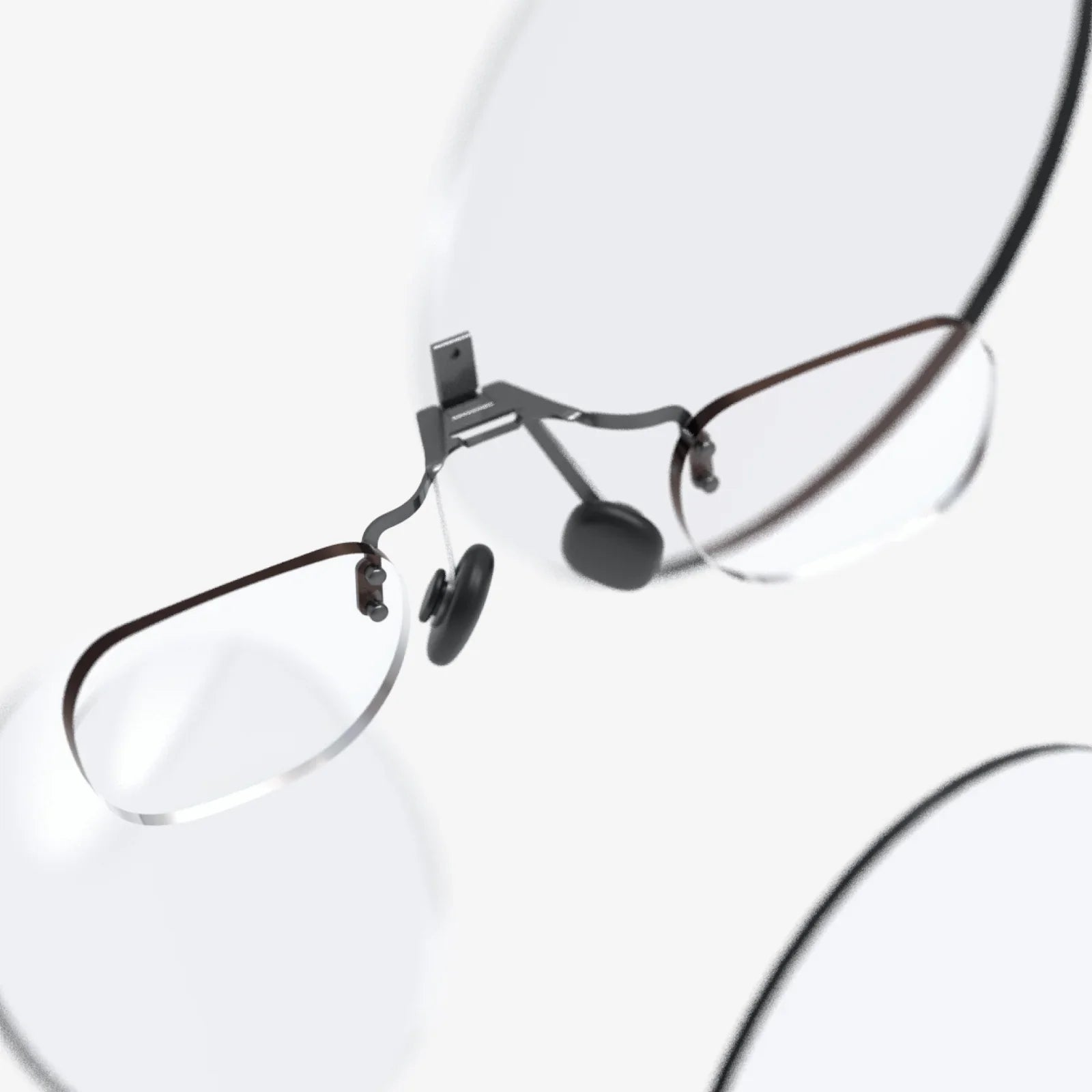
Imagine a world where the digital and the physical are no longer separate realms but a single, interconnected tapestry of experience. This is the promise and the power of Augmented Reality, a technology rapidly moving from science fiction to tangible reality through a multitude of innovative and groundbreaking AR projects. These initiatives are not just changing how we play games or filter our selfies; they are poised to revolutionize industries, redefine human interaction, and reshape our very perception of the world around us. The journey into this enhanced dimension starts here, revealing a future that is already beginning to unfold before our eyes.
Demystifying Augmented Reality: More Than Just a Filter
Before delving into the vast ecosystem of AR projects, it is crucial to understand what Augmented Reality truly is. At its core, AR is a technology that superimposes a computer-generated image, video, or 3D model onto a user's view of the real world. Unlike Virtual Reality (VR), which creates a completely artificial environment, AR enhances the real world by adding digital elements to it. This creates a composite view that exists partly in reality and partly in a digital construct. The magic of AR lies in its ability to anchor these digital objects convincingly within our physical space, making them appear to coexist with real-world objects.
The technological foundation of any AR project rests on three key pillars: sensing, processing, and display. Sensors, including cameras, GPS, accelerometers, and LiDAR, gather data about the user's environment and their position within it. This data is then processed by sophisticated software and algorithms that understand the environment, track surfaces and objects, and calculate the precise position and orientation for the digital overlay. Finally, a display mechanism, which can range from a smartphone screen to specialized smart glasses, presents the combined reality to the user in real-time.
A Spectrum of Augmented Experiences: Marker-Based to Markerless
Not all AR projects are created equal. They exist on a spectrum defined by how the digital content is anchored to the real world. The earliest and simplest form is marker-based AR. This method relies on a predefined visual marker, such as a QR code or a specific image, to trigger the appearance of the digital content. The camera identifies the marker, and the software uses it as a fixed point of reference to place the 3D model or animation. This approach is highly reliable and is often used in marketing materials, educational books, and industrial maintenance manuals.
A more advanced and increasingly common approach is markerless AR. This is where the technology truly shines, offering unconstrained experiences. Markerless AR uses a technique called SLAM (Simultaneous Localization and Mapping). SLAM allows the device to understand and map its environment in real-time without needing a pre-programmed marker. It can identify floors, walls, tables, and other surfaces, enabling digital objects to be placed persistently on a specific spot. This is the technology behind furniture apps that let you see how a virtual couch would look in your living room or navigation arrows that appear to be painted on the floor in front of you.
Further along the spectrum are more complex forms like projection-based AR, which projects light onto physical surfaces to create interactive displays, and superimposition-based AR, which replaces the original view of an object with an augmented view, commonly used in medical fields to overlay an X-ray onto a patient's body.
The Industrial Metaverse: AR Projects Reshaping Enterprise
While consumer applications often grab headlines, the most significant impact of AR projects is currently being felt in the enterprise and industrial sectors. Here, AR is moving beyond novelty to become a critical tool for efficiency, safety, and productivity.
In manufacturing and complex machinery maintenance, AR projects are creating a new paradigm for field service. Technicians wearing AR glasses can see digital schematics, animated repair instructions, and performance data overlaid directly onto the equipment they are fixing. This hands-free access to information drastically reduces error rates, shortens task completion times, and allows less experienced workers to perform complex procedures with expert guidance delivered directly into their field of view. Remote expert assistance is another powerful application, where an off-site senior engineer can see what the on-site technician sees and draw annotations into their environment, effectively providing guidance from thousands of miles away.
The architecture, engineering, and construction (AEC) industries are being transformed by AR. Architects and clients can walk through a full-scale, holographic model of a building before a single brick is laid, assessing spatial relationships and design choices in a way blueprints or screen-based 3D models could never allow. On the construction site, workers can see BIM (Building Information Modeling) data projected onto the physical structure, revealing the precise location of wiring, pipes, or structural beams hidden behind walls, which minimizes rework and ensures accuracy.
Transforming Daily Life: AR in Retail, Education, and Healthcare
The tendrils of AR projects extend deep into the fabric of our daily lives, offering enhanced experiences in familiar domains.
The retail sector has enthusiastically adopted AR to solve a fundamental e-commerce problem: the inability to try before you buy. Sophisticated AR projects now allow customers to visualize products in their own space. You can see how a new lamp would look on your side table, how a different shade of paint would transform your room, or how a pair of glasses would fit your face. This not only boosts consumer confidence and reduces return rates but also creates an engaging and memorable shopping experience that blends the convenience of online shopping with the assurance of physical retail.
In education, AR projects are turning abstract concepts into tangible, interactive experiences. Instead of merely reading about the solar system, students can have a miniature, photorealistic sun and planets orbit around them in their classroom. History lessons can come alive with historical figures reenacting events on the student's desk, and biology students can dissect a virtual frog or explore a detailed, beating human heart from every angle. This immersive form of learning caters to different learning styles and dramatically improves engagement and knowledge retention.
Perhaps most profoundly, AR is making strides in healthcare. Surgeons are using AR headsets to overlay critical information, such as a patient's vital signs or 3D reconstructions of tumors from CT scans, directly into their visual field during procedures, allowing them to maintain focus without looking away at a monitor. Medical students practice complex surgeries on virtual patients, and AR can assist in vein visualization to make blood draws easier and less painful. These applications are not just about convenience; they are about improving patient outcomes and saving lives.
The Engine Room: Building Blocks of an AR Project
Bringing an AR project to life requires a cohesive stack of technologies and tools. For developers, the journey begins with choosing a development platform. Several powerful software development kits (SDKs) provide the essential frameworks for building AR experiences. These platforms offer the core functionalities: environmental understanding (SLAM), surface detection, light estimation, and cloud anchoring, which allows multiple users to share the same AR experience on different devices.
The hardware used to experience AR is also diversifying. While smartphones and tablets remain the most accessible entry point, offering a massive addressable market, the future lies with wearable devices. Smart glasses are the holy grail for AR, offering a truly hands-free, immersive experience. Current iterations range from simpler models designed for specific enterprise tasks to more advanced consumer-grade devices with wider fields of view and more powerful processing. The evolution of this hardware, driven by advancements in waveguide displays, battery life, and processing power, is critical for AR to achieve mainstream adoption beyond the screen.
Navigating the Challenges: The Path to Pervasive AR
Despite its immense potential, the path forward for AR projects is not without obstacles. Technical challenges remain, particularly concerning the form factor and performance of wearable hardware. For glasses to be adopted widely, they need to be socially acceptable—lightweight, stylish, and comfortable—while also delivering high-resolution visuals and all-day battery life, a tall order for current technology.
Perhaps the most significant hurdles are those of privacy and security. AR devices, by their very nature, are equipped with always-on cameras and sensors that continuously scan and map their surroundings. This raises critical questions: Who owns the spatial data collected? How is it stored and used? The potential for unauthorized surveillance and the creation of detailed, mapped interiors of private homes and businesses presents a serious ethical and legal quandary that developers and policymakers must address proactively.
Finally, there is the challenge of creating meaningful and useful content. The success of any platform depends on a thriving ecosystem of applications. Avoiding the creation of AR for AR's sake—gimmicky applications with no real utility—is essential. The focus must remain on solving real user problems and enhancing human capabilities in ways that feel intuitive and natural.
The Future is Augmented: What Lies on the Horizon
Looking ahead, the trajectory of AR projects points toward a world where the technology becomes as ubiquitous and seamless as the mobile internet. We are moving toward the concept of a pervasive spatial computing layer that blankets our physical world with contextually relevant information and interactive digital experiences. This is often referred to as the metaverse—a persistent network of shared AR spaces.
In this future, your AR glasses might recognize a colleague in the street and subtly display their name and recent shared projects. Navigation will be revolutionized with giant floating arrows guiding your path. Language barriers could dissolve with real-time translation overlaid onto street signs and conversations. The line between working remotely and being physically present will blur as lifelike holograms of colleagues sit in meetings with you. The potential to augment human cognition, memory, and social interaction is truly staggering.
The convergence of AR with other transformative technologies like 5G (for high-speed, low-latency data transmission) and Artificial Intelligence (for smarter, context-aware applications) will act as a massive accelerant, unlocking experiences we can only begin to imagine. AI will power more natural user interfaces, like gesture and gaze control, and will enable AR systems to understand the intent and context of a user's surroundings on a much deeper level.
The next time you use your phone to see how a new piece of art might look on your wall or follow a tutorial that animates in your workspace, remember you are witnessing the early, fledgling steps of a fundamental shift in computing. AR projects are the building blocks of this new reality, quietly constructing a future where our digital and physical lives are not just connected, but inextricably and wonderfully fused. This is not a distant dream; it is the next chapter of human-technology interaction, and it is being written one project at a time.
Share:
VR Contacts The Future of Immersive Experience Is Closer Than You Think
Best Wearable Technology: The Ultimate Guide to the Connected Self