


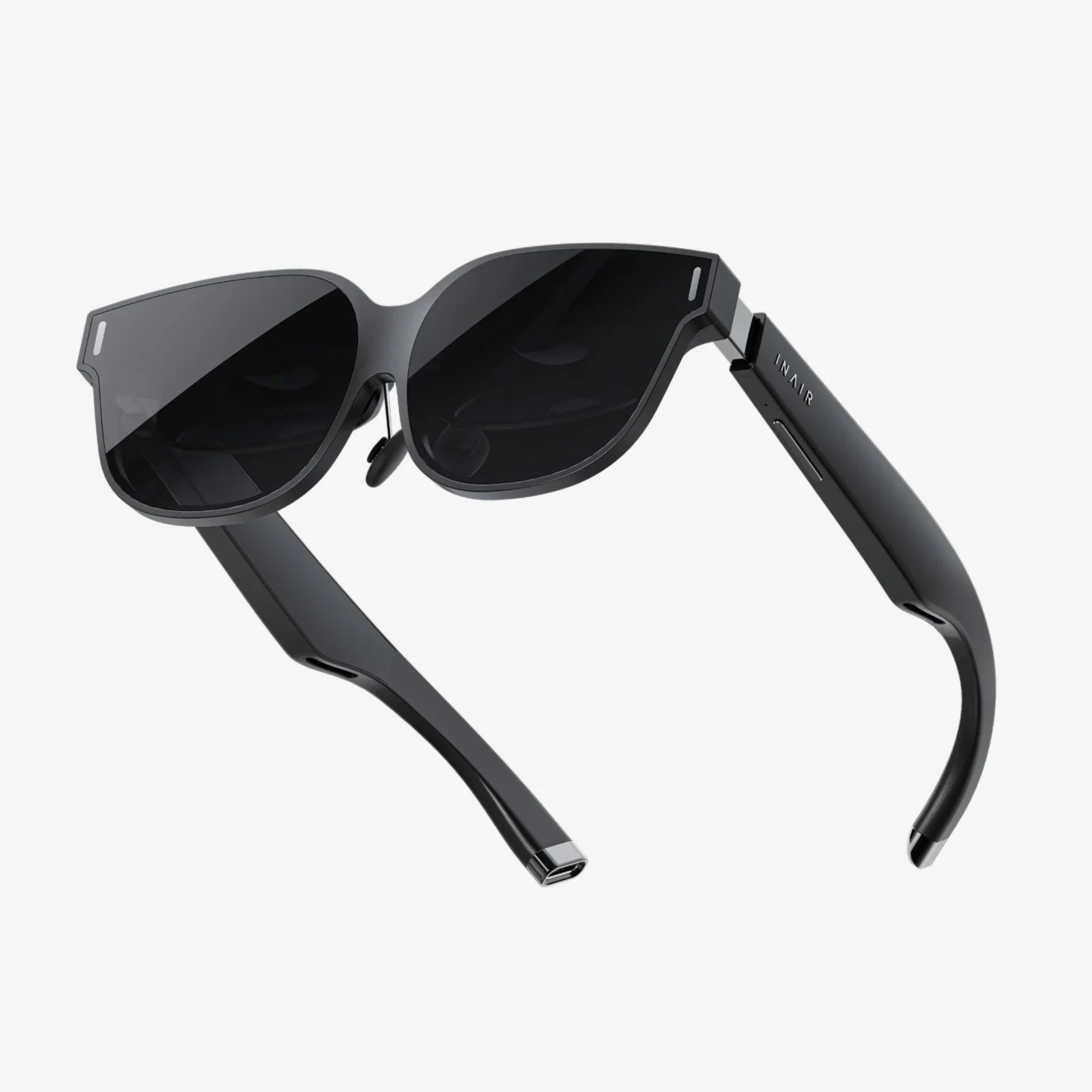
Imagine a world where the boundary between the digital and the physical dissolves completely. Where you can summon a high-definition screen to work from a sun-drenched beach, consult a floating navigation map while walking through an unfamiliar city, or sit face-to-face with a loved one from across the globe, all without wearing a bulky headset. This isn't the premise of a new science fiction novel; it's the breathtaking promise of VR contacts, a technology currently brewing in research labs that aims to place the power of immersive computing directly onto the surface of your eye.
The Evolutionary Leap from Headsets to Contact Lenses
For years, virtual and augmented reality have been tethered, both literally and figuratively, to the head-mounted display. These devices, while impressive, come with a list of inherent limitations. They are often heavy, causing strain during extended use. They create a physical barrier between the user and their environment, isolating them from genuine human interaction. The field of view is frequently constrained, reminding the user they are looking into a screen, not a world. They can cause motion sickness in a significant portion of the population due to latency and vergence-accommodation conflict—where your eyes struggle to focus on simulated depth. VR contacts propose an elegant solution to all these problems. By miniaturizing the technology and placing it on the eye, they promise a form factor that is socially acceptable, incredibly portable, and capable of delivering a truly seamless visual experience that blends with reality itself.
Deconstructing the Miracle: The Core Technologies Involved
The concept of a functional smart contact lens is a monumental engineering challenge, requiring the integration of several advanced technologies into a soft, flexible, and safe platform no thicker than a human hair.
Micro-LED Arrays and Waveguide Projection
At the heart of the visual experience is the display system. Unlike a headset that uses a single screen, VR contacts would need to project images directly onto the retina. This could be achieved through incredibly tiny Micro-LED lights embedded in the lens, each smaller than a grain of pollen. These LEDs would be orders of magnitude more efficient and brighter than existing OLED technology. Alternatively, some concepts involve using nano-projectors and waveguide technology to bend light, channeling a projected image from a tiny source on the edge of the lens directly into the pupil. The goal is to create bright, high-resolution, and energy-efficient graphics that overlay the user's natural vision.
Powering the Impossible: RF Harvesting and Bio-Batteries
Perhaps the most significant hurdle is power. A wired connection is implausible, and a standard battery is too bulky and dangerous to place on the eye. The solution lies in wireless power transmission. One method involves using a small radio frequency (RF) harvester embedded in the lens, which can convert energy from a nearby wireless transmitter, perhaps housed in a pair of glasses or a necklace, into electricity. More futuristic concepts explore bio-batteries that generate a tiny electrical current from the user's own bodily fluids, such as the glucose in tears. While this sounds like fantasy, early-stage research has already demonstrated the feasibility of generating micro-watts of power this way, enough for ultra-low-power applications.
Sensing the World: Integrated Photodetectors and Antennas
To be interactive, the lenses must perceive the world and the user's intentions. This requires a suite of micro-sensors. Tiny photodetectors could act as front-facing cameras, tracking the environment for simultaneous localization and mapping (SLAM), enabling the augmented reality overlay to stick to real-world objects. Even more crucially, they need to track the user's gaze. By measuring the reflection of an imperceptible infrared light off the cornea, the lens can precisely determine where the user is looking. This gaze-tracking is not just for navigation; it enables foveated rendering, a technique where maximum processing power is devoted only to the central point of vision, drastically reducing the computational load. Communication would be handled by a microscopic antenna for Bluetooth or a similar low-power protocol, connecting the lenses to a processing unit like a smartphone.
A World Transformed: Potential Applications Beyond Gaming
While the entertainment value is obvious—truly immersive gaming and revolutionary cinematic experiences—the profound impact of VR contacts will be felt across nearly every aspect of professional and personal life.
Revolutionizing Healthcare and Accessibility
The medical field stands to be transformed. For surgeons, vital statistics and 3D anatomical guides could be overlayed directly onto their field of view during operations. For individuals with visual impairments, the technology could be programmed to act as a sophisticated visual aid. It could enhance contrast for those with macular degeneration, recognize and label objects for those with agnosia, or even translate text into speech or braille in real-time for the blind. For diabetics, sensors embedded in the lens could continuously monitor glucose levels from tear fluid, providing non-invasive, real-time health data.
Redefining Communication and Social Interaction
Communication will become truly immersive. Video calls could evolve into holographic telepresence, where a photorealistic avatar of another person appears in your living room, making eye contact and reacting to your environment. Language barriers could crumble, with real-time translation subtitles appearing under a speaking person's face. Social media could evolve from a feed on a phone to a dynamic layer of information and connection infused into your daily walk through the city, showing you reviews of restaurants you pass or updates from friends who have visited the same location.
The Ultimate Tool for Professionals and Education
An engineer could work on a 3D model of a complex machine, manipulating it with hand gestures as it floats in mid-air. A mechanic could see repair instructions and torque specifications overlayed directly on the engine they are fixing. In education, students studying history could witness a reenactment of a historical event on their desk, while biology students could walk through a detailed, interactive model of a human cell. The potential for enhancing understanding through visual and interactive learning is unparalleled.
The Inevitable Challenges: Safety, Privacy, and the Human Experience
This technological utopia is not without its dark clouds. The development and adoption of VR contacts are fraught with serious challenges that society must confront.
The Paramount Concern: Biological Safety
The eye is one of the most sensitive organs in the human body. Any device placed on it must be impeccably safe. The materials must be hypoallergenic, allow for oxygen permeability to keep the cornea healthy, and be extremely comfortable for all-day wear. The biggest concern is the use of RF energy and its potential thermal effects on delicate eye tissue. Any power transmission method must be proven to be completely safe through long-term studies. Furthermore, the failure mode of such a device is critical; a malfunction must not be capable of damaging the user's vision, for instance, by projecting a blindingly bright light.
The Privacy Paradox: A Camera in Your Eye
If VR contacts become ubiquitous, they will essentially place a camera in the eye of every user. The potential for constant, surreptitious recording is a nightmare for privacy. How do we prevent illicit surveillance? How do we manage the data collected? Will every interaction be recorded and analyzed? The legal and social frameworks for this do not exist. Robust encryption, clear user indicators of recording, and entirely new laws governing digital consent will be required to prevent a dystopian future of perpetual monitoring.
The Blurring of Reality and Its Psychological Impact
When the digital layer is indistinguishable from reality, profound questions about the human experience arise. Will we become addicted to curated, augmented perfection, unable to cope with the unedited real world? Could it exacerbate social isolation, as people retreat into personalized realities? The constant stream of information could lead to cognitive overload and anxiety. The technology risks creating a new digital divide, not just in access, but in the very perception of reality itself. Establishing digital wellness practices and understanding the long-term psychological effects will be as important as developing the technology itself.
The Road Ahead: From Science Fiction to Science Fact
The journey to a commercial, safe, and fully-featured VR contact lens is measured in decades, not years. The current state of the technology is in fundamental materials science and component miniaturization research within corporate and university labs. Prototypes exist for single-function applications, like non-invasive glucose monitoring, but a full-fledged display system remains a formidable challenge. The path forward will be iterative. The first generation will likely be simple, offering basic health monitoring or notifications, and will probably still rely on an external companion device for processing and power. Each subsequent generation will integrate more functionality, improve battery life, and enhance comfort, slowly marching toward the ultimate goal of a self-contained window to a blended reality.
The day you casually slide a pair of VR contacts onto your eyes feels distant, but the foundational research is happening now. This technology represents not just an incremental update, but a fundamental shift in our relationship with computers and information. It promises to augment human capability in ways we are only beginning to imagine, offering solutions to age-old problems while simultaneously presenting society with its next great test. The future it heralds is one of both incredible potential and profound responsibility, a world where the only limit to reality is the imagination of the person looking back at you in the mirror.
Share:
Holographic Computer Display: The Next Evolutionary Leap in Visual Interface Technology
AR Projects: Bridging the Digital and Physical Worlds for a Transformative Future