


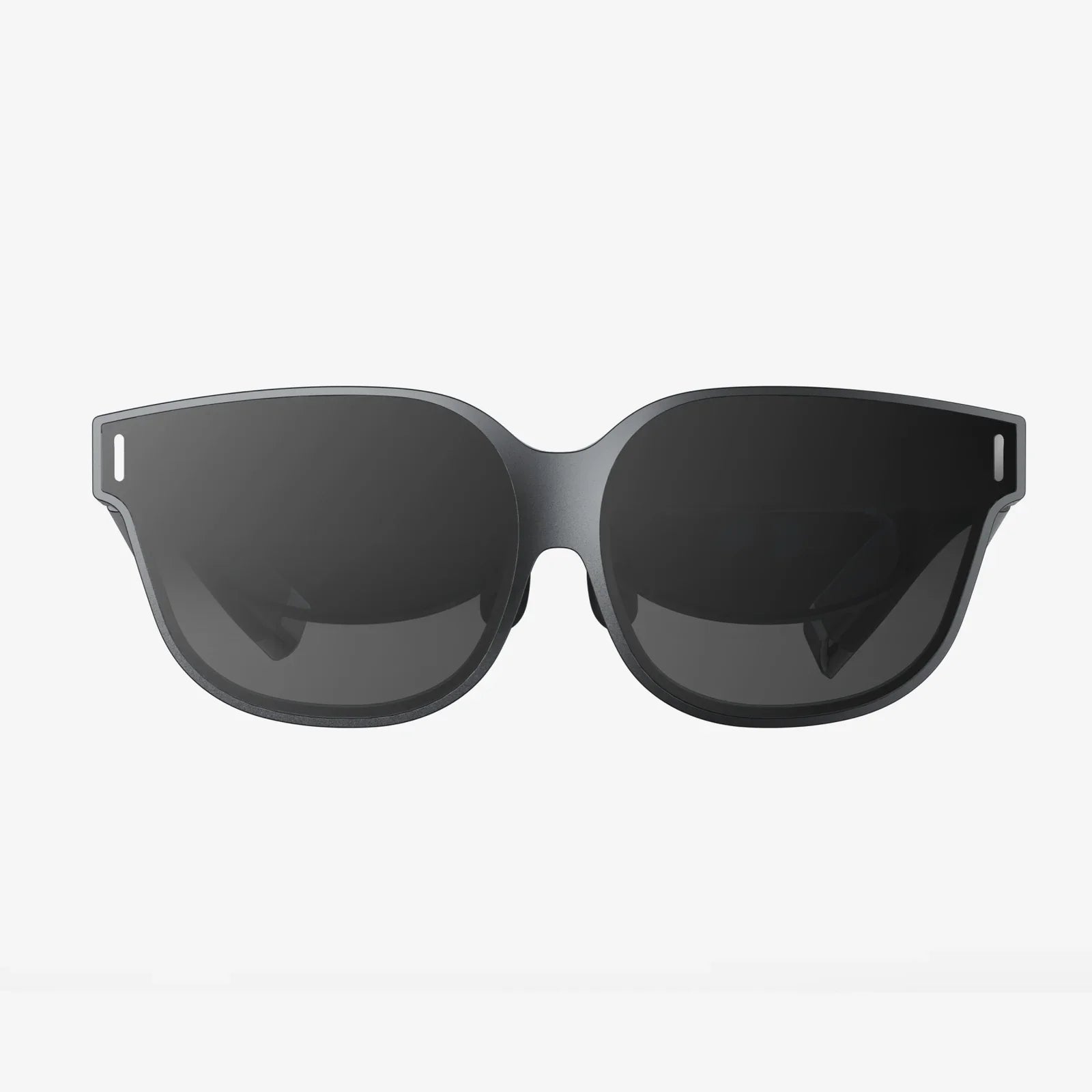
The whispers are getting louder, the rumors more substantiated; the next wave of augmented reality is not just coming, it’s arriving with a thunderous declaration of power that promises to fundamentally alter our perception of the world around us. For years, AR technology has tantalized us with glimpses of a blended future, often constrained by clunky hardware, limited fields of view, and a noticeable lag between the real and the digital. The central promise—seamlessly overlaying useful, interactive, and beautiful digital information onto our physical environment—has remained, for the most part, a promise. But that is all poised for a radical shift. Industry analysts and insiders are now united in a common refrain: the next generation of AR headsets, slated for arrival next year, will be defined not by incremental design tweaks, but by a monumental leap in raw, unadulterated computational power. This isn't just an upgrade; it's a complete re-imagining of what's possible from the silicon heart outward, setting the stage for a revolution in how we work, play, connect, and perceive reality itself.
The Historical Bottleneck: Why Power Has Been the Limiting Factor
To appreciate the significance of this impending leap, one must first understand the critical constraints that have held AR back. Unlike Virtual Reality (VR), which creates a completely synthetic environment, Augmented Reality operates in a far more complex and demanding computational space. A VR headset must render a consistent, controlled world. An AR headset must first understand the uncontrolled, unpredictable real world in real-time and then render convincing digital objects within it. This process involves a symphony of advanced technologies all working in perfect harmony, each one a notorious power hog.
First, there's simultaneous localization and mapping (SLAM). This is the process by which a headset uses its cameras and sensors to constantly scan its environment, identifying surfaces, objects, and points of interest to create a live 3D map. This map allows digital content to "lock" onto a physical table or appear to hide behind a real-world couch. SLAM is incredibly computationally intensive, requiring massive processing to handle the torrent of visual data without delay.
Second, there's the rendering itself. For AR to feel "real," the digital objects must exhibit photorealistic lighting, cast accurate shadows, and occlude correctly (e.g., a digital character stepping behind a physical pillar). This level of graphical fidelity, performed at a high resolution and a rock-solid 90 frames per second or more to prevent user nausea, demands a graphics processing unit (GPU) of remarkable capability.
Finally, there are the ancillary processes: eye-tracking for foveated rendering (which focuses processing power only where the user is looking), hand-tracking for intuitive interaction, spatial audio for convincing sound, and persistent cloud-based data for shared experiences. Each of these features chips away at the available processing budget. Until now, headset manufacturers have faced a brutal trade-off: include these features and suffer from short battery life, excessive heat, and a bulky form factor due to necessary cooling, or strip them out and deliver a less immersive, less compelling experience. The choice has often been to compromise, resulting in devices that felt more like prototypes than finished products. The new power arriving next year is the key that unlocks this prison of compromises.
The Architectural Shift: Beyond Moore's Law
The power surge in next year's headsets won't come from simply stuffing a smartphone processor into a glasses frame and overclocking it. It will be the result of a holistic architectural revolution, leveraging innovations from the chip level up to the software stack. We are moving from general-purpose computing to specialized, task-dedicated processing.
At the core will be dedicated AI accelerators, often referred to as NPUs (Neural Processing Units). These chips are designed from the ground up to handle the matrix multiplication operations that are fundamental to neural networks and machine learning. This makes them exponentially more efficient than CPUs or GPUs at tasks like object recognition, spatial mapping, and predictive tracking. By offloading the immense workload of understanding the environment to these specialized units, the main CPU and GPU are freed up to handle rendering and system tasks, leading to a massive overall efficiency gain.
Furthermore, we will see the widespread adoption of advanced sensor fusion algorithms. Next-gen headsets will boast a suite of sensors—high-resolution RGB cameras, depth sensors (like LiDAR), inertial measurement units (IMUs), and ultrawideband radio. The real magic happens when the data from all these sensors is combined and processed in real-time. A LiDAR sensor provides precise depth data, a camera provides color and texture, and an IMU provides precise orientation. Fusing this data creates a rich, accurate, and stable understanding of the environment far greater than the sum of its parts. Processing this fused data stream is another task perfectly suited for bespoke silicon, minimizing latency to imperceptible levels.
This architectural shift signifies a move away from brute force and towards elegant, intelligent efficiency. It’s not just about having more gigahertz; it’s about having the right kind of power in the right place at the right time. This is how next year's devices will achieve the seemingly impossible: delivering desktop-level AR performance in a sleek, wearable, all-day form factor.
The User Experience Transformed: The Power You Can Actually See
This raw computational horsepower will cease to be a spec sheet bullet point and will instead manifest in every single interaction a user has with their AR headset. The difference will be palpable from the moment the device is turned on.
- Visual Fidelity: Forget the ghostly, translucent polygons of early AR. The next generation will feature digital objects that are visually indistinguishable from reality. Complex materials like brushed metal, frosted glass, and flowing water will be rendered with physically accurate lighting and reflections. Text will be pin-sharp and readable even on virtual displays floating in front of you. This realism is a direct product of powerful GPUs working in tandem with dedicated ray-tracing cores now trickling down from high-end desktop graphics.
- Seamless Interaction: Lag and jitter will become relics of the past. Your digital hands will move in perfect sync with your real ones. Pinching, grabbing, and manipulating virtual objects will feel natural and precise, enabled by powerful processors that can track minute hand movements at ultra-high speeds. Voice commands will be processed on-device instantly, thanks to NPUs running large language models locally, ensuring privacy and responsiveness.
- Persistent Worlds: This is perhaps the most transformative application of power. Today's AR experiences are often ephemeral; turn off the app and your carefully placed digital furniture vanishes. Next year's power enables persistent AR. The headset's deep understanding of your environment will be saved and recalled perfectly. You could place a virtual clock on your real wall, and it would still be there days later, for you and for anyone you invite to see your "augmented" space. This creates a digital layer atop reality that is always on and always in sync, enabling entirely new forms of collaborative work, social connection, and digital art.
- All-Day Usability: The efficiency gains mean that this incredible experience won't come at the cost of comfort. Sleeker, lighter designs approaching the form factor of traditional eyewear will become the norm, as large batteries and complex active cooling systems are no longer required. Users will be able to wear their AR headsets for an entire workday or a long evening of social gaming without needing to recharge, finally making AR a truly all-day companion.
The Ripple Effect: Powering Industries Beyond Consumer Play
While consumer applications like gaming and social media will see dramatic benefits, the impact of powerful AR will be felt most profoundly in enterprise and industrial sectors. This is where the ROI of enhanced power becomes immediately clear.
In manufacturing and field service, technicians will be guided through complex repairs with hyper-accurate, context-aware digital overlays. A powerful headset could recognize a specific engine model, retrieve its 3D schematic and service history from the cloud, and highlight the exact bolt that needs tightening, all while keeping the technician's hands free. The robust processing ensures these instructions are stable and locked onto the machinery, even in a vibrating, noisy industrial environment.
In healthcare, surgeons could overlay real-time diagnostic data, 3D scans of a patient's anatomy, and critical vitals directly onto their field of view during a procedure. The low latency and high precision are not just convenient here; they are life-critical. Medical students could practice procedures on incredibly detailed, persistent holographic patients, learning through doing in a risk-free environment.
For remote collaboration, power means presence. Architects in different countries could walk through a persistent 1:1 scale holographic model of a new building, making changes to the digital blueprint that are instantly visible to all. The sense of "being there" together in a shared virtual space requires immense bandwidth and processing to feel authentic, a barrier that next year's technology is set to demolish.
The Challenges on the Horizon
This powerful future is not without its hurdles. This immense computing power generates heat, and managing thermal output in a device worn on the face remains a significant engineering challenge. While efficiency is improving, innovative passive and active cooling solutions will be critical. Furthermore, this level of performance demands a robust software ecosystem. Developers will need new tools and engines to harness this power effectively, creating experiences that are not just technologically impressive but also genuinely useful and engaging. Finally, the question of data privacy and security becomes even more pressing. A device that has a deep, persistent, and real-time understanding of your personal environment is a treasure trove of data. Ensuring this data is processed securely on-device and that users retain full control over their digital footprint is a societal challenge that must be addressed in parallel with the hardware advances.
The consistent message from across the augmented reality landscape is undeniable and electrifying. The long-awaited fusion of our digital and physical realities is no longer a question of "if" but "how soon." The answer, it seems, is taking clear and powerful shape. The next generation of headsets, supercharged by a revolution in processing architecture, will not merely be an improvement on a existing theme. They will be the foundational platform for a new way of seeing, interacting, and existing within our world. The power is coming, and it will change everything you think you know about reality.
Share:
Upcoming VR Headset to Feature Three Revolutionary Technologies That Will Change Everything
VR Headset Battery Life Comparison: The Ultimate Guide to Power and Playtime