


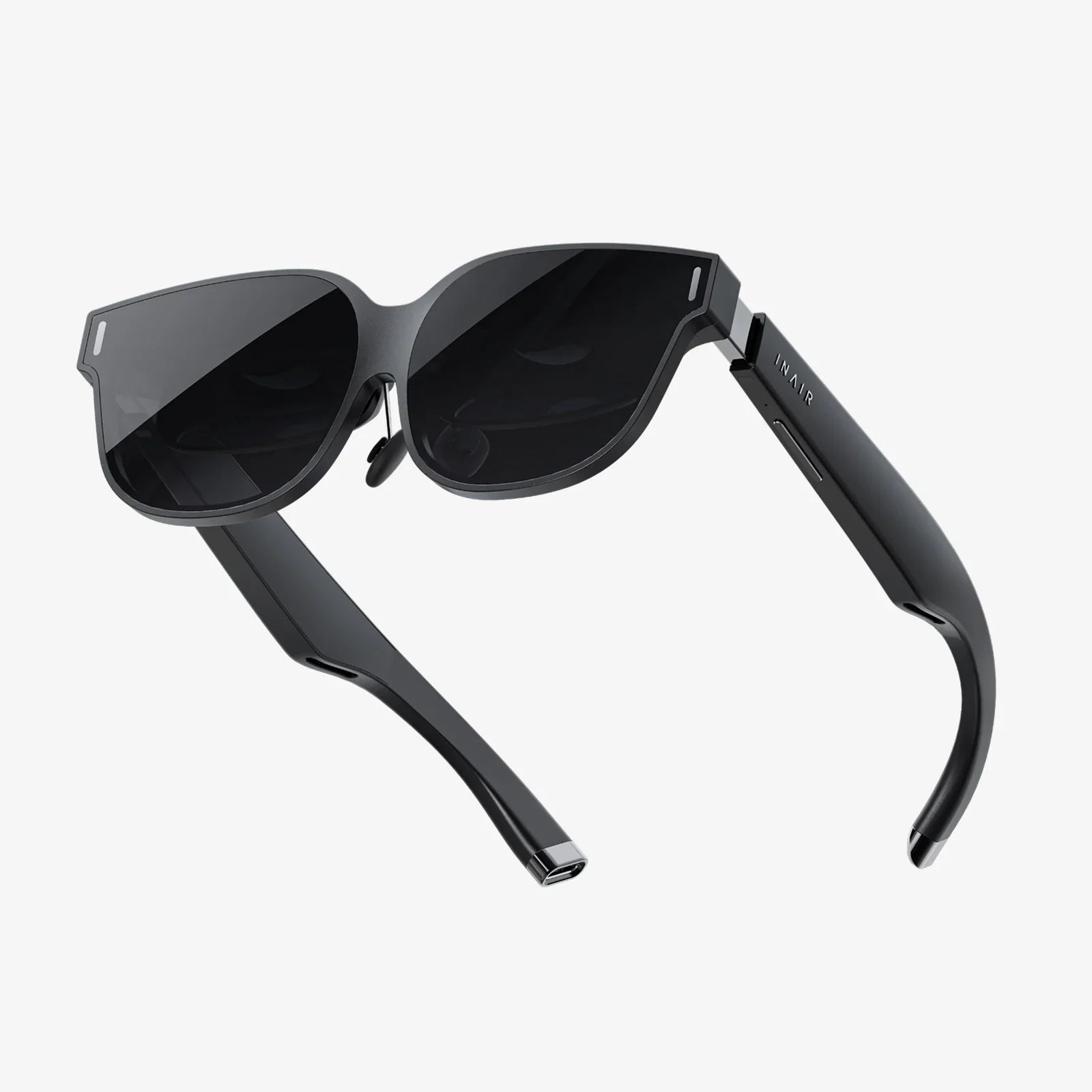
Imagine stepping into a virtual world so crisp, so responsive, and so tactile that the line between the digital and the physical begins to genuinely blur. This is no longer the stuff of science fiction but the imminent reality promised by a new wave of immersive technology. The buzz within the industry is palpable, centered on a pivotal development: an upcoming VR headset to feature three core technological advancements that, together, form a trifecta of innovation poised to catapult virtual reality into its next chapter. This isn't just an incremental update; it's a fundamental leap forward, designed to finally address the long-standing barriers to widespread adoption and true presence.
The Trinity of Next-Generation Immersion
For years, the virtual reality experience has been constrained by a trio of limitations: visual fidelity that never quite matched human visual acuity, control systems that could feel imprecise or cumbersome, and a profound lack of physical feedback. Users could be wowed initially, but a lingering sense of looking at a screen, of interacting with gloves that didn't feel like hands, often prevented long-term, deep engagement. The upcoming generation of hardware appears to have been designed with these very pain points in mind. The strategic integration of these three features suggests a holistic approach to problem-solving, where each component doesn't just operate in isolation but synergizes with the others to create a cohesive and profoundly convincing experience.
The First Feature: Unprecedented Visual Clarity with Micro-OLED Displays
The window to any virtual world is the display. Until now, most headsets have relied on variations of LCD or traditional OLED technology. While these have served admirably, they come with compromises—often in the form of a discernible "screen-door effect" (where the gaps between pixels are visible), limited field of view, or challenges with achieving true black levels without motion smearing. The first revolutionary feature set to change this is the adoption of next-generation micro-OLED displays.
Micro-OLED is a different beast entirely. These displays are built directly onto the chip wafer, allowing for incredibly high pixel densities in a remarkably small form factor. We're talking resolutions that push beyond the coveted threshold of 30 pixels per degree (PPD)—a key metric for visual acuity in VR. At this level, the individual pixels become indistinguishable to the human eye, effectively eliminating the screen-door effect and creating a seamless, lifelike image.
The benefits extend beyond mere resolution. These displays offer exceptional contrast ratios, with true blacks that add depth and realism to dark scenes. Their fast response times eliminate motion blur, and their ability to be incredibly compact and power-efficient is a boon for headset designers striving for a more lightweight and comfortable form factor. This leap in visual technology means virtual environments will possess a clarity and vibrancy previously unattainable, making reading text, discerning distant objects, and appreciating fine details not just possible but effortless.
The Second Feature: Seamless Interaction with Advanced Inside-Out Tracking and Eye-Tracking
A visually stunning world is worthless if you can't interact with it intuitively and naturally. This is where the second feature comes into play: a sophisticated sensor fusion system that combines robust inside-out tracking with high-fidelity eye-tracking. This duo represents the brain and the eyes of the new system, working in concert to understand both your position in space and your intent within the application.
Inside-Out Tracking: Liberation from External Sensors
Early high-end VR systems required external sensors or base stations placed around the room to triangulate the position of the headset and controllers. While effective, this setup was cumbersome, limited play areas, and was a significant barrier to entry. Inside-out tracking, where cameras on the headset itself map the environment, solved the convenience issue but sometimes at the cost of precision, especially with controller tracking behind the user's back.
The upcoming implementation promises a significant evolution. By employing a wider array of high-resolution, high-frame-rate cameras and more powerful on-board processing dedicated to simultaneous localization and mapping (SLAM), these systems will achieve a level of robustness and accuracy that rivals external tracking. They will better handle fast movements, low-light conditions, and featureless spaces, all while freeing the user from any external hardware. This means true plug-and-play immersion in any suitable space.
Eye-Tracking: The Game-Changer Within the Game-Changer
While inside-out tracking handles the "where," integrated eye-tracking handles the "what." This technology uses invisible infrared lights and sensors to precisely monitor the direction and focus of the user's gaze. The applications for this are vast and transformative.
The most immediate benefit is foveated rendering. The human eye only sees a small central area (the fovea) in high detail; our peripheral vision is much lower resolution. Eye-tracking allows the system to know exactly where you are looking. It can then render the area of the scene you are directly focused on in full, high resolution, while intelligently reducing the rendering detail in your periphery. This massive reduction in computational load means developers can create vastly more complex and detailed worlds without requiring proportionally more powerful hardware, a breakthrough for both performance and accessibility.
Beyond performance, eye-tracking enables new forms of social interaction. Avatars in virtual meetings or social spaces can now make genuine eye contact, their digital eyes reflecting where the real user is actually looking. This adds a layer of non-verbal communication that is critical for empathy and presence. Furthermore, it introduces intuitive UI navigation—simply look at a menu item to select it—and opens doors for advanced psychological and neurological research applications within VR.
The Third Feature: The Sense of Touch with Sophisticated Haptic Feedback
Vision and interaction are two-thirds of the puzzle. The final, crucial piece is touch. Haptic feedback in VR has largely been limited to simple vibrations in controllers, a crude approximation of the rich tapestry of sensations we experience in the real world. The third groundbreaking feature aims to change that by incorporating advanced, nuanced haptic systems into both the controllers and, eventually, the headset itself.
We are moving beyond rumble. The next generation of controllers will likely feature adaptive triggers that can simulate varying levels of resistance—pulling back a bowstring will feel taut, while squeezing a trigger will have a distinct break point. More importantly, they will incorporate high-fidelity vibration motors capable of producing a wide spectrum of precise sensations, from the gentle patter of rain on your palm to the rough texture of a stone wall you're brushing against.
The ultimate goal is to simulate weight, texture, tension, and even temperature. This is achieved through a combination of technologies like voice coils for precise waveforms, ultrasonic transducers for mid-air haptics that don't require contact, and perhaps even thermal electric elements. This sophisticated feedback loop completes the sensory immersion. When you reach out to touch a virtual object, your hand isn't just passing through a visual model; you receive physical confirmation that reinforces the illusion. It makes virtual objects feel tangible, solid, and real, grounding the user in the experience in a way visuals and audio alone never could.
The Synergy: How These Three Features Create a Whole Greater Than the Sum of Its Parts
The true magic of this upcoming headset isn't that it has three great features, but that these three features are designed to work together. They create a virtuous cycle of immersion. The eye-tracking not only enables foveated rendering to power the high-resolution displays but can also be used for depth-of-field effects, making the virtual world feel more camera-like and natural. The precise inside-out tracking ensures your virtual hands are exactly where your real hands are, and when combined with the nuanced haptics, the illusion of presence becomes overwhelming.
Imagine a scenario: you're in a hyper-realistic virtual forest. The micro-OLED displays show every vein on a leaf and the deep shadows between distant trees. You reach out to touch the bark of a giant redwood. The inside-out tracking ensures your virtual hand moves without latency, the eye-tracking system notes your gaze focused on the texture, and just as your fingers make contact, the haptic controller delivers a sharp, granular vibration that perfectly mimics the rough, grooved surface. The brain has no reason to disbelieve. You are there.
The Ripple Effect: Implications for Industries Beyond Gaming
While gaming will be the most visible beneficiary, the impact of this technological trifecta will reverberate far beyond entertainment. In enterprise and design, architects and engineers will walk through photorealistic models of their creations, feeling the scale and texture of materials before a single physical resource is spent. In medicine and therapy, these headsets will enable more effective exposure therapy in perfectly controlled environments or allow surgeons to practice complex procedures with realistic haptic feedback. In remote work and collaboration, virtual meetings will become truly immersive, with avatars that convey real eye contact and presence, making remote teams feel connected in a shared space. The barrier between the digital and the physical isn't just breaking down for play; it's dissolving for work, design, and human connection.
This isn't merely another product launch; it's the ushering in of a new era for spatial computing. The combination of visual brilliance, intuitive interaction, and tangible feedback represents the most significant step towards making virtual reality a seamless extension of human experience rather than a novel gadget. The wait for a headset that can truly deliver on the decade-old promise of VR is almost over, and it will be defined by this powerful trio of technologies.
The horizon of virtual reality is no longer a distant dream but an impending reality, defined by a triad of technologies that promise to shatter the final barriers to true immersion. This isn't just about better specs; it's about fundamentally altering our relationship with digital content, making the virtual feel authentically, undeniably real. The next time you step into a headset, you might just forget how to step out.
Share:
Why Get a VR Headset: Unlocking New Realities in Your Living Room
AR Says Headset Next Year Power: The Unseen Revolution in Processing and Perception