


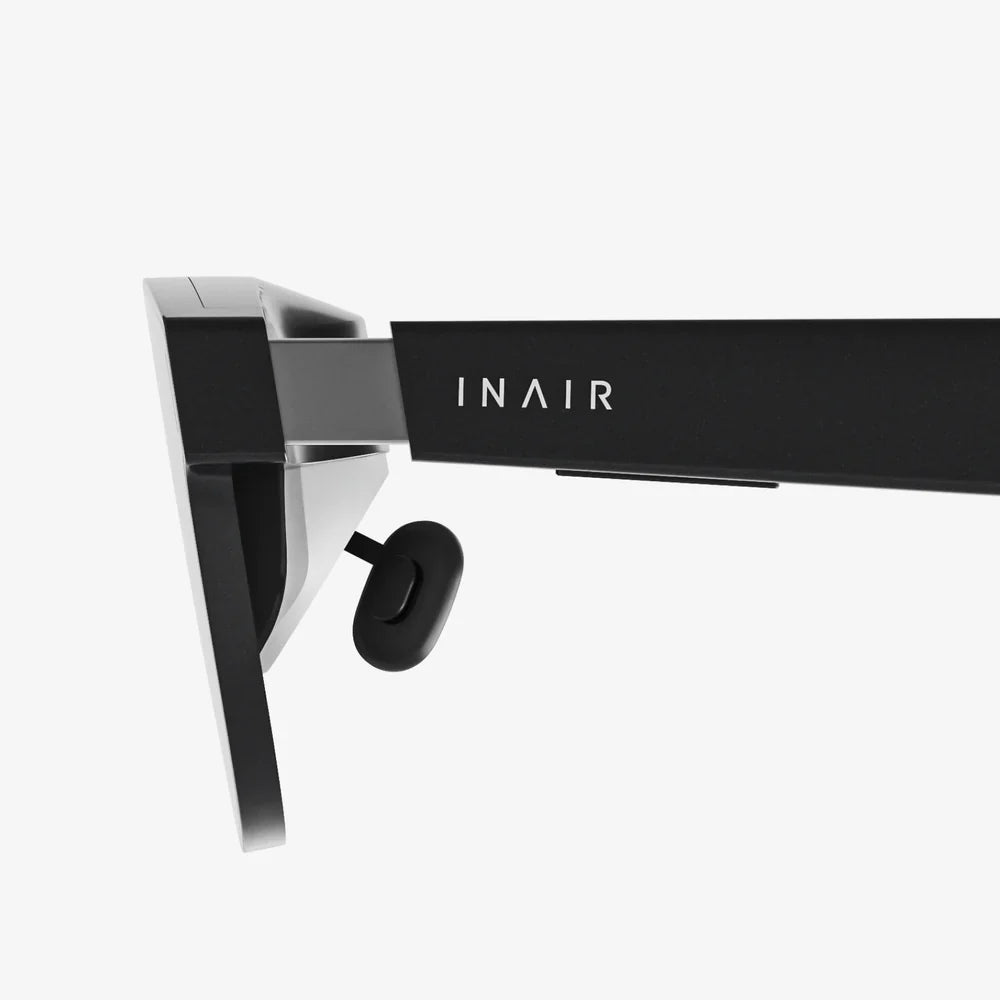
Imagine a world where digital information doesn’t live on a screen in your hand, but is seamlessly woven into the fabric of your reality. This is the promise of augmented reality (AR) smart glasses, a technology poised to redefine our interaction with the digital and physical worlds. The staggering projected growth of the AR smart glasses market size isn't just a statistic; it's a leading indicator of a fundamental shift in computing, communication, and human experience. From revolutionizing industrial workflows to creating new forms of social connection, the potential is limitless, and the race to capture this burgeoning market is already underway.
The Foundation: Defining the Market and Its Meteoric Trajectory
To understand the AR smart glasses market size, one must first define the product category. Unlike virtual reality (VR) headsets that fully immerse a user in a digital environment, AR smart glasses overlay contextual digital information—text, images, 3D models—onto the user’s real-world field of view. This allows for hands-free operation and a more natural integration of technology into daily life and work.
Market analysts and research firms consistently paint a picture of explosive growth. While figures vary slightly between reports, the consensus is unanimous: the market is on a steep, upward trajectory. Current estimates place the global AR smart glasses market size at a multi-billion dollar value, a figure that is expected to multiply by a factor of ten or more within the next five to ten years. This represents a compound annual growth rate (CAGR) that far exceeds that of most other consumer electronics sectors.
This projected growth is not a simple linear progression. It is expected to occur in distinct waves, driven by successive technological breakthroughs and expanding use cases. The initial wave is heavily dominated by enterprise and industrial adoption, where the value proposition is clear and immediate. The subsequent wave, which will catapult the market size to its highest estimates, will be driven by mass consumer adoption, following improvements in form factor, battery life, and content ecosystems.
Catalysts of Growth: The Key Drivers Fueling Expansion
The monumental expansion of the AR smart glasses market size is not happening in a vacuum. It is being propelled by a powerful convergence of technological advancements, evolving user needs, and significant economic investment.
The Enterprise and Industrial Revolution
The most potent driver today is the enterprise sector. Companies are investing heavily in AR smart glasses to solve real-world problems, increase efficiency, and reduce errors. In fields like manufacturing, logistics, and field services, these devices are transformative.
- Remote Expert Guidance: A seasoned technician can see through the eyes of a field worker thousands of miles away, overlaying annotations and instructions directly onto their view to guide complex repairs, drastically reducing travel costs and downtime.
- Digital Workflow Integration: Warehouse pickers see optimal routes and item information displayed in their vision, speeding up order fulfillment and improving accuracy. Assembly line workers receive real-time visual cues for each step in a process, minimizing training time and defects.
- Enhanced Training and Safety: New employees can learn complex procedures through interactive digital overlays, while safety warnings and equipment statuses can be displayed directly to workers in hazardous environments.
The return on investment (ROI) in these scenarios is so compelling that businesses are driving the initial surge in market volume, providing the revenue needed for companies to invest in further research and development.
Technological Advancements: Making the Impossible, Possible
The dream of sleek, powerful AR glasses has long been hampered by technological limitations. Today, those barriers are crumbling.
- Micro-displays and Waveguides: Innovations in micro-display technology (like MicroLED) and optical waveguides are enabling brighter, higher-resolution images while allowing for increasingly sleek and normal-looking form factors that don’t resemble bulky helmets.
- 5G Connectivity: The rollout of high-speed, low-latency 5G networks is critical for offloading intensive processing to the cloud, enabling complex AR experiences without requiring massive, power-hungry processors on the device itself.
- Artificial Intelligence and Computer Vision: On-device AI is what makes AR smart glasses truly "smart." It allows the glasses to understand and interpret the environment in real-time, identifying objects, tracking surfaces, and enabling intuitive gesture-based controls.
- Spatial Computing: This evolving paradigm refers to software that understands and interacts with the three-dimensional space around the user, a foundational element for creating persistent and shared AR experiences.
The Consumer Promise: Beyond the Niche
While enterprise leads, the consumer segment represents the ultimate prize and the key to achieving the highest projections for the overall market size. The potential applications are vast:
- Navigation: Directional arrows and points of interest appear on the streets in front of you, making urban exploration effortless.
- Social Interaction and Gaming: Imagine playing a game that transforms your local park into a digital battlefield or seeing shared digital art installations with friends in a public space.
- Content Consumption: Watching a movie or browsing the internet on a virtual, massive screen that only you can see, anywhere you go.
- Accessibility: Real-time translation of street signs, facial recognition to help remember names, or audio descriptions of the world for the visually impaired.
Consumer adoption hinges on solving the final set of challenges: creating a socially acceptable form factor that looks like regular eyewear, achieving all-day battery life, and developing a killer app that provides indispensable daily value.
Navigating the Hurdles: Challenges on the Path to Mass Adoption
Despite the optimistic forecasts for the AR smart glasses market size, the path forward is fraught with significant challenges that must be overcome to realize its full potential.
- The Form Factor Conundrum: The fundamental trade-off between performance and aesthetics remains. High-performance components often lead to larger, heavier devices. The industry must continue to innovate to shrink these components into a package that is both powerful and desirable to wear all day.
- Battery Life and Power Consumption: Driving high-resolution displays, multiple cameras, and powerful processors is incredibly energy-intensive. Breakthroughs in battery technology and ultra-low-power chip design are essential to move beyond the current limitations of a few hours of active use.
- User Experience and Interface: How do you interact with a device that has no traditional screen or keyboard? Perfecting voice control, gesture recognition, and ultimately, brain-computer interfaces is crucial for creating an intuitive and frictionless user experience.
- Privacy and Security: Devices equipped with always-on cameras and microphones that record the world raise profound privacy concerns. Establishing clear ethical guidelines, robust data security protocols, and social norms will be critical for public acceptance.
- Content and Developer Ecosystem: A hardware platform is nothing without software. Cultivating a vibrant ecosystem of developers to create compelling applications and experiences is perhaps the most important long-term challenge.
The Future Vision: Beyond the Numbers
The discussion of the AR smart glasses market size ultimately points toward a future that is more interconnected, efficient, and immersive. We are moving beyond the era of the smartphone as the central hub of digital life and toward a world of ambient computing, where technology fades into the background and enhances our natural capabilities.
In the coming years, we will see the lines between the physical and digital worlds blur into what many are calling the "metaverse"—a persistent network of shared 3D virtual spaces. AR smart glasses will be the primary portal into this new realm, not as an escape from reality, but as a way to enrich it. The market size is simply a measure of how many people will be stepping through that portal. The companies, developers, and innovators who solve the core challenges of hardware, software, and experience today will be the architects of the reality of tomorrow. The numbers are impressive, but the human experience they represent is truly revolutionary.
The numbers don't lie—the AR smart glasses market is a behemoth in the making, but this is one trend that's about far more than revenue. It's about unlocking human potential. This isn't just another gadget cycle; it's the dawn of a new sensory layer for humanity, a fundamental rewiring of how we perceive, interact with, and ultimately understand the world around us. The companies that crack the code on design, battery, and that elusive killer app won't just dominate a market; they will define the next chapter of human-computer interaction. The future isn't just bright; it's augmented, and it's putting on a pair of glasses.
Share:
A Small Compact Portable Computer: The Ultimate Guide to Modern Mobility
AI Product Description Tool: The Ultimate Guide to Automating E-commerce Copy