


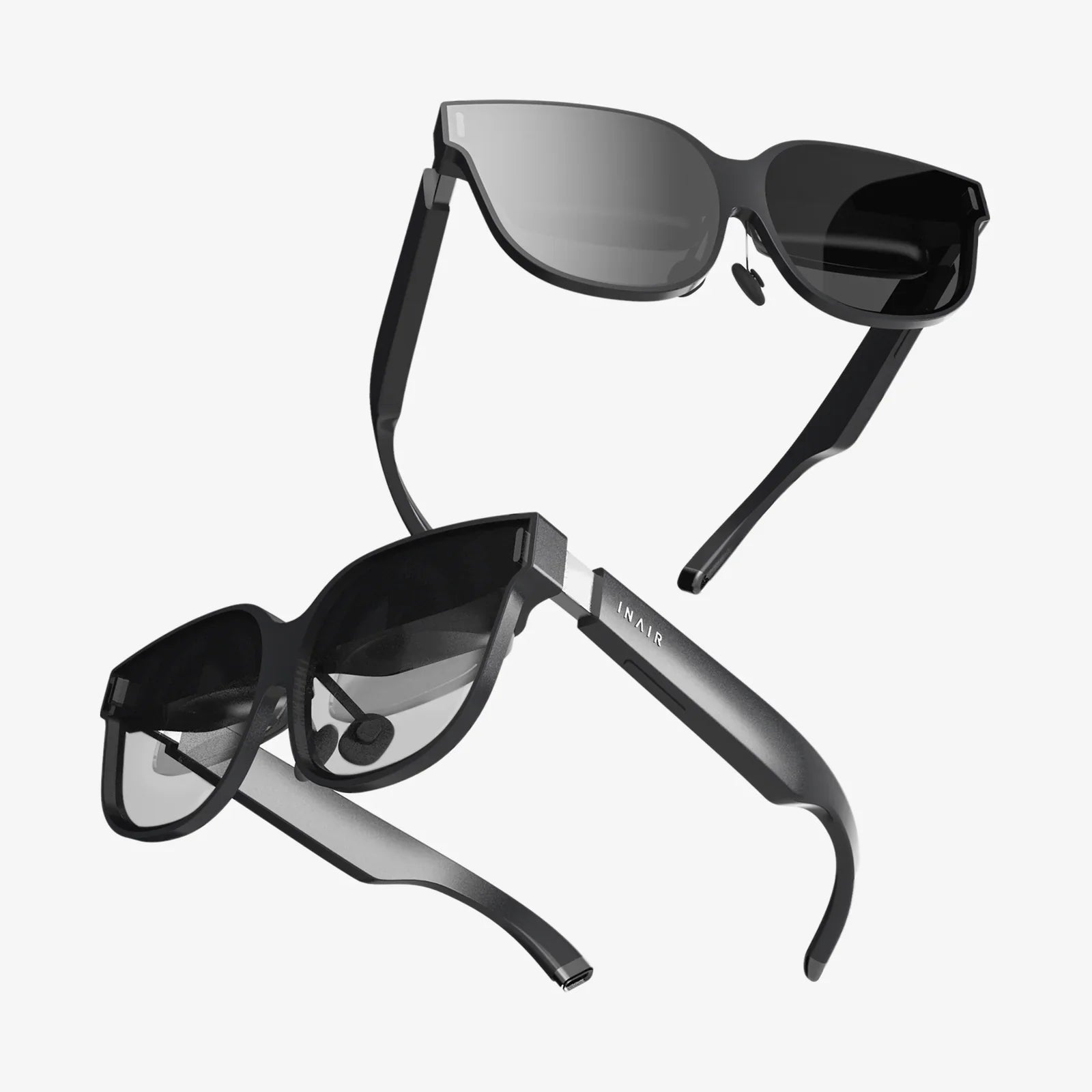
Imagine a world where information doesn’t live on a screen in your hand, but is seamlessly painted onto the canvas of your reality. Where directions appear as a glowing path on the sidewalk, the name of a constellation you’re gazing at floats beside it, and a recipe hovers just beside your mixing bowl without a single smudge on your tablet. This is the promise, the potential, and the profound vision of augmented reality smartglasses, a technology not merely vying for a place in your pocket, but for a permanent residence on your face, fundamentally reshaping your perception of the world.
The Architectural Marvel: How AR Smartglasses Craft Illusion
At their core, AR smartglasses are a feat of optical engineering, a delicate dance between the digital and the physical. Unlike virtual reality, which seeks to replace your world, augmented reality aims to enhance it. This magic is performed by several key components working in concert.
The primary actor is the waveguide display. Think of it as a sophisticated projector system shrunk down to the size of an eyeglass lens. Light from a tiny micro-LED or LCoS (Liquid Crystal on Silicon) projector, often embedded in the arm of the glasses, is shot into a transparent piece of glass or plastic. This light bounces through this waveguide via a process called total internal reflection until it hits an in-coupler, which then directs it out towards the user’s eye. The result is a crisp, digital image that appears to be floating in space several feet away, all while allowing the user to clearly see the real world behind it. The precision of this optical system dictates the field of view (how much of your vision can be filled with digital content) and the clarity of the image, two of the most significant challenges in the industry.
But a display is useless without intelligence. This is provided by a sophisticated suite of sensors that act as the eyes and ears of the device. A combination of high-resolution cameras, depth sensors (like time-of-flight sensors), and inertial measurement units (IMUs) constantly scans the environment. The IMU tracks the precise movement and orientation of your head, while the cameras and depth sensors map the physical space in real-time, identifying surfaces, objects, and their spatial relationships. This process, known as simultaneous localization and mapping (SLAM), is what allows a virtual character to convincingly hide behind your real-world sofa or for a digital model of a new engine to sit perfectly atop your physical workbench.
All this data is crunched by a compact but powerful system-on-a-chip (SoC), the brain of the operation. This processor handles the immense computational load of running computer vision algorithms, rendering complex 3D graphics, and processing voice commands, all while managing power consumption to ensure the device doesn’t overheat or drain its battery in minutes. Increasingly, this workload is being split between the device itself and cloud computing, offloading heavier tasks to remote servers for more complex rendering and AI-driven analysis.
Beyond Novelty: The Practical Power of Augmented Vision
While the concept might seem futuristic, the applications for AR smartglasses are grounded in solving real-world problems today, transforming industries from the ground up.
Revolutionizing the Frontline Workforce
The most immediate and impactful use case is in enterprise and industrial settings. For a field technician repairing a complex piece of machinery, smartglasses can overlay animated, step-by-step instructions directly onto the equipment, highlighting exactly which bolt to turn and which wire to check. A remote expert, seeing exactly what the technician sees through a live video feed, can annotate their field of view with arrows and notes, guiding them through the repair from thousands of miles away. This reduces errors, slashes training time, and minimizes downtime.
In logistics and warehousing, workers equipped with smartglasses can have order-picking information and optimal navigation routes displayed in their vision, allowing them to work hands-free, dramatically increasing efficiency and accuracy. In healthcare, a surgeon could have vital signs, 3D anatomical models from pre-op scans, and critical alerts all within their line of sight without ever turning away from the patient.
Redefining Social Connection and Storytelling
On a consumer level, the potential for new forms of communication and entertainment is staggering. Imagine a video call where the participants appear as life-like holograms sitting in your living room, able to gesture and interact with your environment. Shared experiences become truly shared; you and a friend on the other side of the world could collaboratively build a virtual model together, watch a movie on a virtual big screen, or tour a digital recreation of an ancient city, all feeling as if you are in the same room.
Storytelling will evolve from a passive experience to an interactive one. Instead of watching a detective show on a TV, you could walk around the virtual crime scene, inspecting clues for yourself. Historical events could unfold around you in your city park. The line between audience and participant will blur, creating deeply immersive and personal narratives.
The Ultimate Personal Assistant
For the individual, smartglasses promise to be the ultimate contextual computing device. Walking through a foreign city, real-time translations of street signs and menus could appear over them. At a conference, the name and professional background of someone you’re talking to could discreetly display, helping you remember names and network effectively. Your daily schedule, the weather forecast, and notifications could be prioritized and presented only when relevant, eliminating the constant need to pull out a phone and be pulled out of the moment.
The Invisible Barriers: Challenges on the Road to Ubiquity
Despite the exciting potential, the path to mainstream adoption is littered with significant technological, social, and ethical hurdles that must be overcome.
The Form Factor Conundrum
The most immediate challenge is aesthetics and comfort. For people to wear these devices all day, they must be indistinguishable from regular eyewear—lightweight, stylish, and comfortable. Current technology often forces a trade-off between performance and form factor. Powerful processing and displays require larger batteries and components, leading to bulky, heavy designs. Achieving a socially acceptable, consumer-ready design that doesn’t make the wearer look like a cyborg is the industry's holy grail.
The Battery Life Bottleneck
Processing high-fidelity graphics and constant environmental mapping are computationally intensive tasks that devour energy. Until battery technology sees a significant leap forward or processing becomes radically more efficient, users will be tethered to battery packs or forced to recharge their glasses multiple times a day, severely limiting their utility as an all-day device.
The Privacy Paradox
This is arguably the most critical barrier. Devices with always-on cameras and microphones present a profound privacy challenge. The potential for constant, unauthorized surveillance—both by individuals and by the companies that manufacture the devices—is a legitimate and serious concern. Robust, transparent, and user-centric data policies are non-negotiable. Features like a physical shutter for the camera and clear, external indicators when recording are essential to build trust. Society will need to establish new norms and potentially new laws to govern the use of such technology in public and private spaces.
The Digital Divide and Accessibility
As with any transformative technology, there is a risk of exacerbating existing inequalities. High cost could initially limit access to wealthier individuals and corporations, creating a gap between those who can leverage augmented information and those who cannot. Furthermore, designing interfaces that are accessible to people with different abilities—such as those with visual or auditory impairments—is crucial to ensure this technology is inclusive and beneficial for all.
A New Reality: The Societal Implications of Worn Computing
The widespread adoption of AR smartglasses will ripple far beyond convenience, forcing us to renegotiate our relationship with technology and with each other.
Our attention, already a scarce resource in the age of the smartphone, will become the ultimate battleground. With information constantly available in our periphery, the potential for distraction is immense. Will we be able to remain present in a conversation when a stream of notifications is just a glance away? The concept of attention management will become a critical digital literacy skill. Developers and designers will carry a heavy responsibility to create interfaces that are helpful, not hypnotic, and that prioritize human connection over endless engagement.
Moreover, the very nature of shared reality could be called into question. If two people in the same room can be experiencing completely different digital overlays—different information, different filters, even different virtual objects—does a common, objective experience still exist? This could empower incredible personalization but also fuel further social fragmentation and the creation of personalized reality bubbles, making shared understanding and consensus even more difficult to achieve.
Yet, for all these challenges, the opportunity is too great to ignore. AR smartglasses represent a more intuitive and human-centric way of interacting with technology. They promise to unlock our hands and our focus, allowing us to engage with digital content without disengaging from the physical world and the people around us. They have the potential to amplify human intelligence, making us more knowledgeable, more efficient, and more connected to a global network of information and people.
The journey from clunky prototype to indispensable everyday companion will be long and complex, filled with both missteps and breakthroughs. It will require careful consideration, ethical foresight, and a collaborative effort between technologists, policymakers, and society at large. But the destination—a world where technology enhances our reality instead of distracting us from it—is a future worth building. The next great computing platform isn't on your desk or in your pocket; it's being designed to sit right before your eyes, waiting to reveal a world alive with invisible data, just waiting to be seen.
Share:
Augmented Reality in Business: Revolutionizing Operations and Customer Experience
What Is AR VR Technology: A Deep Dive Into The Digital Frontier