


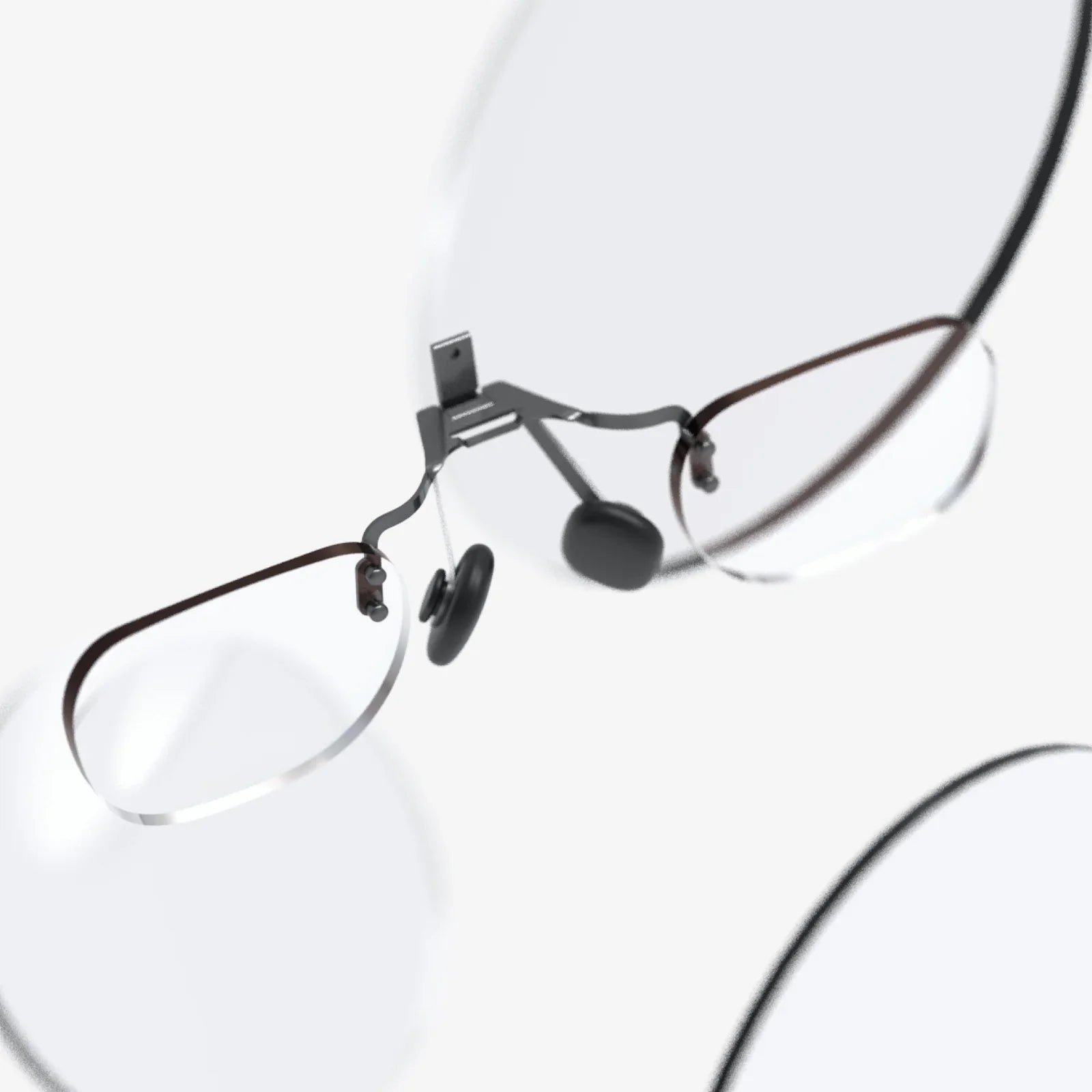
Imagine a world where digital information doesn't just live on your screen but is seamlessly woven into the fabric of your physical environment, enhancing everything from complex machinery repairs to the simple act of trying on a new pair of glasses. This is not a glimpse into a distant sci-fi future; it is the present-day reality for forward-thinking businesses leveraging Augmented Reality (AR). This transformative technology is breaking down the barriers between the digital and physical realms, creating a powerful new layer of interactive data that is revolutionizing operations, supercharging employee training, and creating deeply immersive customer experiences. The business world is on the cusp of a new industrial revolution, and AR is its catalyst.
The Foundation: Understanding Augmented Reality
At its core, Augmented Reality is a technology that superimposes computer-generated images, sounds, and other sensory enhancements onto a user's real-world view. Unlike Virtual Reality (VR), which creates a completely artificial environment, AR uses the existing environment and overlays new information on top of it. This is typically achieved through devices like smartphones, tablets, smart glasses, and heads-up displays (HUDs). The magic of AR lies in its ability to contextualize information, placing it exactly where and when it is needed most. This contextual overlay transforms abstract data into tangible, interactive insights, making it an incredibly potent tool for enterprise applications.
The technological stack enabling AR experiences is complex and multifaceted. It involves sophisticated computer vision algorithms that understand and map the physical space, robust rendering engines to generate high-fidelity digital objects in real-time, and powerful processors to handle the immense computational load. Advancements in simultaneous localization and mapping (SLAM) allow devices to understand their position relative to the world around them, while object recognition software can identify specific items, from industrial parts to retail products, triggering relevant digital interactions. This convergence of hardware and software has finally moved AR out of the realm of novelty and into the sphere of practical, scalable business utility.
Transforming Internal Operations and Workforce Empowerment
One of the most significant impacts of AR is happening behind the scenes, within the internal operations of companies across the globe. Enterprises are deploying AR to solve age-old problems of efficiency, accuracy, and knowledge transfer.
Revolutionizing Training and Onboarding
Traditional training methods often involve thick manuals, lengthy videos, and shadowing experienced colleagues—processes that are time-consuming, costly, and difficult to scale. AR is fundamentally changing this paradigm. New employees can wear AR glasses to receive step-by-step visual instructions overlaid directly onto the equipment they are learning to operate. For a technician assembling a complex engine, digital arrows can point to the exact bolt that needs tightening, and a virtual display can show the precise torque setting. This hands-on, guided learning accelerates proficiency, drastically reduces errors, and ensures that institutional knowledge is captured and standardized, rather than residing solely in the minds of veteran staff.
Enhancing Complex Assembly and Manufacturing
On the factory floor, AR is becoming an indispensable tool for complex assembly and quality control. Workers can see digital schematics projected onto their workstations, highlighting the correct placement of components and wiring. This not only speeds up the assembly process but also virtually eliminates misassembly. Furthermore, during quality assurance checks, inspectors can use AR to compare a finished product against a perfect digital twin, with the system automatically flagging any discrepancies in real-time. This level of precision ensures consistently high quality and reduces waste and rework.
Supercharging Remote Assistance and Maintenance
Perhaps one of the most compelling use cases is in remote expert assistance. When a field technician encounters a malfunctioning piece of equipment they cannot fix, they can use AR-enabled glasses or a tablet to initiate a video call with a specialist located thousands of miles away. The expert can see exactly what the technician sees and can annotate the live video feed with arrows, notes, and diagrams, literally drawing the solution onto the real world. This "see-what-I-see" capability allows for first-time fixes, slashes travel costs for experts, and minimizes equipment downtime, which is often the most expensive factor in maintenance operations.
Redefining the Customer Experience and Sales Process
Beyond internal operations, AR is creating powerful new avenues for customer engagement, marketing, and sales. It allows businesses to bridge the gap between the digital and physical shopping experiences, offering unprecedented levels of interaction and personalization.
"Try Before You Buy" and Visualizations
The furniture and home decor industry has been an early adopter of this application. Customers can now use their smartphone cameras to place true-to-scale 3D models of sofas, tables, and lamps directly into their living rooms. They can walk around the virtual furniture, see how it fits with their existing decor, and make confident purchasing decisions without the guesswork. This application extends to fashion, allowing virtual try-ons of glasses, watches, and even clothing, reducing return rates and increasing customer satisfaction. In the automotive sector, buyers can configure a car's color and trim and then use AR to project a life-sized model into their driveway.
Interactive Marketing and Immersive Storytelling
Marketing campaigns are no longer confined to static posters or video ads. AR transforms traditional marketing materials into interactive portals. A product package can come to life with a simple scan from a phone, playing a video demonstrating the product's features, showing its inner workings, or offering a gamified experience that builds brand loyalty. This creates a memorable and shareable interaction that deepens the emotional connection between the consumer and the brand, moving beyond passive observation to active participation.
Data-Driven Retail and In-Store Navigation
Inside physical retail stores, AR can enhance the shopping journey. Customers could point their phone at a product shelf and instantly see personalized information overlays, such as customer reviews, nutritional information, or comparable products. AR wayfinding apps can guide shoppers through large stores to find the exact items on their list, improving the customer experience and increasing basket size. For the business, this interaction generates a treasure trove of data on customer behavior and product interaction, providing insights that were previously impossible to gather.
Overcoming Implementation Challenges
Despite its immense potential, the widespread adoption of AR in business is not without its hurdles. Successfully integrating AR requires careful consideration of several key challenges.
Technological Infrastructure: High-quality, enterprise-grade AR requires robust connectivity, significant processing power, and reliable hardware. Businesses must invest in the right devices (whether BYOD—Bring Your Own Device—or company-issued smart glasses) and ensure their network infrastructure can support the data transmission.
Content Creation and Management: The digital content that powers AR experiences—the 3D models, animations, and instructions—must be created, updated, and managed. This requires new skills in 3D modeling and AR content development and a content management system that can push updates to devices in the field.
User Experience (UX) Design: Poorly designed AR experiences can be confusing and frustrating. The UX must be intuitive, providing information that is helpful without being overwhelming. The digital overlays must be contextually relevant and add genuine value to the task at hand.
Cost and Return on Investment (ROI): Initial development and deployment can be expensive. Businesses must identify clear use cases with a strong potential for ROI, whether through reduced training time, lower error rates, decreased downtime, or increased sales conversions, to justify the investment.
Privacy and Security: AR devices, especially those with cameras and sensors, collect vast amounts of environmental data. Companies must establish clear policies on data usage, storage, and privacy to protect both their own operational data and the privacy of their employees and customers.
The Future is Overlaid: What Lies Ahead
The evolution of AR technology is rapid and continuous. We are moving towards increasingly lightweight and powerful wearable devices, with improvements in battery life, field of view, and display resolution. The integration of Artificial Intelligence (AI) with AR will be particularly transformative, enabling systems to not only display information but also to understand the context at a deeper level and make intelligent recommendations. The concept of the "digital twin"—a virtual, dynamic replica of a physical asset or system—will become central to AR, allowing for sophisticated simulation, predictive maintenance, and operational planning. As 5G networks roll out, they will provide the low-latency, high-bandwidth connectivity required for complex, cloud-rendered AR experiences to be streamed seamlessly to any device.
The businesses that will thrive in the coming decade are those that begin to view the physical world not as a separate entity from the digital, but as a canvas to be enhanced. Augmented Reality is the brush that will paint this new reality. It is moving from a niche tool to a central component of enterprise software platforms, fundamentally reshaping how work is done, how products are sold, and how value is delivered. The imperative for leaders today is not to ask if AR will impact their industry, but to start exploring where and how its powerful capabilities can be harnessed to build a more efficient, engaging, and intelligent future. The convergence of the real and the digital is already here, and it is waiting to be leveraged.
Share:
Can You Play VR With Glasses? The Ultimate Guide to Virtual Reality and Eyewear
AR Smartglasses The Future of Computing is on Your Face