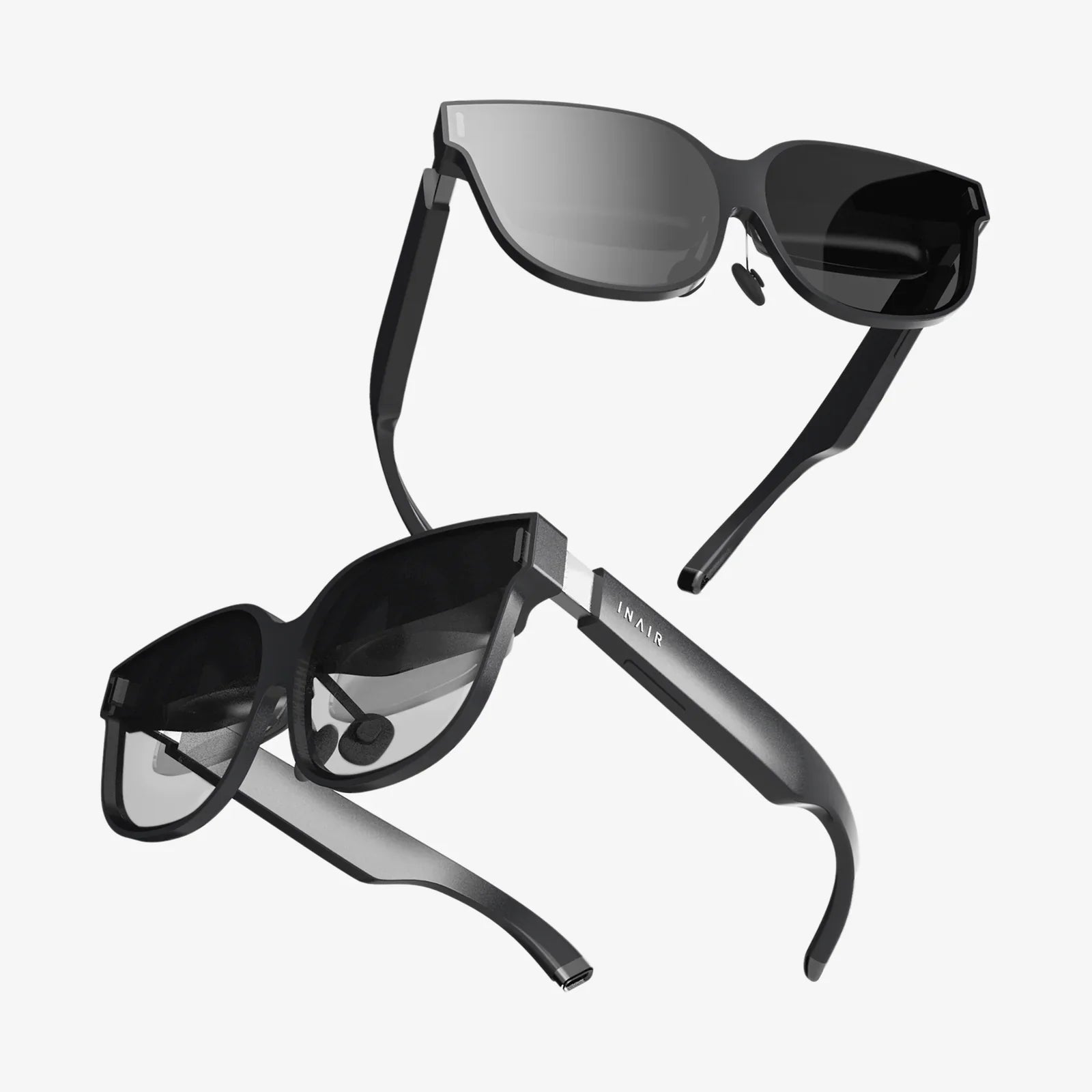
Imagine a world where digital information doesn't just live on a screen but is seamlessly woven into the fabric of your physical reality, accessible with a glance, a gesture, or a simple voice command. This is the promise of augmented reality, a technological revolution that is already underway, and it is all made possible by the rapidly evolving ecosystem of AR supported devices. This isn't a distant sci-fi fantasy; it's happening right now, powered by hardware that ranges from the ubiquitous smartphone to sophisticated head-mounted displays, all designed to augment your perception of the world. The gateway to this enhanced existence is not a single piece of magic but a diverse and powerful array of tools, each with its own strengths, and understanding them is key to unlocking the future.
The Core Technology Stack: What Powers an AR Device?
Before diving into the types of devices, it's crucial to understand the common technological threads that unite them. AR supported devices are not defined by a single component but by a sophisticated symphony of hardware working in concert.
Sensors: The Eyes and Ears
At the heart of any AR experience is environmental understanding. This is achieved through a suite of advanced sensors. High-resolution cameras capture the live video feed of the user's surroundings. Depth sensors, often using technologies like LiDAR (Light Detection and Ranging) or structured light, project and measure thousands of invisible points to create a precise 3D map of the environment. This map allows digital objects to understand the geometry of a room, occlude correctly behind real-world objects, and sit stably on a surface. Simultaneous Localization and Mapping (SLAM) algorithms use this sensor data to track the device's position in space in real-time, ensuring the digital overlay doesn't drift or jitter.
Processors: The Brain
The immense data stream from these sensors requires immense computational power. A powerful System-on-a-Chip (SoC) with a dedicated Graphics Processing Unit (GPU) and, increasingly, a Neural Processing Unit (NPU) is essential. The GPU renders complex 3D graphics at high frame rates, while the NPU accelerates machine learning tasks like object recognition, gesture tracking, and spatial analysis. This onboard processing is critical for low-latency experiences, where any delay between your movement and the AR display can cause discomfort or break immersion.
Displays: The Canvas
This is how the digital magic is presented to your eyes. Different AR devices use different display technologies. Many utilize optical see-through displays, where miniature projectors or waveguides beam light directly into the user's eyes, overlaying graphics onto the real world without blocking it. Others, particularly smartphone-based AR, use video see-through, where the real world is captured by cameras and then combined with digital elements on a standard screen. The key challenge is achieving high brightness, resolution, and a wide field of view to make virtual objects appear solid and believable.
Connectivity and Controls: The Interaction Layer
Finally, AR devices require robust connectivity, like Wi-Fi 6 and 5G, for cloud processing and sharing experiences. They also feature innovative control schemes beyond the touchscreen, including voice assistants, hand-tracking cameras that interpret gestures, and controllers with haptic feedback for a more tangible sense of interaction with digital content.
The Democratized Gateway: Smartphones and Tablets
The most significant and accessible category of AR supported devices is the one already in billions of pockets: the smartphone. By leveraging their high-quality cameras, powerful processors, and inertial measurement units (IMUs), modern smartphones have become potent AR platforms. This accessibility has been the primary driver for widespread AR adoption, allowing users to experience everything from interactive gaming and furniture placement to educational tools without purchasing specialized hardware. Mobile AR operates primarily through video see-through; the camera feed is the window, and the screen is the canvas. While this method can be incredibly effective, it has limitations, such as draining battery life quickly and requiring the user to hold up the device, which is not a hands-free or immersive experience. Nonetheless, it serves as the crucial on-ramp, familiarizing the mass market with AR concepts and fueling developer innovation.
The Immersive Frontier: Standalone AR Headsets and Smart Glasses
This category represents the purest form of the AR vision: untethered, wearable computers for your face. These devices integrate all the necessary components—sensors, processors, batteries, and displays—into a single head-worn unit. They are designed for prolonged use and offer a truly hands-free experience, overlaying information directly into the user's field of view. This form factor is rapidly gaining traction in enterprise and industrial settings, where it provides immense value. Technicians can see schematic diagrams overlaid on complex machinery they are repairing, warehouse workers can receive visual picking and packing instructions without looking down at a scanner, and surgeons can access patient vitals and imaging data without turning away from the operating table. The consumer market for these glasses is also developing, with newer generations focusing on a smaller, lighter, and more socially acceptable form factor that resembles traditional eyewear.
The Specialized Powerhouses: Tethered and PC-VR Systems
Sitting at the high-end of the spectrum are systems that trade portability for raw power. These AR supported devices, often referred to as Mixed Reality headsets, are typically tethered to a powerful personal computer or a dedicated processing unit. This connection provides them with dramatically more graphical and computational resources than a standalone device can muster. The result is incredibly detailed, complex, and stable AR experiences used for advanced professional applications. Architects and engineers walk clients through full-scale, photorealistic 3D models of unbuilt structures, car designers evaluate virtual prototypes placed on real clay models, and military personnel train in highly realistic simulated environments. The tether limits mobility but unlocks a level of visual fidelity and interaction complexity that is currently unmatched by mobile or standalone solutions.
Beyond Sight: The Expanding Universe of AR Hardware
The definition of an AR supported device is expanding beyond headsets and glasses. The ecosystem includes peripherals that enhance or enable AR experiences. Wearable haptic feedback gloves provide a sense of touch, allowing users to feel the shape and texture of a virtual object they are manipulating. Spatial anchors and QR codes placed in the physical world act as triggers and calibration points for persistent AR content. Even devices like smart speakers and displays can serve as anchors for audio AR or control hubs for more immersive experiences. This illustrates that the AR hardware landscape is not monolithic but a connected web of devices each playing a specialized role in blending the digital and physical.
Transforming Industries: The Practical Application of AR Hardware
The true value of this technology is revealed in its practical applications, which are already transforming major sectors of the global economy.
Healthcare and Medicine
AR supported devices are revolutionizing medical training and practice. Medical students can practice complex procedures on detailed holographic anatomy models, reducing risk and improving learning outcomes. Surgeons use AR navigation systems to visualize the precise location of tumors or blood vessels beneath the skin's surface during operations, increasing accuracy and improving patient safety. These devices also assist in vein visualization for easier injections and provide remote expert guidance, allowing a specialist to see what a frontline medic sees and offer visual annotations in real-time.
Manufacturing, Engineering, and Design
In industrial settings, AR is a powerhouse for efficiency and accuracy. Assembly line workers receive step-by-step digital instructions overlaid directly on the product components, reducing errors and training time. Designers and engineers can collaborate in real-time on 3D holographic models, making changes and iterations faster than ever before. Field service technicians can access manuals and diagnostic data hands-free while repairing equipment, and remote experts can see their view and provide guidance through AR annotations, drastically reducing downtime and travel costs.
Retail and E-Commerce
AR is fundamentally changing how consumers shop. Using their smartphones or tablets, customers can visualize how a piece of furniture would look and fit in their living room, how a new shade of paint would transform a wall, or how a pair of glasses would look on their face before making a purchase. This "try before you buy" capability reduces uncertainty and product returns while increasing consumer confidence and engagement, bridging the gap between online convenience and in-store assurance.
Education and Training
AR turns abstract concepts into tangible, interactive experiences. History students can witness historical events unfold in their classroom, biology students can explore a life-sized, beating holographic heart, and mechanics-in-training can practice on virtual engines. This immersive form of learning improves knowledge retention, engagement, and understanding by moving beyond textbooks and static images into dynamic, interactive 3D space.
Challenges and The Road Ahead
Despite the incredible progress, the journey towards perfect, ubiquitous AR is fraught with challenges that hardware engineers are racing to solve. The social acceptance of wearing conspicuous technology in public remains a significant barrier. Battery life continues to be a constraint, as powering all these advanced components is incredibly demanding. Perhaps the most significant hurdles are technical: achieving a wide field of view that matches human vision, creating displays bright enough to work in daylight, and ensuring all-day comfort in a form factor that looks like ordinary glasses. The future of AR supported devices lies in overcoming these obstacles. We are moving towards smarter, context-aware AI that understands our intentions, smaller and more efficient components, and eventually, contact lens displays or neural interfaces that could make the hardware itself invisible. The convergence of 5G/6G connectivity, edge computing, and advanced AI will offload processing and enable shared, persistent AR experiences that multiple people can see and interact with simultaneously, creating a truly shared augmented layer on top of our reality.
The devices we hold, wear, and interact with are the fundamental bridge between our analog present and a digitally-augmented future. From the smartphone that introduced millions to the concept to the specialized headsets transforming entire industries, this hardware is the tangible manifestation of a profound shift in computing. It promises a world not of isolated screens, but of an integrated digital-physical existence where information is contextual, intuitive, and instantly accessible. The evolution of these tools will continue to accelerate, shrinking in size and growing in capability until they become as commonplace and indispensable as the smartphone is today, forever changing how we work, learn, play, and connect with the world around us.