


- by wangfred
AR Technology Definition: A Comprehensive Guide to the Digital Overlay on Reality
- by wangfred
Imagine a world where digital information doesn’t just live on a screen but is seamlessly woven into the fabric of your reality, enhancing everything you see, do, and experience. This is the captivating promise of Augmented Reality, a technology rapidly transitioning from science fiction to an integral part of our daily lives. Understanding the AR technology definition is your first step into this transformative landscape, where the line between the physical and digital worlds beautifully blurs.
At its most fundamental level, the AR technology definition is the integration of digital information—be it images, sounds, text, or 3D models—with the user's environment in real-time. Unlike Virtual Reality (VR), which creates a completely artificial digital environment, AR uses the existing environment and overlays new information on top of it. The key differentiator is that AR enhances one's current perception of reality rather than replacing it entirely.
This enhancement is not a static overlay like a heads-up display (HUD) in a fighter jet. True AR is interactive and registered in three dimensions to the real world. This means the digital content doesn’t just float arbitrarily in your field of view; it is anchored to specific objects, locations, or surfaces. A virtual character might sit convincingly on your real coffee table, or navigation arrows might appear to be painted on the road ahead of you, guiding your way. This precise alignment is what makes the experience feel magical and immersive, transforming a passive view into an interactive interface.
To fulfill the promise of its definition, any functional AR system relies on a sophisticated synergy of hardware and software components. Breaking down this technological stack reveals the engineering marvel behind the magic.
These are the eyes of the AR device. The primary camera captures the live video feed of the user's surroundings. Depth sensors, such as time-of-flight (ToF) cameras or structured light systems, measure the distance to objects, creating a 3D map of the environment. Other sensors, including accelerometers, gyroscopes, and magnetometers (often grouped as an Inertial Measurement Unit or IMU), track the device's precise position, orientation, and movement in space. This combination of visual and motion data is crucial for understanding the world.
The raw data from the sensors is meaningless without significant computational power. The processor is the brain, performing complex tasks in milliseconds. It runs simultaneous localization and mapping (SLAM) algorithms, which use the sensor data to construct a map of the unknown environment while simultaneously tracking the device's location within that map. It also handles the rendering of the digital graphics, ensuring they are perspective-correct and appear solid within the scene.
This is the component that finally presents the augmented view to the user. Display technologies vary widely:
This is the intelligence that orchestrates everything. The software includes the operating system, the AR software development kits (SDKs) that provide developers with tools like motion tracking, environmental understanding, and light estimation, and the actual applications themselves. Advanced computer vision algorithms analyze the camera feed to recognize objects, detect planes (like floors and walls), and understand lighting conditions to make virtual objects cast believable shadows.
Within the broad AR technology definition, there are different methods for anchoring digital content, primarily categorized by their use of triggers.
This was one of the earliest forms of AR. It relies on a specific visual object—a "marker"—to trigger the display of digital content. This marker is typically a distinct black-and-white pattern (like a QR code) or a specific image. The device's camera scans the environment, and when it recognizes the pre-defined marker, it overlays the associated digital model or information exactly onto that spot. This method is highly reliable and precise but requires prior setup and for the marker to be visible in the camera's view.
This is the more advanced and flexible form of AR, which aligns more closely with the ideal definition. It uses GPS, digital compasses, and SLAM to place content based on the user's location or the geometry of the environment, without needing a physical marker. This allows for experiences like seeing historical facts pop up when you point your device at a monument or placing virtual furniture in your living room to see how it fits. Markerless AR can be further broken down:
The power of AR lies not in its novelty but in its utility. The AR technology definition comes to life through its profound applications that are solving real-world problems and creating new opportunities.
AR is fundamentally changing how consumers shop. Virtual try-on applications allow users to see how glasses, makeup, or clothes look on them from their own homes. Furniture retailers enable customers to place true-to-scale 3D models of sofas, tables, and decor into their actual living space to visualize fit and style before purchasing, drastically reducing product returns and increasing consumer confidence.
In industrial settings, AR is a powerful tool for efficiency and accuracy. Technicians wearing AR glasses can see digital schematics and repair instructions overlaid directly onto the physical machinery they are fixing, guiding them through complex procedures hands-free. This improves speed, reduces errors, and enhances training for new employees. Designers and engineers can use AR to visualize and interact with full-scale 3D prototypes long before physical models are built.
The applications in medicine are life-changing. Surgeons can use AR headsets to see critical patient data, like heart rate or a 3D model of a tumor, superimposed directly into their field of view during an operation without looking away. Medical students can practice procedures on detailed holographic anatomy models. AR can even assist nurses in finding veins more easily for injections.
AR brings learning to life. Instead of reading about ancient Rome, students can walk through a digitally reconstructed Colosseum on their tablets. Complex scientific concepts, from planetary orbits to molecular structures, can be visualized in 3D, making them intuitive and engaging. This interactive, experiential learning boosts comprehension and retention.
AR is set to replace the traditional map. Instead of looking down at a phone, users can simply hold up their device and see arrows and directions overlaid on the live view of the street in front of them. In museums, pointing a device at an exhibit can pull up rich historical context and videos. Tourists can explore a city and see labels and information about restaurants, landmarks, and their history floating in their line of sight.
The current AR technology definition is merely a snapshot in time; the field is evolving at a breathtaking pace. The future points towards even more seamless and powerful integration.
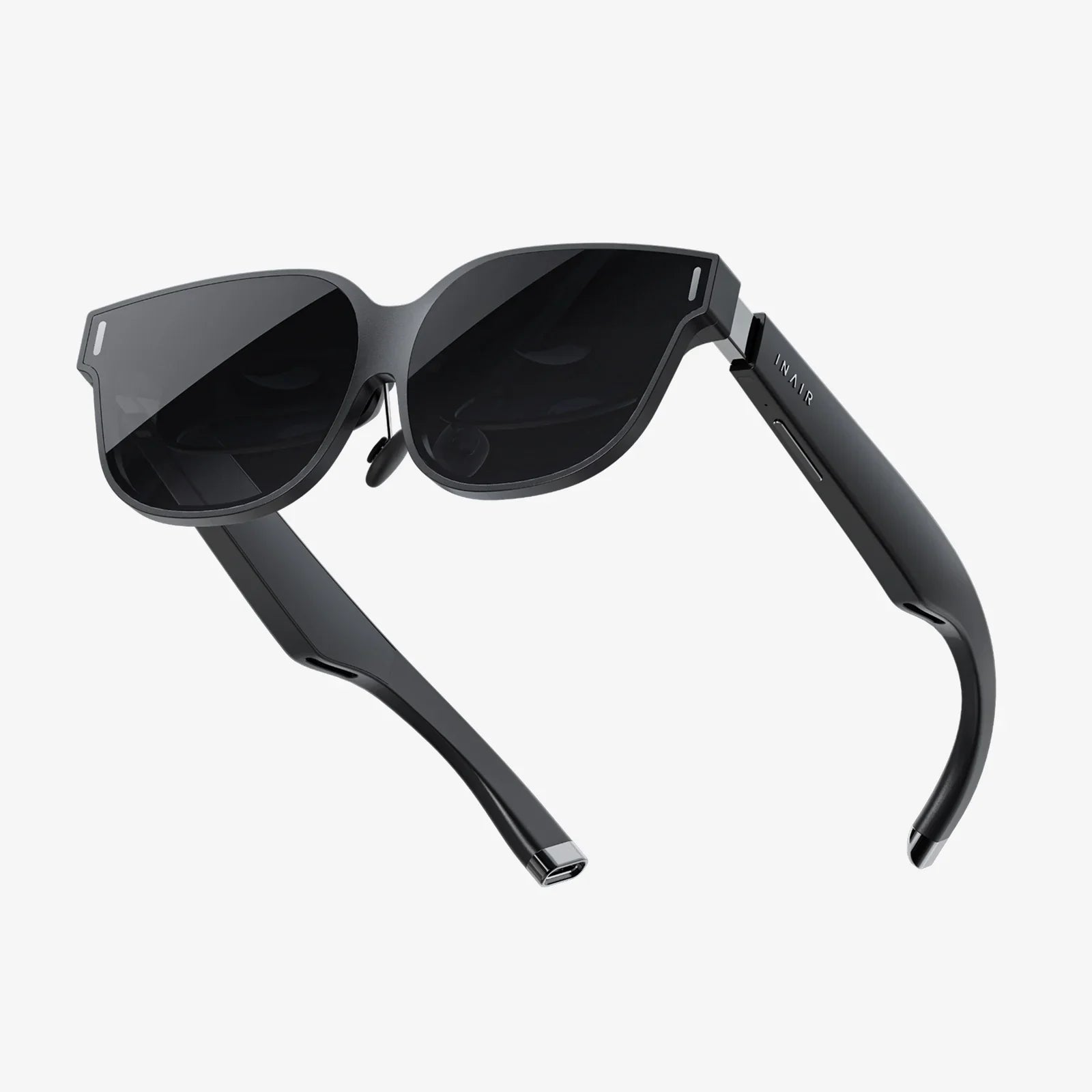
The next major leap is the development of true AR glasses—lightweight, stylish, and powerful enough to be worn all day. These devices will move AR from a deliberate app-based experience to a constant, ambient companion, providing contextual information exactly when and where you need it. The evolution towards a spatial computing paradigm will see our environment itself become the interface, with digital information and controls available on every surface.
Advancements in AI will make AR systems more perceptive and predictive. They will not only understand the geometry of a room but also the semantics—knowing a flat surface is a desk and that a cup is likely to be placed on it. The convergence of AR with 5G and edge computing will offload heavy processing to the cloud, enabling incredibly complex and photorealistic AR experiences on smaller devices.
As the technology matures, it will inevitably raise important questions about data privacy, digital addiction, and the ethics of a world where the digital and physical are inextricably linked. Establishing clear norms and regulations will be as crucial as the technological advancements themselves.
The journey from a simple definition to a world-altering technology is already underway. This digital overlay is no longer a futuristic concept but a tangible tool reshaping how we work, learn, play, and connect. The potential is limited only by our imagination, promising a future where our reality is not replaced, but richly, usefully, and wonderfully augmented.
Share:
Glasses Hardware The Unsung Hero of Vision and Style
Interactive Digital Experience Examples That Are Redefining Engagement