


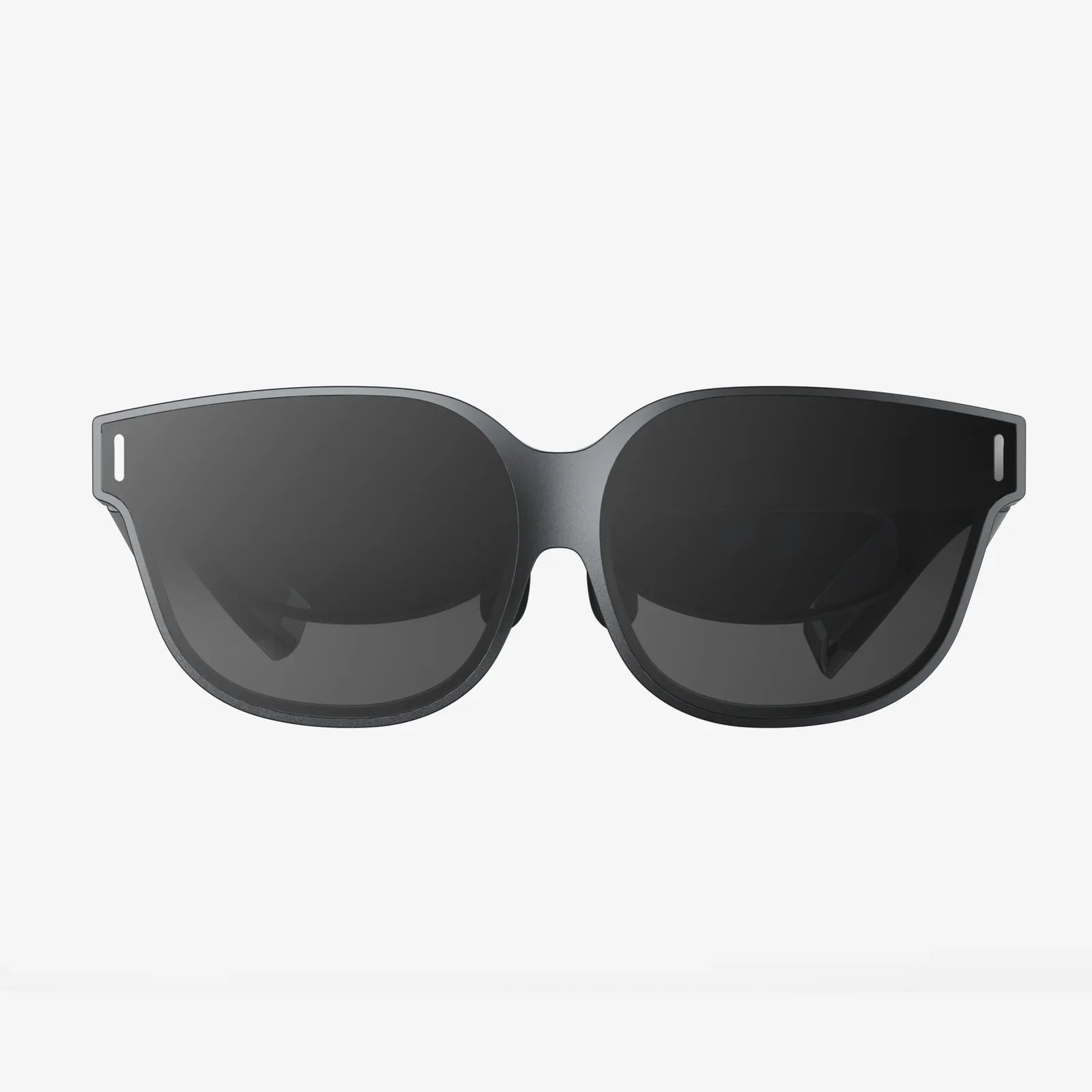
Imagine a world where digital information doesn’t live on a screen in your hand, but is seamlessly woven into the very fabric of your reality. Where instructions for repairing a complex engine hover over the machinery itself, where historical figures narrate their stories as you walk through ancient ruins, and where a virtual dragon lands on your kitchen table for a child’s playdate. This is the promise, and increasingly the reality, of AR technology goggles—a device not meant to distract you from the world, but to enhance your perception of it. This isn't just another gadget; it's a portal to a new layer of existence, and it's arriving faster than most people realize.
Beyond the Hype: Defining the True Nature of AR Goggles
To understand the revolution, we must first define the tool. Augmented Reality (AR) goggles are wearable, head-mounted displays that superimpose computer-generated perceptual information onto the user's view of the physical world. Unlike their close cousin, Virtual Reality (VR) headsets, which completely immerse the user in a digital environment, AR goggles are designed for transparency and interaction with the real world. They are, in essence, an attempt to build an invisible computer—one that provides context, data, and digital assets exactly when and where you need them, without the friction of pulling out a device.
The core magic lies in their sophisticated sensor suite and display technology. Advanced cameras, LiDAR scanners, and depth sensors constantly map the user’s environment, understanding the geometry of a room, the texture of surfaces, and the position of objects in real-time. This spatial map allows the digital content to behave as if it is physically present, occluding behind real objects and maintaining its position as the user moves. Meanwhile, micro-display systems, often using waveguides or holographic optical elements, project high-resolution images directly into the user’s field of vision, creating the illusion that pixels are part of the natural world.
The Architectural Marvel: Deconstructing the Goggles
The seamless experience belies a complex architectural marvel packed into a wearable form factor. Several key components work in concert:
- Sensing and Tracking: This is the foundation of spatial awareness. A combination of inertial measurement units (IMUs), outward-facing cameras, and time-of-flight sensors track the user's head movements (rotational and positional) with extreme precision, ensuring digital overlays remain stable and locked in place.
- Processing Power: The raw data from the sensors is immense. Onboard processors, often leveraging specialized chips for computer vision and machine learning, must process this data instantaneously to understand the environment and render the appropriate graphics without latency, which is crucial to preventing user discomfort.
- Display Systems: This is the window to the augmented world. Technologies like OLED microdisplays project light into optical combiners—thin, transparent pieces of glass or plastic that reflect the digital image into the user's eye while allowing light from the real world to pass through. The challenge is achieving a wide field of view, high brightness for outdoor use, and maintaining a small, socially acceptable form factor.
- Connectivity: While some processing happens on-device, many complex tasks, especially those involving cloud-based AI, require high-bandwidth, low-latency connections like 5G to stream rich, dynamic content seamlessly.
Transforming the Professional Landscape: From the Factory Floor to the Operating Room
The most immediate and impactful applications of AR goggles are emerging in enterprise and industrial settings, where they are solving real-world problems and delivering a clear return on investment.
On the factory floor, technicians wearing AR goggles can see digital work instructions overlaid directly onto the assembly line. A complex wiring diagram is projected onto the specific panel being worked on, with animated arrows guiding each connection. This reduces errors, drastically shortens training time for new employees, and allows experts to remotely guide on-site workers by literally seeing what they see and annotating their field of view. This concept of "see-what-I-see" remote assistance is revolutionizing field service, architecture, and construction, enabling a single expert to support a global workforce.
In healthcare, the stakes are even higher. Surgeons can use AR goggles to visualize critical patient data—like heart rate or blood pressure—without looking away from the operating field. More advanced applications can overlay 3D reconstructions from CT or MRI scans directly onto the patient's body, acting as an X-ray vision tool to guide incisions and improve surgical precision. Medical students can practice procedures on hyper-realistic virtual patients, and physical therapists can guide patients through exercises with perfect digital form demonstrations.
Redefining Social Connection and Consumer Experience
Beyond the workplace, AR goggles promise to reshape the very nature of social interaction and daily life. The concept of the "metaverse" is often discussed in the context of VR, but its most accessible and practical entry point may be through AR.
Imagine a future where distance is no longer a barrier to shared experiences. With AR goggles, a family living across different continents could all see the same virtual board game on their physical table, interacting with digital pieces and each other's holographic avatars as if they were in the same room. Friends could watch a movie together, with a shared virtual screen appearing on the wall of their respective living rooms. This persistent, shared digital layer over reality could create a new paradigm for communication that is far more immersive and personal than a video call.
For consumers, retail will be transformed. Instead of guessing how a new sofa will look in your living room, you could place a photorealistic 3D model of it in your actual space, walking around it and seeing how the light hits it at different times of day. Trying on clothes, experimenting with makeup, or test-driving a virtual car could all be done from the comfort of home. Navigation will evolve from looking at a blue dot on a phone to seeing giant, floating arrows on the sidewalk guiding you to your destination, with contextual information about local businesses popping up as you pass them.
The Invisible Hurdles: Challenges on the Path to Ubiquity
For all their potential, AR goggles face significant technological and societal hurdles before they can achieve mass adoption. The current generation of devices often struggles with a trade-off between performance and form factor. High-powered units can be bulky, heavy, and have limited battery life, while sleeker, more socially acceptable designs often compromise on computing power and field of view.
Perhaps the most daunting challenges are not technical, but human. The concept of pervasive computing raises profound questions about privacy and data security. These devices, by their very nature, are constantly capturing video and audio of their surroundings. Who owns this data? How is it stored and used? The potential for unauthorized surveillance and data harvesting is a serious concern that must be addressed with robust ethical frameworks and transparent policies.
Furthermore, the social etiquette of wearing computers on our faces is uncharted territory. Will it be considered rude to wear goggles during a conversation? How do we prevent a new digital divide between those who can afford this enhanced reality and those who cannot? And finally, there is the risk of experiential overload—a world where we are constantly bombarded with digital notifications and information, potentially eroding our ability to be present in the un-augmented moment.
A Glimpse into the Future: The Ultimate Goal of Ambient Computing
The long-term vision for AR technology goggles is not to create a device we constantly interact with, but to create a technology that fades into the background—a concept known as ambient computing. The ideal pair of AR goggles would be as lightweight and unobtrusive as a standard pair of eyeglasses, with all-day battery life and a display so crisp and perfectly integrated that the user forgets it's there. The interaction would move beyond controllers and hand gestures to more intuitive interfaces like subtle voice commands and eventually, direct neural interfaces.
In this future, the goggles would act as a personalized AI assistant that perceives the world with you. It could remind you of a person's name as you greet them, translate a foreign street sign instantly, warn you of a potential hazard on the road ahead, or help you find your lost keys by remembering where you last had them. The technology would become a seamless extension of our own cognition, amplifying our memory, our perception, and our abilities without ever demanding our conscious attention.
The journey from clunky prototype to a seamless pair of intelligent glasses is a marathon, not a sprint. It will require breakthroughs in battery chemistry, display physics, and miniaturization. But the trajectory is clear. We are moving from a world of personal computing, to mobile computing, and now to spatial computing. AR technology goggles are the vehicle for this next great shift, offering a fundamentally new way to interact with both the digital and physical realms. They hold the potential to enhance human potential in ways we are only beginning to imagine, making us smarter, more connected, and more capable. The future is not on a screen; it's all around us, waiting to be unlocked.
Share:
Latest AR VR MR Technology Developments 2025: The Blurring Lines Between Realities
Latest AR VR MR Technology Developments 2025: The Blurring Lines Between Realities