


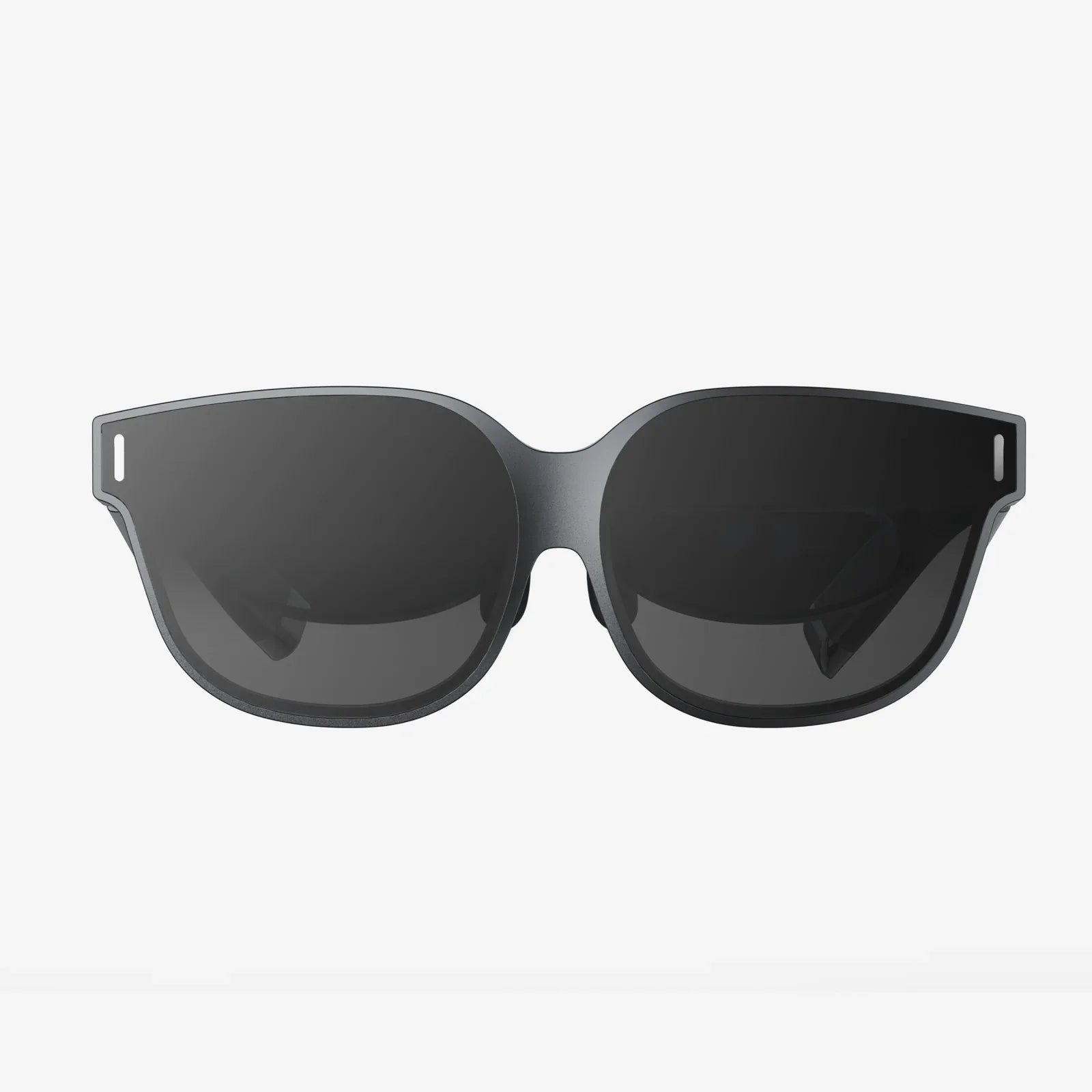
Imagine a world where your reality is not a fixed, immutable canvas but a dynamic, interactive layer cake of information, instruction, and imagination. A world where a complex engine schematic floats before your eyes as you repair it, where a master surgeon guides your hands from across the globe as a translucent overlay, and where your living room transforms into a strategic war room for a tabletop game, complete with holographic armies clashing. This is not a distant science fiction fantasy; it is the nascent reality being forged today by advanced augmented reality technology, with devices like the HoloLens headset leading the charge into this new spatial frontier. We stand at the precipice of a fundamental shift in how we compute, communicate, and comprehend the world around us.
The Architectural Leap: From Pixels to Perception
At its core, AR technology like that found in the HoloLens represents a monumental leap from traditional 2D screen-based computing into the realm of 3D spatial computing. It's a shift from looking at information to looking through it, with data and digital objects occupying real space. This is achieved through a sophisticated symphony of sensors, optics, and software. Multiple environment-understanding cameras continuously scan the room, mapping surfaces, tracking objects, and building a precise 3D mesh of the physical world. This digital twin becomes the stage upon which holograms are placed and persist, locked in place even as you move around them.
Meanwhile, inertial measurement units (IMUs) track the precise movement and orientation of your head, ensuring the digital overlay remains stable and aligned with your perspective. The magic of the display itself lies in its use of transparent lenses. Unlike Virtual Reality (VR), which blocks out the world and replaces it with a digital one, AR allows you to see your actual environment. Projectors beam light into these lenses, which then shape it into the holographic images that appear to inhabit your world. This combination of detailed environmental mapping and precise head tracking is what creates the convincing and breathtaking illusion of digital objects sharing your physical reality.
Beyond Novelty: The Enterprise Revolution
While consumer applications capture the public's imagination, the most profound and immediate impact of this technology is occurring within enterprise and industry. Here, AR is not a toy; it is a powerful tool solving real-world problems, enhancing efficiency, and revolutionizing workflows.
Transforming Design and Manufacturing
In manufacturing and industrial design, the ability to visualize a full-scale 3D prototype in the real world is revolutionary. Engineers and designers can walk around a holographic model of a new component, inspecting it from every angle and identifying potential design flaws long before any physical materials are used. This accelerates the design iteration process dramatically and reduces costly prototyping. On the factory floor, assembly line workers can receive holographic instructions overlaid directly onto the machinery they are assembling, reducing errors and training time. A complex wiring diagram can be projected onto the chassis, showing exactly where each cable should be routed, turning a tedious manual task into an intuitive, guided experience.
Revolutionizing Healthcare and Medicine
The medical field is poised for a transformation through AR. Medical students can practice procedures on interactive, life-sized holographic human anatomies, peeling back layers of muscle, bone, and tissue without ever touching a cadaver. Surgeons can use AR to visualize critical patient data—such as MRI or CT scans—as a 3D hologram floating above the operating table, providing an internal roadmap during complex procedures. This enhances precision and can significantly improve patient outcomes. Furthermore, remote collaboration allows an expert surgeon to guide a less experienced colleague through a procedure by drawing annotations and pointers directly into their field of view, democratizing access to expert knowledge.
Empowering Remote Assistance and Collaboration
AR shatters the limitations of geography for collaboration. A field technician repairing a malfunctioning wind turbine can share their live view with a specialist located thousands of miles away. The expert can then annotate the technician's real-world view with arrows, circles, and notes, literally drawing the solution into existence before their eyes. This "see what I see" paradigm resolves issues faster, reduces travel costs, and ensures that expertise is available anywhere, anytime. This same principle applies to architecture, where clients can walk through a holographic rendering of a building before the foundation is even poured, or to education, where students can interact with historical artifacts or molecular structures as if they were physically present.
The Human Factor: A New Paradigm for Interaction
The true genius of a device like HoloLens lies not just in its ability to display holograms, but in its intuitive method of interaction. It moves beyond the mouse, keyboard, and even touchscreen to a more natural, human-centric interface. Gaze tracking allows the system to know where you are looking. Gesture recognition, particularly the foundational "air tap," lets you select, grab, and manipulate digital objects as if they were really there. Voice commands provide a hands-free way to navigate menus, launch applications, or control elements within an experience.
This multimodal input system creates a sense of direct manipulation that feels magical. You don't command a computer to move a file; you simply reach out and move the holographic file yourself. This reduces cognitive load and makes the technology accessible, allowing users to focus on their task rather than on learning a complex new interface. It represents a significant step towards technology that adapts to humans, rather than forcing humans to adapt to technology.
Navigating the Challenges: The Path to Ubiquity
For all its promise, the path to making this technology a seamless part of everyday life is fraught with challenges. The form factor of current devices, while impressive, still needs to evolve towards a sleeker, lighter, and more socially acceptable form, akin to a pair of everyday eyeglasses. This requires breakthroughs in waveguide technology, battery life, and processing power miniaturization.
Furthermore, the concept of the "killer app" remains elusive for the consumer space. While enterprise has clear use cases, compelling mass-market applications that justify the investment for the average person are still emerging. The ecosystem of apps and experiences needs to grow in both depth and breadth. Perhaps the most significant hurdles are societal and ethical. Widespread use of always-on cameras raises serious questions about privacy and data security in both public and private spaces. The digital divide could be exacerbated if such powerful technology remains accessible only to wealthy corporations or individuals. Establishing clear norms and regulations for this new medium will be crucial for its healthy integration into society.
A Glimpse into the Holographic Future
Looking ahead, the trajectory of AR technology points towards a future where digital information is seamlessly interwoven with our physical perception. We are moving towards a world where persistent holographic anchors—your virtual monitors, your personalized art, your notification center—will be waiting for you in your physical space, instantly available the moment you don your glasses. The lines between working remotely and being physically present will continue to blur as photorealistic holographic avatars of colleagues join meetings, able to gesture and interact with shared 3D models.
This technology will fundamentally change how we learn, giving every student the ability to conduct experiments in physics or history that were previously impossible. It will transform how we shop, allowing us to see how a new sofa truly fits in our living room before we buy it. It will create new forms of art and entertainment that blend narrative with our environment. The physical world will become a customizable shell, a framework for our digital lives.
The journey of AR, pioneered by devices like HoloLens, is ultimately about expanding human potential. It’s about augmenting our intellect, our skills, and our creativity by blending the infinite possibilities of the digital realm with the tangible reality we inhabit. It is a tool that promises to make us more knowledgeable, more efficient, and more connected to both information and to each other.
The screen that has constrained our digital interactions for decades is beginning to fade away, and the world itself is becoming our interface. The age of holographic computing is dawning, and it invites us all to reimagine what is possible, to step into a world where our reality is only the beginning. This isn't just an evolution of the device in your pocket; it's a revolution in the very fabric of human experience, and it's happening right before our eyes.
Share:
Statistic of Success of AR Technology: Quantifying the Augmented Revolution
Price of Augmented Reality Glasses - The Ultimate Investment Guide