


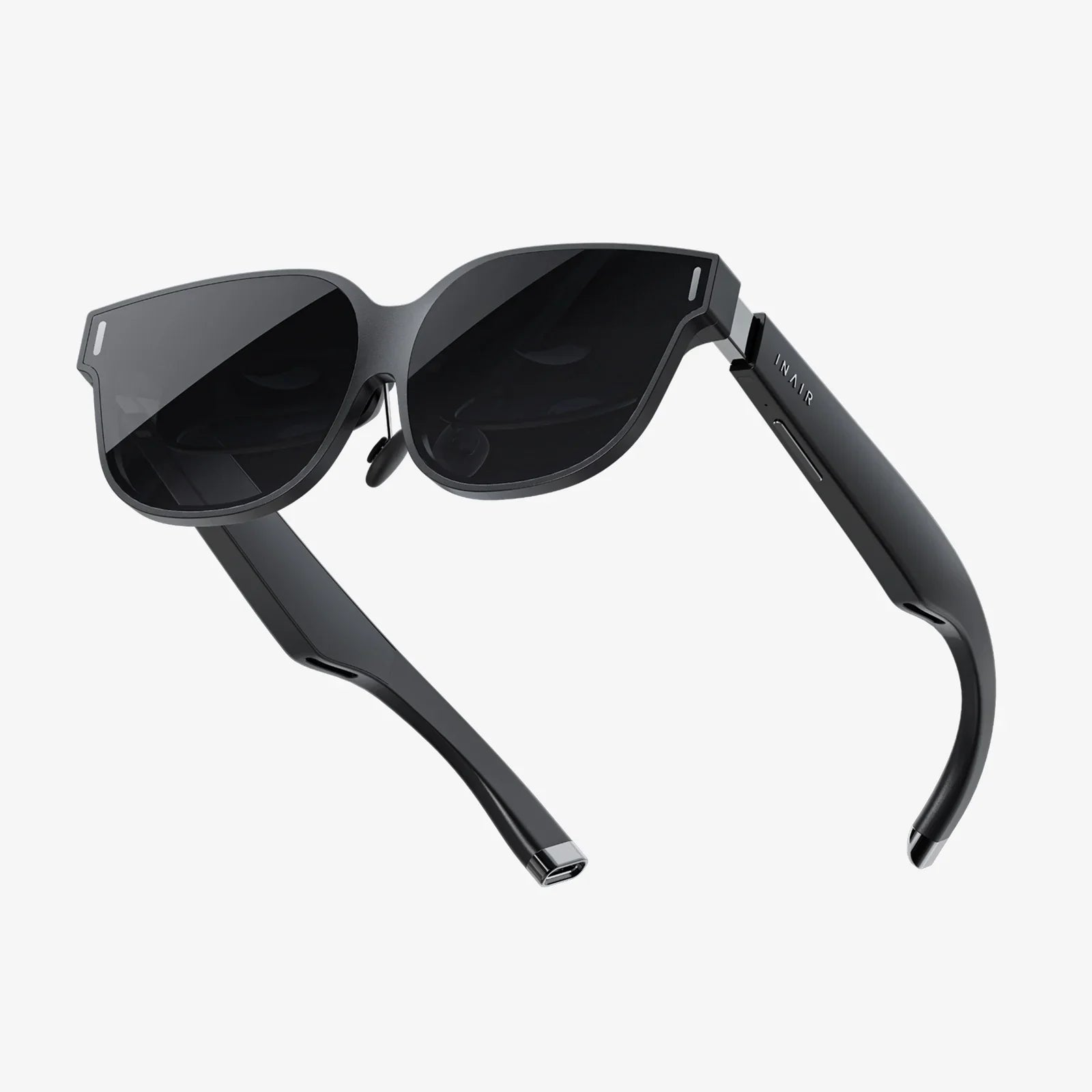
Imagine a world where digital information seamlessly overlays your physical reality, where instructions float over a complex machine you're repairing, or where a historical figure guides you through a museum exhibit visible only to you. This is the promise of augmented reality glasses, a technology poised to revolutionize how we work, learn, and play. But for many, the first and most pressing question isn't about the capabilities—it's about the cost. The price of augmented reality glasses can range from the surprisingly affordable to the astronomically high, creating a landscape that is both exciting and confusing for the potential consumer. Understanding what you're really paying for is the key to unlocking this transformative technology.
Deconstructing the Cost: It's More Than Just Lenses and a Frame
To the uninitiated, a pair of AR glasses might look like a slightly bulkier version of standard eyewear. However, beneath the surface lies a symphony of advanced technology, and each component carries a significant cost. The final price of augmented reality glasses is a composite of extensive research and development, cutting-edge hardware, sophisticated software, and precision manufacturing.
The core technological marvel is the optical display system. This is not a simple screen. Systems like waveguide displays, micro-LED projectors, and holographic optical elements are miniature feats of engineering. They must project a bright, high-resolution, and visually comfortable image onto the user's retina, all while allowing the real world to be seen clearly. Developing and miniaturizing these systems is incredibly expensive, a cost that is inevitably passed on to the early adopter.
Equally critical is the suite of sensors and cameras. For AR glasses to understand and interact with the environment, they are packed with high-resolution RGB cameras, depth sensors (like time-of-flight sensors), inertial measurement units (IMUs) for tracking head movement, and sometimes LiDAR scanners. These components must be incredibly small, power-efficient, and accurate, representing a substantial portion of the bill of materials.
Then there's the processing power. Some glasses act as a "dumb" display, offloading the intense computational work to a connected smartphone or computer. Others are "standalone" devices, housing their own powerful processors, memory, and storage—essentially a full computer on your face. This distinction is a primary driver behind the price of augmented reality glasses, with standalone models commanding a premium for their onboard intelligence and untethered freedom.
Finally, factors like battery life and design play a huge role. A long-lasting battery that doesn't add excessive weight is a costly challenge. Furthermore, consumers expect a device worn on the face to be lightweight, comfortable, and even stylish. Achieving this aesthetic while housing powerful technology requires custom materials and design innovation, further adding to the development and production costs.
The Spectrum of AR: From Entry-Level to Enterprise Powerhouse
The market for AR glasses is not monolithic. It is segmented into distinct tiers, each with vastly different target users, capabilities, and, consequently, price points.
Consumer-Grade Smart Glasses (The Affordable Gateway)
At the most accessible end of the spectrum are consumer smart glasses. These devices often prioritize a specific, limited function over full-blown AR. They might display notifications, control music, or take photos and videos. Their AR capabilities are typically more about overlaying basic information like navigation arrows or simple text rather than complex 3D models.
The price of augmented reality glasses in this category is deliberately kept low to attract a broad audience. This is achieved by using less advanced display technology, relying on a smartphone for processing, and minimizing the number of sensors. They are a fantastic entry point for those curious about the technology but not yet ready for a four-figure investment.
Standalone AR Glasses (The True All-in-One Experience)
This category represents what most people envision when they think of AR glasses: a self-contained unit that offers a rich, immersive experience without wires. These devices are technological powerhouses, incorporating high-resolution displays, a full array of sensors, powerful processors, and a robust operating system designed for spatial computing.
The development and component costs for these devices are extraordinarily high. They are pushing the boundaries of what's possible in miniaturization, thermal management, and power efficiency. Consequently, the price of augmented reality glasses in this tier reflects their position as cutting-edge technology, often placing them in a premium price bracket comparable to high-end laptops. They are aimed at developers, tech enthusiasts, and professionals who need the most capable tool available.
Enterprise and Industrial AR Solutions (The Professional Workhorse)
Far from the consumer market exists the world of enterprise AR. Here, the price of augmented reality glasses is viewed not as a consumer expense but as a capital investment with a clear return on investment (ROI). These devices are built for tough, mission-critical environments like factory floors, surgical theaters, and field service repair.
They are engineered for durability, often featuring reinforced frames, safety certifications, and designs that can be worn with industrial helmets. Their displays are brighter to be visible in direct sunlight, and their software is tailored for specific business workflows, such as remote expert assistance, digital work instructions, or complex 3D visualization. This ruggedization, specialization, and inclusion of enterprise-grade support and software licenses result in a price tag that can be several times higher than even the most advanced consumer models. For a large corporation, however, the ability to reduce errors, speed up training, and improve efficiency can justify the high initial cost many times over.
Beyond the Sticker Price: The Hidden Costs of Ownership
When evaluating the price of augmented reality glasses, it's crucial to look beyond the initial purchase. The true total cost of ownership can include several other factors.
- Software and Subscriptions: While basic apps may be free, professional-grade software for design, remote collaboration, or training often requires a monthly or annual subscription. For enterprise users, this can be a significant ongoing expense.
- Accessories: Additional batteries for all-day use, prescription lens inserts, specialized carrying cases, and docking stations are common add-ons that can add hundreds of dollars to the overall cost.
- Insurance and Repairs: Given their complexity and fragility, repairing AR glasses can be costly. Insurance plans or extended warranties are a wise consideration for expensive models.
- Developer Fees: For those looking to create custom AR experiences, development platforms and app store fees can contribute to the overall investment.
The Future of AR Pricing: A Trajectory Towards Affordability
History has a predictable pattern with transformative technologies. The first mobile phones, personal computers, and high-definition televisions were all prohibitively expensive for the average household. Through economies of scale, technological refinement, and increased competition, their prices plummeted while their capabilities soared. The price of augmented reality glasses is expected to follow this exact same curve.
Several factors will drive this change. As component manufacturers ramp up production of micro-displays and sensors specifically for AR, their costs will fall. Advances in manufacturing will allow for more efficient assembly. Most importantly, as the addressable market grows from a niche of enthusiasts and enterprises to a mass consumer audience, companies will be able to spread their massive R&D costs across millions of units instead of thousands, dramatically lowering the per-unit price.
We are already seeing the early signs of this. The emergence of more capable "gateway" devices is bringing basic AR to more people. The intense competition among tech giants to define the next computing platform ensures that investment—and the pursuit of a competitive price point—will remain high. While truly advanced standalone glasses may remain a premium product for years to come, a future where a powerful AR experience is accessible to everyone is not a question of "if," but "when."
So, before you balk at the current price of augmented reality glasses, consider what you're truly evaluating: a nascent portal to a new way of interacting with information. The cost today reflects the immense ambition packed into a device meant to be worn on your face. Whether you're a developer building the future, an enterprise leader seeking a competitive edge, or simply a curious consumer, understanding the "why" behind the price tag is the first step in deciding if now is your time to step into the augmented world. The real question isn't about the initial investment, but about the value of being an early pioneer in the next great technological shift.
Share:
AR Technology HoloLens: Redefining Reality and the Future of Human Interaction
Smart Glasses Prescription Lens Compatibility: Your Complete Guide to Clear Vision and Cutting-Edge Tech