


Imagine a world where the digital and the physical are no longer separate realms, but a single, intertwined experience. This is the promise held within the vast and dynamic spectrum from Augmented Reality to Virtual Reality. This technological continuum is not just changing how we play games or filter our selfies; it is fundamentally reshaping industries, redefining human connection, and altering our very perception of reality itself. The journey from AR to VR is one of the most significant technological narratives of our time, and it's a story that is still being written.
Defining the Realities: More Than Just Acronyms
While often grouped under the umbrella of 'immersive technologies,' AR and VR represent two distinct points on a spectrum of experience. Understanding their core differences is essential to appreciating their unique applications and potential.
Augmented Reality (AR): The Enhanced World
Augmented Reality operates on a simple yet powerful principle: it overlays digital information onto the user's view of the real world. Instead of replacing your environment, it enhances it. Think of it as a digital layer on top of physical reality. Users typically experience AR through devices they already own, such as smartphones and tablets, or through specialized glasses. The key characteristic of AR is that it maintains a connection to the user's immediate surroundings. A classic example is using a smartphone to see how a new piece of furniture would look in your living room before you buy it. The room is real; the furniture is a digital projection placed within it.
Virtual Reality (VR): The Constructed World
Virtual Reality, in contrast, is an exercise in substitution. It completely replaces the user's real-world environment with a simulated, digital one. This is achieved by using a head-mounted display (HMD) that blocks out the physical world and immerses the user in a computer-generated landscape. This environment can be a realistic simulation of a place on Earth, a fantastical game world, or a abstract data visualization. The goal of VR is to create a sense of 'presence'—the convincing feeling of being somewhere else. This often involves not just visual and auditory immersion, but also motion tracking, allowing users to interact with and navigate through the virtual space.
The Technological Engine Room: How AR and VR Work
Both technologies are feats of modern engineering, combining advanced hardware and sophisticated software to create their illusions.
The Hardware of Illusion
For VR: The primary tool is the VR headset. Inside these devices are high-resolution displays placed very close to the user's eyes, with lenses that focus and reshape the image for each eye to create a stereoscopic 3D effect. Inside-out or outside-in tracking systems use cameras and sensors to monitor the user's head movements, updating the display in real-time to maintain the illusion as they look around. Hand controllers, often equipped with haptic feedback, translate real-world gestures into virtual actions. More advanced systems include treadmills for locomotion and gloves that provide touch sensation.
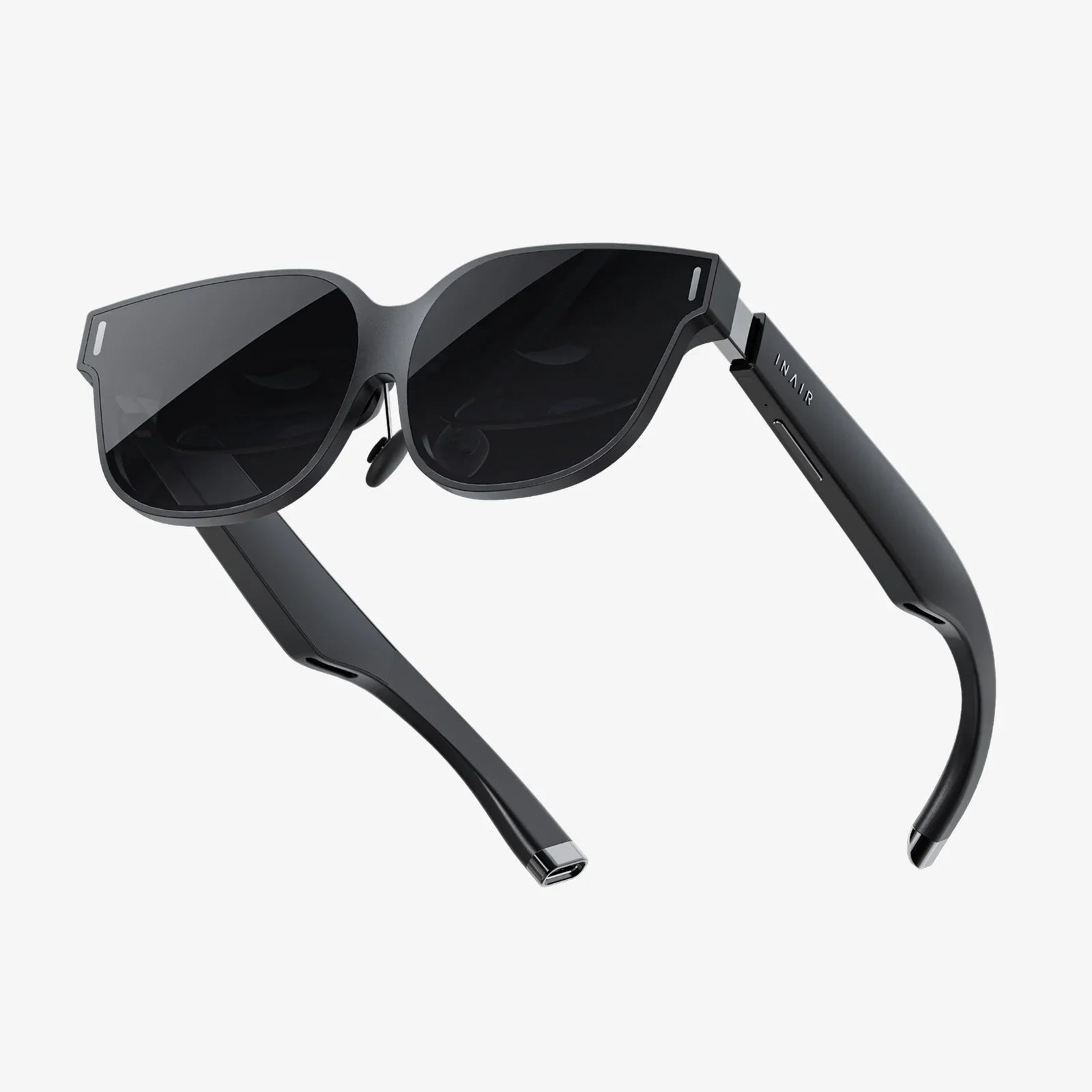
For AR: The hardware varies more widely. Smartphone AR uses the device's camera, GPS, and accelerometer to understand its position and orientation in the world before projecting digital objects onto the screen. Dedicated AR glasses are more complex, featuring transparent lenses (often waveguide displays) that project light directly into the user's eyes while allowing them to see the real world. These glasses also contain a suite of sensors, including depth-sensing cameras and LiDAR scanners, to map the environment and understand surfaces and depth for accurate digital object placement.
The Software That Breathes Life
The magic is orchestrated by powerful software development kits and game engines. These platforms provide the tools to create 3D assets, environments, and the logic that governs how users interact with them. A critical software component for both, but especially for AR, is simultaneous localization and mapping. SLAM algorithms allow a device to scan its surroundings, create a 3D map of the space, and understand its own position within that map in real-time. This is what allows a digital cartoon character to convincingly hide behind your real-world sofa. For VR, the software must also prioritize performance, maintaining a high and stable frame rate to prevent motion sickness and preserve the fragile sense of presence.
A World of Applications: Beyond Entertainment
While gaming and entertainment were the initial drivers, the applications for AR and VR now extend into nearly every professional field.
Revolutionizing Enterprise and Industry
This is where some of the most impactful use cases are emerging. AR is transforming field service and manufacturing. Technicians can wear glasses that overlay schematics, animation instructions, or video calls with remote experts directly onto the machinery they are repairing, drastically reducing errors and downtime. Warehouse workers can use AR to see optimal picking paths and item information, supercharging logistics. VR, meanwhile, is the ultimate tool for safe simulation. Surgeons can practice complex procedures on virtual patients, pilots can train for emergency scenarios, and construction workers can undergo safety training in hazardous virtual environments, all without any real-world risk. This allows for the creation of muscle memory and problem-solving skills in a consequence-free space.
Transforming Healthcare and Medicine
The medical field is embracing both ends of the spectrum. VR is being used for revolutionary therapeutic applications, such as exposure therapy for patients with PTSD or phobias, and for managing chronic pain by distracting the brain with immersive experiences. AR provides surgeons with a kind of 'X-ray vision,' projecting 3D reconstructions of a patient's anatomy from CT or MRI scans directly onto their body during operations, improving precision and outcomes.
Redefining Retail and Design
The 'try before you buy' concept has been supercharged. AR apps allow consumers to visualize products in their home at scale, from furniture and decor to new paint colors and appliances, reducing purchase uncertainty and returns. Car companies use VR to allow customers to take virtual test drives and explore every configuration of a vehicle long before it hits the showroom. Architects and interior designers use VR to create immersive walkthroughs of unbuilt spaces, enabling clients to experience and modify designs long before construction begins.
New Frontiers in Education and Collaboration
Immersive tech is breaking down the walls of the classroom and the office. Students can take a VR field trip to ancient Rome, explore the human bloodstream as a tiny cell, or manipulate complex molecular structures in 3D space. AR can bring textbook diagrams to life. For collaboration, VR meeting spaces allow distributed teams to feel like they are in the same room, interacting with 3D models and data visualizations in ways that are impossible on a flat screen. This concept of the 'metaverse' envisions a persistent virtual space for work, socializing, and commerce.
The Blurring Line: The Rise of Mixed Reality
The most exciting development is not AR or VR in isolation, but their convergence into a spectrum often referred to as Mixed Reality. MR is not just a midpoint; it's a seamless blend where physical and digital objects coexist and interact in real-time. A true MR experience might involve wearing a headset that can digitally occlude parts of your real world (making a real wall appear transparent to reveal a virtual object behind it) or allowing a virtual character to sit convincingly on your real-world couch. This requires even more advanced sensors and processing power but represents the ultimate goal: a fluid continuum where we can slide between a fully real, an augmented, and a fully virtual experience as needed.
Navigating the Challenges: The Path Forward
For all its promise, the path from AR to VR is not without significant obstacles that must be addressed for widespread adoption.
Technical Hurdles: For VR, achieving perfect visual fidelity, eliminating motion sickness, and enabling wireless freedom with all-day battery life are ongoing challenges. For AR, the holy grail is creating glasses that are socially acceptable—as lightweight, stylish, and low-power as regular eyeglasses. Both require massive advances in display technology, processing power, and battery efficiency.
The Social and Ethical Dimension: As these technologies become more pervasive, serious questions arise. How do we protect privacy when devices with always-on cameras and sensors are worn in public and private spaces? How do we prevent the creation of incredibly realistic and misleading deepfakes? Could widespread VR lead to greater social isolation? What are the psychological effects of long-term immersion? Establishing norms, regulations, and ethical frameworks is as important as the technological development itself.
Accessibility and the Digital Divide: High-end immersive technology remains expensive. Ensuring that the benefits of AR and VR are accessible to everyone, not just the wealthy, is crucial to preventing a new digital divide. This includes making experiences accessible to people with disabilities, ensuring that the virtual world is built for all.
The journey from AR to VR is a testament to human ingenuity, a relentless push to expand the boundaries of experience. It’s a spectrum that offers tools for unparalleled efficiency, deep empathy through simulated experiences, and entirely new forms of creativity and expression. The destination is not a choice between an augmented world or a virtual one, but the development of a flexible, powerful medium that will weave itself into the fabric of our daily lives, forever changing how we work, learn, connect, and see the world around us. The device that seamlessly merges your physical and digital life may not be on the market yet, but the path from AR to VR is leading us directly to its creation.
Share:
The Role of Augmented Reality in Business: Transforming Operations and Customer Engagement
AR VR Ideas: The Next Frontier of Digital Interaction and Immersive Experience