


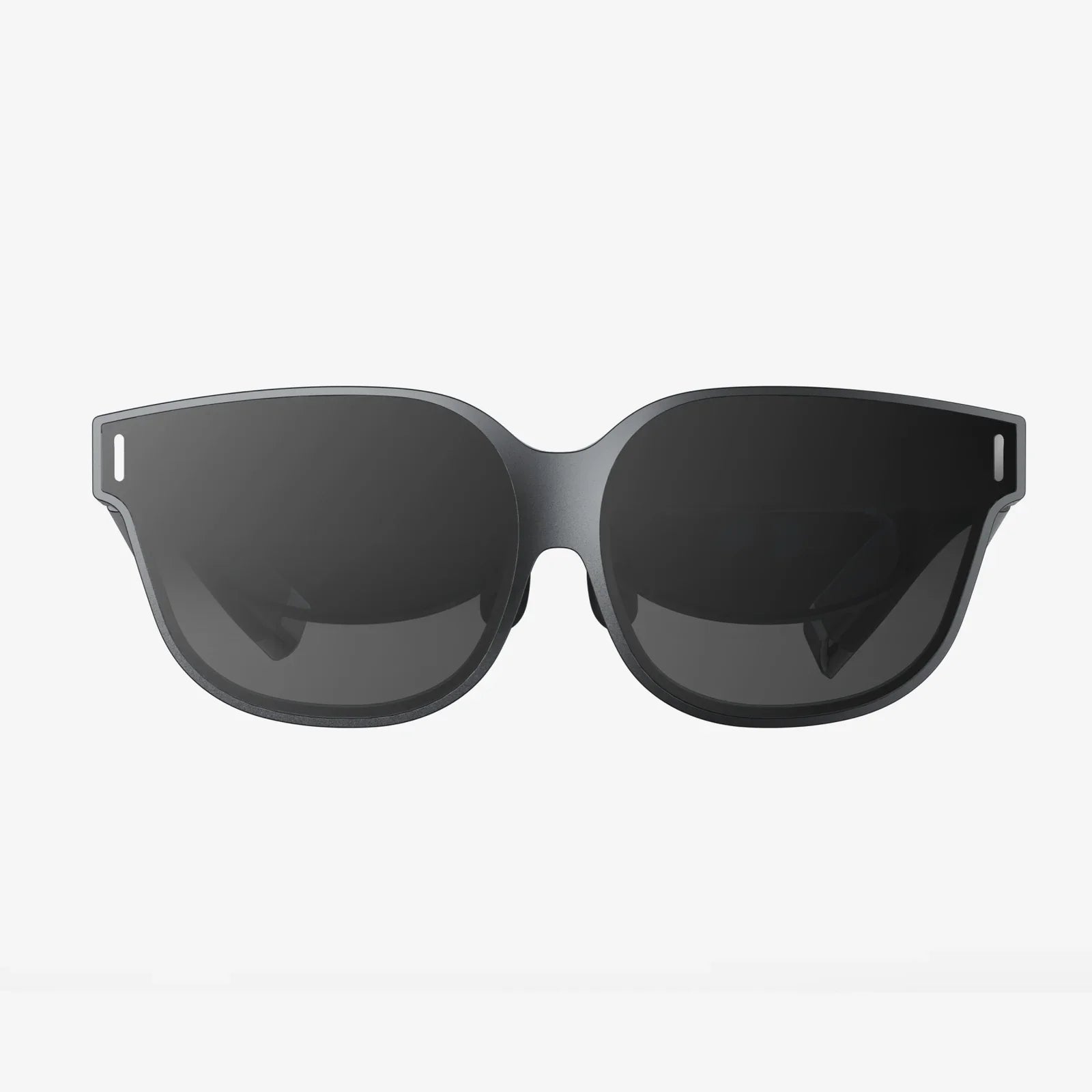
Imagine a world where the boundary between the digital and the physical dissolves entirely, where a surgeon in one country guides a complex procedure in another through a pair of transparent glasses, where a history student walks through a perfectly reconstructed ancient Rome, and where collaborating with a remote team feels as natural as sitting around the same table. This is not a distant science fiction fantasy; it is the imminent future being forged today by the powerful convergence of Augmented Reality (AR), Virtual Reality (VR), and the high-speed, low-latency connectivity of fifth-generation wireless technology (5G). This trifecta is unlocking capabilities that were previously constrained, promising to reshape every facet of our lives, from how we work and learn to how we connect and play.
The Individually Powerful Pillars
To understand the seismic impact of their union, we must first appreciate the unique strengths and limitations of each technology on its own.
Augmented Reality: Overlaying the Digital on the Physical
Augmented Reality enhances our real-world environment by superimposing digital information—images, data, 3D models—onto our field of view. Unlike VR, which seeks to replace reality, AR aims to supplement it. This can be experienced through smartphone screens, tablets, or, more powerfully, through specialized glasses or headsets. The value of AR lies in its contextuality; it provides information relevant to what you are looking at. For instance, a mechanic might see a highlighted arrow pointing to a faulty component simply by looking at an engine, or a shopper might see how a new sofa would look in their living room before making a purchase. However, for AR to be truly seamless and immersive, it requires a constant, high-bandwidth connection to stream complex models and process vast amounts of environmental data in real-time, a requirement that often strained previous network generations.
Virtual Reality: The Ultimate Escape
Virtual Reality is the technology of immersion. By wearing a headset that completely encompasses your vision and hearing, VR transports you to a fully digital, computer-generated environment. This has profound implications for entertainment, creating deeply engaging gaming and cinematic experiences. However, its potential extends far beyond. VR enables safe, realistic training simulations for pilots, surgeons, and first responders. It allows for virtual travel and tourism, letting people explore places they might never physically visit. The primary historical constraints of VR have been the need for powerful, often tethered, computing hardware to render complex, high-fidelity worlds, and the challenge of multi-user experiences suffering from latency issues, where even a slight delay in movement transmission can break immersion and cause discomfort.
5G: The Nervous System of the Future
Fifth-generation wireless technology, or 5G, is far more than just a faster version of 4G. It represents a fundamental leap in network capability, defined by three core pillars:
- Enhanced Mobile Broadband (eMBB): Significantly faster download and upload speeds, potentially reaching multi-gigabit per second rates, enabling the instant streaming of ultra-high-definition content.
- Ultra-Reliable Low-Latency Communications (URLLC): A dramatic reduction in latency, or lag, to mere milliseconds (1ms or less). This is critical for applications requiring real-time feedback, like remote control of machinery or collaborative design.
- Massive Machine-Type Communications (mMTC): The ability to connect a vast number of devices—up to a million per square kilometer—laying the groundwork for the Internet of Things (IoT) at an unprecedented scale.
It is this combination of high speed, incredibly low latency, and massive connectivity that acts as the essential catalyst, unlocking the true potential of AR and VR.
The Convergent Revolution: A Symbiotic Relationship
Individually, these technologies are innovative. Together, connected by 5G, they become revolutionary, solving each other's greatest weaknesses and amplifying their strengths.
Liberating AR and VR from Hardware Constraints
One of the most immediate impacts of 5G is the enablement of cloud-based rendering, often called cloud gaming or cloud streaming in the context of immersive media. Instead of relying on the processing power of the headset or the connected computer, the complex rendering of high-fidelity AR graphics and photorealistic VR environments is offloaded to powerful servers in the cloud. The resulting visual stream is then sent over the 5G network to the device. This has two transformative effects:
- Lightweight, Untethered Devices: Headsets and glasses no longer need to contain expensive, bulky, and heat-generating processors and batteries. They can become as lightweight and comfortable as everyday eyewear, making them suitable for all-day use and mass adoption.
- Constant Access to Infinite Computing Power: Users are no longer limited by the hardware they own. They can access experiences of unimaginable complexity because the rendering is handled by virtually limitless cloud computing resources, always ensuring the highest possible visual quality.
This shift is akin to moving from a dedicated DVD player to streaming Netflix; the content is no longer limited by your local hardware but is instead streamed on-demand from a vast, remote library.
Enabling Persistent and Shared Experiences
5G’s low latency is the key to multi-user synchronization and the concept of the persistent digital layer. In AR, this means that digital objects can be anchored to specific GPS coordinates and physical landmarks with high precision. You could leave a virtual note for a friend on a street corner, or a museum could place a virtual sculpture in its courtyard, visible to anyone with an AR device. This creates a shared digital landscape overlaid onto our world, often referred to as the "metaverse" or "spatial web."
In VR, URLLC ensures that when multiple users inhabit a virtual space, their movements and interactions are transmitted to each other with imperceptible delay. A handshake, a passed object, or a collaborative brushstroke on a virtual canvas feels natural and instantaneous, fostering a genuine sense of co-presence and overcoming the physical barriers of distance. This makes truly effective remote work and social interaction in VR a practical reality.
Transforming Industries and Redefining Practices
The practical applications of this technological convergence are already emerging across diverse sectors, promising unprecedented gains in efficiency, safety, and capability.
Healthcare: The Scalpel of Remote Expertise
The medical field stands to be profoundly transformed. Imagine a scenario where a world-renowned specialist can guide a complex surgical procedure in a remote field hospital without being physically present. Using AR glasses, the on-site surgeon sees critical patient data, anatomical overlays, and precise guidance directly in their field of view, while the remote expert sees the same perspective streamed in real-time over a 5G connection. The ultra-low latency is non-negotiable here; a delay could be catastrophic. Furthermore, medical training is being revolutionized with hyper-realistic VR simulations, allowing students to practice procedures countless times in a risk-free environment.
Manufacturing and Field Services: The Knowledge Layer
In complex industrial settings, AR powered by 5G is becoming an indispensable tool. A technician servicing a malfunctioning turbine can wear AR glasses that recognize the equipment and instantly overlay the relevant schematic diagrams, highlight the specific part that needs replacement, and provide animated step-by-step repair instructions. This "see-what-I-see" capability can also connect them to a remote expert who can annotate their live view to provide guidance, drastically reducing downtime, minimizing errors, and empowering less experienced workers to perform complex tasks.
Education and Training: The Immersive Classroom
The traditional classroom model is being upended. Instead of reading about ancient Egypt, students can take a virtual field trip, walking through the pyramids and seeing historical events unfold around them. Medical students can practice anatomy by exploring a life-sized, interactive 3D model of the human body. Trainee mechanics can learn to repair an engine by following AR instructions overlaid on the physical machinery. This experiential learning leads to dramatically improved knowledge retention and engagement. 5G ensures these rich, interactive experiences can be streamed simultaneously to every student in a classroom without buffering or lag.
Retail and Real Estate: Try Before You Buy, From Anywhere
The consumer experience is being personalized and dematerialized. In retail, AR apps allow customers to visualize products in their own home—from furniture and appliances to makeup and clothes—before making a purchase decision. In real estate, potential buyers can take immersive, interactive 3D tours of properties from across the globe, walking through rooms at their own pace as if they were physically there. This saves immense time and resources for both buyers and sellers and creates a far more informed purchasing process.
Remote Collaboration and the Future of Work
The concept of the office is evolving. With AR and VR connected by 5G, remote collaboration moves beyond video calls on a flat screen. Teams distributed across the globe can meet in a virtual boardroom, interact with 3D data models as if they were physical objects, and brainstorm on a virtual whiteboard that feels tangible. Architects and engineers can collaboratively walk through and modify a full-scale 3D rendering of a new building design before a single brick is laid. This level of collaboration preserves the nuance and spontaneity of in-person interaction, making remote work more effective and human-centric.
Navigating the Challenges on the Horizon
Despite the immense promise, the path to ubiquitous AR/VR/5G adoption is not without significant hurdles that must be addressed.
- Infrastructure and Access: The rollout of comprehensive 5G networks, particularly the millimeter-wave bands that enable the highest speeds and lowest latency, is an ongoing process concentrated in urban areas. Ensuring equitable access and avoiding a new digital divide between urban and rural communities is a critical challenge.
- Device Design and Comfort: While 5G enables lighter devices, creating AR glasses that are socially acceptable, comfortable for prolonged use, and provide all-day battery life remains a formidable engineering challenge. The goal is a device that feels as natural as wearing regular glasses.
- Content Creation and Standards: Building the immersive 3D content and experiences for this new medium requires new tools, skills, and, crucially, universal standards. Interoperability between different platforms and devices is essential for the shared, persistent digital layer to flourish.
- Privacy, Security, and Ethics: This convergence raises profound questions. AR devices with always-on cameras and sensors will collect unprecedented amounts of data about our lives and environments. Who owns this data? How is it secured? How do we prevent digital vandalism in the persistent AR layer? Establishing robust ethical frameworks and privacy-centric regulations is paramount to building trust and ensuring the technology benefits society.
A Glimpse into the Future
As we look ahead, the line between our digital and physical existences will continue to blur. The smartphone, a device we constantly look down to, may eventually be replaced by spatial computing interfaces we look through. The internet will evolve from something we browse on a screen to an environment we move through and interact with. This will give rise to new forms of art, storytelling, and social connection that we are only beginning to imagine.
The convergence of AR, VR, and 5G is more than a technological trend; it is the foundation for the next major computing platform. It represents a shift from interacting with technology to experiencing it within our lives. It promises to augment human capability, transcend physical limitations, and redefine the very fabric of how we connect with information, with the world around us, and ultimately, with each other. The future is not just about being connected; it's about being immersed in a seamlessly blended reality where distance is no longer a barrier and where our digital and physical selves finally converge.
We are standing at the precipice of a new reality, one where your surroundings become an interactive canvas and your connection to the digital world is as immediate and intuitive as turning your head. The tools to build this future are now here, and the only limit is our imagination. The next chapter of human experience is being written not on pages, but in the very space around us.
Share:
AR Glasses vs VR Glasses: The Ultimate Guide to Choosing Your Digital Reality
What Is AR and VR: A Deep Dive Into Immersive Technologies