


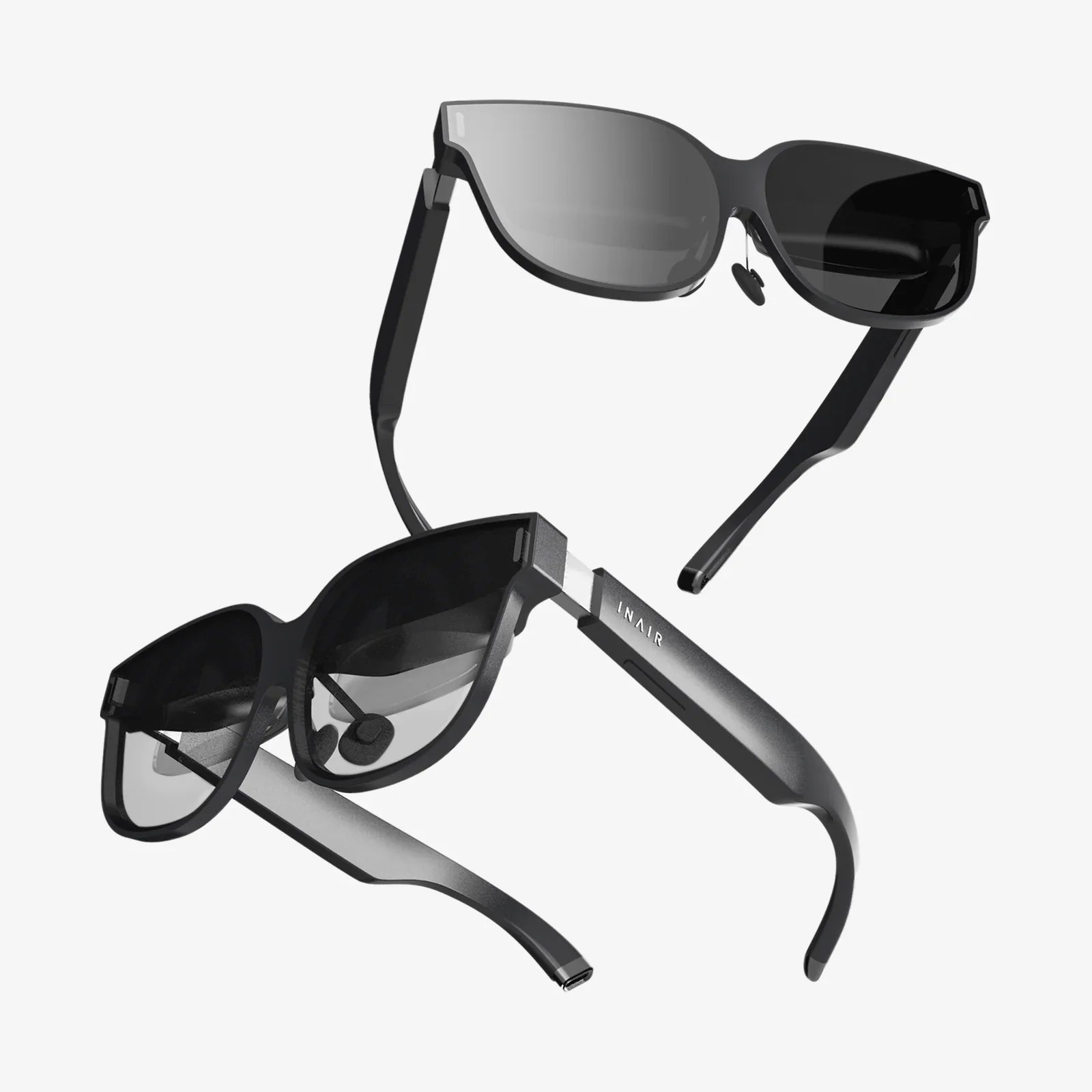
Imagine a world where the line between the digital and the physical blurs, where you can learn, play, and work in environments limited only by imagination. This is no longer the stuff of science fiction; it's the emerging reality powered by two transformative technologies: Augmented Reality and Virtual Reality. While often mentioned in the same breath, they offer distinctly different paths into the future of human-computer interaction.
Defining the Digital Divide: AR vs. VR
At their core, both AR and VR are immersive technologies, but they approach the concept from opposite directions. Understanding this fundamental distinction is the first step in appreciating their unique potentials and applications.
Virtual Reality (VR): The Complete Digital Escape
Virtual Reality is the technology of total immersion. It aims to shut out the physical world entirely and transport the user to a fully simulated, digital environment. Users typically wear a head-mounted display that covers their entire field of vision. This device presents computer-generated imagery (CGI) to their eyes, while built-in sensors track head movements, adjusting the visual perspective in real-time to create a convincing sense of being inside this digital space, a phenomenon known as presence.
The experience is often enhanced with spatial audio, which makes sounds appear to come from specific locations within the virtual world, and interactive controllers that allow users to reach out, grab, and manipulate virtual objects. The ultimate goal of VR is to make the user forget their physical surroundings and accept the digital reality as their own, even if just for a moment.
Augmented Reality (AR): Enhancing the World Around You
If VR is about replacement, Augmented Reality is about augmentation. AR overlays digital information—images, text, 3D models, animations—onto the user's view of their real-world environment. Instead of creating a new world, it enhances the existing one with a layer of interactive data.
Unlike VR, AR does not require a fully enclosed headset. It can be experienced through smartphones and tablets, which use their cameras to capture the real world and then display that video feed on the screen, augmented with digital elements. More advanced AR is delivered through transparent glasses or lenses that allow the user to see the real world directly, with digital projections superimposed onto their field of view. The key principle of AR is context; the digital content is directly tied to and interacts with the user's physical surroundings.
The Technological Engine Room
While their outcomes differ, AR and VR share a common foundation of sophisticated technology. Both rely on a complex interplay of hardware and software to create their illusions.
Sensors and Tracking: Knowing Where You Are
Precise tracking is the bedrock of immersion. Both systems use a suite of sensors to understand the user's position and movement in space.
- Inside-Out Tracking: Cameras on the device itself look at the surrounding environment to track its position relative to the room. This is common in modern standalone headsets.
- Outside-In Tracking: External sensors or base stations placed in the room track the position of the device and controllers. This method is often considered more precise but requires a dedicated space.
- Inertial Measurement Units (IMUs): These include gyroscopes, accelerometers, and magnetometers that measure the rotation, acceleration, and orientation of the headset.
AR systems add another layer: environmental understanding. They must map the physical world in real-time to place digital objects convincingly. This is achieved through simultaneous localization and mapping (SLAM) algorithms, which process camera data to create a 3D map of the environment and the device's position within it.
Displays: Windows to New Worlds
The display technology is where the two diverge most visibly.
VR headsets use two high-resolution screens (one for each eye) placed very close to the user's face, with lenses in between to focus the image and create a wide field of view. The goal is maximum pixel density and a high refresh rate (90Hz and above) to prevent motion sickness and create a smooth, believable world.
AR displays are more varied. Smartphone AR uses the device's standard screen. For glasses, the challenge is projecting an image onto a transparent lens. This is done using technologies like waveguides, which bend light into the user's eye, or micro-projectors that reflect images off the lens itself. The key challenge is achieving enough brightness for digital objects to be visible in various real-world lighting conditions.
Processing Power: The Brain Behind the Illusion
Rendering complex 3D environments in high fidelity at over 90 frames per second requires immense processing power. High-end VR systems often connect to a powerful external computer to handle this workload. Standalone headsets have all the necessary computing components—a System-on-a-Chip (SoC), RAM, and storage—built directly into the device, representing a marvel of miniaturization and efficiency.
AR processing needs are different but equally demanding. Instead of rendering entire worlds, the processor must handle complex computer vision tasks—constantly analyzing the camera feed to understand surfaces, lighting, and occlusion so digital objects can blend seamlessly into the real world.
A World of Applications: Beyond Gaming
While gaming and entertainment are the most visible applications, the true potential of AR and VR lies in their ability to revolutionize practical fields.
Transforming Education and Training
These technologies are creating unparalleled opportunities for experiential learning.
- VR for Immersive Training: Surgeons can practice complex procedures on virtual patients without risk. Mechanics can learn to repair jet engines by taking apart a virtual replica. Employees can be trained on dangerous machinery or safety protocols in a completely safe, virtual environment.
- AR for Interactive Learning: Students can point their tablet at a textbook diagram of the human heart and see a beating, interactive 3D model spring to life. History classes can walk through digitally reconstructed ancient ruins overlaid onto their school playground.
Revolutionizing Design and Manufacturing
In the industrial world, AR and VR are powerful tools for design and maintenance.
Automotive designers use VR to review full-scale 3D models of new car designs long before a physical prototype is built, saving millions of dollars. Architects and their clients can take virtual walkthroughs of unbuilt buildings to experience the space and make changes.
Field technicians using AR glasses can see schematics, instructions, or expert guidance overlaid directly onto the equipment they are repairing. Digital arrows can point to specific components, and warnings can highlight potential hazards, drastically improving efficiency and reducing errors.
Enhancing Healthcare and Therapy
The medical field is embracing these technologies for both treatment and therapy. VR is being used for exposure therapy, helping patients with phobias or PTSD confront their triggers in a controlled, safe virtual setting. It's also a powerful tool for pain management, distracting patients during painful procedures.
AR can assist surgeons by projecting critical information, such as the location of blood vessels or tumors, directly onto their field of view during an operation, effectively giving them X-ray vision.
The Synergy of Mixed Reality
The line between AR and VR is not always rigid. This spectrum is often referred to as the reality-virtuality continuum. At one end is the completely real environment, and at the other is a fully virtual one. In between lies Mixed Reality (MR).
MR is not just a buzzword; it represents the seamless blending of real and virtual worlds where physical and digital objects co-exist and interact in real-time. A true MR experience might involve seeing a virtual robot hide behind your real sofa, with the headset correctly occluding the robot when the sofa passes in front of it. This requires a deep understanding of the geometry and physics of the real world, making it the most technologically challenging—and potentially the most transformative—expression of these immersive technologies.
Challenges and The Road Ahead
Despite rapid advancement, significant hurdles remain before AR and VR become ubiquitous. For VR, issues of user comfort, such as motion sickness (cybersickness) and the social isolation of being cut off from one's surroundings, are active areas of research. The form factor of headsets needs to become smaller, lighter, and more socially acceptable.
For AR, the holy grail is a pair of stylish, lightweight glasses that can deliver high-fidelity graphics all day on a single charge—a goal that remains years away due to limitations in battery technology and display miniaturization. Both fields also grapple with critical questions around data privacy, security, and the ethical implications of persistent digital layers over our reality.
Yet, the trajectory is clear. The next evolution of computing is moving away from screens on our desks and toward interfaces that are integrated into our lives and environments. As the technology becomes more powerful, affordable, and accessible, AR and VR will cease to be niche curiosities and become fundamental tools, reshaping how we connect with information, with each other, and with the world itself. The journey into these new realities is just beginning, and it promises to be one of the most defining technological adventures of our time.
From revolutionizing how we master complex skills to offering new dimensions of entertainment and social connection, the promise of stepping into another layer of reality is an irresistible draw for innovators and users alike. The future is not just something we will watch on a screen; it's an experience we will step into and interact with, and understanding these tools is your first ticket into that new frontier.
Share:
AR VR 5G: The Trifecta Reshaping Reality and Redefining Human Connection
Augmented Reality Coaching: The Future of Personalized Skill Development is Here