


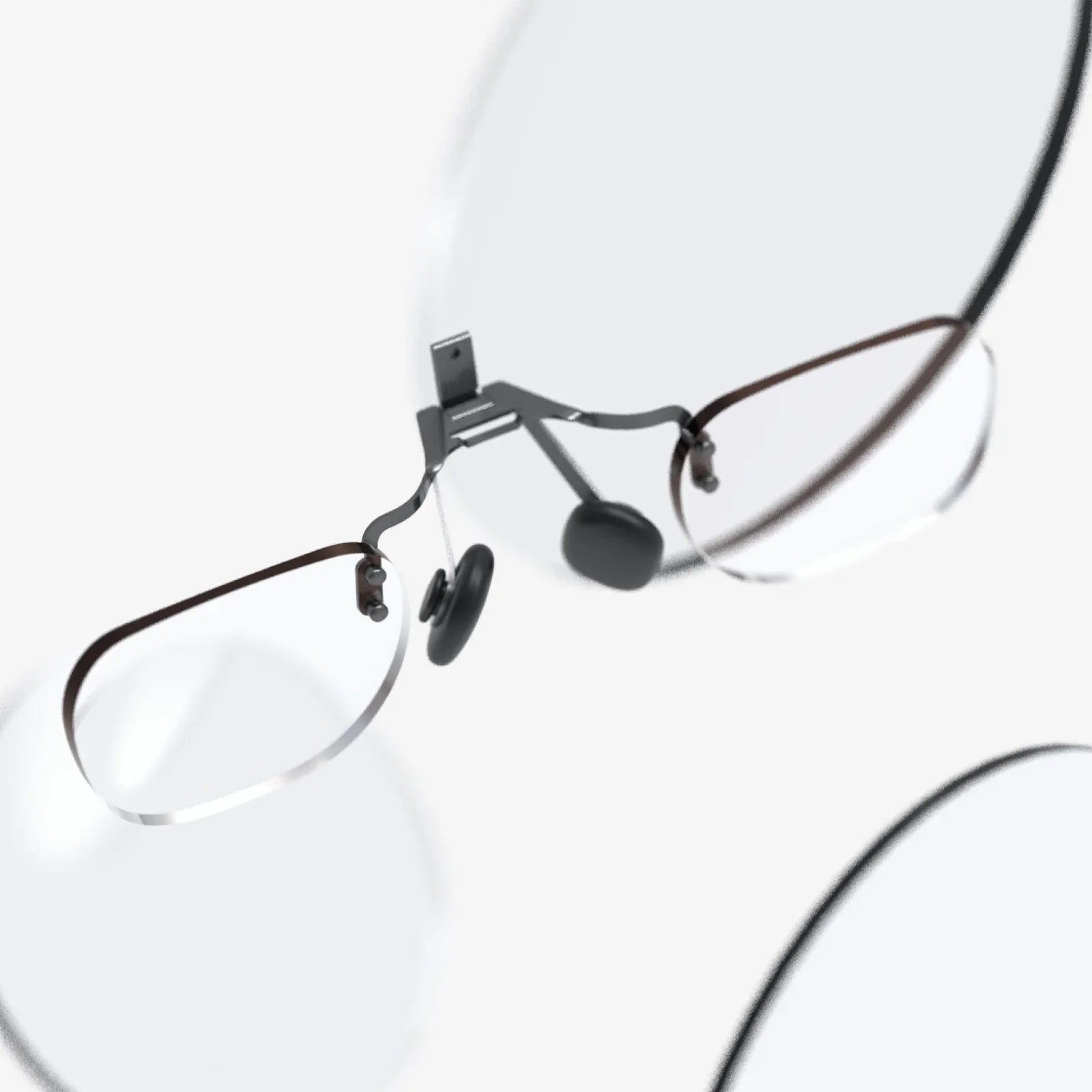
Imagine a world where a master surgeon guides your hands through a complex procedure from across the globe, a virtuoso pianist corrects your finger placement on the keys in real-time, or a veteran mechanic shows you exactly how to replace an engine component, all without them being physically present. This is not a scene from a science fiction film; it is the imminent reality being forged by the rapid advancement of augmented reality coaching. This transformative technology is poised to dismantle the barriers of traditional learning, offering a hyper-personalized, immersive, and profoundly effective path to skill acquisition and mastery, fundamentally altering our relationship with knowledge and expertise.
Beyond the Hype: Defining the Augmented Reality Coaching Ecosystem
At its core, augmented reality coaching is the convergence of several powerful technological trends. It is the practical application of augmented reality—the overlay of digital information and visuals onto the user's real-world environment—specifically for the purpose of instruction, guidance, and performance enhancement. Unlike virtual reality, which creates a completely synthetic environment, AR coaching enhances the user's existing reality, making it ideal for learning tasks that must be performed in the physical world.
The ecosystem comprises several integrated components. Sophisticated hardware, often in the form of smart glasses or even advanced mobile devices, serves as the user's window into this enhanced world. Powerful software platforms act as the brain, processing data and generating the appropriate digital overlays. Crucially, the system is driven by a foundation of artificial intelligence and computer vision. AI algorithms analyze the user's performance, compare it to ideal models, and generate personalized feedback, while computer vision allows the system to understand and interact with the user's environment—recognizing tools, components, and the user's own body movements.
This creates a continuous, real-time feedback loop. The user performs an action, the system sees and interprets it, and then provides immediate, contextual guidance. This could be a floating arrow pointing to the correct next step, a highlighted area indicating where to apply force, a ghosted image of the correct hand position, or an auditory cue signaling a mistake. This loop transforms passive learning into active, guided doing.
The Unmatched Advantages: Why AR Coaching is a Game-Changer
The shift from traditional coaching methods—books, videos, or even in-person instruction—to AR-driven guidance is not merely incremental; it is paradigmatic. The benefits touch upon every aspect of the learning process.
First is the power of contextualized, in-situ learning. Instead of watching a video on a screen and then trying to remember and apply those steps later, the instructions are superimposed directly onto the task itself. A individual learning to change a tire sees the exact sequence and location for loosening lug nuts overlaid on the wheel itself. This eliminates the cognitive load of translating 2D instructions into 3D actions, drastically reducing errors and frustration.
Second, and perhaps most significantly, is the promise of hyper-personalization. Traditional coaching, even one-on-one, relies on the coach's perception and experience. An AR coaching system can quantify performance with immense precision. It can track the millimeter-level accuracy of a welder's torch movement, the precise angle of a golfer's clubface at impact, or the subtle tremors in a surgeon's hand. The AI can then tailor its feedback to the individual's specific needs, identifying persistent flaws and creating custom drills to address them, all at a scale impossible for human coaches to achieve.
Third, AR coaching democratizes access to expertise. A world-class expert's knowledge can be digitized and distributed infinitely. A master plumber in Tokyo can create a guided AR tutorial that helps an apprentice in Lisbon repair a complex system. This breaks down geographical and socioeconomic barriers to high-quality instruction, making elite-level coaching accessible to a much wider audience.
Finally, it enhances safety and risk mitigation. In high-stakes fields like medicine, heavy machinery operation, or electrical work, mistakes can be catastrophic. AR coaching can provide a safe, simulated environment for practicing dangerous procedures or can act as a real-time safety net during actual tasks, warning users of potential hazards and preventing errors before they happen.
Transforming Industries: From the Operating Room to the Factory Floor
The applications for augmented reality coaching are vast and are already beginning to transform numerous sectors.
Healthcare and Medicine
In medicine, the stakes could not be higher. AR coaching is being developed to guide surgeons through complex procedures, overlaying critical patient data like MRI scans directly onto their field of view and highlighting sensitive structures to avoid. It can train new surgeons on virtual patients, allowing them to make mistakes without consequence. For physical therapists, AR can guide patients through rehabilitation exercises at home, ensuring they maintain correct form to prevent re-injury and track their progress with objective data.
Manufacturing and Field Service
On the factory floor, AR is revolutionizing assembly, maintenance, and repair. Technicians wearing AR glasses can see step-by-step instructions overlaid on complex machinery, with arrows pointing to components that need inspection and highlighting the correct tools to use. This reduces training time for new employees, minimizes errors, and accelerates complex assembly processes. For field service engineers, it means having expert guidance on-demand for repairing unfamiliar equipment, drastically improving first-time fix rates.
Corporate Training and Soft Skills
Beyond technical skills, AR coaching is venturing into the realm of soft skills. Systems can be used to train public speakers by providing real-time feedback on pacing, eye contact (by tracking where the user is looking), and use of filler words. Sales representatives can practice pitches with virtual avatars that respond realistically, and corporate trainees can navigate complex virtual scenarios to hone their negotiation and leadership abilities in a risk-free environment.
Sports and Fitness
The sports world is an early and eager adopter. Golfers and baseball players can use AR to analyze their swing kinematics against a perfect model. Sprinters can see a virtual runner pacing them to improve speed. In gyms, AR mirrors can demonstrate exercises and correct a user's posture in real-time, acting as a personal trainer for every individual, regardless of when they work out.
Navigating the Challenges: The Road to Widespread Adoption
Despite its immense potential, the path to ubiquitous augmented reality coaching is not without significant obstacles.
Technological Hurdles remain paramount. For a truly seamless experience, AR hardware needs to become lighter, more comfortable, socially acceptable, and offer all-day battery life. The field of view for most devices is still limited, and the visual fidelity must improve to avoid user fatigue. Furthermore, the AI and computer vision engines must achieve near-perfect reliability. A system that misidentifies a component or provides incorrect guidance in a critical situation could have severe consequences.
The financial investment for developing robust AR coaching platforms is substantial. This includes not only the hardware costs but also the significant expense of creating accurate and effective digital content and AI models for each specific skill domain. This could initially limit adoption to well-funded enterprises and institutions.
Perhaps the most complex challenges are human-centric. There are valid concerns about data privacy, as these systems collect vast amounts of sensitive biometric and performance data. Robust cybersecurity and clear data governance policies will be non-negotiable. Furthermore, the nature of expertise itself may change. Will over-reliance on digital guidance hinder the development of deep, intuitive understanding and problem-solving skills? The goal must be to use AR as a scaffold to build expertise, not a crutch that creates dependency.
Finally, the regulatory and ethical landscape is uncharted. Who is liable if an AR-guided surgeon makes a fatal error? How do we certify that an AR coaching program is effective and safe? Establishing these frameworks will be essential for building trust in the technology.
The Next Frontier: The Future of Augmented Mentorship
Looking ahead, the evolution of augmented reality coaching will be shaped by further integration with other exponential technologies. The rise of the metaverse suggests a future where collaborative AR coaching sessions occur in persistent digital spaces, with multiple users—both human and AI—interacting within a shared augmented environment. The development of more advanced haptic feedback systems will add the sense of touch, allowing a trainee to literally feel the correct amount of pressure to apply during a task.
We will also see the emergence of AI-powered digital twins—high-fidelity virtual models of physical objects or systems. A technician could practice a repair on a digital twin of an engine, making every possible mistake without cost, before ever touching the physical asset. The line between simulation and reality will continue to blur.
Ultimately, the long-term vision is the creation of a perpetual personal mentor. A personalized AI assistant that learns your strengths, weaknesses, and preferences, available on-demand through AR glasses to help you learn any physical skill throughout your life, from playing a musical instrument to mastering a new trade. This technology promises a future where the gap between novice and expert is shorter than ever before, and where human potential is unlocked not in sterile classrooms, but in the rich, interactive context of the real world.
The promise of augmented reality coaching is nothing short of a revolution in human capability, offering a glimpse into a future where expert guidance is no longer a scarce resource but a ubiquitous utility, seamlessly integrated into the very fabric of our daily lives and empowering anyone, anywhere, to achieve mastery.
Share:
What Is AR and VR: A Deep Dive Into Immersive Technologies
How Much Does Augmented Reality Cost? A Comprehensive Guide to Budgeting for AR