


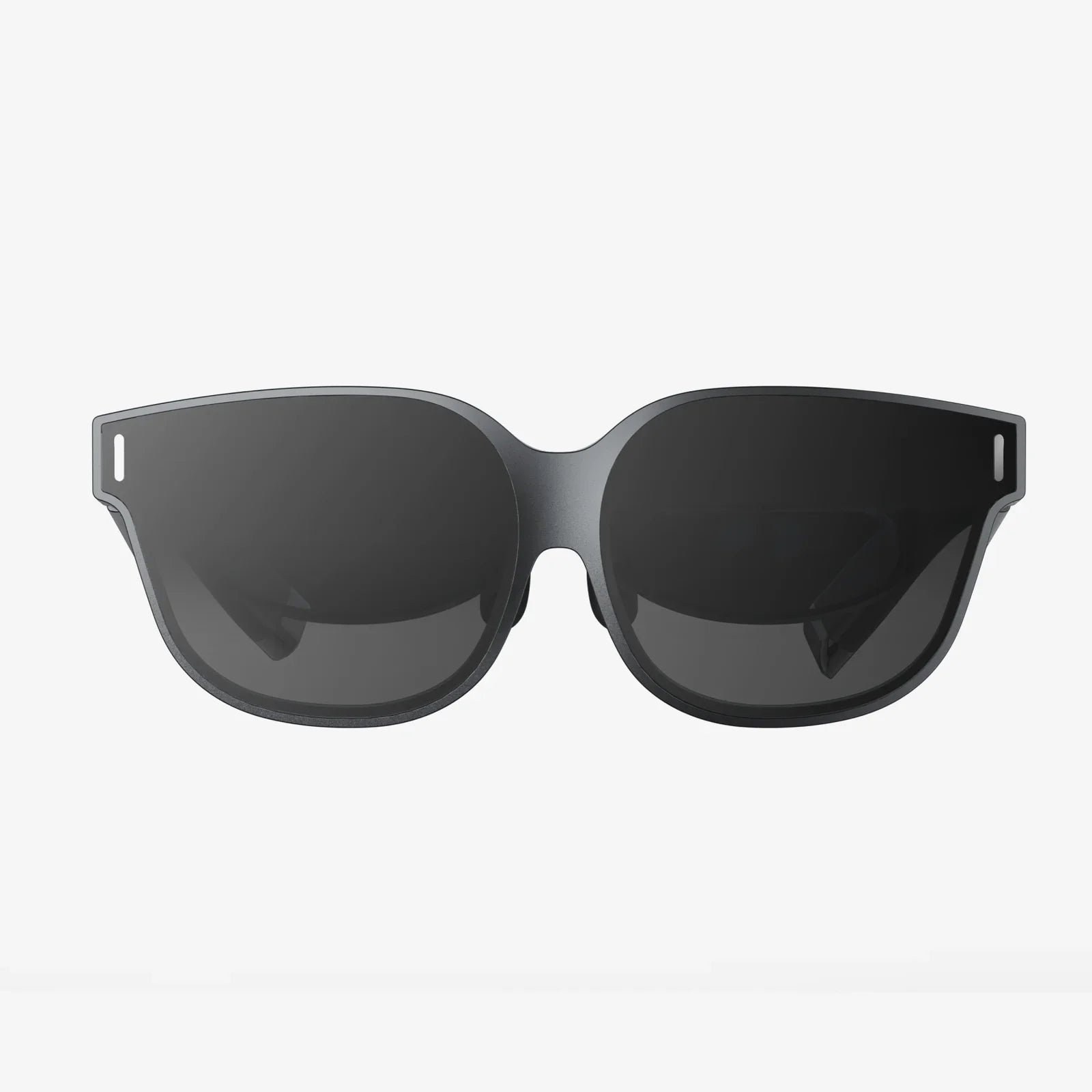
If you thought the immersive technology revolution was still years away, this week's blistering pace of AR and VR developments will force a dramatic rethink. The boundary between our physical and digital worlds didn't just blur; it was fundamentally redrawn by a series of announcements and breakthroughs that promise to reshape everything from how we work and learn to how we connect and create. From the boardroom to the living room, the future is not on the horizon—it's downloading onto our devices and appearing right before our eyes, and this past week provided the most compelling evidence yet.
Major Platform Updates Reshape the User Experience
The foundational software that powers our headsets received significant overhauls this week, focusing on accessibility, social connectivity, and user comfort. One of the leading standalone VR platforms unveiled a substantial update that introduces a redesigned home environment, moving away from a static void to a dynamic, customizable personal space. This isn't just an aesthetic change; it's a philosophical shift towards making virtual spaces feel more persistent and personal, a crucial step for long-term user adoption.
Furthermore, a new system-level accessibility feature has been introduced, allowing users to automatically reduce the intensity of motion-heavy applications. This clever implementation uses a combination of software-based image stabilization and a subtle reduction in the field of view during rapid movement, effectively combating simulation sickness for a wider audience. This development is a quiet but monumental step towards inclusivity, acknowledging that comfort is the primary gatekeeper for VR's mass-market potential.
The Enterprise Sector Embraces Immersive Training and Remote Assistance
While consumer applications often grab headlines, the enterprise sector for AR and VR continues to be a powerhouse of innovation and ROI. This week, a major leap forward was announced in the field of immersive training. A new software suite, compatible with a range of existing enterprise-grade headsets, allows companies to create hyper-realistic safety and procedural training modules without a single line of code.
The platform leverages volumetric video capture and spatial anchors, enabling trainees to walk around, inspect, and interact with life-like digital replicas of complex machinery or hazardous scenarios. The system tracks user actions and provides real-time feedback, creating a feedback loop that dramatically accelerates proficiency and knowledge retention. In parallel, the remote assistance space saw enhancements with the integration of real-time object recognition. Now, a field technician wearing AR glasses can have a remote expert not only see their view but also automatically annotate specific components within the engine or circuit board they are examining, streamlining complex diagnostics and repair processes.
A New Frontier: The Metaverse Gets a Developer Tool Kit
The concept of a interconnected network of virtual experiences, often dubbed the metaverse, took a significant step from theory towards practice. A consortium of tech firms and standards bodies released the first open-source toolkit designed to facilitate interoperable asset creation. This means digital objects, avatars, and environments created using this toolkit can, in theory, be ported across different compatible platforms, breaking down the-walled gardens that have historically segmented virtual worlds.
This development cannot be understated. It provides a common framework for creators, reducing development time and costs while promising users a more cohesive digital identity and inventory. While full-scale interoperability is still a future goal, this week's release is the foundational infrastructure upon which a true open metaverse could be built, shifting power towards creators and users and away from closed-platform ecosystems.
Breakthroughs in Hardware: Lighter, Faster, and More Powerful
On the hardware front, the news was dominated not by new headset releases, but by the components that will power the next generation of devices. A prominent chip manufacturer unveiled a new dedicated processor designed specifically for mixed reality applications. This system-on-a-chip (SoC) integrates on-device AI processing for hand and eye tracking, spatial mapping, and gesture recognition, all while significantly improving power efficiency.
The implications are profound. This allows for thinner, lighter, and cooler-running headsets with longer battery life, all while offloading complex tasks from the main processor to enhance performance and responsiveness. In parallel, advancements in pancake optics were showcased by a display technology firm, demonstrating lenses that are significantly thinner and lighter than current Fresnel solutions, with reduced glare and a much larger "sweet spot" for visual clarity. Together, these hardware developments address the core physical limitations that have hindered all-day wearability, paving the way for devices we can comfortably wear for hours, not minutes.
WebAR Continues Its Quiet Conquest, No App Required
The barrier to experiencing AR has always been the requirement to download a specific app. This week, WebAR—augmented reality experienced directly through a web browser—saw several key advancements that threaten to make native apps obsolete for simple AR experiences. Major updates to web standards and JavaScript libraries now enable more stable markerless tracking and persistent AR content that can be placed in the real world and revisited later, all triggered by a simple URL click.
Brands and educators are already leveraging this for instant-access campaigns, interactive manuals, and historical recreations. A user can simply point their smartphone camera at a QR code and immediately see a product assembled in their room or a historical figure appear in their classroom. This frictionless access is arguably the most significant driver for mass AR adoption, and its progress this week demonstrates a mature and rapidly scaling technology ready for prime time.
The Creator Economy Meets Spatial Computing
A pivotal development this week was the announcement of a new monetization platform for AR creators. This platform allows artists and developers to create and sell virtual objects, effects, and filters directly to users, with the creator receiving a majority share of the revenue. This moves beyond the sponsorship model and establishes a direct digital marketplace for virtual goods, empowering a new class of spatial digital artists.
We are witnessing the very early stages of a virtual goods economy that mirrors the rise of mobile app stores over a decade ago. This provides a tangible financial incentive for high-quality content creation, which in turn attracts more users to the platforms, creating a virtuous cycle of growth and innovation. The message is clear: building engaging virtual worlds and objects is no longer just a passion project; it's a viable career path.
Navigating the Ethical and Social Implications
With great technological power comes great responsibility, and this week also featured important dialogues around the ethics of immersive technology. A non-profit organization focused on digital ethics published a comprehensive framework for responsible spatial computing. It addresses critical issues such as data privacy in always-on cameras and microphones, psychological effects of persistent virtual immersion, and the prevention of harassment in social VR spaces.
Furthermore, there were discussions at a leading tech conference about developing industry-wide standards for user identity and safety, aiming to create tools that empower users to control their experience and interactions without stifling the social spontaneity that makes these platforms compelling. This proactive, rather than reactive, approach to ethics is a positive sign for the long-term health of the AR and VR ecosystem.
This week wasn't about a single, earth-shattering product launch. It was something far more significant: a synchronized maturation across every layer of the AR and VR stack. From the silicon and software up through the creator economy and ethical frameworks, the pieces are rapidly falling into place. The distance between imagining a future where digital and physical coexist and actually living in it has just been shortened, and the pace is only accelerating. The revolution will not just be televised; it will be immersive, interactive, and available on the device in your pocket or on your face, sooner than anyone thought possible.
Share:
Augmented Reality Production: Reshaping Industries and Redefining Creativity
The Augmented Reality: A Comprehensive Guide to the Technology Reshaping Our World