


- by wangfred
AR VR Hybrid Work Environments 2025: The Immersive Future of Your Office
- by wangfred
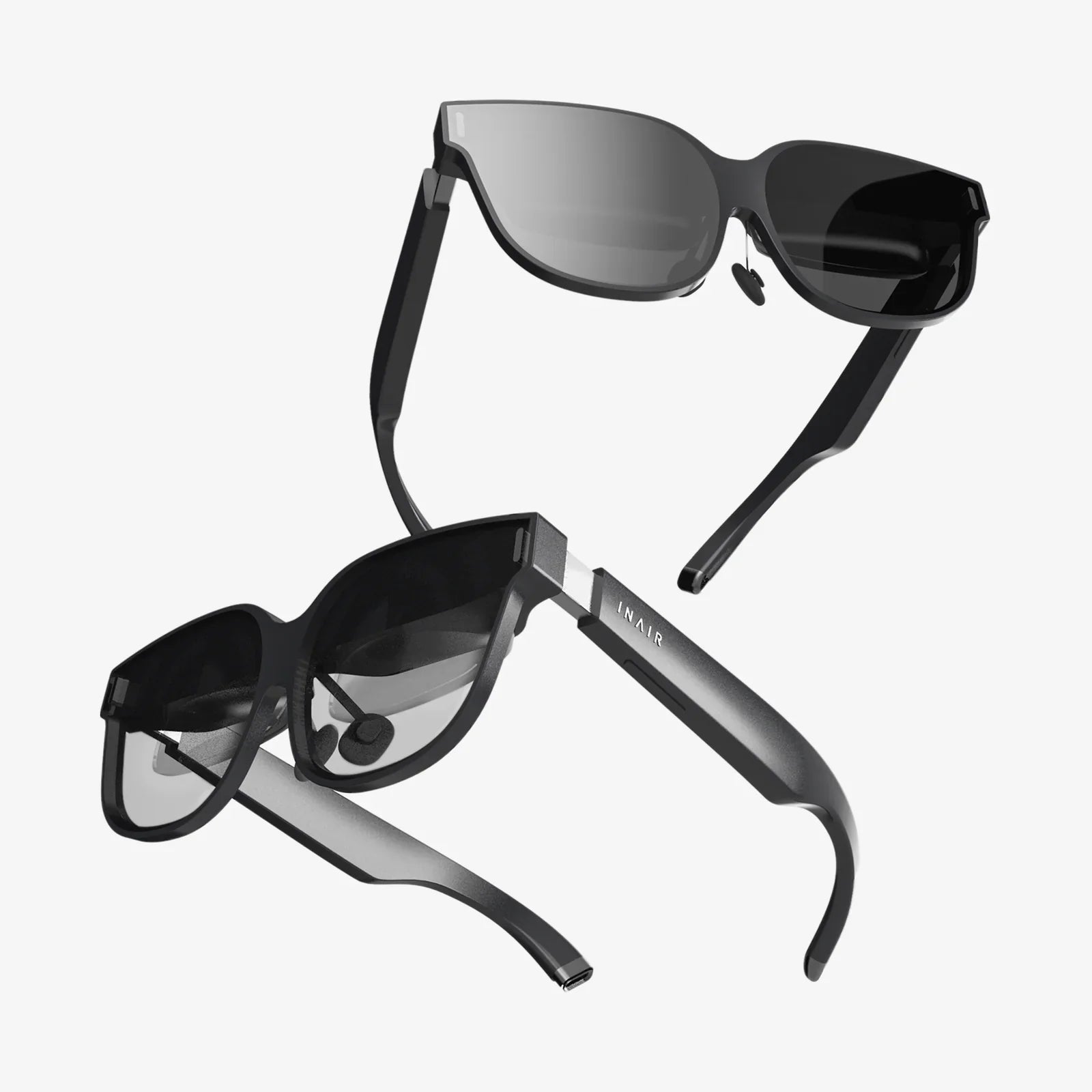
Imagine it’s a Tuesday morning in 2025. You wake up, brew your coffee, and instead of trudging to a home office to stare at a grid of faces on a flat screen, you slip on a pair of sleek, lightweight glasses. With a simple voice command, your physical living room fades, not to black, but into a sun-drenched digital workspace. Your team, scattered across three continents, is already there, represented by photorealistic avatars, gathered around a 3D model of a new product design. You can reach out, twist a component with your hand, hear the subtle spatial audio of a colleague’s feedback from your left, and feel the palpable sense of presence that has been missing from video calls. This isn’t science fiction; it’s the imminent future of work, powered by the convergence of Augmented Reality (AR), Virtual Reality (VR), and the enduring shift to hybrid models. By 2025, these technologies will have matured from novel experiments into the core infrastructure of how we connect, create, and collaborate, finally making the promise of a seamless hybrid work environment a tangible, transformative reality.
The journey to the 2025 hybrid work environment began with necessity. The global shift to remote work exposed the critical limitations of our existing digital toolkit. Video conferencing platforms, while revolutionary in their own right, created "Zoom fatigue," a phenomenon rooted in the cognitive strain of interpreting non-verbal cues on a 2D plane and the constant pressure of being "on camera." Collaboration on documents became a tedious game of screen sharing and version control, stripping away the intuitive, dynamic energy of a physical whiteboard session. The office, for all its flaws, provided a shared context—a place of spontaneous interaction and shared purpose that digital tools struggled to replicate.
Enter immersive technologies. AR and VR offer a paradigm shift, moving us from looking at a digital world to being in it. Virtual Reality provides complete immersion, transporting users into a fully digital environment ideal for focused collaboration, training, and social connection without physical-world distractions. Augmented Reality, by contrast, layers digital information onto the physical world, allowing a designer to see a 3D prototype on their real-world desk or a field technician to receive remote guidance with annotations overlaid on actual machinery. The hybrid work environment of 2025 won't choose between these two modalities; it will fluidly blend them, creating a spectrum of presence where employees can choose the right tool for the right task.
The successful implementation of these technologies rests on several foundational pillars that will have matured significantly by the middle of the decade.
The uncanny valley will be a relic of the past. Advancements in photogrammetry, machine learning, and eye-tracking will enable avatars that are not just visually precise but behaviorally authentic. They will capture subtle micro-expressions, body language, and even the direction of a user’s gaze. Coupled with high-fidelity spatial audio that mimics real-world acoustics—making a voice sound like it’s coming from your right, left, or across the virtual table—this creates an unparalleled sense of "co-presence." Meetings will feel less like a broadcast and more like a conversation in a shared room, rebuilding the nonverbal communication bedrock that fosters trust and understanding.
Instead of launching a meeting that disappears when the last person logs off, companies will invest in persistent digital headquarters. These are always-on virtual office spaces, custom-designed to reflect company culture. New employees will have a digital onboarding center. The sales team might have a virtual "war room" with live data dashboards covering the walls. Engineers will have a persistent lab where 3D models of their projects are always available for tinkering. This persistent world becomes the cultural and operational heart of the organization, a place employees "go to" work that exists beyond the ephemeral link of a video call.
The true power of this new paradigm is interoperability. A colleague using a high-end VR headset must be able to collaborate naturally with a manager using AR glasses on the factory floor and a third team member joining via a laptop or smartphone in a 2D interface. Cloud-based platforms will enable this seamless cross-reality collaboration, ensuring that digital assets—a 3D model, a virtual whiteboard, a data visualization—are accessible and interactive from any device. This inclusivity is critical for widespread adoption, ensuring no one is locked out of the collaborative process.
Artificial Intelligence will act as the invisible orchestrator of the immersive workspace. AI assistants, represented as subtle digital entities or simply as a voice, will be context-aware. They could automatically transcribe meetings in real-time, translate conversations between languages seamlessly, pull up relevant documents when mentioned, or even manage the "room," adjusting lighting or acoustics for optimal comfort. This layer of intelligent automation will remove administrative friction, allowing teams to focus purely on the creative and strategic work at hand.
The impact of AR/VR will be felt across every department, redefining classic work functions.
New hires will step into a immersive onboarding experience, touring the digital HQ, meeting colleagues as avatars, and practicing complex procedures in risk-free VR simulations. From practicing public speaking in a virtual auditorium to mastering the repair of intricate equipment with AR-guided instructions, experiential learning will drastically reduce training time and increase retention and competency.
The iterative process of design will be revolutionized. Global teams will gather inside life-size 3D models of buildings, cars, or consumer products. They will be able to walk through their designs, assess ergonomics, manipulate materials in real-time, and identify flaws long before a physical prototype is ever built. This "digital twin" technology will save millions in development costs and dramatically accelerate time-to-market.
An expert engineer in a headquarters thousands of miles away will be able to see what a field technician sees through their AR glasses. The expert can then draw arrows, highlight components, and pull up schematics that are anchored to the physical machine in front of the technician, guiding them through a complex repair. This resolves issues faster, reduces travel costs, and empowers frontline workers with instant access to expert knowledge.
This future is not without its hurdles. For widespread adoption to occur, several challenges must be addressed head-on.
Hardware and Accessibility: Devices must become lighter, more comfortable, have all-day battery life, and be significantly more affordable. The goal is for them to feel as natural and essential as a laptop or smartphone.
Digital Equity and Inclusivity: Companies must be vigilant to avoid creating a two-tier system where those with advanced hardware have better access and presence than those joining via simpler devices. Design principles must prioritize accessibility from the ground up.
Data Privacy and Security: Immersive technologies collect vast amounts of novel data—eye gaze, body movement, even biometric responses. Robust, transparent frameworks are needed to govern this data, ensuring employee privacy is protected and corporate data within virtual spaces is secure from new vectors of attack.
Cultural Adoption and New Etiquette: Organizations will need to develop new norms and etiquette for the immersive workplace. When is it appropriate to use VR versus AR? How do we prevent "virtual presenteeism"? Training and change management will be as important as the technology itself.
Ultimately, the goal of integrating AR and VR into hybrid work is not to replace humanity with technology, but to use technology to enhance human connection and capability. It’s about giving distributed teams the tools to collaborate with the same richness, spontaneity, and effectiveness as if they were sharing a physical space. It’s about moving beyond the isolating experience of a video call grid and into a shared experience that fosters creativity, builds culture, and drives innovation.
The year 2025 is not an end point, but a significant milestone on a longer journey. The hybrid work environment, supercharged by AR and VR, will finally begin to feel less like a compromise and more like an upgrade—a more flexible, more inclusive, and more human way of working. The office walls are dissolving, but in their place, we are building boundless new worlds where talent, not location, is the only thing that matters. The future of work isn't just remote; it's immersive, and it's arriving sooner than you think.