


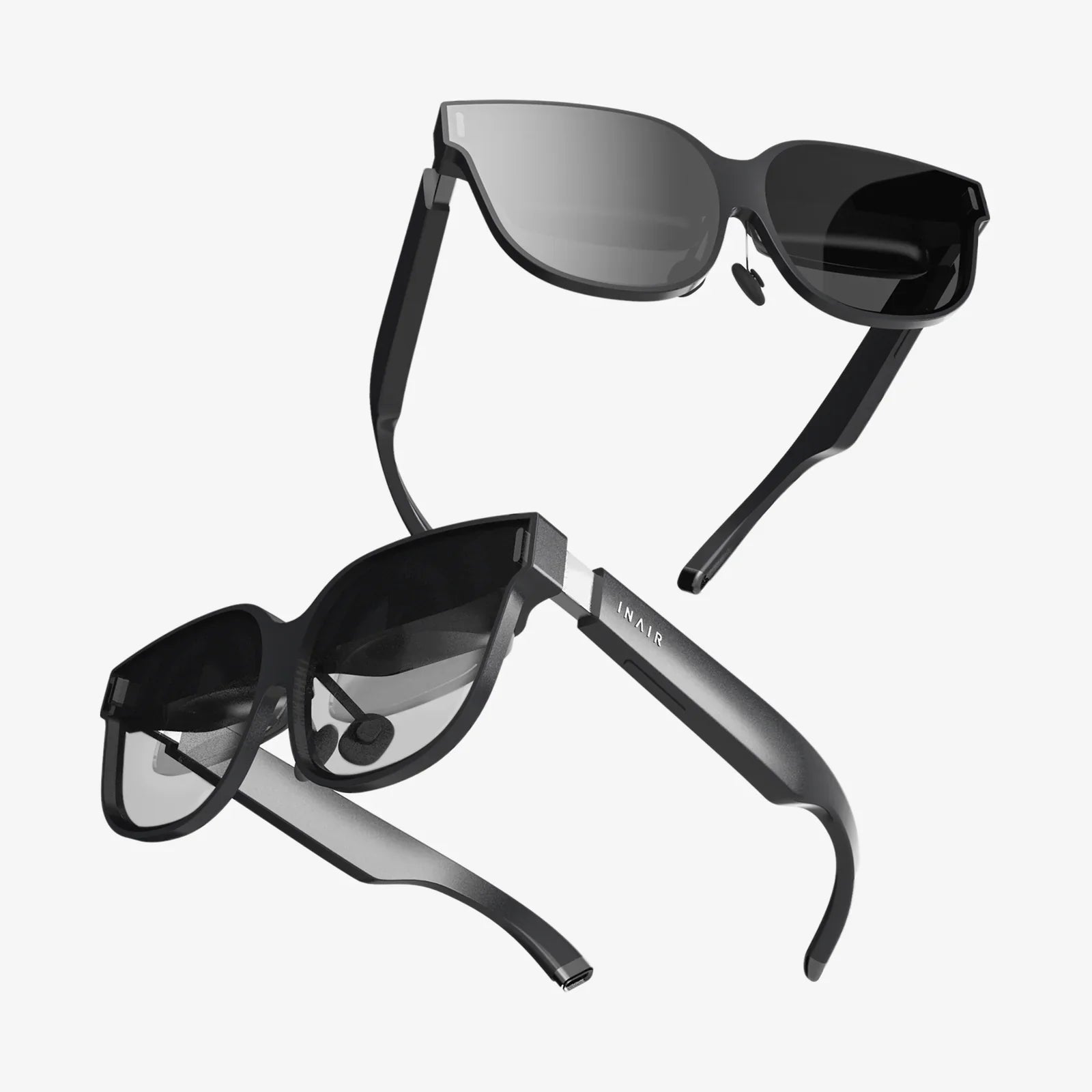
Imagine a world where digital information doesn't just live on a screen but is seamlessly woven into the fabric of your physical reality, enhancing everything from how you work and learn to how you shop and play. This is no longer the stuff of science fiction; it's the rapidly materializing present and future powered by Augmented Reality (AR). The projections for the global augmented reality market size by 2025 are not merely impressive numbers on a spreadsheet; they are a testament to a fundamental technological shift that is poised to redefine our interaction with the digital realm. The staggering figures forecasted for the coming years signal a tectonic movement in the tech landscape, one that promises to unlock new dimensions of productivity, creativity, and connection.
The Foundation: Understanding the AR Market's Meteoric Trajectory
The journey to comprehending the projected global augmented reality market size for 2025 begins with understanding its current momentum. AR, which overlays digital content—such as images, sounds, and data—onto the user's real-world environment, has evolved from a niche technology into a mainstream powerhouse. This evolution is fueled by a powerful convergence of hardware advancements, software innovation, and skyrocketing consumer and enterprise adoption. Market analysts and research firms consistently project a compound annual growth rate (CAGR) that places the market value well into the tens of billions of dollars by the middle of the decade, a figure that seemed almost unattainable just a few years ago.
Key Drivers Propelling the Market Forward
Several interconnected forces are acting as powerful accelerants for the AR industry's expansion, each contributing significantly to the anticipated market size.
The Proliferation of 5G Connectivity
The global rollout of high-speed, low-latency 5G networks is arguably the single most critical infrastructure development for AR. AR applications demand massive bandwidth to stream high-fidelity 3D models and complex data in real-time. 5G's capabilities eliminate the lag and buffering that can break immersion, enabling truly seamless and responsive AR experiences on mobile devices and smart glasses. This network evolution is removing a previously significant barrier to entry and quality.
Advancements in Hardware and Form Factors
The clunky, expensive headsets of the past are giving way to a new generation of sophisticated, accessible, and diverse hardware. While smartphone-based AR continues to be the dominant access point due to its ubiquity, the development of dedicated AR smart glasses is accelerating. These devices are becoming lighter, more powerful, and more socially acceptable. Furthermore, innovations in components like micro-displays, sensors (LiDAR, depth sensors), and processors are dramatically improving tracking accuracy, field of view, and overall user comfort, making AR a more practical tool for all-day use.
Enterprise Adoption: The Primary Growth Engine
While consumer applications often grab headlines, the enterprise sector is the undeniable workhorse driving the AR market's valuation. Companies across a vast spectrum of industries are deploying AR to solve real-world problems, increase efficiency, and reduce costs. This tangible return on investment is fueling massive spending and is a primary contributor to the projected 2025 market size.
Industry-Specific Applications Fueling Market Expansion
The value of AR is not abstract; it is being proven in concrete terms within specific verticals.
Manufacturing and Industrial Maintenance
On factory floors and in field service, AR is revolutionizing workflows. Technicians can wear smart glasses to see digital schematics overlaid directly onto the machinery they are repairing, receive remote expert guidance with annotations placed in their field of view, and access real-time data and safety instructions. This reduces errors, slashes training time, and minimizes downtime, translating directly into millions of dollars in savings for large enterprises.
Healthcare and Medicine
The healthcare sector is embracing AR for its life-saving potential. Surgeons use AR for pre-operative planning, projecting 3D scans of a patient's anatomy onto their body for precise incision points. Medical students can learn anatomy through interactive, holographic models. AR is also being used for vein visualization to aid nurses, physical therapy guidance, and even providing visual cues for individuals with low vision.
Retail and E-Commerce
AR is fundamentally changing the retail experience. Virtual try-on for clothes, accessories, and makeup allows customers to visualize products on themselves from home. Furniture retailers enable shoppers to place true-to-scale 3D models of sofas and tables into their living rooms to see how they fit and look. This immersive shopping experience significantly reduces purchase hesitation and product return rates, creating a powerful competitive advantage.
Education and Training
AR brings learning to life. Instead of reading about ancient Rome, students can walk through a digitally reconstructed Colosseum from their classroom. Complex mechanical or biological processes can be animated and interacted with in 3D space. This experiential learning leads to dramatically improved knowledge retention and engagement, creating a new paradigm for education.
Navigating the Challenges on the Path to 2025
Despite the optimistic projections, the path to achieving the global augmented reality market size in 2025 is not without its obstacles. Addressing these challenges is crucial for sustained growth.
Privacy and Data Security Concerns
AR devices, particularly glasses with always-on cameras and sensors, collect unprecedented amounts of data about the user and their environment. This raises profound questions about data ownership, usage, and protection. Establishing clear, transparent, and robust security protocols and ethical guidelines is paramount to gaining widespread public trust.
Content Creation and Developer Ecosystem
For AR to thrive, it needs a rich and diverse ecosystem of applications and experiences. The tools for creating AR content are becoming more user-friendly, but there is still a need for more developers skilled in 3D modeling, spatial computing, and AR-specific UX/UI design. The growth of the market is directly tied to the availability of compelling content that demonstrates clear utility and entertainment value.
Battery Life and Hardware Limitations
Processing complex AR environments is computationally intensive and drains battery life quickly. For smart glasses to achieve all-day usability, significant breakthroughs in battery technology and power-efficient chipsets are required. Similarly, achieving a wide field of view, perfect occlusion (where digital objects realistically hide behind real ones), and comfort in a consumer-affordable package remains a technical hurdle.
Regional Market Dynamics: A Global Perspective
The adoption and growth of AR are not uniform across the globe. The North American market, driven by strong technological infrastructure, high enterprise IT spending, and a concentration of leading tech companies, is expected to hold a significant share of the market. Meanwhile, the Asia-Pacific region is projected to exhibit the highest growth rate, fueled by massive manufacturing bases in China, South Korea, and Japan, rapid technological adoption, and government initiatives supporting Industry 4.0 and digital transformation.
The Competitive Landscape: Innovation and Consolidation
The race to dominate the AR space is fiercely competitive, involving tech giants, specialized startups, and component manufacturers. This environment fosters rapid innovation but also leads to market consolidation as larger companies acquire smaller ones for their unique IP or talent. The strategies vary from developing end-to-end ecosystems (encompassing hardware, software, and app stores) to creating specialized enterprise-focused solutions or providing crucial underlying technologies like display engines and perception algorithms.
Beyond 2025: The Road to Ubiquity
The projected global augmented reality market size for 2025 is a major milestone, but it is merely a stepping stone. As technology continues to mature, AR is expected to evolve towards more contextual and intuitive experiences, powered by Artificial Intelligence and machine learning. The ultimate vision is a shift from devices we hold or wear to always-available, ambient computing where digital information is simply a layer of our reality, accessible through lightweight, stylish glasses or even contact lenses. This will further blur the lines between the physical and digital worlds, creating new economies and forms of social interaction that we are only beginning to imagine.
The numbers pointing to the multi-billion dollar valuation of the AR market by 2025 tell a compelling story of economic potential, but they only scratch the surface. This financial forecast is the quantitative expression of a qualitative revolution—a fundamental rewiring of how humanity interfaces with information. From the operating room to the classroom, the factory floor to the living room, AR is poised to become as indispensable as the smartphone is today. The journey to 2025 is not just about reaching a market size; it's about building the foundational layer for the next era of computing, an immersive world waiting for us to step inside.
Share:
Introduction to AR and VR: A Comprehensive Guide to the Immersive Future
AR VR Hybrid Work Environments 2025: The Immersive Future of Your Office