


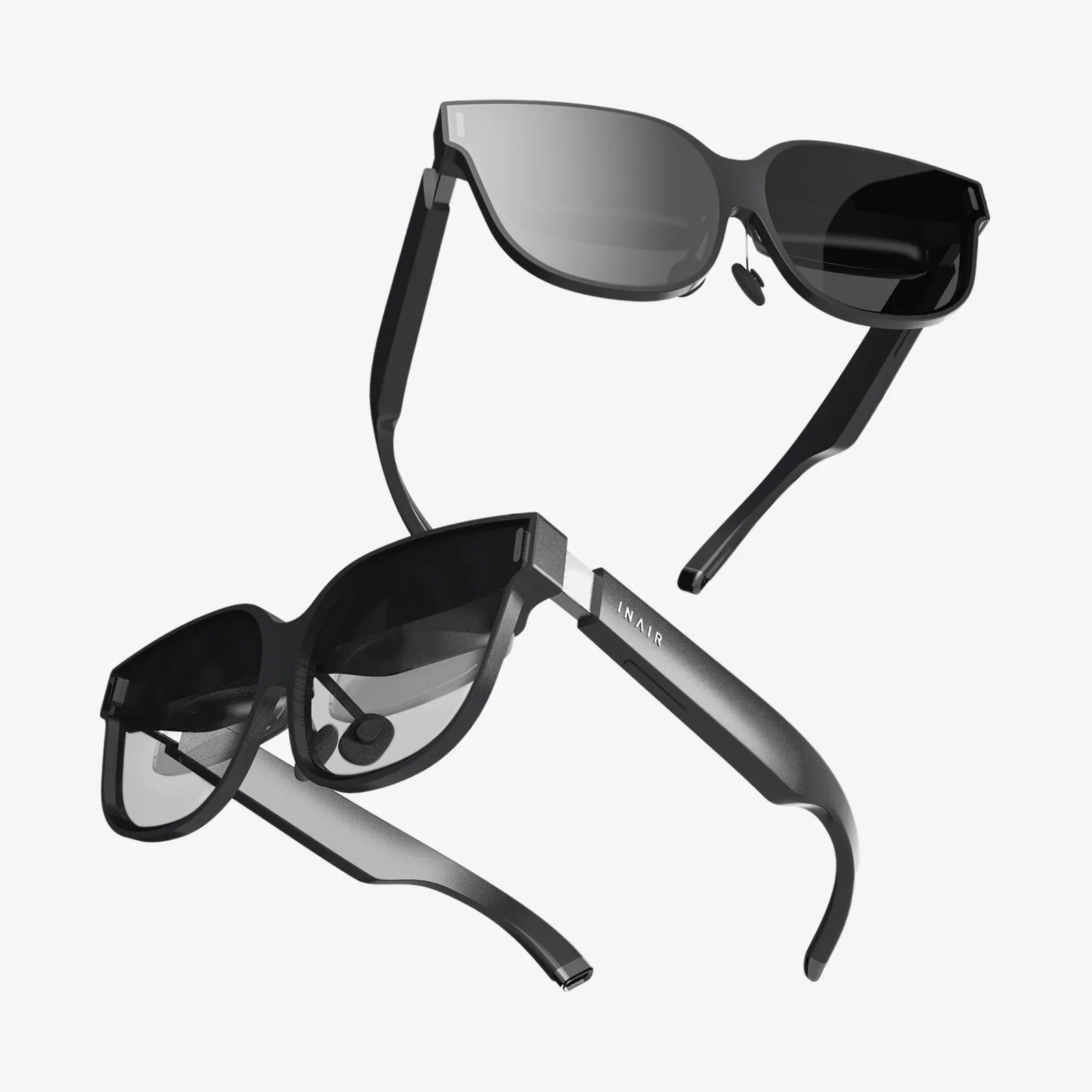
Imagine a world where a new employee, on their first day, can practice a complex surgical procedure, service a million-dollar piece of machinery, or navigate a sensitive client meeting—all without any real-world risk. Envision an architect walking a client through the very building they designed before a single foundation has been poured, or a field technician thousands of miles from headquarters receiving expert guidance as if their mentor were standing right beside them. This is no longer the realm of science fiction. This is the rapidly dawning reality of Augmented Reality (AR) and Virtual Reality (VR) in the workplace, a technological revolution poised to fundamentally alter how we work, learn, and connect.
Demystifying the Digital Duo: AR vs. VR
While often mentioned in the same breath, AR and VR offer distinct experiences and serve different, though sometimes overlapping, purposes in a professional context.
Virtual Reality (VR) is an immersive, all-encompassing technology. By wearing a headset, users are transported into a completely computer-generated digital environment. The physical world is entirely blocked out, replaced by a simulated one. This is ideal for creating controlled, repeatable, and safe environments for training, simulation, and virtual collaboration where the physical context is either irrelevant or a hindrance.
Augmented Reality (AR), by contrast, layers digital information onto the real world. Using devices like smart glasses, helmets, or even smartphones and tablets, users can see their physical environment enhanced with digital overlays—text, images, 3D models, or animated instructions. AR acts as a contextual guide, providing just-in-time information that is directly relevant to the task at hand, without removing the user from their actual surroundings.
A simple analogy: VR is like being inside a video game; AR is like having a game's heads-up display (HUD) in real life. Understanding this distinction is key to appreciating their unique applications across various industries.
The Virtual Workspace: Revolutionizing Remote Collaboration
The traditional video conference, with its grid of faces and occasional screen share, has been a lifeline for remote work. However, it falls short when collaboration requires a shared sense of space and interaction with complex data or 3D models. This is where VR and AR create a paradigm shift.
VR collaboration platforms allow employees from across the globe to meet in a persistent virtual office or a custom-designed environment. Instead of staring at a webcam, they are represented by avatars and can gather around a virtual prototype, manipulate 3D data with their hands, brainstorm on an infinite whiteboard, or simply have a "water cooler" conversation that feels significantly more natural and engaging than a forced video chat. This sense of "presence"—the feeling of actually being in a place with others—is a powerful tool for building team cohesion and fostering spontaneous creativity, elements often lost in remote work setups.
AR takes a different approach to collaboration, often referred to as "see what I see" support. A field technician wearing AR smart glasses can stream their live point-of-view to a remote expert. The expert can then annotate the technician's real-world field of view with arrows, diagrams, or text instructions, guiding them through a repair step-by-step. This drastically reduces errors, slashes the need for expensive expert travel, and shortens resolution times from days to minutes.
Learning by Doing: The Training and Simulation Revolution
Perhaps the most mature and impactful application of immersive tech in the workplace is in training and skills development. VR, in particular, offers an unparalleled platform for experiential learning.
- High-Stakes Skill Practice: Surgeons can rehearse complex procedures on virtual patients. Pilots have used simulators for decades, and VR makes this technology more accessible and affordable for everything from heavy machinery operation to emergency response drills. Employees can make critical mistakes in a consequence-free environment, learning muscle memory and decision-making skills that directly translate to the real world.
- Soft Skills Development: VR is being used to train employees in soft skills like public speaking, leadership, and customer service. Trainees can be placed in a virtual conference room filled with animated attendees or confronted with a difficult virtual customer, allowing them to practice and refine their responses in a realistic yet safe setting.
- Onboarding and Orientation: New hires can take virtual tours of massive facilities, from factory floors to corporate campuses, learning layouts and safety procedures without needing to be physically present or disrupting ongoing operations.
AR-based training provides on-the-job guidance. Instead of memorizing a thick manual, a maintenance worker can wear AR glasses that display the correct torque settings for a bolt or highlight the exact component that needs replacement, overlaying the instructions directly onto the equipment they are servicing.
Design, Prototyping, and the Future of Manufacturing
The design and manufacturing sectors are being transformed by the ability to visualize and interact with 3D models at a 1:1 scale. Automotive and aerospace engineers can assemble and disassemble virtual engines long before a physical prototype is built, identifying design flaws and interference issues that would be incredibly costly to fix later in the production process. This concept, known as digital twin technology, involves creating a virtual replica of a physical asset or system, and AR/VR are the perfect interfaces to interact with it.
Architects and interior designers are using VR to conduct immersive walkthroughs with clients, allowing them to experience the spatial qualities, lighting, and flow of a building long before construction begins. Clients can request changes when they are still easy and inexpensive to implement. AR, on the other hand, can be used on the construction site itself, projecting blueprints and BIM (Building Information Modeling) data onto the physical structure to ensure accuracy and streamline the building process.
Overcoming the Obstacles: Barriers to Widespread Adoption
Despite the immense potential, the integration of AR and VR into the mainstream workplace is not without its significant challenges.
- Hardware Limitations: While improving rapidly, hardware can still be a barrier. VR headsets can be bulky, cause motion sickness in some users, and often require powerful computers. AR glasses need to become lighter, more socially acceptable, have longer battery life, and offer a wider field of view to be truly effective for all-day wear.
- Cost and ROI: Developing high-quality, custom VR training modules or enterprise AR applications requires a substantial upfront investment. Businesses must carefully evaluate the return on investment, measuring gains in productivity, reduction in errors, and savings on travel and training costs.
- Technical Integration and Content Creation: Seamlessly integrating immersive experiences with existing enterprise software (like ERP, CRM, or CAD systems) is complex. Furthermore, creating and managing a library of effective 3D content requires new skills and resources that many companies do not yet possess.
- Health, Safety, and Privacy: Prolonged use can lead to eye strain, headaches, or cybersickness. There are also valid concerns about data privacy, especially with AR devices that often use cameras and sensors to continuously scan and interpret the user's environment.
The Horizon of Work: What's Next for Immersive Tech?
The evolution of AR and VR is moving at a breakneck pace, fueled by advancements in connectivity, artificial intelligence, and hardware design. The rollout of 5G networks, with their high bandwidth and low latency, will be a major catalyst, enabling complex, cloud-rendered AR and VR experiences on lighter, wireless devices.
We are moving towards a future where the lines between AR and VR may blur into a concept known as Mixed Reality (MR) or the broader "metaverse"—a persistent network of shared, immersive spaces. In this future, your virtual office, your training simulator, and the digital twin of your factory's production line could all be interconnected parts of a new digital layer over the physical world.
AI will further supercharge these technologies, powering intelligent virtual assistants that can understand natural language and context within an AR/VR environment, providing information and automating tasks without being explicitly commanded.
The workplace of the future will not be defined by a single technology but by a seamless blend of the physical and digital. AR and VR are the lenses through which this fusion will be viewed and experienced. They promise a world not where humans are replaced by technology, but where technology is harnessed to amplify human intelligence, creativity, and collaboration. The question for businesses is no longer if this future will arrive, but how quickly they can prepare to step into it.
The desk of the future might not have a computer monitor; it might be a blank surface waiting for digital schematics to be summoned from the air. The onboarding process for your next star employee might begin not in a conference room, but on a virtual tour of a facility that exists only in the cloud. The competitive edge will belong to those who are not just ready to adopt these tools, but to imagine entirely new ways of working that they make possible. The immersive age of work is here, and it’s inviting you to put on a headset and redefine what’s possible.
Share:
Best AR VR Firms: The Architects of Our Digital Future
VR Wearing Glasses: The Future of Immersive Technology and Personal Accessibility