


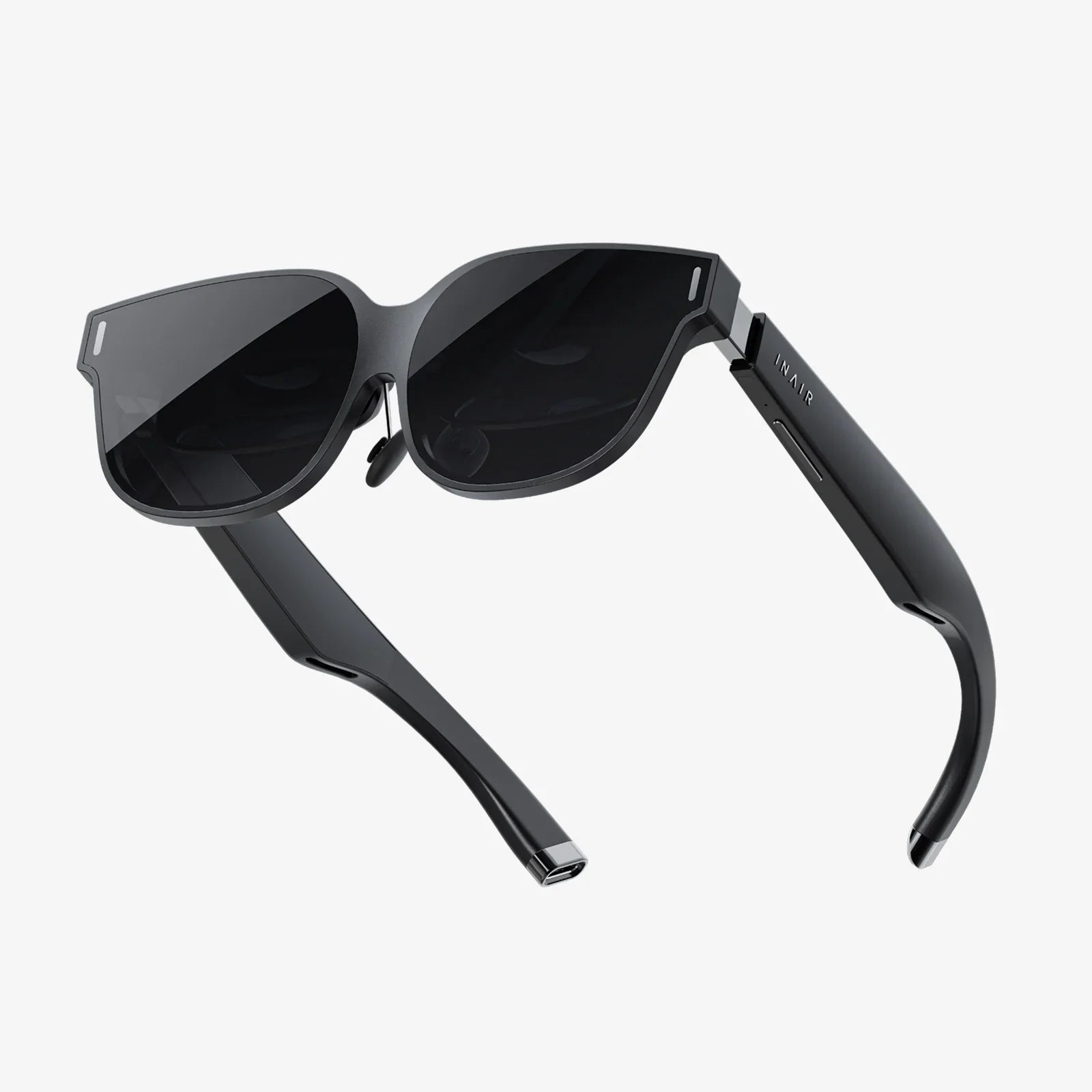
Imagine a world where the digital and the physical are no longer separate realms, where you can learn complex surgery by practicing on a holographic heart, explore the ancient ruins of Rome from your living room, or see how a new sofa would look in your home before you buy it. This is no longer the stuff of science fiction; it is the rapidly unfolding present, made possible by the revolutionary technologies of Augmented Reality (AR) and Virtual Reality (VR). This AR VR introduction is your gateway to understanding these powerful tools that are poised to redefine everything from entertainment and education to manufacturing and medicine. The future is immersive, and it's already here.
Defining the Realities: More Than Just Acronyms
While often mentioned in the same breath, AR and VR offer distinctly different experiences. Understanding this fundamental distinction is the first step in any AR VR introduction.
What is Virtual Reality (VR)?
Virtual Reality is the technology of complete immersion. It uses a head-mounted display (HMD), often paired with motion-tracking sensors and controllers, to transport the user into a fully digital, computer-generated environment. The core objective of VR is to replace your real-world surroundings, effectively shutting out the physical world to create a convincing sense of presence elsewhere—whether that's on the surface of Mars, inside a human cell, or on the deck of a fictional starship. A successful VR experience makes your brain believe you are truly in that virtual space.
What is Augmented Reality (AR)?
Augmented Reality, by contrast, does not seek to replace the real world but to enhance it. AR technology superimposes digital information—images, text, 3D models, animations—onto the user's view of their physical environment. This is most commonly experienced through the camera of a smartphone or tablet (think of popular social media filters) or through specialized transparent glasses. The digital elements appear to coexist with the real world, providing context, information, or entertainment that is anchored to your immediate surroundings. AR adds a layer of useful data and graphics on top of reality.
The Technological Pillars: How AR and VR Work
Creating these immersive experiences requires a sophisticated fusion of hardware and software engineering. The magic of AR and VR rests on several key technological pillars.
The Hardware of Immersion
Displays: For VR, high-resolution screens are placed mere centimeters from the user's eyes, often using lenses to widen the field of view and create a stereoscopic 3D effect. AR devices use either transparent waveguide optics (in glasses) to project images onto the real world or a smartphone's screen to display a camera feed augmented with digital content.
Tracking: Precise tracking is essential for maintaining immersion. This includes:
- Head Tracking: Using gyroscopes, accelerometers, and magnetometers to monitor the orientation and position of your head, ensuring the virtual world moves with you in perfect sync.
- Motion Tracking: External cameras or inward-facing sensors on the headset itself (inside-out tracking) monitor your physical movement through space, allowing you to walk around and interact within a virtual or augmented space.
Processing Power: Rendering complex, high-fidelity 3D environments at a high frame rate (typically 90 frames per second or higher for VR) is computationally intensive. This processing can be handled by a powerful connected computer, a game console, or increasingly, by sophisticated mobile chipsets built directly into standalone headsets.
Input Systems: To interact with these digital worlds, users need intuitive controllers. These range from handheld wands with buttons and joysticks to sophisticated hand-tracking technology that uses cameras to replicate your real hand movements in the virtual space, allowing you to push, grab, and manipulate objects naturally.
The Software That Builds Worlds
On the software side, development engines are used to create the 3D environments and experiences. These powerful tools provide the frameworks for physics, lighting, sound, and interaction. Furthermore, spatial audio is a critical but often overlooked component; realistic sound that changes based on your head position sells the illusion of being in another place just as much as the visuals do.
A Spectrum of Experience: From AR to VR and Everything In Between
The landscape of immersive technology isn't a simple binary of AR vs. VR. It's more accurately described as a spectrum, often referred to as the Virtuality Continuum, a concept introduced by Paul Milgram and Fumio Kishino in 1994.
On one end of this spectrum is the completely real environment, and on the other is a completely virtual one. In between lies a range of mixed reality (MR) experiences:
- Augmented Reality (AR): Digital overlays on the real world. The real environment remains primary.
- Augmented Virtuality (AV): Primarily a virtual world, but with some real-world elements incorporated into it. For example, seeing a live video feed of your real hands manipulating a virtual object.
- Mixed Reality (MR): This term is sometimes used as an umbrella for AR and AV, but it more precisely describes experiences where digital and real objects not only coexist but can interact with each other in real-time. A virtual ball bouncing off your real-world table is a classic example of MR.
This continuum helps illustrate that the technologies are fluid and increasingly blending together, with many modern devices capable of offering experiences across different points of the spectrum.
Transforming Industries: The Practical Applications
The value of AR and VR extends far beyond gaming and entertainment. They are powerful tools for solving real-world problems across numerous sectors.
Revolutionizing Education and Training
Imagine medical students performing dissections on virtual cadavers that can be reset infinitely, or mechanics-in-training practicing repairs on complex engine models that float in front of them. VR provides a safe, cost-effective, and incredibly effective platform for experiential learning. AR can bring textbooks to life, allowing students to point their device at a diagram of the solar system to see a rotating 3D model, transforming passive learning into an interactive discovery.
Enhancing Healthcare and Therapy
Surgeons use AR to overlay CT scans and vital data onto their view of a patient during operations, improving precision. VR is proving to be a groundbreaking tool for pain management, physical rehabilitation (by making exercises more engaging), and treating phobias and PTSD through controlled, safe exposure therapy.
Powering Design and Manufacturing
Engineers and designers use VR for virtual prototyping, allowing them to walk through a full-scale model of a new building or test the ergonomics of a car's interior long before any physical materials are used. AR assists factory technicians by projecting wiring diagrams and assembly instructions directly onto the machinery they are working on, reducing errors and speeding up complex tasks.
Reshaping Retail and Commerce
AR has become a game-changer for retail. "Try before you buy" takes on a new meaning when you can use your phone's camera to see how a pair of glasses looks on your face, how a new shade of paint appears on your wall, or how a piece of furniture fits in your room, drastically reducing purchase uncertainty and return rates.
Redefining Remote Collaboration and Communication
VR meeting spaces are emerging as the next evolution of video conferencing. Instead of looking at a grid of faces on a screen, colleagues from around the world can meet as lifelike avatars in a virtual boardroom, workshop, or presentation hall. They can interact with 3D models together, whiteboard ideas in mid-air, and experience a much stronger sense of shared presence, making remote collaboration more natural and effective.
Challenges and Considerations on the Road Ahead
Despite the immense potential, the widespread adoption of AR and VR faces several significant hurdles.
Technical Hurdles
Hardware Limitations: For VR, achieving perfect visual fidelity, eliminating motion sickness for all users, and creating smaller, lighter, more comfortable headsets remain active challenges. For AR, creating stylish, socially acceptable glasses with all-day battery life and a wide field of view is the holy grail that developers are striving toward.
Content Creation: Developing high-quality, immersive experiences is still a complex and expensive endeavor, creating a barrier to entry for many creators and businesses.
Human and Social Factors
Cost and Accessibility: While prices are falling, high-end equipment remains a significant investment, potentially limiting access.
Privacy and Security: AR and VR devices, especially those with always-on cameras and microphones, collect vast amounts of sensitive data about users and their environments. Establishing robust ethical frameworks and data security protocols is paramount.
Social Isolation and Health: Prolonged use of immersive technology raises questions about its impact on social skills, physical activity, and mental well-being. Establishing healthy usage patterns will be an important part of integrating these technologies into daily life.
The Future is a Blend: What Comes Next?
The trajectory of AR and VR points toward convergence. The future likely lies not in separate devices for AR and VR, but in a single pair of glasses capable of seamlessly shifting between fully immersive virtual experiences and contextually aware augmented overlays throughout your day. Advancements in artificial intelligence, 5G/6G connectivity, and brain-computer interfaces will further dissolve the barrier between the digital and the physical, creating experiences we can scarcely imagine today.
The journey into spatial computing is just beginning. This AR VR introduction has only scratched the surface of a technological revolution that promises to be as transformative as the advent of the personal computer or the smartphone. The line between our digital and physical lives is blurring, and these immersive technologies are the paintbrushes with which we will redesign reality itself. The question is no longer if AR and VR will change the world, but how quickly we will adapt to a world where anything we can imagine can be made manifest before our eyes.
Share:
AI Glasses Price India: A Comprehensive Guide to Smart Eyewear Costs in 2024
AI Glasses Price India: A Comprehensive Guide to Smart Eyewear Costs in 2024