


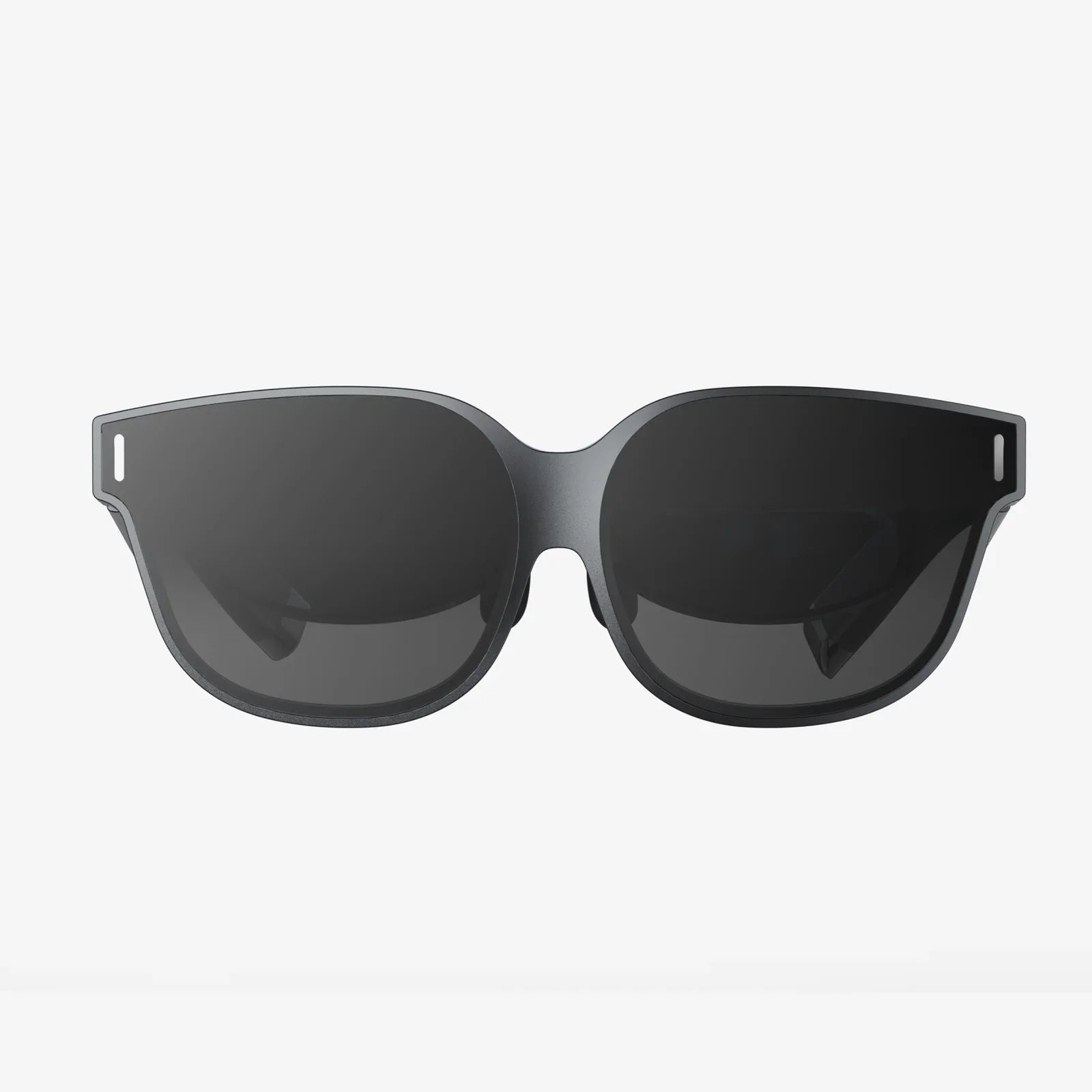
The digital frontier is expanding at a breathtaking pace, and at the very edge of this new horizon lies a realm of limitless potential—the world of augmented and virtual reality. For the curious, the creative, and the technically gifted, a new breed of career is emerging from the digital ether, promising not just a job, but a passport to building the very fabric of our future. The demand for skilled professionals in this domain is skyrocketing, creating a gold rush of opportunities for those ready to dive headfirst into the immersive revolution. This isn't just about playing games; it's about architecting new realities, and the call for talent has never been louder.
The Metaverse Momentum: Why the AR VR Job Market is Exploding
To understand the sheer volume of AR VR jobs flooding the market, one must first appreciate the powerful economic and technological forces driving this expansion. We are witnessing a paradigm shift in how we interact with digital information, moving from passive screen observation to active, immersive participation. This shift is fueling unprecedented investment.
Major corporations across every sector—from healthcare and automotive to retail and education—are allocating significant budgets to explore and implement immersive solutions. They are no longer asking if they should adopt AR/VR, but how and when. This corporate scramble to avoid being left behind is the primary engine for job creation. Furthermore, the hardware is becoming more accessible, powerful, and affordable. As headsets become lighter, more comfortable, and capable of higher fidelity experiences, the addressable market for consumers and enterprises grows exponentially, necessitating more content, more platforms, and more experts to build and maintain them.
Deconstructing the Ecosystem: Key AR VR Job Roles and Responsibilities
The AR VR landscape is not a monolith; it's a complex ecosystem requiring a diverse array of talents. The career paths are varied, catering to different skill sets and interests.
Software Development and Engineering
This is the backbone of the industry. These are the builders who write the code that makes virtual worlds function.
- XR Engine Developer: A highly specialized role focusing on the core technology of game engines, optimizing rendering pipelines, and developing tools for other creators.
- AR/VR Software Engineer: The generalist coder who builds applications, implements features, and integrates SDKs for specific platforms and devices.
- Graphics Programmer: A wizard of visual effects, shaders, and lighting, responsible for making virtual experiences look stunning and perform smoothly.
- Tools Programmer: Creates the software that accelerates the development process for artists and designers, building plugins and automation scripts.
Design and User Experience (UX)
If developers build the world, designers define how we live in it. This discipline is arguably more challenging than traditional web or app design.
- UX/UI Designer (Immersive Tech): Focuses on the user's journey within a 3D space. They design intuitive interfaces that float in the air, create comfortable locomotion systems to prevent motion sickness, and ensure interactions feel natural and engaging.
- 3D Artist & Modeler: The digital sculptors and painters. They create the characters, environments, props, and assets that populate virtual worlds, requiring expertise in software and an keen eye for detail.
- Technical Artist: The crucial bridge between art and programming. They ensure that artistic assets are optimized for real-time performance without sacrificing visual quality, often working on shaders, rigging, and animation systems.
- Experience Designer: Thinks holistically about the entire user narrative, from the moment the headset is put on to the final moment of the experience, focusing on emotion, storytelling, and engagement.
Product and Project Management
Every great AR/VR experience needs a captain to steer the ship and a strategist to chart the course.
- XR Product Manager: Defines the vision, strategy, and roadmap for an immersive product. They conduct market research, prioritize features, and align the development team with business objectives.
- XR Project Manager: Focuses on the execution. They manage budgets, timelines, and resources, ensuring the team delivers the product on schedule and within scope.
Hardware and Research
This domain is for those interested in the physical technology that makes immersion possible.
- Optics Engineer: Designs the lenses and displays that are the very windows into virtual worlds.
- Hardware Engineer: Works on the ergonomics, sensors, tracking systems, and internal components of headsets and controllers.
- Research Scientist (Computer Vision/HCI): Pushes the boundaries of what's possible, working on advanced problems like hand-tracking, eye-tracking, photorealistic rendering, and neural interfaces.
The Skillset Arsenal: What You Need to Land an AR VR Job
While specific roles demand specialized knowledge, a common foundation unites successful candidates in this field.
Technical Prowess
A strong technical base is non-negotiable for most development roles.
- Proficiency in Game Engines: Mastery of industry-standard engines is the single most important skill. Expertise in their respective scripting languages is essential.
- Programming Languages: C# is paramount for development, while C++ is critical for engine-level and high-performance applications. Knowledge of Python for tools and automation is also valuable.
- 3D Mathematics: A solid grasp of linear algebra, vectors, matrices, and quaternions is fundamental for understanding 3D space, movement, and rendering.
- Version Control: Proficiency with systems is a basic requirement for any collaborative software project.
Design and Soft Skills
Technical skill gets your foot in the door, but other abilities define your success.
- Spatial Design Thinking: The ability to design in 360 degrees, understanding scale, depth, and user orientation in a 3D environment.
- User Empathy: A deep understanding of the user's perspective is critical to designing comfortable, intuitive, and accessible experiences.
- Problem-Solving & Creativity: AR/VR development is filled with novel challenges that require innovative, out-of-the-box thinking.
- Cross-Disciplinary Communication: The ability to effectively communicate complex technical concepts to artists and designers, and vice-versa, is invaluable.
Forging Your Path: How to Break into the AR VR Industry
Landing your first role requires a strategic and proactive approach. A standard resume is not enough; you must demonstrate passion and capability.
- Build a Portfolio, Not Just a Resume: This is your most important asset. Create and release projects that showcase your skills. For developers, this means playable experiences. For artists, it's a website with high-quality 3D models and scenes. For designers, it's detailed case studies of your process. Contribute to open-source XR projects to demonstrate collaborative skills.
- Acquire Relevant Education: While formal degrees in Computer Science, Game Development, or Digital Media are excellent foundations, they are not the only path. Numerous high-quality online courses, tutorials, and specialized bootcamps are dedicated to AR/VR development and design. Pursue certifications from established platforms to validate your skills.
- Immerse Yourself in the Community: The XR community is remarkably open and supportive. Attend meetups, conferences, and online webinars. Engage on platforms. Networking here isn't just about handing out business cards; it's about learning, sharing ideas, and finding collaborators.
- Target the Right Companies: Research companies that align with your interests. Do you want to work on enterprise training solutions, medical applications, consumer games, or social platforms? Tailor your portfolio and applications accordingly. Don't overlook smaller startups, where you can often have a broader impact and faster growth.
Navigating the Interview and Beyond
The interview process for AR VR roles is often rigorous and practical. Be prepared for deep technical or design interviews, and almost certainly a portfolio review. You may be given a practical test or asked to whiteboard solutions to spatial problems. Demonstrate not only your technical knowledge but also your thought process, user-centric approach, and passion for the medium. Once you land the job, the learning has only just begun. This field evolves at lightning speed, and a commitment to continuous learning is the only way to ensure long-term success and career growth.
The door to the next digital revolution is wide open, but it doesn't require a secret key or an exclusive invitation—it requires initiative, creativity, and a willingness to learn a new craft. The symphony of the metaverse is still being composed, and the most exciting chapters of this story are yet to be written. Whether your talent lies in code, design, or strategy, there is a place for you on this new frontier, waiting for you to step through and leave your mark on a world that is literally what you make it. Your future career is no longer confined to a screen; it's waiting in a universe of possibilities, limited only by the boundaries of your imagination.
Share:
Do You Need to Wear Glasses With VR? The Ultimate Guide to Visual Clarity
Augmented Reality in Corporate Events: The Ultimate Guide to Transforming Engagement