


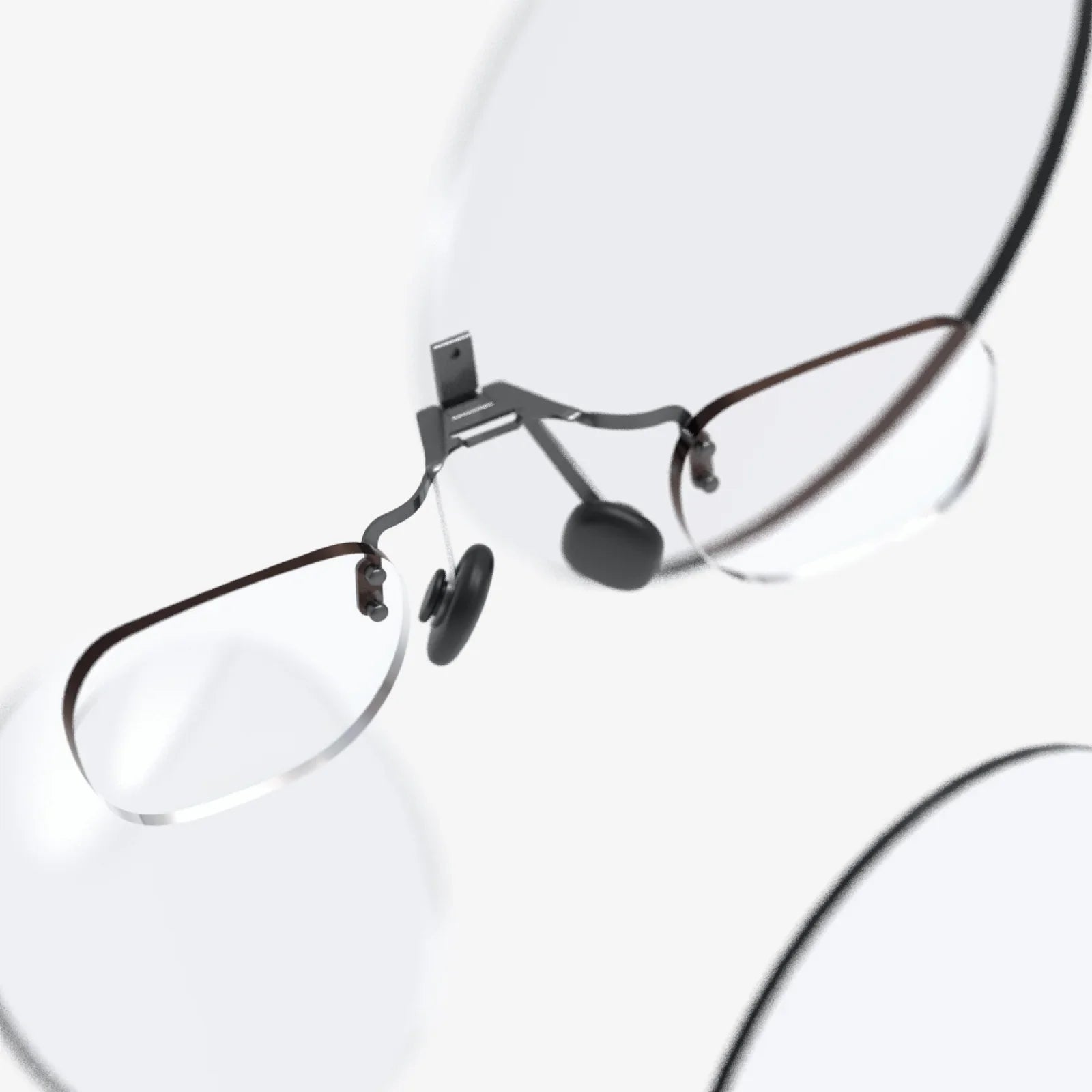
The digital and physical realms are colliding at a breathtaking pace, and at the epicenter of this convergence are Augmented Reality (AR) and Virtual Reality (VR). What was once the domain of science fiction and clunky, expensive prototypes is now rapidly maturing into a suite of powerful technologies poised to redefine everything from how we work and learn to how we socialize and play. Keeping up with the AR VR latest news means tracking a landscape in constant, thrilling flux, where each week seems to bring a new breakthrough, a strategic partnership, or a glimpse into a future that feels increasingly within reach.
The Enterprise Arena: Where AR and VR Are Proving Their Worth
While consumer applications often grab headlines, the most profound and immediate impact of AR and VR is happening within enterprise and industrial sectors. Companies are deploying these technologies to solve real-world problems, drive efficiency, enhance safety, and save millions of dollars.
Remote Assistance and Guided Workflows
One of the most established use cases is remote expert guidance. Field technicians, whether repairing a complex wind turbine or a critical hospital MRI machine, can wear AR glasses that allow a senior engineer thousands of miles away to see their field of view. This expert can then annotate the real world with digital arrows, diagrams, and text, guiding the on-site worker through complex procedures step-by-step. This drastically reduces downtime, minimizes errors, and lessens the need for expensive travel. The latest news in this sector revolves around the integration of artificial intelligence into these workflows, where AI can now automatically recognize components and surface the relevant section of a manual or tutorial without human intervention.
Design and Prototyping in Virtual Spaces
VR has revolutionized the design process for manufacturing, automotive, and aerospace industries. Instead of building physical prototypes, which is time-consuming and costly, engineers and designers can create and interact with full-scale 3D models in a shared virtual space. They can walk around a virtual car, inspect the engine bay, test ergonomics, and identify design flaws long before any metal is cut. The latest iterations of this technology allow for incredibly high-fidelity simulations with photorealistic rendering and haptic feedback, enabling even more nuanced evaluation.
Training for High-Stakes Scenarios
From training surgeons for complex operations to preparing first responders for disaster scenarios, VR provides an unparalleled safe environment for practice. Trainees can make mistakes without real-world consequences, building muscle memory and critical decision-making skills. AR is being used similarly on the factory floor, overlaying instructions onto machinery to train new operators more quickly and effectively. The AR VR latest news in training highlights a move towards hyper-realistic simulations powered by AI-driven characters and dynamic environments that react unpredictably, just like the real world.
The AI Revolution: Supercharging Immersive Experiences
It is impossible to discuss the current state of AR and VR without highlighting the transformative role of Artificial Intelligence. AI is not just an additive feature; it is the foundational technology that is making AR and VR smarter, more contextual, and more powerful.
Generative AI and World Building
Generative AI models are drastically reducing the time and cost required to create 3D assets and environments. Developers can now use text prompts to generate intricate textures, realistic objects, and even entire virtual worlds. This breaks down a major barrier to content creation, allowing smaller studios and individual creators to build rich, compelling experiences that were previously only possible for large teams with massive budgets.
Enhanced Computer Vision and Understanding
AI is the brain that allows AR devices to understand their environment. Advanced computer vision algorithms can now perform semantic segmentation—meaning they don't just see shapes and colors; they recognize that a particular surface is a wooden table, another is a concrete wall, and an object is a coffee cup. This deep understanding allows digital content to interact with the physical world in believable ways: a virtual ball can bounce accurately off a real floor, and a digital character can sit convincingly on a physical sofa. This is a key focus in AR VR latest news, as companies race to develop the most robust and efficient computer vision models to enable seamless blending of realities.
Intelligent Avatars and Natural Interaction
The days of clunky, robotic avatars are numbered. AI is enabling the creation of digital humans with realistic facial expressions, body language, and voice tonality. Furthermore, generative AI and large language models are powering natural, conversational interactions with characters in VR or digital assistants in AR. You can have a fluid, unscripted conversation with a historical figure in an educational app or receive contextual information about a product you're looking at in a store simply by asking aloud.
The Hardware Evolution: Towards Lighter, Smarter, More Accessible Devices
The hardware itself is undergoing a rapid evolution, moving away from tethered, bulky headsets towards more elegant, self-contained, and powerful systems.
The Quest for Form Factor: From Headsets to Glasses
The ultimate goal for AR, in particular, is a pair of stylish glasses that look no different from standard eyewear but can project rich digital information onto the world. We are not there yet, but recent announcements and prototypes show significant progress. The use of pancake lenses has allowed for much thinner profiles, while advancements in micro-OLED displays provide bright, high-resolution imagery in a tiny package. Companies are exploring various display technologies, including holographic waveguides, to achieve the desired blend of a wide field of view and a slim design. This relentless miniaturization is a constant headline in AR VR latest news.
Inside-Out Tracking and Spatial Computing
Gone are the days of needing external sensors or lighthouses placed around a room. Modern VR and AR headsets use inside-out tracking, employing a suite of onboard cameras and sensors to map their environment and track their own position within it in real-time. This technology, the core of what is now called "spatial computing," has become incredibly sophisticated and reliable, empowering users to move freely and interact naturally.
The Rise of Standalone and Mobile Power
The success of standalone VR headsets, powered by mobile chipsets, has proven that high-quality immersive experiences don't require a connection to a high-end computer. This has dramatically increased accessibility and convenience. The latest chipsets designed specifically for AR and VR are delivering desktop-level performance in a mobile form factor, enabling more complex graphics and physics simulations without the wire.
The Content Ecosystem: Beyond Gaming
While gaming remains a massive driver of VR adoption, the content ecosystem is diversifying at an impressive rate.
Social and Collaborative Platforms
The concept of the "metaverse" continues to evolve, primarily through social VR platforms. These are persistent virtual spaces where people can meet, attend concerts, watch movies together, play games, and simply hang out using personalized avatars. The focus for developers is on fostering genuine social connection and providing tools for user-generated content. The AR VR latest news in this space often involves major music artists hosting virtual concerts or companies launching virtual offices for remote team collaboration.
Immersive Storytelling and Documentary
Filmmakers and journalists are embracing VR to create profoundly empathetic experiences. Instead of watching a documentary about a refugee crisis, you can stand in the camp. Instead of reading about ancient Rome, you can walk its streets. This medium has the unique power to foster understanding by placing you directly in someone else's shoes. New narrative techniques and volumetric video capture are pushing the boundaries of what's possible in non-fiction and fictional storytelling.
Fitness and Wellness
VR has unexpectedly become a formidable player in the fitness industry. A plethora of apps turn a workout into a fun, immersive game, whether it's boxing, rhythm-based dancing, or HIIT training in exotic virtual locales. This "gamification" of exercise has proven highly effective at motivating users, making VR fitness a sustained and growing trend.
Challenges and Considerations on the Horizon
Despite the exciting progress, the industry still faces significant hurdles that are a key part of any honest assessment of the AR VR latest news.
The Privacy Conundrum
AR glasses, with their always-on cameras and microphones, continuously scan your environment. This raises immense privacy concerns, both for the user and for anyone nearby. The industry must develop clear, transparent, and ethical guidelines for data collection, usage, and storage. Questions about who has access to the continuous stream of environmental data and how it is analyzed are paramount and remain largely unanswered.
Interoperability and Open Standards
The current AR and VR landscape is often described as a series of "walled gardens." Digital assets and identities typically cannot move from one platform to another. For a truly open and interconnected metaverse to emerge, developers and hardware makers will need to agree on common standards for identity, avatars, and assets, much like the early web needed standards like HTML and HTTP.
Accessibility and Avoiding Digital Divides
As these technologies become more integral to work and society, ensuring they are accessible to people with different abilities is critical. This includes designing for visual, auditory, and mobility impairments. Furthermore, the cost of high-end hardware could create a new digital divide, limiting access to the transformative benefits of AR and VR based on socioeconomic status.
User Safety and Comfort
Issues like simulator sickness, eye strain, and physical safety while immersed remain areas of active research. Hardware improvements like better latency, higher refresh rates, and more accurate pupil tracking are helping, but designing experiences that are comfortable for prolonged use is an ongoing challenge for developers.
The trajectory of AR and VR is no longer a question of "if" but "how" and "when." The pace of innovation is accelerating, fueled by parallel advancements in AI, semiconductor technology, and connectivity. The stories making up the AR VR latest news today—be it a breakthrough in micro-displays, a novel enterprise application saving a company millions, or a new AI model that understands our world more deeply—are the building blocks of a fundamentally new way to interact with computing. This isn't just about putting a screen on your face; it's about weaving computing into the very fabric of our daily lives, making it more contextual, intuitive, and human. The next click you make might just transport you to a new dimension of reality itself.
Share:
First AI Powered Glasses: The Dawn of a New Invisible Computing Era
First AI Powered Glasses: The Dawn of a New Invisible Computing Era