


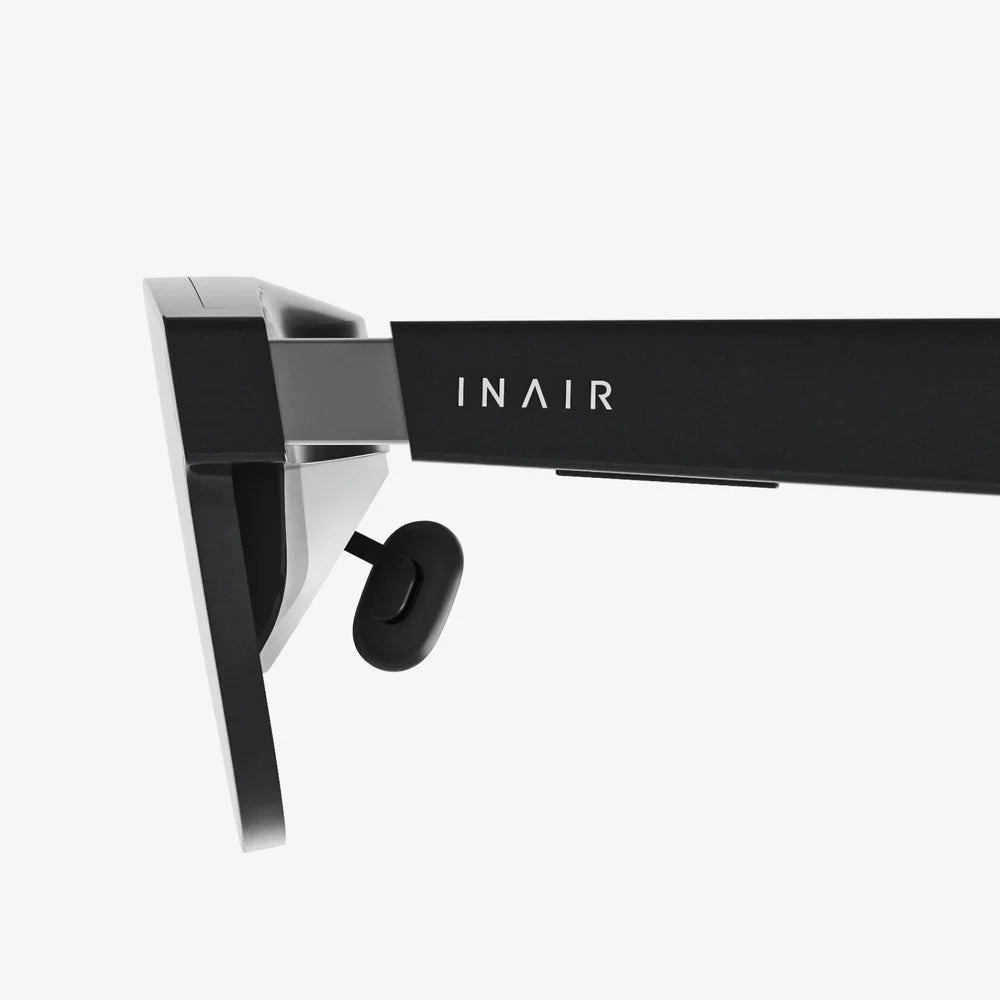
Imagine a world where information doesn't live on a screen you hold, but is woven directly into the fabric of your perception, accessible with a glance or a whisper. This is the promise, now the nascent reality, ushered in by the arrival of the first AI powered glasses. This isn't just another gadget; it's a fundamental shift in how we interact with technology, data, and each other. It’s the dawn of a new era of ambient, invisible computing, and it’s poised to change everything.
The Architectural Breakthrough: More Than Just a Display
To understand the significance of these devices, one must look beyond the familiar form factor of eyewear. The true revolution lies in the sophisticated fusion of hardware and intelligent software, creating a system that is far greater than the sum of its parts.
At the core of these glasses is a powerful, miniaturized processing unit. Unlike the simple microprocessors in smartwatches or previous wearable displays, this is an AI-optimized chipset designed for one primary task: to run complex neural networks and machine learning models in real-time, directly on the device. This capability, known as on-device processing, is critical. It eliminates latency, ensuring that the AI's responses are instantaneous. More importantly, it enhances privacy and security; your audio and visual data can be processed locally without needing to be constantly streamed to a remote cloud server for analysis.
This onboard AI brain is fed by a suite of advanced sensors. These typically include:
- High-Resolution Cameras: Strategically positioned to see what the user sees, capturing the world from a first-person perspective.
- Microphone Array: Using beamforming technology to isolate the user's voice from ambient noise, enabling clear voice commands even in noisy environments.
- Inertial Measurement Units (IMUs): Accelerometers and gyroscopes that track head movement and orientation, providing crucial contextual data about the user's actions and focus.
- Depth Sensors/Time-of-Flight Sensors (in some models): To understand the three-dimensional structure of the environment, distinguishing distances between objects.
The output, the magic that makes the digital world visible, is achieved through innovative optical systems. Unlike the bulky optics of virtual reality headsets that create fully immersive environments, these glasses use micro-projectors and combiners or waveguides. These technologies project a layer of digital information—text, graphics, highlights—onto the lenses, which then reflect it into the user's eyes. The result is a transparent, always-available heads-up display (HUD) that overlays the real world, a concept known as augmented reality (AR).
The Intelligence Within: How the AI Actually Works
The hardware is merely the vessel; the artificial intelligence is the soul. The AI stack in these glasses is a multi-layered engine of perception, comprehension, and action.
It begins with computer vision. The AI is trained on millions of images and videos to identify objects, people, text, and scenes. It can read a sign in a foreign language, recognize a specific breed of dog, identify a product on a shelf, or even gauge the nutritional information of a meal by sight. This visual understanding is continuous and contextual.
Simultaneously, natural language processing (NLP) and automatic speech recognition (ASR) are at work. The AI doesn't just hear sounds; it understands intent. A user can ask, "What am I looking at?" and the AI will use its computer vision to analyze the scene and then formulate a spoken response. This multimodal interaction—where voice commands and visual input are processed together—is what makes the experience feel truly intelligent and seamless. It’s a conversation with your environment, mediated by AI.
Finally, this leads to predictive assistance. By learning from user patterns, location data, and calendar entries, the AI can proactively surface information. Walking towards a subway station? It might display the schedule for the next train on your lens. In a meeting? It could discreetly show talking points you prepared earlier. This shift from reactive command to proactive assistance is the ultimate goal, creating a truly personal and helpful digital companion.
Transformative Applications: Beyond Novelty to Utility
The potential use cases for this technology extend far beyond tech demos and into the very core of daily life, accessibility, and professional work.
Revolutionizing Accessibility
This is perhaps the most immediate and profound impact. For individuals with visual impairments, AI glasses can act as a powerful visual interpreter. They can audibly describe a room, read text from a menu or document aloud, identify currency notes, recognize familiar faces and whisper their name, and even describe the mood expressed on a person's face. For those with hearing impairments, real-time speech-to-text transcription can be displayed directly on the lenses, turning conversations into captioned interactions. This technology has the potential to grant a new level of independence and connection.
Enhancing Professional Efficiency
In fields where hands-free operation and instant access to information are paramount, AI glasses are a game-changer.
- Healthcare: A surgeon could view patient vitals or surgical plans without looking away from the operating table. A paramedic could receive guided instructions for a procedure while keeping their hands on a patient.
- Manufacturing & Field Service: A technician repairing complex machinery could see schematic diagrams overlaid on the equipment itself, follow step-by-step AR instructions, or video-call a remote expert who can annotate their field of view.
- Logistics: Warehouse workers could have order-picking information and optimal routing displayed in their vision, dramatically speeding up fulfillment and reducing errors.
Redefining Daily Life and Social Interaction
For the general consumer, the applications are both practical and magical. They can serve as a perfect navigation tool, painting directions onto the street in front of you. They can be a universal translator, translating foreign street signs in real-time or providing live subtitles for a conversation with someone speaking another language. They can help you remember names and details at a networking event. They can identify constellations in the night sky or provide historical facts about a monument you're viewing.
The Inevitable Challenges: Privacy, Social Norms, and the Future
Such a powerful tool does not arrive without significant questions and challenges. The most glaring concern is privacy. A device that sees what you see and hears what you hear is the most intimate recording device ever conceived. The potential for constant surveillance, either by corporations or governments, is a terrifying prospect. Robust, transparent data handling policies, strong encryption, and the aforementioned on-device processing are non-negotiable prerequisites for public trust. The very concept of consent in public spaces is thrown into question—should people be notified if they are being recorded by someone's glasses?
Furthermore, the social acceptance of this technology is not guaranteed. Early adopters may be labeled "glassholes," a term born from previous attempts at facial computers. Wearing a camera on your face in a social setting can be perceived as anti-social, intrusive, or even threatening. New social etiquettes will need to evolve—unspoken rules about when it is appropriate to use them, perhaps indicated by a clear physical signal (like a light) when recording.
There are also concerns about cognitive overload and distraction. Will having a constant stream of notifications and information in our field of view make us less present in the real world? Will we become overly reliant on AI for basic tasks like navigation and memory, leading to an atrophy of our own innate skills?
The Road Ahead: From Prototype to Platform
The first generation of any transformative technology is always imperfect. These initial devices are likely to be expensive, have limited battery life, and offer a field of view for the AR display that is smaller than ideal. But they represent the critical first step.
The future trajectory is clear: miniaturization will continue until the technology is indistinguishable from regular eyewear. Battery technology will improve, perhaps leveraging solar charging or kinetic energy. The AI models will become exponentially more capable, understanding context and nuance with near-human intuition. Most importantly, these glasses will evolve from standalone products into a new platform.
Just as the smartphone gave rise to an entire ecosystem of apps, the AI glasses platform will spawn a new economy of " experiences." Developers will create immersive AR games that blend with city parks, educational tools that bring textbooks to life, and professional software that changes how we work. This platform shift could eventually make the smartphone, a device we constantly look down to, feel obsolete.
The launch of the first AI powered glasses is not merely a product release; it is a cultural and technological inflection point. It challenges our deepest notions of privacy, connection, and reality itself. It offers a glimpse of a future where technology understands us and our environment so deeply that it can assist us in ways we've only seen in science fiction. The genie is out of the bottle, and it's wearing glasses. The question is no longer if this future will arrive, but how quickly we can adapt to its immense potential and navigate its profound challenges.
We are standing at the precipice of the next great digital migration, moving from devices in our hands to intelligence in our sight. The first true pair of AI powered glasses is more than a piece of hardware; it's a key, unlocking a world where the line between human intuition and machine intelligence beautifully, and perhaps irreversibly, blurs. The next time you put on a pair of glasses, you might not just be seeing the world more clearly—you might be seeing an entirely new one.
Share:
AR VR Latest News: The Next Wave of Immersive Technology Is Here
AR VR Latest News: The Next Wave of Immersive Technology Is Here