


Imagine a world where the digital and physical seamlessly intertwine, where you can attend a concert on another continent from your living room, consult with a holographic doctor, or test-drive a car you've designed yourself. This is no longer the realm of science fiction; it is the rapidly materializing promise of AR, VR, and Metaverse developments, a technological revolution poised to redefine the very fabric of our daily lives and interactions. The pace of innovation is staggering, pushing the boundaries of what we thought possible and inviting us all to step into a new dimension of existence.
The Foundational Pillars: Understanding AR, VR, and the Metaverse
Before delving into the latest developments, it's crucial to establish a clear understanding of these interconnected yet distinct concepts. Often used interchangeably, they represent different layers of the immersive technology stack.
Augmented Reality (AR) overlays digital information—images, sounds, text—onto the user's real-world environment. Think of navigation arrows projected onto the road through your car's windshield or trying on virtual glasses using your smartphone's camera. AR enhances reality rather than replacing it, making it accessible through ubiquitous devices like smartphones and, increasingly, specialized glasses.
Virtual Reality (VR), by contrast, is a fully immersive, computer-generated simulation that replaces the user's real-world environment. By wearing a headset that tracks head and sometimes body movements, users are transported to entirely digital worlds, from hyper-realistic simulations to abstract artistic landscapes. VR is about presence, the convincing feeling of being somewhere else.
The Metaverse is the grand, overarching vision—a persistent, shared, and interconnected universe of these 3D virtual spaces, accessed via AR, VR, and traditional screens. It's not a single application but a hypothesized iteration of the internet, a collective virtual space created by the convergence of virtually enhanced physical and digital reality. It promises a future of interconnected digital experiences for work, play, socializing, and commerce.
The Engine Room: Breakthroughs in Hardware and Enabling Technologies
The recent surge in AR VR Metaverse developments is fundamentally powered by staggering advancements in the underlying hardware and core technologies. These innovations are solving long-standing challenges related to accessibility, comfort, and realism.
Next-Generation Headsets: Lighter, Faster, Smarter
The clunky, tethered, and nausea-inducing headsets of yesteryear are giving way to a new generation of sophisticated hardware. Standalone VR headsets have become the norm, offering powerful, all-in-one computing that liberates users from expensive gaming PCs. A significant focus for developers is on making devices smaller, lighter, and more comfortable for extended use, a critical factor for both enterprise adoption and consumer entertainment.
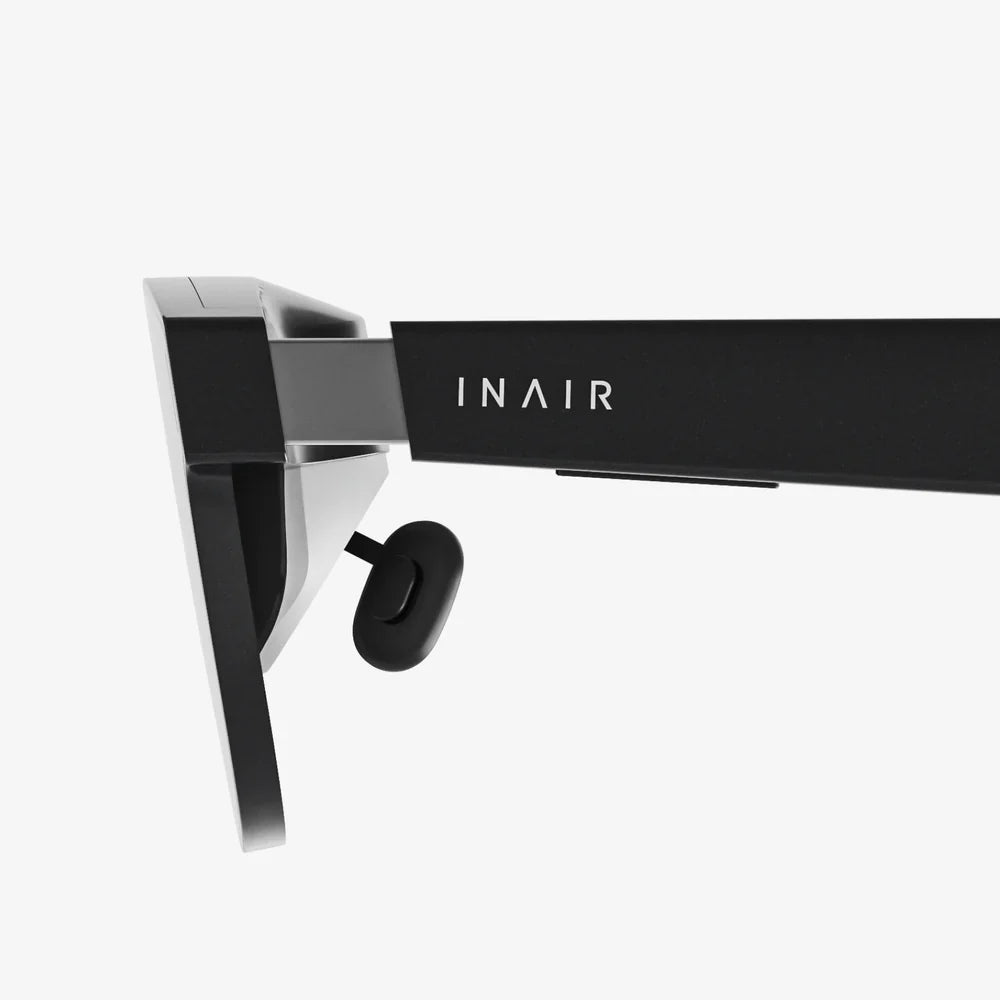
For AR, the holy grail remains a pair of stylish, socially acceptable glasses that can deliver high-fidelity digital overlays for all-day use. Recent prototypes and releases show immense progress, utilizing advanced waveguides and micro-LED displays to project bright, crisp images directly into the user's field of view. These devices are becoming more capable of understanding and interacting with the complex geometry of the real world in real-time.
Inside-Out Tracking and Eye-Tracking
The elimination of external sensors for positional tracking (known as inside-out tracking) has been a game-changer for user convenience. Cameras on the headset itself now map the room, tracking the user's position and controllers with remarkable accuracy. This technology is becoming more robust and efficient, reducing the processing power required.
Perhaps one of the most significant developments is the integration of eye-tracking. This technology does more than just create more expressive avatars. It enables foveated rendering, a technique where the headset renders only the area where the user's eyes are focused in high detail, drastically reducing the graphical processing load. This allows for more complex visuals and longer battery life. Furthermore, eye-tracking enables intuitive menu navigation and provides invaluable data for developers and researchers on user attention and behavior.
Haptics and Sensory Feedback
Immersion is not just visual and auditory. The sense of touch is a critical frontier. Advanced haptic feedback vests, gloves, and controllers are emerging, capable of simulating everything from the impact of a virtual bullet to the subtle texture of a digital fabric. These developments are crucial for professional training simulations, deep gaming immersion, and creating a true sense of physical presence in the Metaverse.
Software and Ecosystem: Building the Worlds Within
Powerful hardware is meaningless without compelling software and a thriving ecosystem to support it. This is where the true shape of the Metaverse is being forged.
The Rise of the Immersive Web and Interoperability
A key development is the move towards open standards that promise interoperability—the ability for users to move their digital assets, identities, and avatars across different virtual platforms and experiences. Initiatives like the Metaverse Standards Forum are bringing industry giants together to avoid a future of walled-garden digital spaces. Technologies like WebXR are allowing users to access AR and VR experiences directly through a web browser, lowering the barrier to entry dramatically and making immersive content as easy to access as a website.
AI as the Architect and Inhabitant
Artificial Intelligence is the invisible hand shaping AR VR Metaverse developments. AI algorithms are used to generate vast, realistic virtual environments through procedural generation, create intelligent non-player characters (NPCs) that can hold complex conversations, and power the translation and moderation tools necessary for a global, persistent digital world. AI is not just building the Metaverse; it will be a fundamental part of its population and functionality.
Creator Economies and User-Generated Content
The most successful virtual platforms are those that empower their users to create. Robust toolkits and simplified development environments are allowing artists, designers, and hobbyists with little to no coding experience to build virtual spaces, objects, and games. This user-generated content is the lifeblood of the Metaverse, ensuring a constant stream of fresh and diverse experiences and fostering vibrant creator economies where individuals can monetize their digital creations.
Transforming Industries: Enterprise Adoption Accelerates
While consumer applications often grab headlines, some of the most impactful and valuable AR VR Metaverse developments are happening within enterprise and industry.
- Remote Work and Collaboration: Virtual meeting platforms are evolving beyond simple video calls into persistent 3D spaces where remote teams can collaborate on digital whiteboards, manipulate 3D models, and interact with a sense of shared presence that Zoom cannot replicate.
- Design and Prototyping: Automotive, aerospace, and architecture firms are using VR to immerse themselves in full-scale prototypes of cars, buildings, and interiors long before any physical materials are used, saving millions in development costs and accelerating iteration.
- Training and Simulation: From surgeons practicing complex procedures to warehouse workers learning safety protocols, immersive training provides a safe, repeatable, and highly effective learning environment. AR can overlay instructions directly onto machinery, guiding a technician through a repair process step-by-step.
- Retail and Try-Before-You-Buy: AR apps allow customers to visualize how furniture will look in their home, how clothes will fit, or how a new shade of paint will transform a room, reducing purchase uncertainty and returns.
Navigating the Uncharted: Challenges and Considerations
For all its promise, the path to a mature and equitable Metaverse is fraught with significant challenges that developers, regulators, and society must address.
The Privacy Paradox
Immersive technologies are data collection engines on an unprecedented scale. A VR headset can track your precise movements, gaze, vocal inflections, and even physiological responses. In an AR world, a device could continuously scan and analyze your personal environment. Establishing clear, ethical, and transparent data governance frameworks is paramount to preventing dystopian scenarios of surveillance and manipulation.
Safety, Security, and Identity
How do you prevent harassment in a virtual space when someone can invade your personal bubble? How do you secure digital assets and identities from theft? How do you verify someone is who they claim to be? These are critical questions that platforms are grappling with through features like personal boundary systems, blockchain-based authentication, and robust community moderation tools.
The Digital Divide and Accessibility
There is a real risk that the Metaverse could exacerbate existing social and economic inequalities. High-cost hardware and the need for powerful internet connections could create a new class of digital haves and have-nots. Furthermore, ensuring these experiences are accessible to people with different physical abilities must be a core design principle from the outset, not an afterthought.
The Horizon: What's Next for the Spatial Web?
The current wave of AR VR Metaverse developments is merely the foundation. Looking ahead, several nascent technologies are set to catalyze the next great leap forward.
Neural Interfaces represent a frontier beyond screens and headsets. Research into non-invasive brain-computer interfaces could one day allow us to control digital interfaces with our thoughts, creating a level of immersion and intuitiveness that is currently unimaginable.
Photorealistic Avatars and Digital Humans, powered by sophisticated graphics and AI, will blur the line between human interaction and interaction with AI agents. This has implications for customer service, entertainment, and even how we preserve and interact with historical figures or loved ones.
Finally, the full integration of blockchain and decentralized technologies could realize the vision of a user-owned Metaverse, where digital property rights are as concrete as physical ones, and users have true sovereignty over their data and digital identities.
The convergence of AR, VR, and the broader vision of the Metaverse is not just another technological trend; it is a fundamental shift in how humanity interfaces with information, narrative, and each other. The developments are moving at lightning speed, driven by immense investment and human ingenuity. The virtual frontier is open, its rules are being written now, and its ultimate shape will be determined by the choices we make today. The door between realities is creaking open—will you step through?
Share:
Who Invented Augmented Reality: The Untold Story of a Digital Revolution
Virtual Pro XR Glasses Are Redefining Reality and Reshaping Our Digital Future