


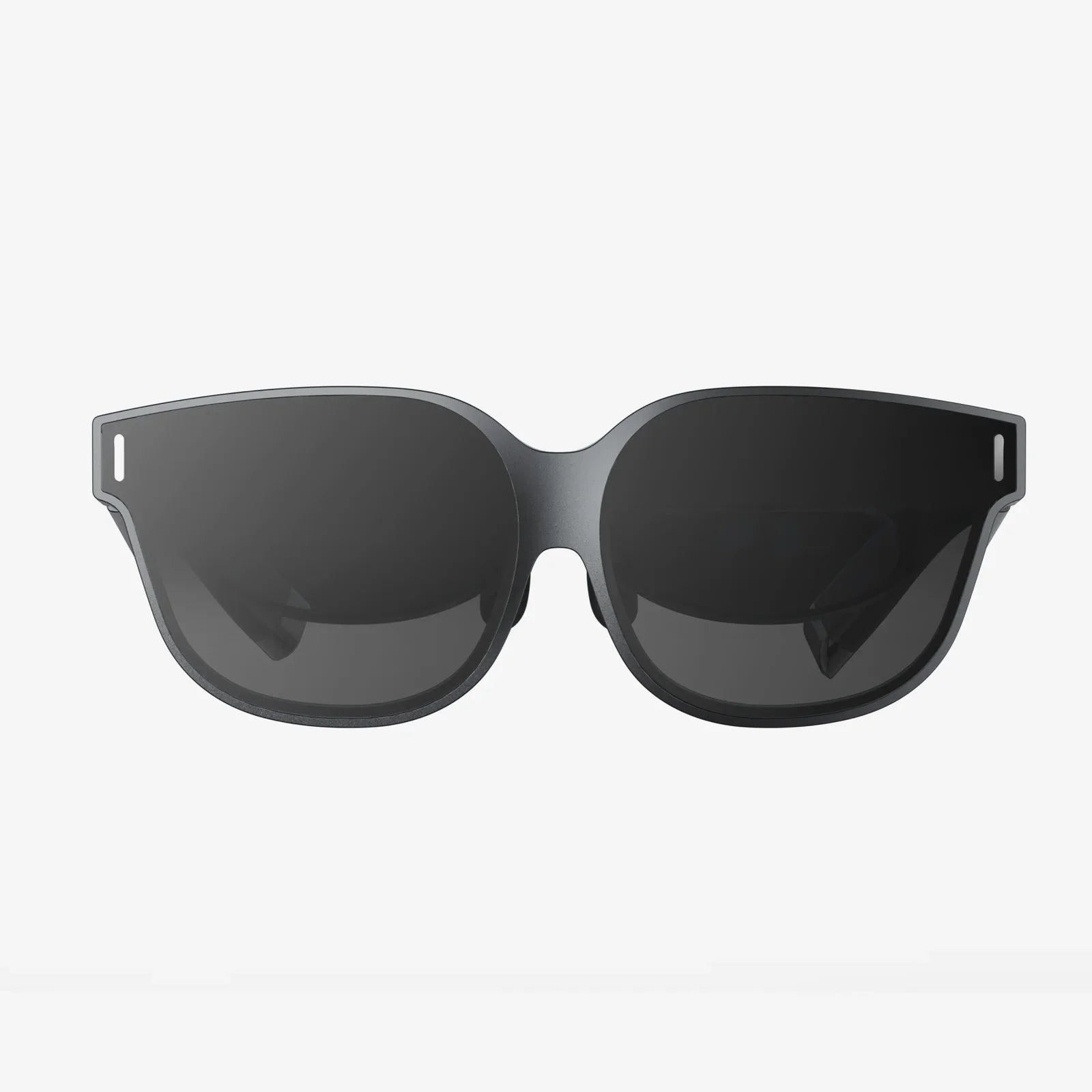
Imagine a world where the line between the digital and the physical doesn't just blur—it vanishes. A world where your workspace is a panoramic vista of mountains, your instructor is a life-sized hologram demonstrating a complex procedure, and the stories you consume unfold all around you, making you a character within them. This is not a distant sci-fi fantasy; it is the imminent future being unlocked today by a new class of advanced wearable technology. At the forefront of this revolution are sophisticated devices known as Virtual Pro XR glasses, which promise to be the most transformative portal to our digital lives since the advent of the smartphone.
The Evolution of Seeing: From Screens to Scenes
The journey to this point has been one of relentless miniaturization and ambition. The earliest forays into head-mounted displays were bulky, low-fidelity, and offered experiences that felt more like novelties than necessities. They were confined to labs and niche enthusiast communities. The subsequent wave of consumer-grade virtual reality headsets brought immersive gaming and experiences to the masses, but they often remained tethered to powerful computers, isolating users from their environment. Augmented reality, through smartphone cameras, offered a glimpse of overlaying digital information but felt indirect and disconnected.
Virtual Pro XR glasses represent the synthesis and maturation of these technologies. The "XR" stands for Extended Reality, an umbrella term encompassing the spectrum from the fully digital (Virtual Reality) to the digitally augmented (Augmented Reality) and everything in between. The "Pro" designation signifies a leap in capability, fidelity, and intention. These are not merely entertainment devices; they are professional tools, creative canvases, and social platforms built into a single, sleek form factor that aims for all-day usability. They are the culmination of breakthroughs in optics, processing power, sensor fusion, and artificial intelligence, packaged to be worn like a regular pair of glasses.
Deconstructing the Magic: The Core Technologies Powering the Experience
The seamless experience offered by these devices is a technical marvel, hinging on several key innovations working in concert.
Advanced Optical Systems: Windows to New Worlds
At the heart of the experience are the display and lens systems. Unlike their predecessors that used heavy fresnel lenses, many modern devices employ pancake lenses. These compact, multi-element designs fold the light path, allowing for a dramatically slimmer profile without sacrificing field of view or image quality. Coupled with these are micro-OLED displays, which offer incredibly high resolutions, pixel-dense enough to eliminate the "screen door effect," alongside perfect blacks, high contrast ratios, and vibrant colors. This combination creates a visual fidelity that is crisp, immersive, and comfortable for extended periods, crucial for professional applications where detail is paramount.
Spatial Computing and Environmental Understanding
For the digital to feel present in your physical world, the device must understand that world intimately. This is the domain of spatial computing. A suite of high-resolution cameras, LiDAR scanners, and depth sensors continuously map the user's environment, creating a real-time 3D mesh. This digital twin allows virtual objects to obey the laws of physics: they can rest on your physical desk, occlude behind your real sofa, and cast accurate shadows. This environmental understanding is also critical for user safety, enabling features like automatic passthrough that alerts the user to physical obstacles or creates digital boundaries.
Intuitive Interaction: Beyond the Controller
Interaction paradigms have evolved beyond handheld controllers. High-fidelity hand-tracking cameras allow users to manipulate digital interfaces and objects with natural pinches, grabs, and gestures, making the technology feel more immediate and magical. Eye-tracking is another revolutionary feature. It enables foveated rendering, a technique where the system renders the area of the display you are directly looking at in full resolution while subtly reducing the detail in your peripheral vision. This massively reduces the computational load, allowing for stunning graphics without sacrificing battery life or requiring excessive processing power. Furthermore, eye-tracking unlocks nuanced social interaction in shared virtual spaces, as avatars can convey where a person is looking, and interfaces can respond to your gaze.
Seamless Passthrough: Blending Realities
A defining feature of these glasses is high-resolution, low-latency video passthrough. Instead of simple transparent lenses, cameras feed a live video feed of your surroundings to the internal displays. This allows the system to seamlessly blend high-quality digital content with your real environment. The technical challenge is immense: the passthrough must be high-resolution enough to read text on a physical phone screen, have a wide enough dynamic range to handle bright windows and dark corners, and have such low latency that the world doesn't feel laggy or nauseating. When done correctly, it creates the convincing illusion that digital objects are truly coexisting in your space.
The Professional Paradigm Shift: Revolutionizing Industries
While consumer applications are exciting, the most immediate and profound impact of Virtual Pro XR glasses is happening within professional sectors, redefining workflows and unlocking new possibilities.
Design and Engineering
Architects and industrial designers are no longer constrained to 3D models on a 2D screen. They can walk clients through a full-scale, photorealistic rendering of an unbuilt home, examining sightlines and material choices in context. Automotive engineers can collaborate on a life-sized 3D model of a new engine prototype from different continents, annotating and manipulating components in real time as if they were in the same garage. This ability to visualize and iterate in real space drastically reduces prototyping costs and accelerates time to market.
Healthcare and Medicine
The potential in medicine is staggering. Surgeons can use detailed, interactive 3D holograms of a patient's anatomy from MRI or CT scans to plan complex procedures, practicing the operation before making a single incision. During surgery, vital signs and guidance data can be overlaid directly onto their field of view, keeping their focus on the patient. Medical students can move beyond textbooks to perform virtual dissections and practice diagnostics on animated, anatomically precise holograms, gaining experience in a zero-risk environment.
Remote Collaboration and Training
Virtual Pro XR glasses make the concept of a "holoportation" a practical reality. Instead of a flat video call, remote colleagues can appear as life-like avatars or even volumetric video captures in your physical space, able to collaborate on 3D models, point to specific elements, and share a true sense of presence. This is transformative for training technicians to repair complex machinery. An expert miles away can see what the trainee sees, draw arrows and instructions directly onto their reality, and guide them through each step, effectively teleporting their expertise.
Content Creation and Storytelling
For filmmakers and game developers, these devices become the ultimate creative studio. They can sculpt 3D characters and environments with their hands, block out scenes by physically walking through virtual sets, and preview visual effects in the context of a live-action shoot. This immersive pre-visualization saves millions of dollars and fosters a more intuitive creative process. Storytellers are also exploring new narrative forms, creating immersive experiences where the audience is inside the story, able to look around and explore at their own pace.
Navigating the New Frontier: Challenges and Considerations
For all their promise, the path to mainstream adoption of this technology is not without significant hurdles.
The quest for the perfect form factor continues. While far slimmer than previous generations, achieving a design that is socially acceptable, comfortable for all-day wear, and houses all the necessary technology remains a monumental challenge. Battery life is another critical constraint; powering high-resolution displays, numerous sensors, and powerful processors demands innovative solutions, whether through efficient chipsets, external battery packs, or novel power management.
Beyond hardware, the software ecosystem needs to mature. A killer app that demonstrates undeniable daily utility for the average person is still emerging. Furthermore, the advent of such a pervasive technology raises profound questions about data privacy, security, and the very nature of human experience. These devices, with their always-on cameras and microphones, collect unprecedented amounts of data about our environments, behaviors, and even our biometric responses like eye movement. Establishing clear ethical guidelines and robust security frameworks is not an option; it is a prerequisite for societal trust and acceptance.
There are also societal concerns about a new digital divide. Will this technology become an essential tool for work and communication, creating a gap between those who can afford it and those who cannot? And on a human level, as we spend more time in enriched digital spaces, we must be mindful not to diminish the value and beauty of our un-augmented physical reality.
The Horizon of Human Experience: What Comes Next?
The current state of Virtual Pro XR glasses is merely the foundation. The future trajectory points toward even more seamless integration with our lives and biology. We are moving toward neural interfaces that will allow us to control digital elements with thought alone, moving beyond gestures. Haptic feedback technology will evolve to let us feel the texture of a virtual object or the handshake of a remote colleague. Artificial intelligence will act as an always-available contextual assistant, overlaying relevant information and insights based on what you're looking at and what you're trying to achieve, predicting your needs before you even articulate them.
This will eventually evolve into the concept of the "metaverse"—a persistent network of interconnected virtual spaces and digital twins of our physical world. Virtual Pro XR glasses will be the primary lens through which we access this layer of existence, not as a separate place we go to, but as an integral part of our daily reality, enhancing everything from commerce and education to social connection.
The true potential of Virtual Pro XR glasses lies not in replacing our reality, but in augmenting our human capabilities. They are a tool to enhance creativity, to collapse distance, to democratize expertise, and to solve problems that have previously been too complex to visualize. They represent a new platform for human experience, as significant as the personal computer or the internet. The question is no longer if this future will arrive, but how we will choose to shape it. The gateway is here, and it’s waiting to be opened. The next era of human discovery and connection will be viewed not on a screen in our hands, but through the lenses on our faces, transforming every room, every street, and every moment into a canvas of infinite possibility.
Share:
AR VR Metaverse Developments: Shaping the Next Digital Frontier
Augmented Reality How To: A Comprehensive Guide for Beginners and Developers