


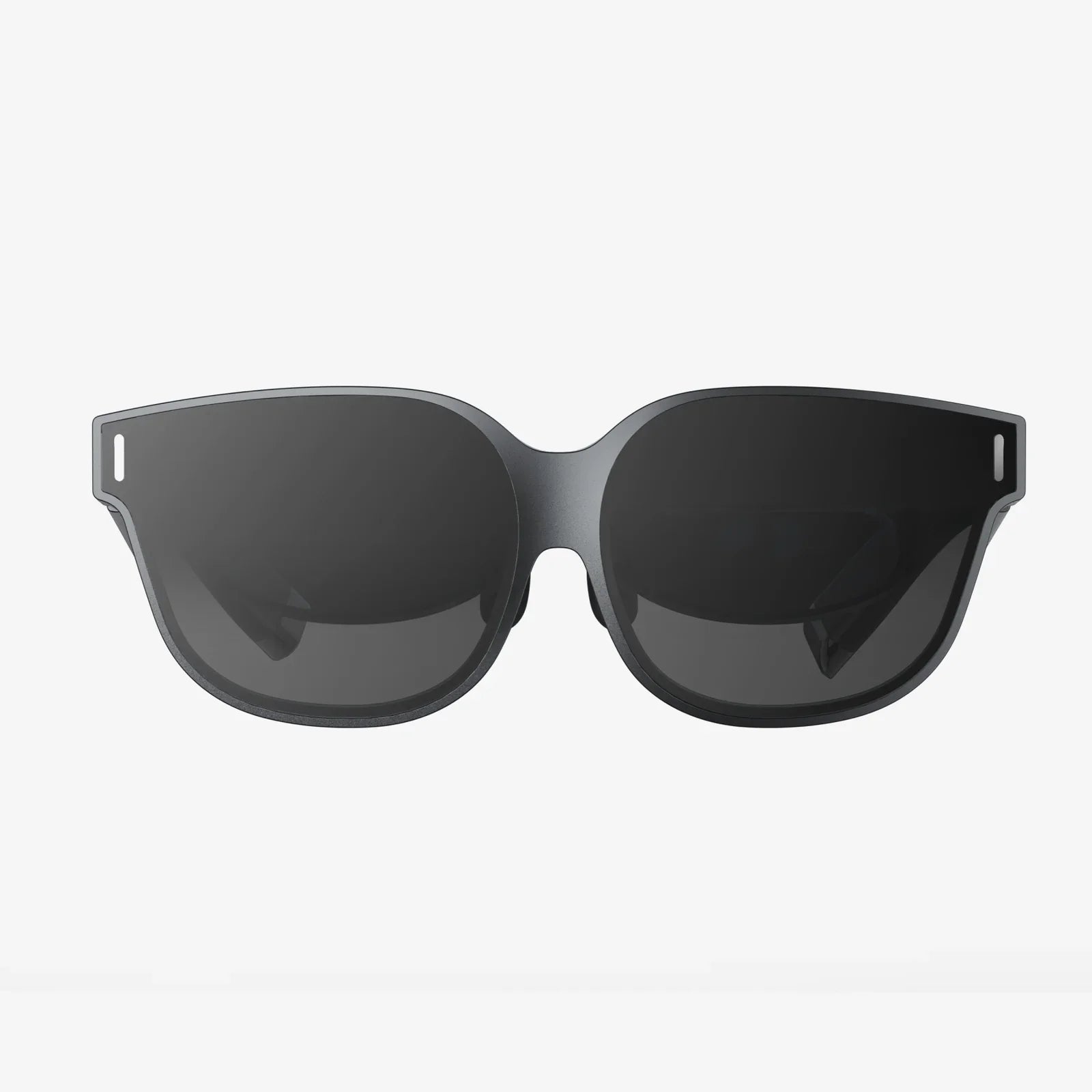
Imagine a world where the digital and the physical are not just connected, but seamlessly interwoven, where information doesn't just appear on a screen but is painted onto the very fabric of reality around you. This is the tantalizing promise held within the cryptic yet powerful designation: AR VR Series SV. More than just a product line, it represents a fundamental shift in philosophy, a new chapter in the story of immersive technology that moves beyond the limitations of current devices to forge a unified, intelligent, and astonishingly real experience. The journey to understand this evolution is a journey to the very frontier of how we will work, learn, play, and connect.
The Historical Divide: A Tale of Two Realities
To appreciate the significance of the SV series concept, one must first understand the historical context from which it emerged. For years, Augmented Reality (AR) and Virtual Reality (VR) have been perceived as two distinct paths, two separate philosophies vying for dominance.
Virtual Reality offered total immersion. By donning a headset, users were transported to entirely digital worlds, from the depths of the ocean to the surface of Mars. The strength of VR was its ability to create presence—the undeniable feeling of being somewhere else. However, this strength was also its primary weakness: isolation. VR, by its very nature, shut out the physical world, creating experiences that were often solitary and required a clear, safe space to operate.
Augmented Reality, on the other hand, sought to enhance the real world rather than replace it. By overlaying digital graphics, text, and interfaces onto a user's field of view through glasses or a smartphone, AR aimed to provide contextual information exactly when and where it was needed. Its weakness was often in its fidelity and integration; many early AR experiences felt like gimmicky holograms slapped onto a camera feed, lacking the persistence and depth necessary to feel truly real.
This divide created a technological schism. Developers had to choose a camp: build for the closed, high-immersion world of VR, or for the open, context-aware world of AR. Users often had to choose between devices dedicated to one experience or the other. The AR VR Series SV paradigm shatters this binary thinking.
Deconstructing the Moniker: What Does SV Signify?
The "SV" designation is not arbitrary; it serves as a concise manifesto for this new technological direction. While interpretations may vary, it most compellingly stands for Seamless Vision. This core principle underpins every aspect of the series' conceptual framework.
Seamless refers to the eradication of barriers. This includes the barrier between the real and the digital, creating interactions so natural they feel instinctive. It also means seamlessness between applications, allowing a user to fluidly move from a fully immersive VR meeting into an AR-enhanced view of their physical desk without fumbling with hardware or software. It implies a seamless form factor—hardware that is lightweight, comfortable, and socially acceptable to wear for extended periods, moving away from the bulky, face-consuming designs of the past.
Vision operates on a dual level. First, it is about literal vision—achieving a visual fidelity so high that the human eye cannot distinguish between a digital object and a physical one. This involves breakthroughs in display technology, offering high resolutions, wide fields of view, and perfect focal depth. Second, it is about perspective and intelligence. It represents the device's capacity for contextual awareness, using advanced sensors and artificial intelligence to not just see the world, but to understand it. This machine vision allows the technology to recognize objects, surfaces, people, and gestures, enabling truly intuitive interaction.
Together, Seamless Vision describes a future where technology fades into the background, and the experience of enriched reality takes center stage.
The Pillars of the SV Framework
The realization of this Seamless Vision is built upon several key technological pillars that differentiate it from previous generations of immersive tech.
1. Advanced Sensor Fusion and World Mapping
At the heart of any SV-class device is a sophisticated array of sensors—LiDAR, depth sensors, high-resolution cameras, and inertial measurement units (IMUs). These don't work in isolation; their data is fused together in real-time by powerful onboard processors to create a rich, dynamic, and understanding of the user's environment. This is beyond simple spatial mapping; it's about semantic understanding. The system doesn't just know there is a table; it recognizes it as a surface for placing digital objects. It doesn't just see a wall; it understands it as a boundary and a potential canvas for a display. This persistent digital twin of the physical world is the foundational canvas upon which seamless experiences are painted.
2. Photorealistic Rendering and Light Estimation
For digital objects to feel real, they must obey the laws of physics, particularly concerning light. SV-caliber technology employs advanced light estimation algorithms, using the onboard sensors to analyze the ambient lighting conditions, including direction, color temperature, and intensity. Digital objects are then rendered in real-time to cast accurate shadows, exhibit correct specular highlights, and even occlude and be occluded by physical objects. This interplay of light and shadow is crucial for the brain to accept the virtual as physical, moving past the cartoonish or ghostly overlays of the past.
3. Neural Interfaces and Intuitive Control
The break from handheld controllers is a hallmark of the SV evolution. While controllers may remain an option for specific tasks, the primary mode of interaction shifts towards more natural input methods. This includes:
- Eye-Tracking: Used not just for rendering efficiency (a technique called foveated rendering) but also as a direct input method. Menus can be navigated with a glance, and objects can be selected by looking at them.
- Hand Tracking: Advanced computer vision allows the system to track all 26 degrees of freedom of the user's hands with sub-millimeter accuracy. This enables pinch, grab, and gesture controls that feel as natural as interacting with a physical object.
- Voice Control: Integrated intelligent assistants allow for complex commands to be executed hands-free, further reducing friction between user intent and action.
4. Ubiquitous Connectivity and Cloud Integration
The SV series concept is not an island. It is a node in a larger network. Leveraging high-speed, low-latency connectivity, heavy computational tasks like complex simulation physics or detailed AI processing can be offloaded to the cloud. This allows the wearable hardware to remain slim and efficient while still delivering incredibly powerful experiences. Furthermore, this enables shared persistent experiences. A digital model left on a physical conference table can be seen and interacted with by colleagues joining remotely from their own SV devices, creating a truly collaborative spatial web.
Transforming Industries: The SV Impact
The potential applications for a technology that successfully implements the SV framework are vast, stretching across every sector of society.
Revolutionizing Enterprise and Design
In industrial design and architecture, professionals will be able to life-size, photorealistic 3D models of their creations directly into their workspace. A car designer could walk around a full-scale hologram of a new vehicle prototype, examining the curve of a fender from every angle and making adjustments with a wave of their hand. An architect could walk clients through a building that hasn't been built yet, with sunlight streaming through virtual windows at the correct time of day. The line between blueprint and reality will blur into irrelevance.
The Future of Medicine and Surgery
Surgeons could have critical patient data—like MRI scans or vital signs—floating seamlessly in their field of view during an operation, without ever having to look away from the patient. Medical students could practice complex procedures on hyper-realistic digital twins of human anatomy. This technology could democratize access to expert knowledge, allowing a specialist to virtually "step into" an operating room anywhere in the world to guide a local team through a procedure.
Redefining Social Connection and Remote Work
The concept of a video call will become obsolete, replaced by shared virtual spaces that feel tangible. Colleagues from across the globe could appear as lifelike avatars sitting around the same table, able to share and manipulate 3D data models as if they were physical objects. This sense of co-presence—of truly being together in a shared space—has the potential to heal the fragmentation of remote work and connect people in profoundly new ways.
A New Paradigm for Entertainment and Storytelling
Entertainment will become an active experience rather than a passive one. Imagine a mystery game where clues are hidden not on a screen but within your own home, or a historical documentary where you can stand next to a holographic historian as they explain the artifacts in a museum. The very nature of narrative will evolve to be spatial and participatory.
Navigating the Challenges Ahead
The path to this seamless future is not without significant hurdles. The computational power required to run these experiences demands immense processing capability within a small, thermally constrained form factor. Battery technology must advance to support all-day use. Perhaps most importantly, the industry must tackle critical questions of privacy, data security, and ethical design. A device that maps and understands your home and life in intimate detail must be built on a foundation of trust and user control. Establishing robust norms and regulations will be just as important as the technological breakthroughs themselves.
The AR VR Series SV is more than a product; it's a beacon pointing toward the next great platform shift in computing. It represents the culmination of decades of research and a bold bet on a future where our technology doesn't demand our attention but quietly enhances our perception and amplifies our potential. The devices that embody this philosophy will not be something we look at, but something we look through—a lens that finally brings the full promise of the digital world into perfect harmony with our own.
Share:
Future Concept Augmented Reality: Redefining the Fabric of Human Experience
History of Augmented Reality Technology: From Sci-Fi to Everyday Life