


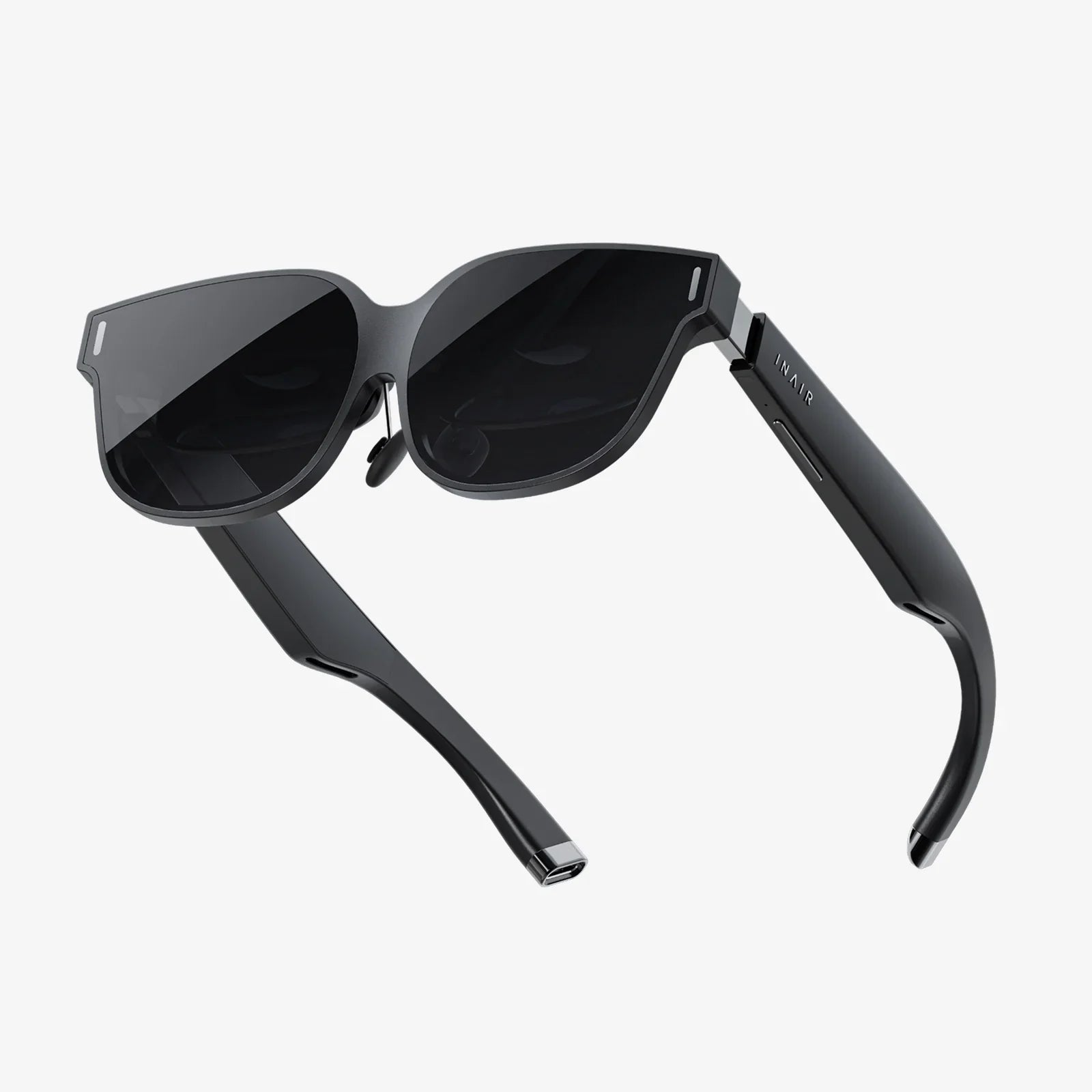
Imagine a world where the line between the digital and the physical doesn't just blur—it vanishes. Where information doesn't live on a screen in your hand but is woven into the very fabric of your reality, accessible with a glance, a gesture, or a thought. This is the breathtaking promise of future concept augmented reality, a technological evolution poised to leap from science fiction into the very core of our daily existence, transforming everything from how we perform surgery to how we remember a walk in the park.
Beyond the Screen: The Evolution from Tool to Environment
The current public perception of augmented reality is often tied to smartphone filters or clunky headsets that project digital monsters into your living room. These are merely the primordial precursors, the proof-of-concept that hints at a far more profound future. Future concept augmented reality is not about a device; it is about an environment. It envisions a shift from looking at a digital interface to living within an information-augmented world.
This next generation will be characterized by several key evolutionary leaps. First is the hardware itself. Bulky headsets will give way to sleek, socially acceptable form factors—think lightweight glasses, and eventually, contact lenses or even neural interfaces that project imagery directly onto the retina. The goal is ubiquity and comfort, allowing the technology to fade into the background of our perception, becoming an invisible conduit to a richer world.
Second, and perhaps most crucially, is spatial understanding. Future AR systems will move beyond simple marker recognition to possess a deep, real-time comprehension of their environment. Using advanced sensor suites, LiDAR, and machine learning, these systems will construct a dynamic 3D map of the world, understanding the geometry of a room, the properties of materials, the presence of people, and even the emotional context of a situation. This allows digital content to not just appear in a space, but to interact with it authentically—a virtual ball bouncing correctly off a real table, or a navigation arrow pointing precisely to the exact door you need to enter.
The Intelligent Layer: Contextual and Predictive AI
At the heart of this future concept is a powerful, embedded artificial intelligence. This AI will act as an invisible curator and assistant, constantly analyzing the vast streams of data from the environment and the user. It won't just show you information; it will show you the right information at the right time.
Imagine walking through a foreign city. Your AR interface, recognizing your curiosity, could subtly highlight historical facts about a building as you look at it, translate a menu in real-time as you peer through the restaurant window, and warn you of a bicycle lane you're about to step into—all without a single explicit command. This is contextual computing at its finest.
This predictive layer will extend to social interactions. Imagine attending a large conference. Your AR system, with permission, could identify colleagues, displaying their name and recent work projects as you approach them, helping to break the ice. It could analyze a person's facial micro-expressions to provide subtle social cues, potentially aiding those with social anxiety. The AI becomes a partner in navigation, both physical and social, enhancing our capabilities and perception.
Revolutionizing Industries: From the Operating Room to the Factory Floor
The practical applications of this technology will disrupt nearly every professional field, moving far beyond gaming and entertainment.
Healthcare and Surgery
In medicine, future concept augmented reality will be nothing short of transformative. Surgeons will operate not by looking up at a distant 2D screen showing a CT scan, but by seeing a perfect, holographic overlay of the patient's anatomy directly on their body. They could "see through" tissue to locate tumors, arteries, and nerves with millimeter precision, drastically reducing risk and improving outcomes. Medical students could practice complex procedures on hyper-realistic virtual cadavers, and first responders could receive guided instructions for emergency care directly in their field of view.
Engineering and Manufacturing
On the factory floor, assembly and maintenance will be revolutionized. A technician repairing a complex engine could see step-by-step instructions overlaid directly onto the machinery, with arrows pointing to specific components and torque values displayed next to each bolt. Designers and engineers could collaborate on a full-scale 3D model of a new jet engine, walking around it, peering inside, and making adjustments in real-time, all from different parts of the world.
Education and Training
Education will cease to be confined to textbooks and videos. Students studying astronomy could have a detailed model of the solar system orbiting around their classroom. History lessons could become immersive reenactments, with historical figures and events playing out in the room. Chemistry students could safely mix volatile elements in virtual beakers, watching reactions unfold on their desk. This shift from abstract learning to experiential, spatial learning will deepen understanding and retention dramatically.
The New Social Fabric: Connection and Presence at a Distance
One of the most profound impacts of future concept AR will be on human connection. Video calls, which flatten our interactions into a grid of faces on a screen, will feel archaic. The future of communication is holographic presence.
You could have a business meeting where remote participants appear as life-sized, realistic avatars sitting around the same table, making eye contact and sharing body language. Families separated by oceans could share a meal, with grandparents appearing as if they are truly present in the dining room, able to interact with the physical space. This technology promises to collapse distance, creating a sense of shared presence that video conferencing can never achieve, and potentially mitigating the loneliness of an increasingly digital world.
The Architectural Canvas: Redefining Space and Art
Our physical spaces will become dynamic canvases. With future concept AR, your home's walls could change color and display art on command. Your empty living room could be furnished with virtual pieces to test layouts before you buy. Public art could become interactive and ever-changing—a city square might feature a virtual sculpture garden one day and a historical battle reenactment the next.
Architects and urban planners will no longer be limited to showing clients static models or blueprints. They will be able to walk them through a full-scale, photorealistic holographic rendering of a building before a single brick is laid, allowing for changes to be made in real-time based on the client's spatial experience. This will democratize design and lead to spaces that are more human-centric and functional.
The Ethical Frontier: Privacy, Accessibility, and the Reality Divide
Such a powerful technology does not arrive without significant challenges and ethical dilemmas. The most pressing concern is privacy. A device that is always-on, always-sensing, and always-recording the environment is a unprecedented data collection tool. Who owns the data of your living room that an AR system maps? How do we prevent constant facial recognition and tracking in public spaces? Robust legal frameworks and ethical design principles, prioritizing user control and transparency, will be essential to prevent a dystopian surveillance state.
Furthermore, the digital divide could evolve into a "reality divide." If AR becomes the primary interface for work, education, and social interaction, what happens to those who cannot afford or access it? There is a risk of creating a two-tiered society: those who are "augmented" and have access to a layer of enhanced information and efficiency, and those who are not, left behind in an analog world.
There are also profound philosophical questions. If we can filter our reality—hiding advertisements, altering the appearance of people and places, or creating personalized fantasy worlds—what does that do to our shared sense of reality? Will it lead to greater empathy and understanding, or to further social fragmentation and isolation within customized bubbles?
A Symbiotic Future: Augmenting Humanity, Not Replacing It
The ultimate goal of future concept augmented reality should not be to escape our reality, but to enrich it. It should be a symbiotic technology, designed to augment human intelligence, creativity, and connection. It can offload mundane cognitive tasks (like remembering directions or a shopping list), freeing our minds for higher-level thinking and creativity. It can make invisible data visible, helping us understand complex systems from the human body to global climate patterns.
It has the potential to make us more present, not less. Instead of looking down at a phone, we can be guided through the world with our heads up, engaging more deeply with our surroundings and the people in them. The technology itself must be designed to be calm, contextual, and respectful, appearing only when needed and enhancing the experience of being truly, wonderfully human.
The journey toward this future is already underway in research labs and startups around the globe. The path is fraught with technical hurdles and profound ethical questions that we must navigate with care and foresight. But the destination is a world of immense possibility—a world where our digital intelligence escapes the confines of the screen and harmoniously merges with our physical existence, expanding the very boundaries of human experience and allowing us to see the world, and each other, in a brilliant new light.
Share:
Augmented Reality AR: The Digital Layer Reshaping Our World
AR VR Series SV: The Next Evolution in Immersive Technology