


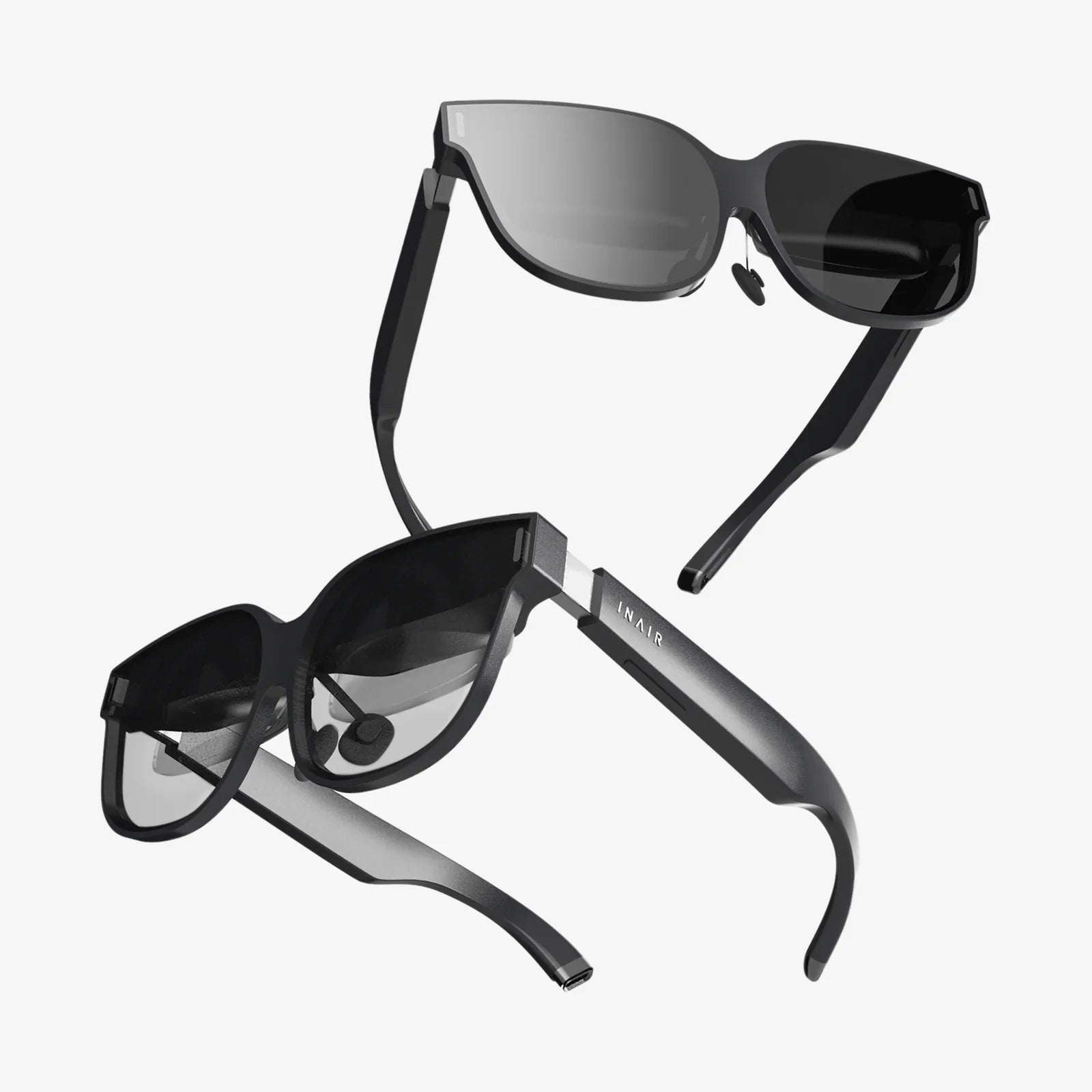
Imagine a world where the digital and the physical are no longer separate realms, but a single, intertwined experience. This is no longer the stuff of science fiction; it is the palpable future being built today through the breathtaking pace of augmented and virtual reality technology developments. These aren't just new gadgets; they are gateways, fundamentally altering how we work, learn, connect, and perceive reality itself. The line between what is real and what is digitally rendered is blurring, and the implications are as profound as they are exciting, promising to unlock experiences we've only ever dreamed of.
The Evolutionary Leap: From Novelty to Necessity
The journey of AR and VR from clunky, expensive prototypes to sleek, powerful platforms has been accelerated by breakthroughs across multiple disciplines. Early iterations were often hampered by technical limitations: low-resolution displays that caused the dreaded 'screen door effect', cumbersome hardware that induced nausea, and a lack of compelling content. Today, we stand on the precipice of a new era. The convergence of more powerful mobile processors, sophisticated display technology, and advanced software algorithms has created a fertile ground for exponential growth. This evolution is moving the technologies from peripheral novelties to central tools in the global tech ecosystem.
Hardware: The Physical Bridge to New Realities
The most tangible signs of progress are found in the hardware itself. The devices that facilitate these immersive experiences are becoming more powerful, comfortable, and accessible.
Headsets: Lighter, Faster, Smarter
The modern headset is a marvel of miniaturization and engineering. Gone are the days of being tethered to a massive desktop computer. Standalone VR headsets now pack immense processing power into a single unit, offering untethered freedom and high-fidelity experiences. Inside, advancements in display technology are crucial. Micro-OLED and pancake lenses are providing sharper images with greater pixel density, wider fields of view, and significantly reduced glare and god rays. This directly combats visual discomfort and enhances the feeling of 'presence'—the sensation of truly being in a virtual space.
Tracking and Input: Intuitive Interaction
How we interact within these spaces has also seen revolutionary change. Inside-out tracking, where cameras on the headset itself map the environment, has eliminated the need for external sensors, making setup instantaneous and expanding the usable play area. Hand-tracking technology is perhaps even more significant. By allowing users to manipulate digital objects with their bare hands, it removes the last barrier of abstraction—the controller—making interaction feel natural and intuitive. This is a critical step towards mass adoption, as it leverages our most innate tools.
The Auditory and Haptic Layer
Immersion is not a purely visual affair. Spatial audio, which mimics how sound behaves in the real world, is now a standard feature. Hearing a sound originate from a specific point in a 3D space completes the illusion and provides crucial contextual cues. Furthermore, haptic feedback is evolving beyond simple controller vibrations. Advanced haptic suits and gloves are in development, promising to let users feel the texture of a virtual object, the impact of a virtual raindrop, or the recoil of a virtual tool. This multisensory approach is key to creating truly believable and impactful experiences.
Software and Connectivity: The Brains and Nervous System
Hardware provides the vessel, but software provides the world and the rules that govern it. The development of sophisticated game engines, which were once the domain of video game developers, has been instrumental. These powerful platforms now allow creators to build incredibly detailed and physically accurate virtual environments with relative ease.
The Power of AI and Machine Learning
Artificial intelligence is the silent engine supercharging AR and VR. AI algorithms are used for everything from generating realistic non-player character behaviors to optimizing rendering performance. In AR, machine learning is essential for object recognition, allowing a device's camera to not just see a table, but understand it is a table, and then anchor a digital asset to it perfectly. AI-driven avatars are becoming more expressive and lifelike, enabling more genuine social interactions in virtual spaces.
The Promise of 5G and Cloud Computing
The high bandwidth and low latency of 5G networks are set to unlock a new paradigm: cloud-based VR and AR. Instead of requiring immense local processing power, the heavy computation can be offloaded to powerful remote servers, and the visual stream can be beamed to a headset wirelessly. This could lead to a new generation of lighter, cheaper, and more accessible headsets that can still deliver high-end experiences. It also enables persistent, shared experiences on a massive scale, where thousands of users can interact in the same virtual world simultaneously without lag.
Sector-Specific Transformations
The impact of these developments is being felt far beyond entertainment. They are driving efficiency, enhancing understanding, and creating new possibilities across industries.
Revolutionizing Education and Training
AR and VR are creating the ultimate learning tools. Medical students can practice complex surgical procedures on virtual patients, making mistakes without consequence. Mechanics can learn to repair new engine models with AR instructions overlaid directly onto the physical equipment. History students can walk through ancient Rome, and astronomy students can navigate the solar system. This experiential learning leads to drastically improved knowledge retention and skill acquisition.
Redefining Remote Work and Collaboration
The concept of the 'metaverse' for business is becoming a practical reality. Instead of a flat video call, teams from across the globe can meet in a virtual boardroom, interact with 3D models of a new product design, and brainstorm on a virtual whiteboard as if they were in the same room. This fosters a much stronger sense of collaboration and presence than traditional remote work tools can offer. Architects and engineers can walk clients through unbuilt structures, and factory planners can design and test production lines in VR before a single piece of metal is cut.
Enhancing Healthcare and Therapy
The healthcare sector is embracing these technologies for both treatment and therapy. Surgeons use AR overlays to visualize patient anatomy during operations, providing real-time data without looking away from the surgical site. VR is proving highly effective in exposure therapy for treating phobias and PTSD, allowing patients to confront triggers in a safe, controlled environment. It is also used for pain management, distracting patients during painful procedures with calming and engaging virtual experiences.
Powering Retail and Design
Try before you buy is taking on a new meaning. AR apps allow customers to see how a new sofa would look in their living room, how a pair of glasses would fit their face, or how a new shade of paint would transform a wall. This reduces purchase uncertainty and minimizes returns. In interior design and architecture, clients can take full VR walkthroughs of proposed designs, making it easier to approve plans and avoid costly changes later in construction.
The Road Ahead: Challenges and the Future Vision
Despite the incredible progress, significant challenges remain on the path to ubiquitous adoption. The cost of high-end equipment, while falling, is still a barrier for many consumers. There are ongoing concerns about data privacy, user safety in immersive environments, and the potential for social isolation. Furthermore, creating a truly seamless and interoperable metaverse—where digital assets and identities can move freely between different platforms—requires industry-wide standards that are still in their infancy.
However, the trajectory is clear. The next wave of AR VR technology developments will focus on solving these challenges. We can expect even more miniaturized hardware, perhaps culminating in consumer-grade smart glasses that look no different from regular eyewear. Brain-computer interfaces are being explored for even more direct control. The fidelity of digital humans will reach photorealistic levels, making remote interaction feel genuinely face-to-face. As the underlying technology continues to fade into the background, the experiences it enables will leap even further into the foreground.
The revolution is not coming; it is already here, unfolding in labs, offices, classrooms, and living rooms around the world. AR and VR are dismantling the constraints of physical distance and material limitation, offering a new canvas for human creativity and connection. This is more than just technological progress; it is a fundamental expansion of human experience, inviting us all to step through the looking glass and participate in shaping what comes next.
Share:
Singapore Augmented Reality: A Nation's Journey from Vision to Virtual Revolution
Is Augmented Reality Dead? The Surprising Evolution Beyond the Hype