


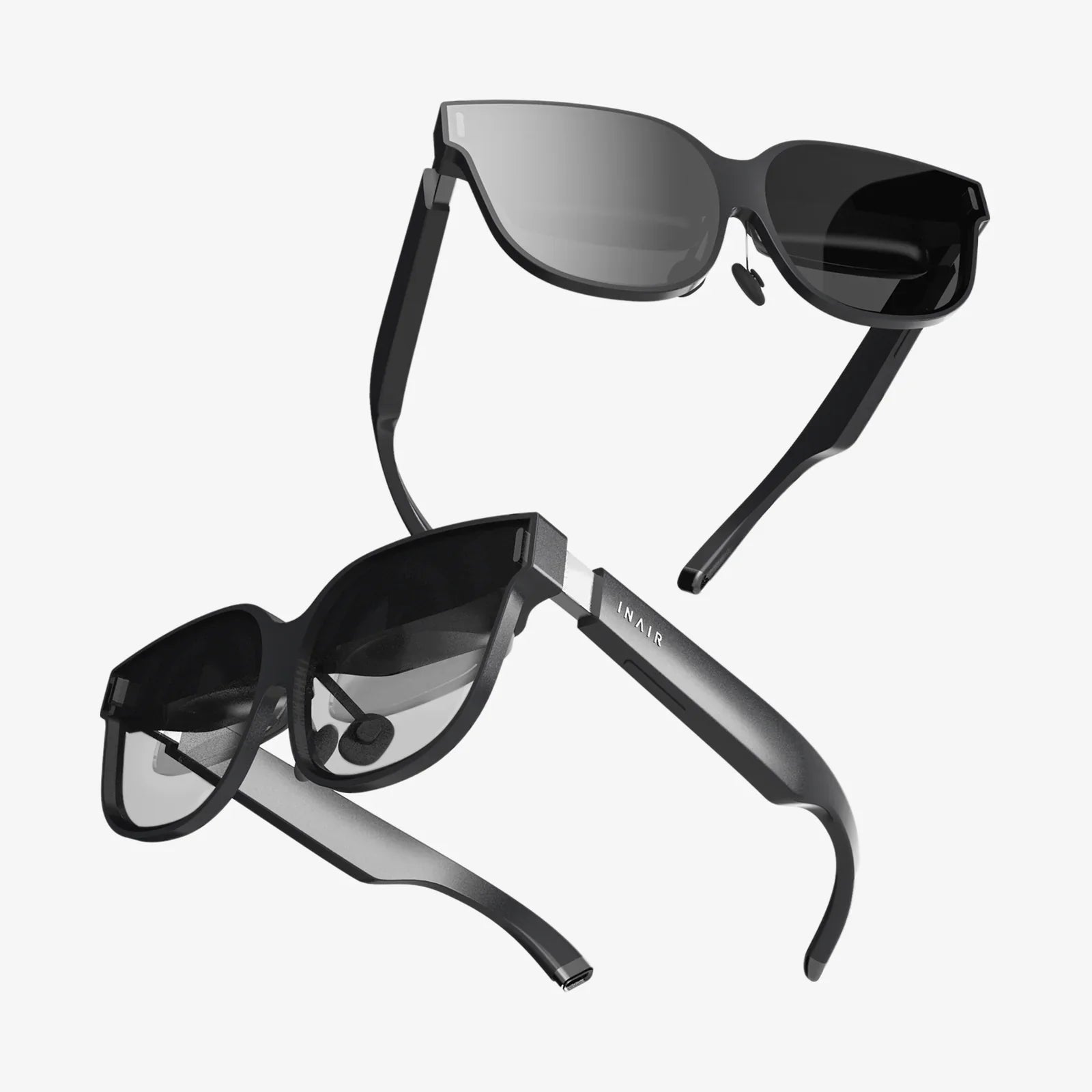
Remember the promise? A world overlaid with digital information, where virtual dragons crouched behind your sofa and navigation arrows were painted onto the pavement before you. For a few feverish years, augmented reality (AR) was the undisputed next big thing, poised to revolutionize everything from gaming to shopping. Then, the loud hype faded. The consumer-facing applications that captured the public's imagination failed to become daily essentials for most. Glasses designed for the masses remained clunky, expensive, and socially awkward. And so, the whispers began, growing into a deafening question: is augmented reality dead?
Beyond the Hype Cycle: From Spectacle to Substance
The Gartner Hype Cycle is a useful model for understanding the life cycle of emerging technologies. It charts a predictable path from a "Technology Trigger" that generates immense excitement, through a "Peak of Inflated Expectations," followed by a deep plunge into the "Trough of Disillusionment." This is where the flashy headlines fade, initial products underwhelm, and early adopters move on. To the casual observer, this trough looks an awful lot like a grave. For AR, the peak was undoubtedly the viral success of a certain location-based mobile game and the breathless promises of ubiquitous smart glasses. The subsequent disillusionment was equally pronounced when those glasses didn't materialize for everyday use and AR apps failed to find a permanent home on our phones.
However, the cycle doesn't end in the trough. It continues onto the "Slope of Enlightenment," where businesses and industries begin to find practical, valuable, and often less glamorous applications for the technology. This is followed by the "Plateau of Productivity," where the technology becomes mainstream and delivers steady, measurable value. The critical mistake is to confuse the trough for the endpoint. AR hasn't died; it has simply moved out of the spotlight and into the workshop, the factory floor, the operating room, and the classroom. It's growing up.
The Quiet Revolution: Enterprise and Industrial AR
While consumer AR captured headlines, a much more significant and financially substantial revolution was taking place behind corporate firewalls. Enterprises discovered that AR could solve real, expensive problems, saving millions of dollars in time, errors, and training.
- Manufacturing and Field Services: Technicians repairing complex machinery can now look through a tablet or smart glasses to see digital schematics overlaid directly onto the physical equipment. Step-by-step instructions highlight exactly which bolt to turn next, which wire to check, and what the correct reading on a gauge should be. This drastically reduces errors, cuts training time for new engineers from weeks to days, and allows experts to guide on-site personnel remotely, seeing what they see and annotating their field of view in real-time.
- Healthcare and Medicine: Surgeons are using AR for precision guidance during operations, visualizing 3D scans of a patient's anatomy directly on the surgical site. Medical students can practice procedures on virtual patients, and nurses can use AR to locate veins more accurately for injections. The technology is enhancing precision, improving outcomes, and transforming medical education.
- Design and Architecture: Architects and interior designers can project full-scale 3D models of their designs onto empty physical spaces, allowing clients to literally walk through a building before a single brick is laid. Engineers can visualize complex systems like plumbing and electrical wiring within a structure's shell, identifying conflicts and issues long before construction begins.
- Logistics and Warehousing: In massive distribution centers, AR is streamlining the process of "picking and packing." Workers wearing AR glasses are guided along the most efficient routes, with digital arrows on the floor and indicators highlighting the exact shelf and item to grab. This technology has proven to increase picking speed and accuracy by a significant margin.
In these domains, AR isn't a gimmick; it's a powerful tool for enhancing human capability. The value proposition is clear: increased efficiency, reduced costs, fewer mistakes, and enhanced training. This enterprise adoption is fueling a robust and growing market, far from the gaze of the average consumer.
The Consumer Conundrum: Finding the Killer App
The struggle for consumer AR has been real. The initial vision of everyone wearing AR glasses all day has proven to be a long-term goal, not a short-term reality. The hardware challenges are immense: creating glasses that are socially acceptable, comfortable, powerful, and have all-day battery life, all at a consumer-friendly price point, is a monumental engineering task. While progress is being made, we are likely years away from a product that checks all these boxes.
Furthermore, the search for the "killer app" continues. Social media filters and games were a fantastic introduction, but they lacked staying power. The question remains: what daily, indispensable utility will AR provide for the average person? It might not be a single app, but a suite of integrated functionalities:
- Contextual Information: Glasses that can translate street signs in real-time, identify landmarks, and provide historical information simply by looking at them.
- Enhanced Navigation: Truly intuitive directions painted onto the world, not just a blue dot on a map.
- Persistent Digital Objects: The true metaverse vision, where digital art, notes, and memories are anchored to specific locations for you and others to find.
The path forward for consumer AR is likely one of gradual integration, perhaps starting in niche hobbies or specific professional use cases before expanding to the mass market. Its success hinges on technology becoming invisible and applications becoming seamlessly useful.
The Technological Undercurrent: Advancements Powering the Comeback
To declare AR dead is to ignore the furious pace of innovation happening beneath the surface. The technology stack that powers AR is advancing rapidly, setting the stage for its future resurgence.
- 5G and Edge Computing: AR requires immense processing power and low latency. Offloading heavy computation to the cloud via high-speed 5G networks and edge computing nodes means future AR devices can be lighter, cheaper, and more powerful, as they won't need to house all the processing hardware on-board.
- Computer Vision and AI: The ability for a device to understand and interact with the real world is core to AR. Massive improvements in machine learning and AI are making object recognition, spatial mapping, and gesture control faster and more accurate than ever before.
- Hardware Miniaturization: While still a challenge, components like micro-displays, sensors, and batteries are constantly getting smaller, more efficient, and less expensive. This relentless progress is what will eventually make comfortable, all-day AR glasses a reality.
These advancements are the bedrock upon which the next generation of AR will be built. The foundational work is being done now, ensuring that when the hardware and software are ready for prime time, the underlying infrastructure can support a smooth and powerful user experience.
The Future is Augmented, Not Virtual
It's also crucial to distinguish AR from its cousin, Virtual Reality (VR). While VR aims to replace your vision entirely and transport you to a digital world, AR aims to enhance your existing world. This fundamental difference is why many believe AR has a broader long-term potential. It doesn't require us to withdraw from our environment; instead, it helps us interact with it more effectively. The future likely isn't one where we live inside headsets, but one where digital information is subtly, usefully, and elegantly integrated into our physical reality. This symbiotic relationship between human and machine, the real and the digital, is the true promise of AR.
So, is augmented reality dead? The evidence suggests a resounding no. It has merely shed its skin of hype and spectacle. The obituaries are premature, mistaking a period of quiet, focused maturation for death. The revolution wasn't canceled; it just changed venues. From the factory floor to the surgical suite, AR is already here, it's working, and it's delivering immense value. The path to ubiquitous consumer AR remains longer and more complex than initially imagined, but the technological march continues. Rather than dying, augmented reality is doing what all transformative technologies must do: it's learning to be useful before it learns to be cool. The best is yet to come.
Share:
AR VR Technology Developments: Shaping Reality and Redefining Human Experience
Define AR and VR: Unraveling the Digital Realities Reshaping Our World