


- by wangfred
AR VR Visualization Technology: The New Frontier of Human Experience and Enterprise
- by wangfred
Imagine a world where the digital and physical realms are no longer separate entities but a single, intertwined continuum. A world where a surgeon can see a patient's vital organs superimposed on their body before making an incision, where an engineer can walk through a full-scale prototype of a jet engine that hasn't been built yet, and where a history student can stand in the midst of a bustling ancient Roman forum. This is not a distant sci-fi fantasy; it is the emerging reality being crafted by the rapid, relentless advancement of AR VR visualization technology. This powerful duo is fundamentally altering the lens through which we perceive, interact with, and understand information, data, and our own environment, promising a revolution as significant as the advent of the personal computer or the smartphone.
While often mentioned in the same breath, Augmented Reality (AR) and Virtual Reality (VR) represent two distinct approaches to visual computing, each with its own unique capabilities and applications.
Virtual Reality (VR) is the technology of immersion. It constructs a completely synthetic, digital environment that entirely replaces the user's real-world surroundings. By wearing a headset that encompasses their field of vision and tracks their head movements, the user is transported into a computer-generated world. This world can be a photorealistic simulation of a real place, a fantastical game environment, or a abstract data landscape. The key principle of VR visualization is presence—the convincing sensation of being somewhere else. This is achieved through high-resolution displays, precise motion tracking, and immersive spatial audio, all working in concert to trick the brain into accepting the virtual world as real.
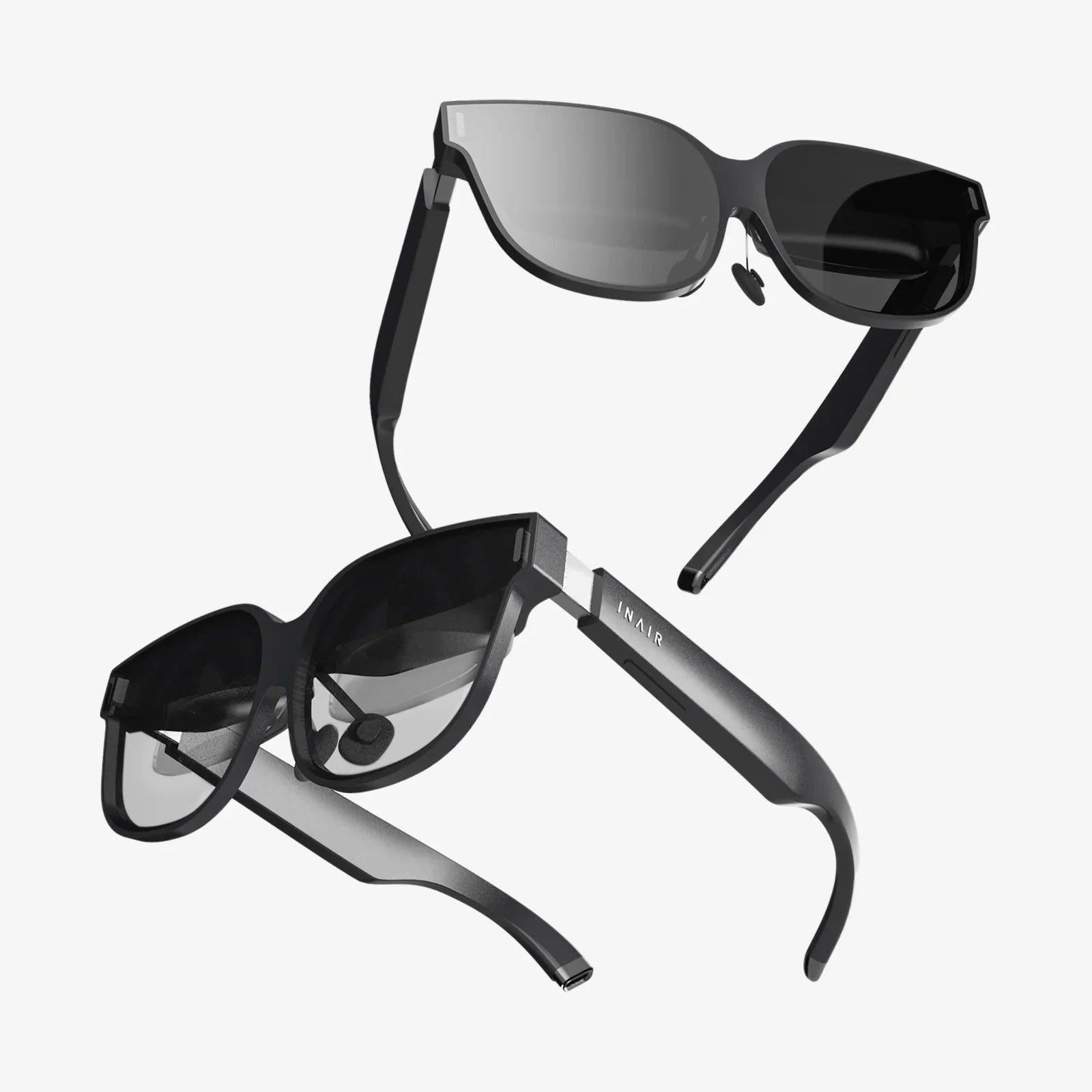
Augmented Reality (AR), on the other hand, is the technology of overlay. Instead of replacing reality, it enhances it by superimposing digital information—images, text, 3D models, animations—onto the user's view of the physical world. This can be achieved through transparent glasses or lenses (optical see-through) or by using a smartphone or tablet's camera to capture the real world and then display the augmented view on the screen (video see-through). The magic of AR visualization lies in its contextuality and seamlessness. The digital content is anchored to and interacts with the real world in real-time, whether it's a navigation arrow painted onto the street in front of you or a virtual new sofa placed in your actual living room to check for size and style.
The compelling experiences of AR and VR are powered by a sophisticated convergence of several cutting-edge technologies.
While consumer entertainment grabs headlines, the most profound impact of AR VR visualization technology is happening within enterprise and industrial sectors, where it is solving real-world problems and delivering tangible ROI.
This is perhaps the most mature application area. Companies are using VR to create digital twins—virtual replicas of physical assets, processes, or systems. Engineers and designers can collaborate within a full-scale, interactive 3D model of a new product long before a single physical prototype is built. They can identify design flaws, test ergonomics, and simulate maintenance procedures in a risk-free environment, saving millions in prototyping costs and accelerating time-to-market. AR, meanwhile, is revolutionizing the factory floor. Assembly line workers can see digital instructions overlaid directly on the components they are handling, reducing errors and training time. Technicians can look at a complex machine and see performance data, operational history, and animated repair guides, enabling faster and more accurate diagnostics.
The stakes in healthcare are incredibly high, and AR VR visualization is rising to the challenge. Medical students are using VR to practice complex surgical procedures on virtual patients, gaining valuable muscle memory and procedural knowledge without risk. Surgeons are using AR in the operating room to visualize CT scans and MRI data projected directly onto the patient's body, effectively giving them "X-ray vision" to improve precision and minimize invasiveness. Furthermore, VR is being used for therapeutic purposes, such as treating phobias through controlled exposure therapy and managing chronic pain by distracting the brain with immersive experiences.
For architects and clients alike, 2D blueprints and static 3D renders on a screen can be difficult to interpret. VR visualization changes this completely. Stakeholders can put on a headset and take a photorealistic virtual walkthrough of a building before the foundation is even poured. They can experience the space, assess sightlines, check material choices, and make informed changes early in the design process, avoiding costly change orders during construction. AR is used on-site to overlay BIM (Building Information Modeling) data onto the physical construction, allowing workers to see where pipes, conduits, and structural elements should be placed, ensuring accuracy and adherence to plan.
The "try before you buy" paradigm is being supercharged. AR apps allow customers to see how a piece of furniture would look and fit in their living room, how a new shade of paint would change their walls, or how a pair of glasses would look on their face. This not only enhances consumer confidence and reduces return rates but also creates an engaging and interactive shopping experience that bridges the gap between online and in-store retail.
Despite its immense potential, the widespread adoption of AR VR visualization technology faces significant hurdles.
The trajectory of AR VR visualization technology points toward a future where the distinction between these two paradigms blurs into a concept often called the metaverse or spatial computing—a persistent network of shared, real-time 3D spaces. We are moving towards eyewear that can seamlessly switch between AR and VR modes. Artificial Intelligence will play a massive role, intelligently understanding our environment and context to serve up the right information at the right time. Haptic technology will evolve to allow us to feel virtual objects with increasing realism. Ultimately, this technology will become less of a distinct device we "use" and more of an invisible layer integrated into our daily lives, enhancing our perception and augmenting our capabilities in ways we are only beginning to imagine.
The door to a new layer of reality is now open, and AR VR visualization technology is the key. It’s shifting from a novelty for gamers to an indispensable tool for surgeons, engineers, architects, and educators. This isn't just about better screens or more immersive games; it's about fundamentally expanding human potential. The ability to see the unseen, to practice the unpracticable, and to collaborate across continents as if standing side-by-side is no longer a futuristic dream—it’s the next chapter of the digital revolution, and it’s being written in three dimensions all around us.
Share:
Auto Adjusting Glasses Technology: The Future of Vision is Here
Auto Adjusting Glasses Technology: The Future of Vision is Here