


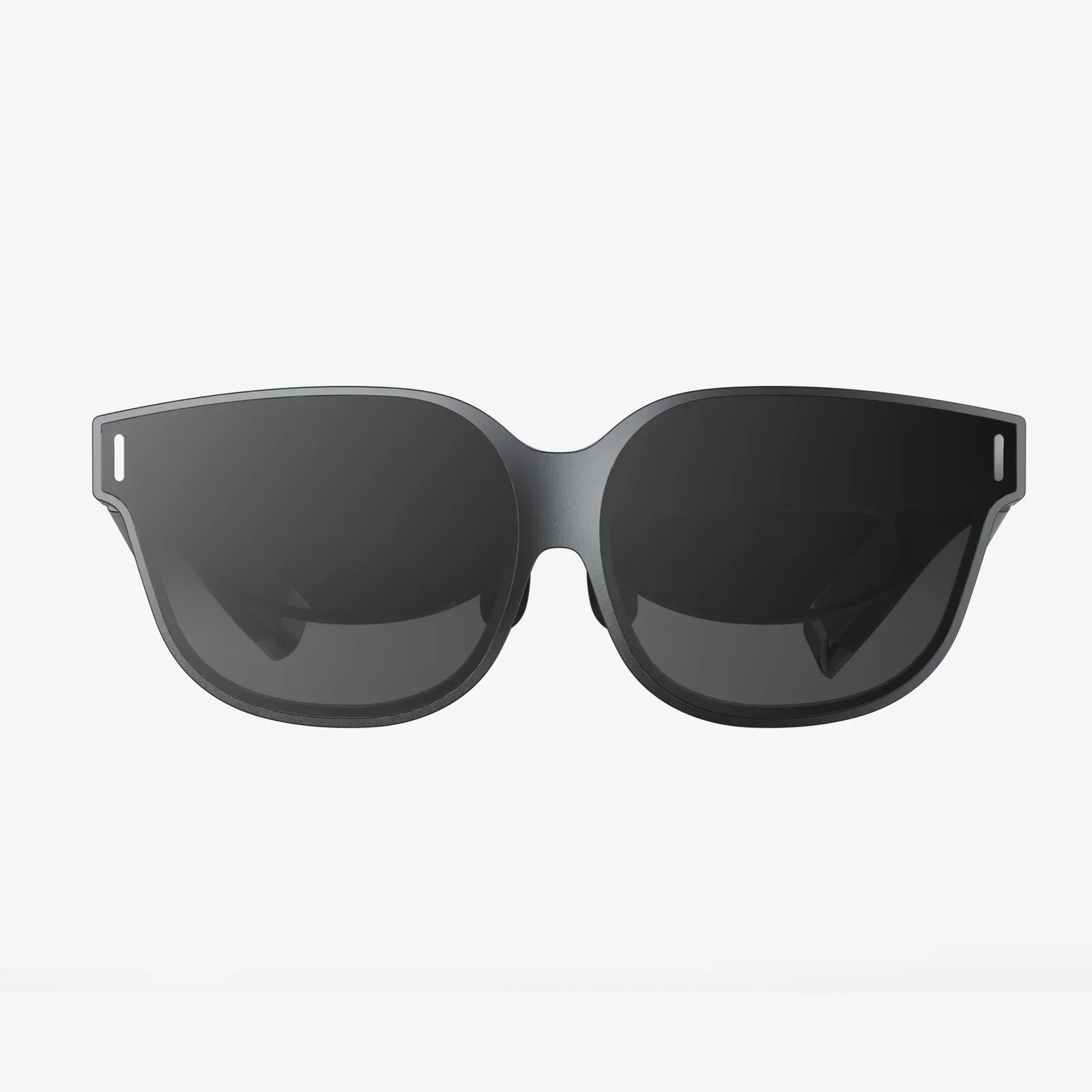
Imagine a world where information floats before your eyes, where you can summon a virtual workspace from your living room, or step into a breathtaking digital universe with the simple act of putting on a pair of glasses. This is no longer the stuff of science fiction; it is the burgeoning reality being built by the rapid advancement of Augmented Reality (AR) and Virtual Reality (VR) wearables. These devices are poised to fundamentally reshape how we work, learn, play, and connect, moving computing from our pockets and laps directly onto our faces and into our field of view. The race to create the definitive window to these new realities is on, and the implications are nothing short of revolutionary.
The Technological Pillars Powering Immersion
The magic of AR and VR wearables is built upon a complex symphony of advanced hardware and sophisticated software, each component pushing the boundaries of what's possible.
Sensing the World: Cameras, LiDAR, and Beyond
For AR wearables to convincingly overlay digital content onto the physical world, they must first understand that world in exquisite detail. This is achieved through a suite of sensors. High-resolution cameras continuously scan the environment, while depth sensors, like LiDAR (Light Detection and Ranging), fire out invisible lasers to measure the distance to objects, creating a precise 3D map of the room. This allows a virtual character to convincingly hide behind your real sofa or for a digital tape measure to accurately gauge the length of your wall. Simultaneous Localization and Mapping (SLAM) algorithms process this sensor data in real-time, allowing the device to understand its own position within the space and keep the digital elements locked firmly in place, preventing the jarring drift that breaks immersion.
The Display Dilemma: Screens, Waveguides, and Retinal Projection
How do you project an image so it appears to exist in the world around you? Different wearables employ different display technologies. Many VR headsets use high-density OLED or LCD screens placed mere centimeters from the user's eyes, with sophisticated lenses focusing the image to fill their entire field of view, creating a convincing sense of presence in a virtual world.
AR glasses, aiming for a sleeker form factor, often utilize waveguides. These are tiny, transparent pieces of glass or plastic etched with microscopic patterns that channel light from a micro-projector at the temple into the user's eye, painting the digital imagery onto their view of the real world. Other experimental technologies include retinal projection, which beams light directly onto the retina, potentially offering incredible clarity and a large virtual screen from a very small device. The constant battle is to make these displays brighter for outdoor use, higher resolution for clarity, and more power-efficient for all-day wear.
The Brain of the Operation: Processing Power and Connectivity
Processing the immense amount of sensor data and rendering complex 3D graphics requires serious computational muscle. Some wearables are tethered to a powerful external computer or gaming console, providing maximum fidelity at the cost of mobility. Standalone devices, or all-in-one headsets, pack a smartphone's worth of processing power, battery, and storage into the wearable itself, offering freedom and convenience. A growing category leverages a hybrid approach, using a wireless connection to offload heavy processing to a nearby phone or a cloud computing platform, aiming for a balance between performance, form factor, and battery life. The rise of edge computing and faster wireless standards like Wi-Fi 6E and eventual 5G/6G integration are critical to this future.
A Spectrum of Experiences: From Augmentation to Full Immersion
It's crucial to understand that AR and VR, while often grouped together, offer distinctly different experiences, often described as points on a spectrum called the "Virtuality Continuum."
Augmented Reality (AR): Enhancing Your World
AR wearables are designed to supplement reality, not replace it. They add a layer of useful or entertaining digital information onto your existing environment. Think of it as a permanent, context-aware heads-up display for life. You might see navigation arrows painted onto the street in front of you, get real-time translations of foreign street signs, or see the name and latest project of a colleague you meet at a conference floating above their head. The goal is to make you more efficient, informed, and connected to your immediate surroundings.
Virtual Reality (VR): Crafting New Worlds
VR wearables are designed for full immersion. They block out the physical world entirely and transport the user to a completely computer-generated environment. This is the technology of deep gaming experiences, virtual tourism to the pyramids or the depths of the ocean, and immersive training simulations for surgeons, pilots, or mechanics. The sense of "presence"—the undeniable feeling of being somewhere else—is the holy grail of VR, achieved through a combination of high-fidelity visuals, precise head-tracking, and 3D spatial audio.
Mixed Reality (MR): The Best of Both Worlds
Occupying the middle ground is Mixed Reality. MR wearables, which are often more advanced AR devices, don't just overlay digital content; they allow that content to interact with and be occluded by the real world. A virtual pet might jump onto your real coffee table and run behind your laptop. You could design a virtual car engine and then walk around the physical space it appears to occupy, examining it from every angle. This seamless blending is the most technically challenging but also the most powerful, unlocking applications that are both grounded in reality and enhanced by the virtual.
Transforming Industries: The Enterprise Leads the Way
While consumer entertainment captures headlines, the most significant and immediate impact of AR/VR wearables is happening in enterprise and industrial settings.
Revolutionizing Training and Simulation
Industries are using VR to create safe, repeatable, and cost-effective training simulations. Surgeons can practice complex procedures without risk to patients. Oil rig workers can learn safety protocols in a virtual replica of their dangerous worksite. Walmart famously used VR to train millions of employees for Black Friday crowds. These simulations can recreate rare or dangerous scenarios that would be impossible or prohibitively expensive to practice in the real world, significantly improving competency and safety.
Enhancing Remote Assistance and Field Service
AR wearables are a powerful tool for remote collaboration. A field technician repairing a complex piece of machinery can wear AR glasses that allow an expert thousands of miles away to see their live point-of-view. The expert can then draw arrows, highlight components, or pull up schematics that appear directly in the technician's field of view, guiding them through the repair step-by-step. This "see-what-I-see" capability reduces errors, slashes travel costs for specialists, and resolves issues faster.
Reimagining Design and Prototyping
From architecture to automotive design, AR and VR are changing the creative process. Designers and engineers can immerse themselves in a life-size 3D model of a new building before a single brick is laid, allowing them to assess spatial relationships, lighting, and flow in a way a 2D screen never could. They can collaboratively sculpt virtual clay models of new cars or instantly change the materials and colors of a product's virtual prototype. This accelerates iteration, improves decision-making, and reduces the need for expensive physical mockups.
The Path to Ubiquity: Overcoming the Adoption Hurdles
For AR and VR to move from niche gadgets to universal platforms, like the smartphone, several significant challenges must be overcome.
The Form Factor Conundrum: From Geek to Chic
The classic image of VR—a bulky headset with a tangled wire—is a major barrier. For all-day AR, the current goal is to achieve a form factor indistinguishable from regular eyeglasses. This requires monumental advances in miniaturizing batteries, processors, and displays, all while managing heat dissipation. The social acceptability of wearing technology on your face is also a hurdle. The devices must not only be powerful but also comfortable, lightweight, and something people actually want to be seen wearing.
Battery Life: The Tether of Power
High-resolution displays and constant sensor data processing are incredibly power-intensive. A device that lasts only two hours is a novelty; one that lasts all day is a tool. Breakthroughs in battery energy density, power management software, and low-power display technologies are essential to cutting the cord and enabling true mobility and all-day usability.
Crafting the Killer App and Intuitive Interfaces
While enterprise has found its "killer apps," the mass consumer market is still searching for that must-have application that drives everyone to buy a device. Furthermore, how do you interact with these immersive interfaces? Controllers can break presence. Voice control isn't always appropriate. Hand-tracking, where the device uses cameras to see and interpret your gestures, is emerging as a powerful and intuitive solution, allowing you to reach out and manipulate digital objects with your bare hands. Developing a universal, seamless, and fatigue-free interface is critical.
The Human and Societal Implications
As this technology becomes more woven into the fabric of daily life, it raises profound questions that we must grapple with as a society.
The Privacy Paradox: A World Under Surveillance
AR wearables, by their very nature, are equipped with always-on cameras and microphones constantly scanning the environment. This creates an unprecedented privacy challenge. Who has access to this data stream? How is it stored and used? Could it lead to a world of continuous, passive surveillance? Establishing clear ethical guidelines, robust data ownership models, and privacy-first design principles is not optional; it is a prerequisite for public trust and adoption.
The Digital Divide: Access and Equity in New Realities
Will these technologies become a great equalizer, providing global access to world-class education and experiences, or will they exacerbate existing inequalities? High-cost hardware and the need for powerful internet connectivity could create a new gap between the reality-haves and have-nots. Ensuring equitable access and designing for inclusivity from the outset is crucial to preventing a dystopian future where digital and physical realities are starkly stratified.
Redefining Human Connection and Presence
If we can meet as photorealistic avatars in a virtual boardroom or share a mixed reality experience with a relative on another continent, what does that mean for physical presence? These technologies have the incredible potential to deepen human connection across vast distances, but they also risk further isolating us from the immediate physical world and the people in it. Navigating this balance, and understanding the psychological effects of long-term immersion, will be one of the defining social challenges of the coming decades.
The journey of AR and VR wearables is just beginning. We are moving past the clunky prototypes and entering an era of genuine utility and wonder. The devices on the horizon promise to dissolve the barrier between the digital and the physical, offering us new lenses through which to see, understand, and interact with our world—and to create entirely new ones. The question is no longer if these wearables will become a central part of our technological landscape, but how quickly we can navigate the challenges to harness their full potential for progress, connection, and human advancement.
Share:
AR and VR Smart Glasses Market Trends: The Next Frontier in Digital Interaction
Positive Effects of Augmented Reality: Reshaping Our World Through an Enhanced Lens