


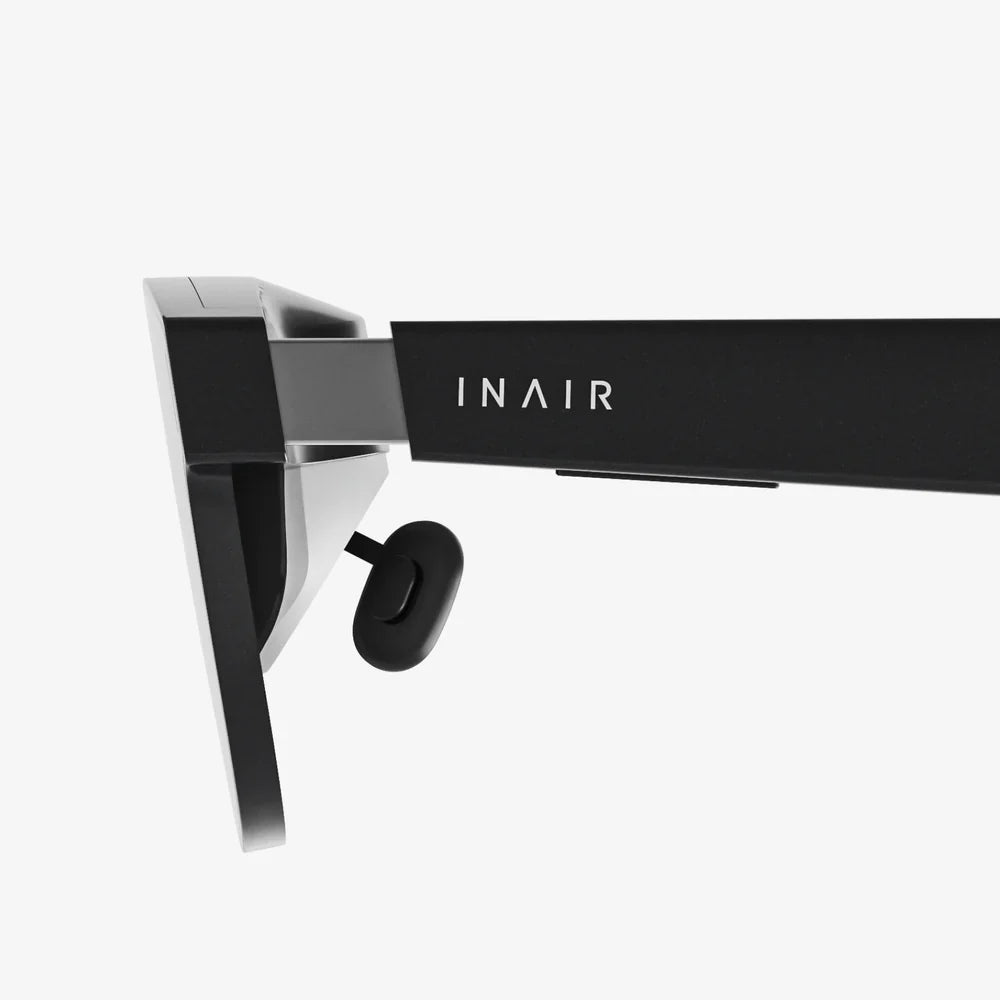
The digital and physical worlds are on a collision course, and the lenses through which we will witness this fusion are not on our phones, but on our faces. The market for augmented reality (AR) and virtual reality (VR) smart glasses is no longer a niche for developers and gamers; it is a burgeoning frontier, poised to redefine how we work, play, learn, and connect. The convergence of powerful microprocessors, sophisticated optics, and intuitive software is creating a perfect storm of innovation, making what was once science fiction an imminent reality. This isn't just about a new gadget; it's about a fundamental shift in human-computer interaction, and the market trends are the map to this uncharted territory.
The Great Convergence: Blurring the Lines Between AR and VR
Historically, AR and VR have been treated as distinct domains. VR headsets offered fully immersive, digital-only experiences, transporting users to entirely virtual environments. AR glasses, conversely, aimed to overlay digital information onto the user's real-world view. The current market trend, however, is a rapid and deliberate blurring of these lines. The concept of 'mixed reality' (MR) or 'spatial computing' is becoming the dominant paradigm. Next-generation devices are increasingly equipped with high-resolution passthrough cameras, allowing VR headsets to function as AR glasses by streaming the real world to internal displays. This technological leap means a single device can offer a full spectrum of experiences, from fully virtual to richly augmented. This convergence is a critical trend, as it simplifies the value proposition for consumers and enterprises, reducing the need for multiple specialized devices and creating a unified platform for developers.
The Enterprise: The Proven Ground for Adoption
While consumer applications capture the imagination, the most significant and tangible growth in the AR and VR smart glasses market is currently in the enterprise sector. Businesses are adopting this technology not for novelty, but for a clear and compelling return on investment. The trends here are powerful and diverse:
- Remote Assistance and Expert Guidance: A field technician repairing a complex piece of machinery can wear smart glasses that allow an expert thousands of miles away to see their viewpoint, annotate the real world with arrows and instructions, and guide them through the repair process step-by-step. This drastically reduces downtime, travel costs, and error rates.
- Design and Prototyping: Engineers and designers are using AR to visualize 3D models at full scale, overlaying new parts onto existing assemblies to check for fit and function before a single physical prototype is built. This accelerates development cycles and reduces waste.
- Warehousing and Logistics: In massive distribution centers, workers equipped with AR glasses can receive order-picking information directly in their line of sight, with digital arrows guiding them to the exact shelf and bin. This hands-free operation increases picking accuracy and efficiency by remarkable margins.
- Training and Simulation: From training surgeons on virtual procedures to preparing factory workers for dangerous tasks, VR and AR provide a safe, repeatable, and highly effective training environment. Trainees can make mistakes without real-world consequences, leading to better preparedness.
This enterprise-first trend is a pragmatic approach. It allows the technology to mature, proves its economic value, and funds further research and development that will eventually trickle down to consumer-grade products.
The Hardware Evolution: Lighter, Faster, Smarter
The success of smart glasses is intrinsically linked to the evolution of their physical form and function. The market is trending away from clunky, tethered, and power-hungry devices toward sleek, standalone, and all-day companions. Key hardware advancements driving this trend include:
- Micro-OLED and Laser Beam Scanning (LBS) Displays: These technologies enable incredibly high-resolution, bright, and efficient displays that are small enough to fit into the arms of glasses. They are crucial for achieving visual fidelity and a wide field of view without adding bulk.
- Waveguide and Holographic Optics: The magic of AR lies in its optics—the system that projects digital images onto the user's retina. Waveguide technology, particularly diffractive and holographic waveguides, is becoming more advanced and affordable. This allows for thinner, lighter lenses that look more like regular eyewear.
- On-Device AI Processors: Dedicated AI chips are now being integrated into smart glasses. This enables features like real-time object recognition, gesture tracking, and spatial mapping to happen directly on the device, reducing latency, preserving battery life, and ensuring user privacy by not constantly streaming data to the cloud.
- Advanced Sensor Suites: A combination of high-fidelity cameras, LiDAR scanners, depth sensors, and inertial measurement units (IMUs) work in concert to understand the user's environment and movements with extreme precision, which is the foundation of convincing mixed reality.
The Software Ecosystem and the Rise of Spatial Computing
Hardware is nothing without software. The most significant trend may be the industry-wide pivot toward 'spatial computing' as a core philosophy. This refers to a computing paradigm where the digital interface is no longer confined to a 2D screen but is mapped onto the 3D space around us. Operating systems are being built from the ground up for this reality, featuring:
- Spatial Anchors: Digital content can be pinned to specific locations in the real world, persistent across sessions and for multiple users. Imagine a virtual art installation in a public square that anyone with glasses can see and interact with.
- Gesture and Gaze-Based Navigation: Interfaces are moving beyond controllers to more intuitive input methods. Users can select items by looking at them and confirm with a subtle hand gesture or voice command.
- Contextual Awareness: The device's AI understands the context of the user's environment. Looking at a restaurant might bring up its menu and reviews; looking at a monument might launch a historical tour.
This rich software layer is what will transform smart glasses from a display into an intelligent assistant that is aware of both the user and their surroundings.
The Connectivity Backbone: 5G and Edge Computing
For truly seamless and powerful AR experiences, especially those involving complex rendering or multi-user collaboration, local processing power alone may not be sufficient. This is where the trends of 5G connectivity and edge computing become critically important. High-bandwidth, low-latency 5G networks allow computationally intensive tasks to be offloaded to powerful servers in near real-time. This means a lightweight pair of glasses can deliver graphically stunning experiences without the need for a bulky onboard computer. Edge computing ensures this processing happens geographically close to the user, minimizing delay. This symbiotic relationship between wearable devices and powerful cloud infrastructure will be a key enabler for mainstream adoption.
Navigating the Challenges: The Roadblocks to Mass Market
Despite the exciting trends, the path to ubiquitous smart glasses is fraught with significant challenges that the market must overcome.
- Battery Life and Thermal Management: High-performance computing in a tiny form factor generates heat and consumes power. Achieving all-day battery life without significant weight trade-offs remains a monumental engineering challenge.
- Social Acceptance and Design: For consumers to wear these devices daily, they must be socially acceptable. This means they need to look like fashionable eyewear, not technological headgear. Balancing style with the required technology is a major hurdle.
- The Killer App for Consumers: While enterprise has clear use cases, the consumer 'killer app'—the must-have application that drives every household to buy a pair—remains elusive. Gaming and entertainment are strong candidates, but the truly transformative consumer application may not have been invented yet.
- Privacy and Security: Devices with always-on cameras and microphones that map our homes and lives raise profound privacy questions. The industry must establish and adhere to robust ethical guidelines and transparent data policies to build public trust.
- Cost: Advanced technology comes at a high price. Bringing the cost down to a mass-market level while maintaining performance is essential for broad adoption.
The Future Vision: A World Transparently Augmented
Looking ahead, the trends point toward a future where AR and VR smart glasses evolve into a universal computing platform. We are moving toward a day when we may no longer reach for our phones for information but instead glance through our glasses to see a layer of intelligent data seamlessly integrated into our reality. Directions will be painted onto the street, conversations will be translated in real-time with subtitles appearing below the speaker, and historical figures could reenact events on the very ground they occurred. The distinction between 'going online' and living offline will vanish, replaced by a constant, contextually relevant, and empowering stream of digital augmentation.
Imagine a world where your expertise is just a glance away, where your workspace is limitless and defined only by your imagination, and where learning is an interactive overlay on the world itself. The market trends in AR and VR smart glasses are not merely charts of growth and revenue; they are the early signals of this profound shift. The race is on to build the device that will become our constant companion, the lens through which we will not just see the world, but see it better. The next decade will be defined by which companies can best marry technological prowess with human-centric design, finally delivering on the promise of a truly augmented humanity.
Share:
Sleek 4K AR VR Glasses The Future of Immersive Technology is Here
AR VR Wearables: The Next Evolution in Human-Computer Interaction