


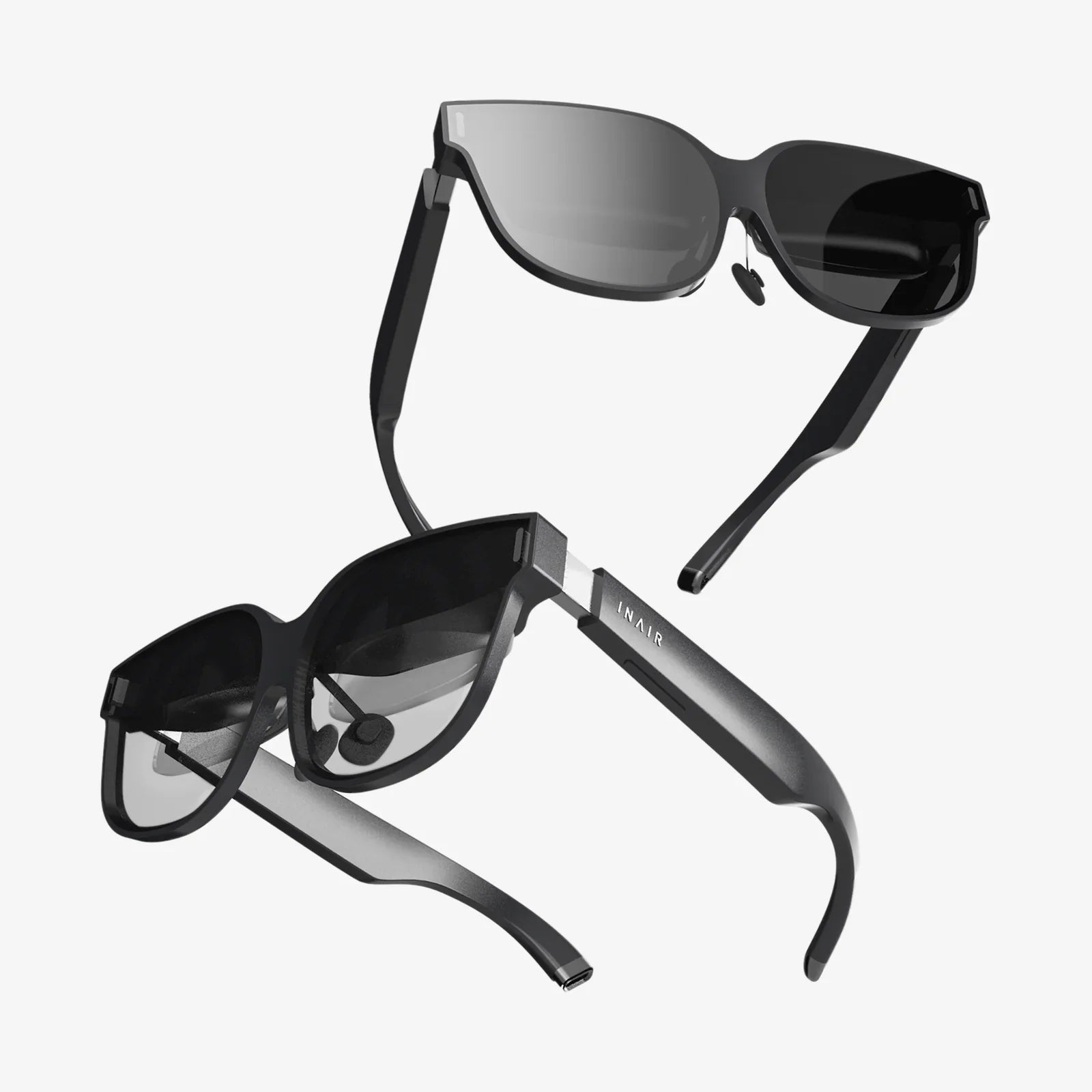
Have you ever wondered what it would be like to step into a completely digital world or to have digital information seamlessly layered onto your physical surroundings? The realms of augmented reality (AR) and virtual reality (VR) are no longer confined to the pages of science fiction; they are rapidly evolving technologies poised to revolutionize how we work, play, and connect. But for many, the line between AR and VR remains blurred. This comprehensive AR vs VR comparison will demystify these two distinct realities, guiding you through their unique capabilities, practical applications, and the profound implications they hold for our future.
The Core Concept: Blending Worlds vs. Creating New Ones
At its most fundamental level, the AR vs VR comparison boils down to one central question: does the technology enhance your real world or replace it entirely?
Augmented Reality (AR) functions by superimposing digital content—such as images, text, or 3D models—onto the user's view of their physical environment. Think of it as a digital overlay on top of reality. AR does not isolate you from your surroundings; instead, it aims to supplement and enrich them with contextual information and interactive elements. The real world remains the primary stage, and digital objects are merely the actors upon it.
Virtual Reality (VR), in stark contrast, is an immersive, simulated experience that completely replaces the user's real-world environment with a digital one. By blocking out the physical world, VR transports the user to a computer-generated landscape, whether that's a fantasy game, a virtual meeting room, or a simulation of a historical site. The user's perception of reality is entirely manufactured by the technology, creating a powerful sense of "presence" within the virtual space.
Hardware and Technology: Headsets, Glasses, and Smartphones
The hardware required for AR and VR is a direct reflection of their core purposes, representing a major point of divergence in any AR vs VR comparison.
Virtual Reality Hardware
VR systems are typically more hardware-intensive, as they must generate and render entire worlds. They come in two primary forms:
- Tethered VR Headsets: These are high-performance devices connected to a powerful external computer or console. They offer the most immersive and graphically rich experiences, featuring high-resolution displays, precise motion tracking, and advanced controllers. They are the gold standard for gaming and professional simulations but require a significant investment and are limited by a physical tether or a large, clear play area.
- Standalone VR Headsets: These all-in-one devices have the necessary computing power, display, and tracking technology built directly into the headset. They are无线束缚, more accessible, and easier to set up, making them popular for consumer entertainment and enterprise training. While their graphical power is catching up, it generally remains below that of tethered systems.
All VR headsets share common features: they fully enclose the user's field of vision with screens and use a combination of internal and external sensors (like cameras and gyroscopes) to track head movement, allowing the virtual world to respond naturally as the user looks around.
Augmented Reality Hardware
AR hardware is more varied, aiming for ubiquity and convenience:
- Smartphones and Tablets: The most common gateway to AR. Using the device's camera, screen, and sensors, mobile AR apps can project digital objects into your environment. This is highly accessible but limited by the device's screen—you view the augmented world through a window, rather than it being part of your direct vision.
- Smart Glasses: These are the true embodiment of AR's potential. Resembling regular eyeglasses or safety goggles, they use transparent lenses or projectors to overlay digital information directly onto the user's field of view, hands-free. This form factor is ideal for enterprise applications (e.g., providing instructions to a technician on the factory floor) and is slowly evolving for consumer use.
- Heads-Up Displays (HUDs): A specialized form of AR found in aviation (fighter jet helmets) and increasingly in automotive windshields, projecting speed, navigation, and other data directly into the driver's line of sight.
The User Experience: Immersion vs. Enhancement
The sensory and psychological experience is where the AR vs VR comparison becomes most tangible for the user.
VR is defined by Immersion. The primary goal is to achieve a state of "presence," the convincing feeling of being physically located in the virtual environment. This is achieved through:
- Visual Immersion: High-resolution displays that fill your entire peripheral vision.
- Audio Immersion: 3D spatial audio that changes based on your head position.
- Haptic Feedback: Controllers that simulate touch, vibration, and even force feedback.
- Motion Tracking: Precise 1:1 tracking of your head and hand movements, making your virtual body an extension of your real one.
The result is an experience that can be profoundly absorbing, emotionally resonant, and incredibly effective for training and simulation.
AR is defined by Contextual Enhancement. Its value lies in its relevance to the immediate physical world. The user experience is about utility and information access:
- Information Layer: Seeing navigation arrows on the street, product reviews floating over a shelf, or a recipe's instructions on your kitchen counter.
- Visualization: Placing a virtual piece of furniture in your living room to see how it fits or overlaying a digital model of a machine part onto the physical machinery for repair.
- Social Interaction: Unlike the isolating nature of VR, AR experiences are often designed to be shared. Multiple people can look at the same space and see the same digital objects, facilitating collaboration and social play.
AR enhances your reality without removing you from it, making it a more practical tool for daily life and social scenarios.
Applications and Use Cases: From Factories to Fantasy
The practical applications of AR and VR are vast and growing, often overlapping but serving different purposes within the same industry.
Virtual Reality Applications
- Gaming and Entertainment: The most well-known application. VR provides unparalleled immersion in games, 360-degree films, and virtual concerts.
- Training and Simulation: Used to train surgeons, pilots, soldiers, and first responders in high-risk, high-cost scenarios without any real-world danger. Companies use it for soft skills training, like public speaking or difficult conversations.
- Architecture and Design: Architects and clients can "walk through" a building design long before the foundation is poured, allowing for design changes and client approvals in a truly experiential way.
- Therapy and Rehabilitation: VR is used for exposure therapy to treat phobias (fear of heights, flying), PTSD, and for physical rehabilitation by making exercises more engaging.
Augmented Reality Applications
- Retail and E-commerce: The "try before you buy" concept for furniture, home decor, clothes, and even makeup through smartphone cameras or mirrors.
- Industrial Maintenance and Repair: Technicians can see schematics, instructions, and animated guides overlaid on the equipment they are fixing, hands-free via smart glasses.
- Healthcare: Surgeons can have patient vitals and MRI data displayed in their field of view during operations. Medical students can learn anatomy by exploring interactive 3D models superimposed on mannequins.
- Navigation: AR can project turn-by-turn directions onto the real road through a car's windshield or onto the sidewalk through a smartphone.
- Education: Bringing textbooks to life—students can point their device at a page to see a 3D volcano erupt or a historical figure tell their story.
Challenges and Limitations
Both technologies face significant hurdles on the path to mainstream adoption.
VR Challenges:
- Cost and Accessibility: High-end systems remain expensive.
- Physical Discomfort: "VR sickness" (similar to motion sickness) affects some users, and headsets can be bulky and uncomfortable for extended use.
- Social Isolation: The experience is inherently solitary, cutting the user off from their physical environment and the people in it.
- Space Requirements: Room-scale VR requires a dedicated, clear space, which is a luxury in many homes.
AR Challenges:
- Hardware Limitations: Smart glasses need to become smaller, lighter, more powerful, and much more affordable to achieve mass adoption. Battery life is also a major constraint.
- Digital Literacy and UI/UX: Designing intuitive interfaces that seamlessly blend with the real world without causing information overload is incredibly difficult.
- Privacy Concerns: Always-on cameras and sensors that map your environment raise serious questions about data collection, security, and surveillance.
- Social Acceptance: Wearing cameras on your face in public makes others uncomfortable, creating a significant social barrier.
The Future is Blended: The Rise of Mixed Reality (MR)
The most exciting development is not a winner in the AR vs VR comparison, but the convergence of the two into a spectrum often referred to as Mixed Reality (MR) or Extended Reality (XR). MR aims to combine the best of both worlds: the immersion of VR with the contextual awareness of AR.
Imagine a headset that can transition seamlessly from rendering a fully virtual world to allowing high-fidelity digital objects to interact with and be occluded by your real-world physical furniture. This is the promise of MR. Advanced sensors and cameras will allow future devices to understand and digitize your environment in real-time, enabling digital and physical objects to coexist and interact meaningfully. This will unlock new possibilities for remote collaboration, where a colleague's photorealistic avatar can sit on your real couch, or for design, where you can sculpt a virtual clay model with your real hands.
The ultimate goal is the creation of a universal computing platform that moves beyond the confines of screens, where information and experiences are integrated into the fabric of our reality, accessible through lightweight, socially acceptable eyewear. This evolution will fundamentally change our relationship with technology, making it an intuitive extension of our human capabilities rather than a separate device we need to pick up and use.
As the boundaries between our physical and digital lives continue to dissolve, understanding the distinct strengths of AR and VR is the first step toward navigating the incredible, blended future that is already taking shape around us. The question is no longer which technology will win, but how their powerful combination will reshape everything from how we learn and heal to how we imagine and create.
Share:
Could AI Glasses Replace Smartphones? The Future of Personal Computing on Your Face
Most Advanced AI Glasses 2025: The Dawn of Invisible Computing