


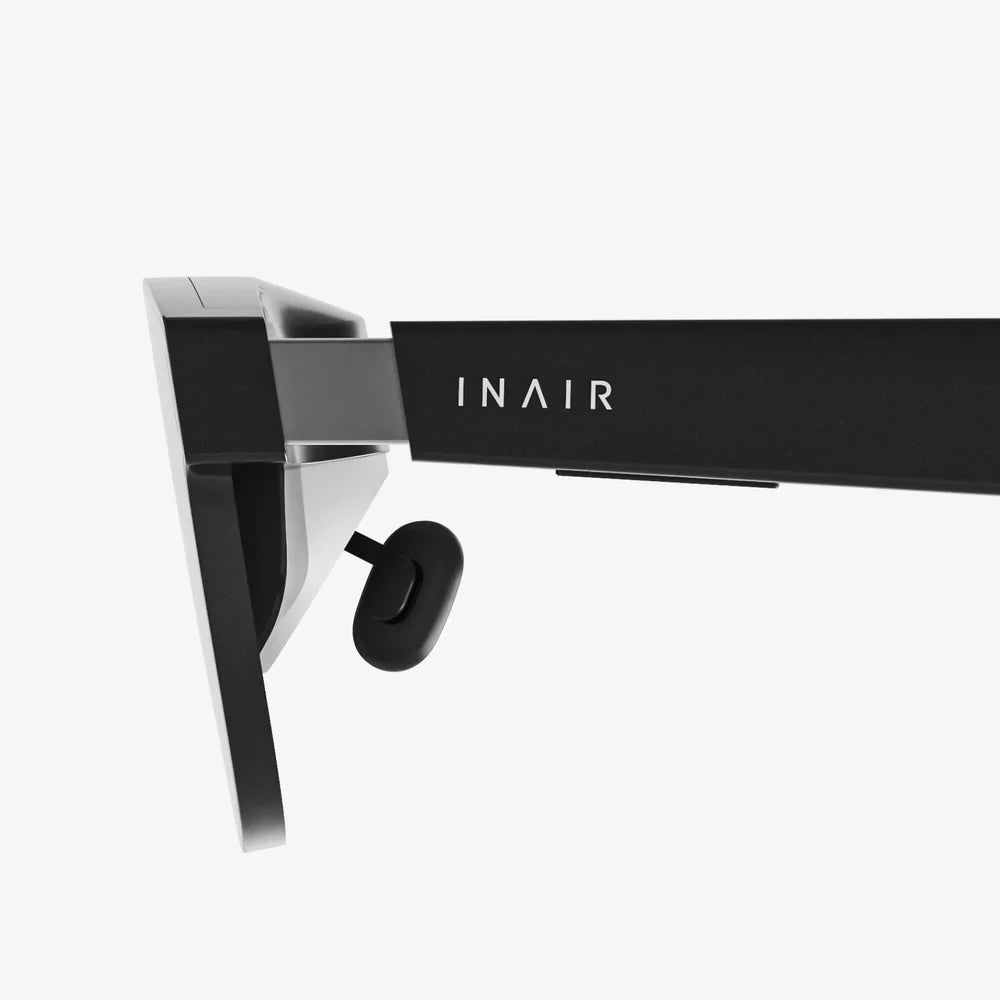
Imagine a world where information doesn't live on a screen in your hand but is seamlessly woven into the very fabric of your perception. Where a whispered question to the air is answered instantly, where navigating a foreign city feels intuitive, and where the line between your own knowledge and the vast digital library of human intelligence becomes beautifully blurred. This is not a distant sci-fi fantasy; it is the promise held within the most advanced AI glasses of 2025, a product category poised to revolutionize personal technology and human-computer interaction forever.
The Architectural Leap: Beyond Wearable Screens
The defining characteristic of the 2025 generation of AI glasses is a fundamental shift in architecture. Previous iterations often functioned as secondary displays, tethered to a smartphone or acting as a cumbersome viewfinder for augmented reality. The 2025 models represent a paradigm shift towards true standalone intelligent systems. They are not accessories; they are primary computing platforms worn on the face.
This leap is powered by a convergence of cutting-edge technologies:
- On-Device AI Processors: Gone are the days of significant latency waiting for data to be processed in the cloud. The 2025 glasses feature dedicated neural processing units (NPUs) built on advanced nanometer processes. These chips are engineered for extreme efficiency, capable of running complex large language models and computer vision algorithms locally. This enables real-time analysis of the user's environment without a constant, bandwidth-heavy internet connection, ensuring privacy and instantaneous response.
- Advanced Sensor Fusion: The "eyes" of these glasses are a sophisticated array of sensors that go far beyond simple cameras. High-resolution RGB cameras, depth sensors, LiDAR scanners, and infrared emitters work in concert to create a rich, three-dimensional understanding of the world. They can map a room with millimeter accuracy, track micro-gestures for control, and understand spatial relationships between objects with astonishing precision.
- Low-Latency Connectivity: When cloud computation is necessary, the glasses leverage advanced 5G and nascent 6G modems, as well as Wi-Fi 7, for near-instantaneous data transfer. This hybrid approach—powerful local computing supplemented by boundless cloud intelligence—creates a fluid and uninterrupted user experience.
The Invisible Interface: How We Interact
The most profound advancement in the 2025 AI glasses is the move towards an invisible interface. The goal is to minimize cognitive load, allowing the technology to augment the user's life without becoming a distracting intermediary.
-
Multimodal Input: Interaction is no longer limited to a single modality.
- Voice: Voice assistants have evolved into true conversational partners. Using advanced on-device LLMs, they understand context, nuance, and can engage in multi-turn conversations without the stilted responses of the past. They can process speech even in noisy environments through advanced beamforming microphones and noise cancellation.
- Gesture: Subtle, intentional gestures—a pinch of the fingers, a swipe in the air—allow for precise control without the need to physically touch the device. This is enabled by ultra-low-power radar sensors embedded in the frames that can detect sub-millimeter hand movements.
- Contextual Awareness: The most powerful input is often no input at all. The glasses continuously analyze the user's environment, gaze direction, and even physiological signals to anticipate needs. If you look at a restaurant, they might automatically display reviews. If you've been walking in the sun for a while, they might gently suggest hydration.
- Output: The World as Your Canvas
Visual output has seen equally dramatic improvements. The challenge has always been to project bright, full-color, high-resolution information onto transparent lenses without obscuring the real world. The 2025 solutions are elegant and effective.
- Micro-LED Waveguide Displays: The dominant display technology uses microscopic Micro-LEDs—incredibly bright and efficient light sources—projected into transparent waveguides etched with nanometer precision. These waveguides pipe light into the user's eye, overlaying digital information onto the real world with stunning clarity and a wide field of view. The result is text and graphics that appear to float in space, seamlessly integrated with your surroundings.
- Audio: Personal Sound Beams The audio experience is equally revolutionary. Instead of traditional speakers or bone conduction, which can leak sound, advanced acoustic systems use phased array speakers to create precise personal sound beams. Sound is directed only into the user's ears, making it crystal clear even in loud environments while ensuring complete privacy for those nearby. It allows for immersive spatial audio experiences without isolating the user from their environment.
Applications That Redefine Reality
The hardware is merely the enabler; the true magic lies in the software and the applications it powers. The most advanced AI glasses of 2025 are transformative across countless domains.
- Productivity Reimagined: Imagine a developer seeing documentation and code suggestions floating next to their IDE on a physical monitor. A surgeon receiving vital signs and procedural guidance directly in their field of view without looking away from the patient. A mechanic seeing a exploded-view diagram and torque specifications overlaid on the engine they are repairing. The glasses become the ultimate hands-free knowledge tool, delivering the right information at the right time, contextually.
- Seamless Navigation and Translation: Walking through a city, directional arrows are painted onto the sidewalk. Glancing at a street sign or menu in a foreign language instantly reveals a perfect translation, stylized to match the original font and seamlessly integrated into the scene. The world becomes effortlessly navigable and universally understandable.
- Enhanced Social Connection: In a video call, participants can appear as holograms sitting across from you at your table. The glasses can provide real-time captions for conversations, highlight people you've met before with their name, and even offer subtle social cues, helping to break down communication barriers.
- Accessibility Breakthroughs: For the visually impaired, the glasses can audibly describe scenes, read text aloud, and highlight obstacles. For those who are hard of hearing, they can provide flawless, real-time transcription of group conversations, identifying each speaker. This technology has the potential to be the most significant accessibility aid since the screen reader.
The Inevitable Challenges: Privacy, Security, and Society
Such a powerful technology does not arrive without significant challenges. The ability to continuously record and analyze the environment raises profound questions.
- Privacy: The concept of public and private space is challenged. How do we prevent unauthorized recording? The 2025 models are leading with hardware solutions: a prominent physical indicator light that cannot be disabled when recording, and privacy shutters that physically cover the cameras. Strong, on-device data processing ensures that personally identifiable information from strangers is never stored or uploaded.
- Security: As with any connected device, security is paramount. Biometric authentication (like iris scanning) ensures the glasses only work for the owner. End-to-end encryption protects all data in transit, and the secure enclave of the on-device NPU protects personal data at rest.
- The Social Contract: New social norms will need to emerge. Is it polite to wear them during a conversation? How do we prevent a new form of digital divide? These are not technical problems but societal ones that we must navigate together as the technology becomes more prevalent.
The most advanced AI glasses of 2025 are far more than a new gadget; they are a portal. They represent the next logical step in the miniaturization and personalization of computing, moving from our desks to our pockets, and now, directly onto our faces and into our fields of view. They promise a future of heightened awareness, effortless access to knowledge, and deeper connection with our environment. The age of staring down at a slab of glass is ending, replaced by a world where we can finally look up and see a universe of information laid over our reality, waiting to be explored. The future is not in your pocket; it's right before your eyes.
Share:
AR vs VR Comparison: Understanding the Key Differences and Future Potential
What Do AI Glasses Do For You? A Deep Dive Into The Future On Your Face