


Imagine a world where information doesn't live on a screen in your hand, but floats seamlessly in your field of vision. Where language barriers dissolve with a glance, where your memories are catalogued not just in your mind but with perfect digital clarity, and where a gentle voice in your ear guides you through complex tasks. This isn't a distant sci-fi fantasy; it's the emerging reality promised by artificial intelligence glasses, a device poised to become the most personal computer you will ever own. The question is no longer if they will integrate into our lives, but profoundly, what do AI glasses do for you?
The Core Concept: Augmented Intelligence, Not Just Augmented Reality
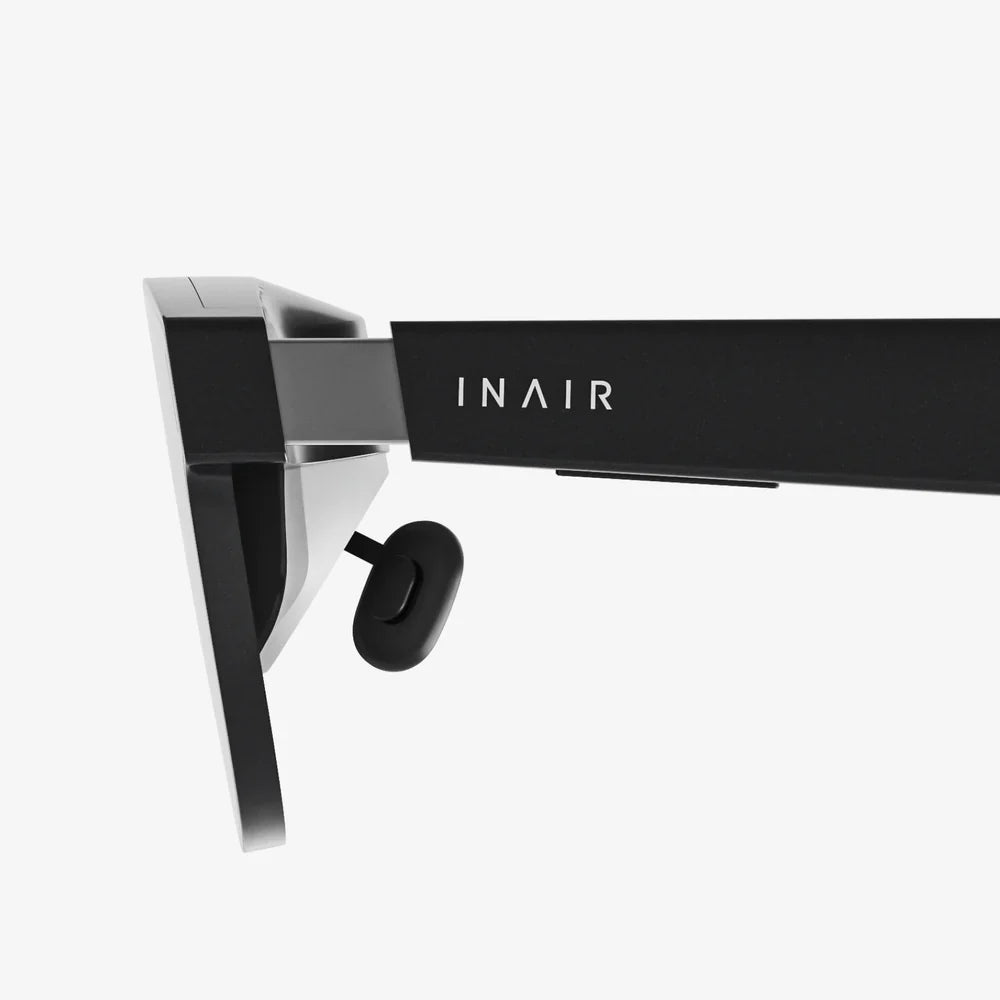
At their essence, AI glasses are a wearable computer in the form of eyeglasses. They combine a sophisticated array of hardware—miniaturized cameras, microphones, sensors, bone-conduction or micro-speakers, and a transparent display—with powerful, on-device and cloud-based artificial intelligence. Unlike their virtual reality counterparts, which seek to replace your reality with a digital one, AI glasses aim to augment and enhance the world you already see.
The magic lies in the fusion of these components. The AI acts as the brain, processing a constant, contextual stream of visual and auditory data from the cameras and microphones. It understands what you are looking at, hears what you are saying and what is being said around you, and then delivers relevant, useful information directly onto the lenses or into your ears. This creates a continuous, intuitive feedback loop between you, your environment, and the vast knowledge of the internet, all without the friction of pulling out a device.
Transforming How You See and Navigate the World
One of the most immediate and powerful applications of AI glasses is as a navigational and informational overlay for the physical world. Think of it as having a knowledgeable tour guide whispering in your ear everywhere you go.
- Contextual Navigation: Instead of staring at a blue dot on a phone map, directional arrows and street names can be projected onto the road in front of you. Look at a complex subway map, and the AI could highlight the best route to your destination. Inside a large airport or museum, find points of interest with visual markers guiding your way.
- Real-Time Object and Text Recognition: Look at a landmark, and instantly learn about its history. Glance at a menu in a foreign language, and see it translated into your native tongue, word-for-word, overlayed perfectly on the paper. At a grocery store, you could identify products that meet specific dietary needs (e.g., "show me all gluten-free pasta sauces") or get instant nutritional information.
- Visual Search: See a plant in a park and don't know what it is? The AI can identify it. Spot someone wearing an outfit you admire? The glasses could help you find similar items available for purchase. This ability to search the world with your eyes fundamentally changes how we interact with our surroundings.
Revolutionizing Productivity and Hands-Free Assistance
For professionals, hobbyists, and anyone who needs to multitask, AI glasses offer an unprecedented level of hands-free efficiency. They become a silent, always-available assistant that understands context.
- The Ultimate Multitasking Tool: Imagine a mechanic working on a complex engine repair. With AI glasses, they can pull up a schematic diagram and overlay it onto the physical engine, see torque specifications for each bolt, and even record a first-person video to send to a colleague for advice—all without wiping their hands on a rag to use a tablet.
- Seamless Meeting and Note-Taking: In a meeting, the AI can provide real-time transcriptions of the conversation, highlight action items as they are agreed upon, and even identify speakers. It can pull up relevant documents or data visualizations based on the discussion topic, making presentations and collaborations more dynamic and informed.
- Voice-Activated Control and Reminders: Your entire digital world is accessible through simple voice commands. Set reminders that are triggered by location or seeing a specific person ("remind me to ask Sarah about the project when I see her next"). Control smart home devices as you walk from room to room. Dictate emails or notes while you commute or cook dinner.
Enhancing Accessibility and Creating a More Inclusive World
Perhaps the most profound and human-centric benefit of AI glasses lies in their potential to break down barriers for people with disabilities. This technology can act as a powerful assistive tool, granting new levels of independence and connection.
- For the Visually Impaired: AI glasses can describe scenes, read text aloud from signs, documents, or product labels, identify currency, and even recognize faces, discreetly telling the wearer who is approaching them. They can provide enhanced contrast or highlight obstacles on a sidewalk, acting as a high-tech guide dog.
- For the Hearing Impaired: Advanced speech-to-text algorithms can transcribe conversations in real-time, displaying the subtitles of the world right on the lenses. They can also identify and notify the user of important ambient sounds, such as sirens, doorbells, or a baby crying.
- Social and Cognitive Assistance: For individuals with social anxiety or conditions like autism, the AI could provide subtle social cues, help identify emotions on people's faces, or remind them of conversational prompts, making social interactions less daunting.
Capturing Life and Strengthening Memory
In our smartphone era, we often experience life through a viewfinder, missing the moment itself to capture it for later. AI glasses promise a more intimate and authentic form of documentation.
- The First-Person Perspective: From recording a child's first steps from your literal point of view to capturing a breathtaking sunset during a hike, the footage is inherently more personal and stable. Content creators, journalists, and athletes can document their experiences without any extra equipment.
- Photographic Memory: The AI can be commanded to "remember this"—snapping a photo or saving a clip of what you're seeing. Later, you can search your visual history. "Show me all the times I saw that specific client last month" or "Find that recipe I looked at in a cookbook at my friend's house." It becomes a searchable, photographic archive of your life.
- Live Sharing: Share your live perspective with a trusted friend or expert, allowing them to see what you see and offer guidance, whether you're solving a technical problem or trying to find a specific item in a store.
Navigating the Inevitable Challenges: Privacy, Social Acceptance, and Design
For all their potential, the widespread adoption of AI glasses is not without significant hurdles. The very features that make them powerful also raise critical questions.
- The Privacy Paradox: A device that is always watching and listening is a privacy advocate's nightmare. The potential for constant, surreptitious recording is immense. Robust, transparent, and user-centric privacy controls are non-negotiable. Features like a clear "recording" light, local processing that doesn't stream data to the cloud, and clear data ownership policies will be essential for building public trust.
- The Social Hurdle: Walking into a conversation or a private space while wearing a camera on your face can be unnerving for others. Social norms will need to adapt. Manufacturers must design for social cues—making it obvious when the device is active—to avoid the creation of a society where people feel they are constantly being recorded.
- Design and Battery Life: For true all-day wear, the glasses must be lightweight, stylish, and indistinguishable from regular eyewear for most people. They also need a battery that can last a full waking day without becoming a burden. Current technology is pushing the boundaries, but this remains a key engineering challenge.
The journey of AI glasses is just beginning, mirroring the early, clunky days of mobile phones. Yet, their trajectory points toward a fundamental shift. They are not merely a new gadget; they are a new lens through which we will perceive, understand, and interact with our reality. They promise to make us more knowledgeable, more efficient, and more connected to the digital realm without being disconnected from the physical one. The true answer to 'what do AI glasses do for you' is ultimately limited only by our imagination, and our careful navigation of the new world they will help create. The future is looking right back at us, and it's wearing glasses.
Share:
Most Advanced AI Glasses 2025: The Dawn of Invisible Computing
How Much Are Android XR Glasses? A Deep Dive into Pricing and Value