


Imagine reaching out and touching a shimmering, three-dimensional image suspended in mid-air, a creation of pure light that looks as solid and real as your own hand. This vision, a staple of science fiction for decades, ignites a powerful question: are holograms possible? The answer is a resounding and fascinating yes—but the reality is both more complex and more incredible than most fictional depictions. The journey from a scientific principle discovered in the 1940s to the dynamic, interactive displays of today is a story of human ingenuity, bending light, and redefining the possible.
The Foundation: What is a Hologram, Really?
Before delving into the modern marvels, it's crucial to understand the fundamental principle. The word "hologram" itself comes from the Greek words "holos" (whole) and "gramma" (message), meaning a complete recording. Unlike a photograph, which captures only the intensity of light (shades of light and dark) reflecting off an object from a single perspective, a hologram captures both the intensity and the phase of light waves.
This phase information is the secret ingredient. It encodes the direction and depth of the light waves, allowing the hologram to reconstruct a true three-dimensional image. When you look at a standard holographic sticker on a credit card, you can move your head and see the image from a slightly different angle, just as you would a real object. This is the magic of recorded parallax and depth perception, the hallmark of a genuine hologram.
The Birth of an Idea: The Laser and the Hologram
The theoretical groundwork for holography was laid by Hungarian-British physicist Dennis Gabor in 1947 while he was working on improving electron microscopy. He sought a way to increase the resolution of images, coining the term "hologram." However, his work remained largely theoretical because he lacked a crucial tool: a pure, coherent light source.
The breakthrough came with the invention of the laser in 1960. Lasers produce light that is coherent (all waves in phase) and monochromatic (a single pure color). This was the perfect key to unlock Gabor's theory. In the early 1960s, scientists Emmett Leith and Juris Upatnieks at the University of Michigan, and Yuri Denisyuk in the Soviet Union, building on Gabor's work and using lasers, independently developed the techniques that created the first practical optical holograms. Their work transformed holography from a mathematical curiosity into a tangible, breathtaking reality.
How a Hologram is Made: Interference and Illumination
The creation of a traditional hologram is an elegant dance of light and precision. It requires a stable environment, as even vibrations of a wavelength of light can ruin the recording. The process, known as interference holography, involves splitting a single laser beam into two paths.
- The Object Beam: One beam is directed onto the physical object you want to record. The light scatters off the object and onto a special photographic plate or film.
- The Reference Beam: The second beam is sent directly to the same photographic plate, without touching the object.
On the surface of the plate, these two beams meet. The light waves from the reference beam (clean and undisturbed) and the object beam (which has been scattered and distorted by the object's shape) collide and interfere with each other. Where the peaks of waves align, they create bright areas (constructive interference); where a peak and a trough meet, they cancel out to create darkness (destructive interference). This intricate, complex pattern of light and dark swirls, which looks nothing like the original object, is permanently etched into the photographic plate. This exposed and developed plate is the hologram.
To view it, you must illuminate the hologram with a light source that mimics the original reference beam, often another laser or a focused point of white light. The recorded interference pattern acts like a complex lens, diffracting the new light to precisely reconstruct the original light waves that scattered off the object. Your eyes perceive these reconstructed waves, seeing a perfect 3D replica of the object, frozen in time and space.
Beyond the Static Image: The Different Types of Holograms
The classic laser-viewable transmission hologram is just the beginning. Over the decades, scientists have developed numerous types of holograms, each with its own properties and applications.
- Reflection Holograms: These are the common, rainbow-colored holograms seen on security stickers and artistic displays. They are viewed by reflecting white light off their surface, making them easier to display without a specialized laser light source.
- Embossed Holograms: This is the technology behind mass production. The interference pattern is stamped onto thin, metallic foil, making it inexpensive to produce millions of copies for everything from product packaging to anti-counterfeiting measures on currency and passports.
- Digital Holography: Instead of using photographic film, a digital sensor (like a CCD or CMOS chip in a camera) captures the interference pattern. This digital hologram can then be processed by a computer, transmitted electronically, and even used for precise microscopic measurements and biological cell analysis.
- Computer-Generated Holograms (CGH): This is where the line between recording and creation blurs. Here, a computer calculates the incredibly complex interference pattern that a fictional or virtual object would have created, and then that pattern is physically etched onto a plate using a laser or printer. This allows for the creation of holograms of objects that never existed.
The Princess Leia Effect: Science Fiction vs. Science Fact
When most people ask "are holograms possible?" they are often thinking of the iconic Princess Leia projection in Star Wars or the sprawling, interactive tables in Marvel's Iron Man films. These fictional depictions are what technologists call "fictional holograms" or free-space volumetric displays. They have three characteristics that make them immensely challenging to recreate:
- They are projected into free space without a physical medium.
- They are visible from multiple angles surrounding the display.
- They are dynamic, changing in real-time.
Traditional holography, as described, does not create images in free air; it requires a surface (the holographic plate) to reconstruct the image. So, while the classic hologram is a true window into a 3D scene, it is not a free-floating image. Creating an image that literally floats in the air, visible from all sides, is the holy grail of display technology and remains an active area of intense research and development.
The Cutting Edge: Technologies Creating "Floating" Images
While we cannot yet recreate a perfect Princess Leia hologram with a simple droid, several astonishing technologies are pushing the boundaries, creating the illusion of free-space holograms or achieving similar ends through different means.
- Pepper's Ghost: A 19th-century stage illusion that uses a pane of glass or a thin film of foil set at a 45-degree angle to reflect a hidden image, making it appear ghostlike on stage. This simple technique is behind many "holographic" concerts and performances featuring deceased celebrities. It is an illusion, not a true hologram, but its effect is powerful and convincing.
- Volumetric Displays: These displays physically create points of light within a defined volume. Some techniques use a rapidly spinning screen or a fog chamber that is precisely illuminated by lasers. As the lasers scan across the droplets of fog, they excite them to glow, creating a 3D image that can be walked around. This is one of the closest technologies to a true free-space image, though it often requires a contained chamber of fog or mist.
- Photophoretic Optical Trapping: A groundbreaking technique developed by researchers at Brigham Young University. It uses nearly invisible lasers to trap and move a tiny particle of cellulose through the air at high speeds. A second set of colored lasers illuminates this particle as it moves. By scanning the particle through a 3D path faster than the eye can see, it traces out a full-color, volumetric image in mid-air. This is perhaps the closest realization to a sci-fi hologram, allowing users to literally touch the image with their hands, though it is currently small in scale and requires specific, controlled conditions.
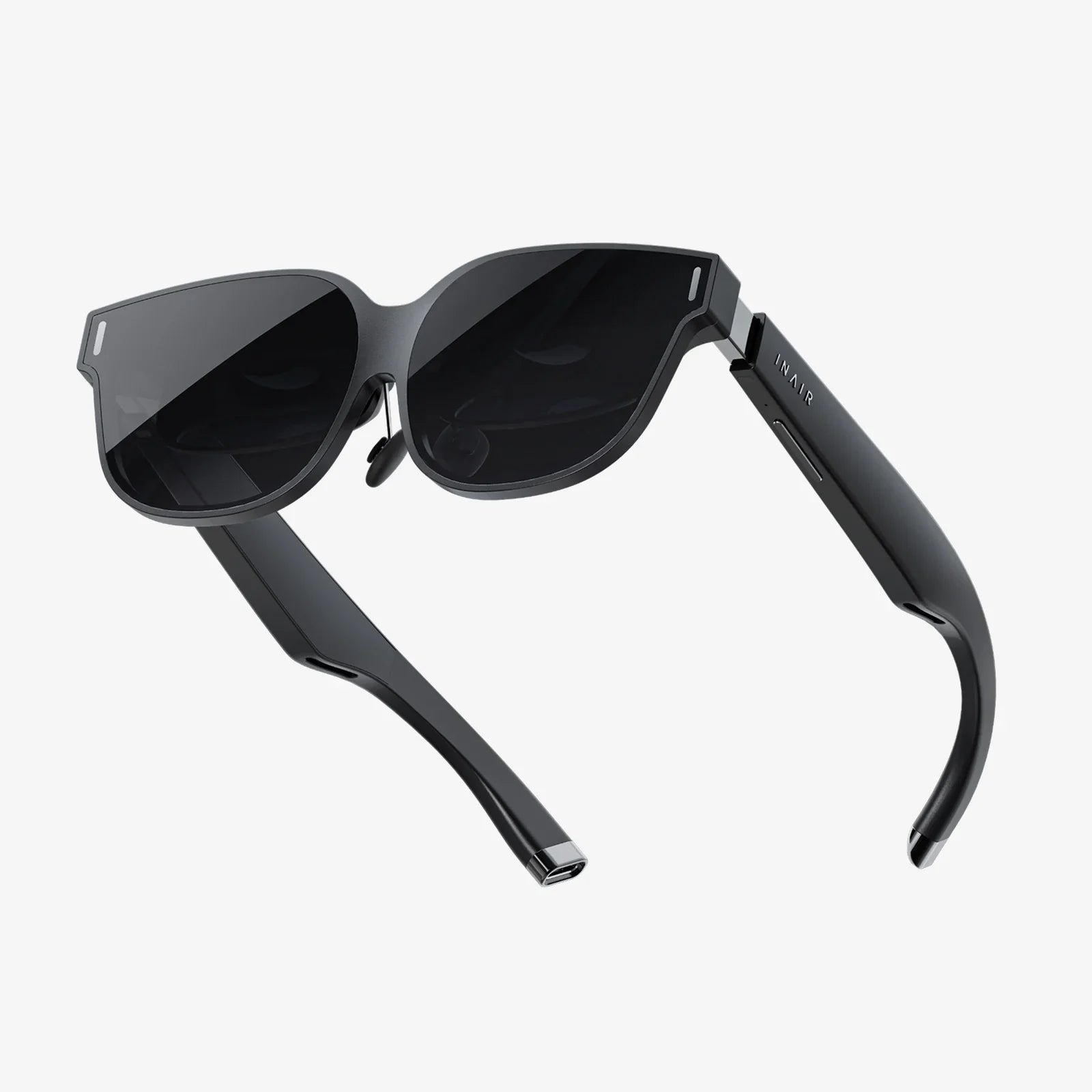
- Augmented Reality (AR) and Mixed Reality (MR): For many practical applications, AR and MR headsets are providing the holographic experience. They use advanced sensors and waveguides to project computer-generated 3D images onto the user's view of the real world. While the image is not physically present for everyone to see, it is a convincing and interactive personal hologram, perfectly anchored to the user's environment.
The Real-World Applications: More Than Just a Pretty Image
Holography's value extends far beyond entertainment and flashy displays. It is a critical tool in numerous scientific, medical, and industrial fields.
- Security and Authentication: The difficulty of replicating a high-quality hologram makes it a gold standard for preventing forgery on passports, IDs, credit cards, and currency.
- Data Storage: Holographic memory is a theoretical technology that could store vast amounts of data in a sugar-cube-sized crystal by recording data in three dimensions instead of two, offering unprecedented density.
- Microscopy and Biomedicine: Digital holographic microscopy allows scientists to study living cells in 3D without damaging stains or labels, observing processes in real-time.
- Industrial Design and Metrology: Engineers use holographic interferometry to detect microscopic stresses, vibrations, and flaws in materials like jet engine blades or composite structures, by comparing a test object to a perfect holographic reference.
- Art and Archiving: Holograms are used to create stunning works of art and to preserve priceless cultural artifacts in perfect 3D detail, allowing them to be studied and appreciated without risk to the original.
The Future: Where Do We Go From Here?
The future of holograms is a convergence of technologies. Advances in computational power, laser physics, nanomaterials, and AI are all accelerating progress. We are moving towards displays that are increasingly immersive, interactive, and integrated into our daily lives. The goal of a shared, social, free-space holographic display for telepresence—making it feel like a person is truly in the room with you—drives much of this research. It promises to revolutionize communication, collaboration, and entertainment, erasing geographical distances with a fidelity that video calls cannot match.
The question is no longer if holograms are possible, but how we will continue to evolve the technology. The line between the science fiction of yesterday and the scientific achievement of tomorrow is constantly blurring, illuminated by the ever-advancing light of human creativity. The shimmering, interactive future we once only dreamed of is steadily, beam by beam, being built right before our eyes.
From the secret holograms in your wallet to the experimental images dancing in research labs, the answer is all around you, a testament to our ability to capture and sculpt light itself, bringing the impossible into dazzling focus.
Share:
Computer Human Interface: The Evolution of Our Digital Dialogue
AR Headsets with Hand-Tracking Support 2025: The Future of Interaction Is in Your Hands