


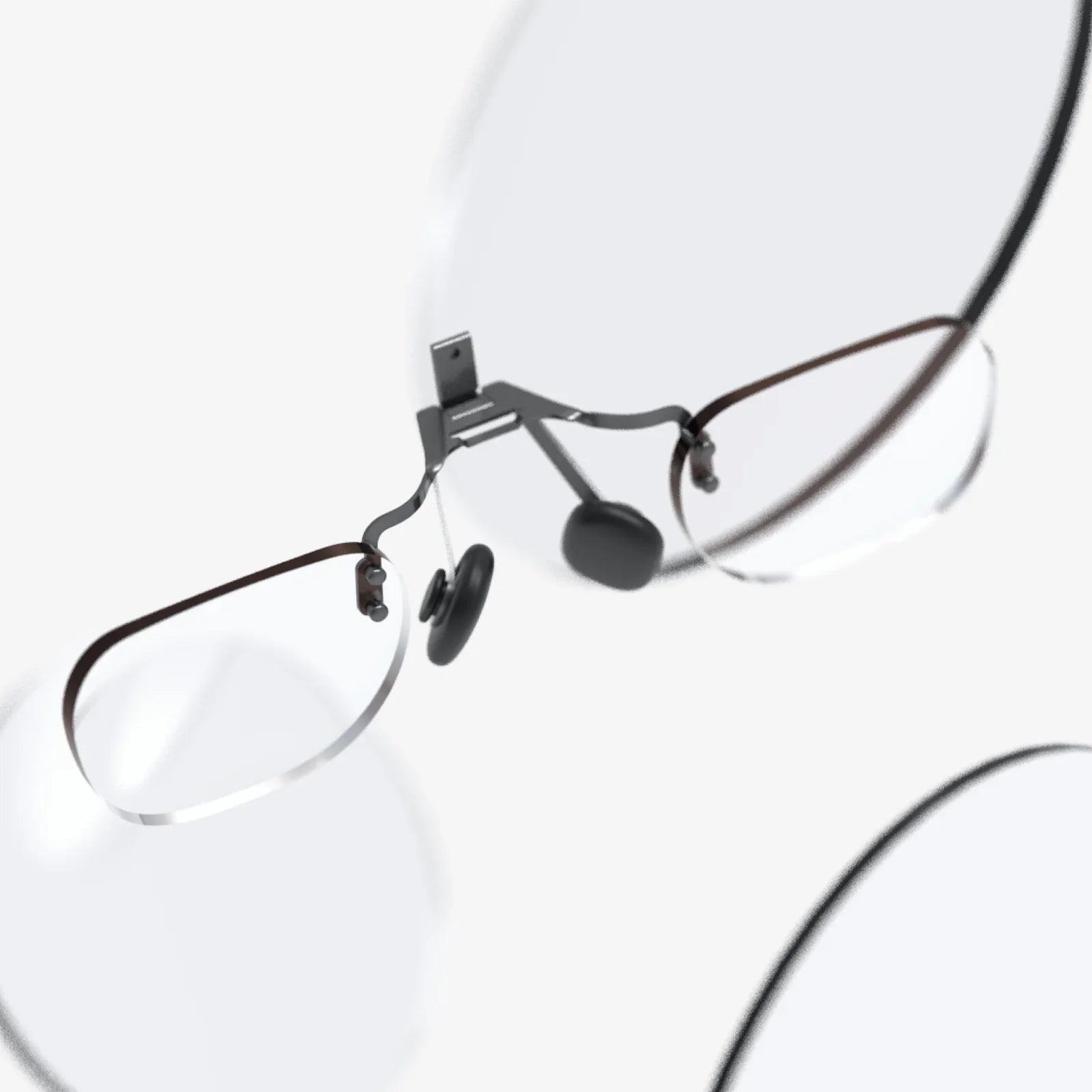
You’ve seen the futuristic promos and the concept videos: a world where digital information seamlessly blends with our physical reality, all accessed through a sleek pair of glasses. The promise is intoxicating, a paradigm shift in how we work, play, and connect. But the burning question remains, cutting through the marketing hype and technological wonder: are XR glasses actually worth your hard-earned money right now?
Demystifying the XR Spectrum: More Than Just a Buzzword
Before we can assign value, we must first define the product. "XR Glasses" is an umbrella term that encompasses a spectrum of experiences, often leading to confusion. Understanding these categories is the first step in evaluating their worth.
Augmented Reality (AR) Glasses: These are designed to overlay digital elements—text, images, 3D models—onto your view of the real world. The goal is to enhance your environment, not replace it. Think of navigation arrows painted onto the street in front of you or a recipe floating next to your mixing bowl.
Virtual Reality (VR) Headsets: These devices are fully immersive, blocking out the physical world entirely and transporting you to a digital one. They are typically used for gaming, immersive training simulations, and virtual social spaces. While often called "headsets," the line blurs as they evolve into more glasses-like form factors.
Mixed Reality (MR) Glasses: This is the cutting edge, combining the best of AR and VR. MR glasses can understand and interact with your physical environment. A digital character could sit on your real couch, or you could use a virtual controller to manipulate a real-world object's digital twin. This requires advanced sensors and powerful processing.
Most consumer devices currently marketed as "XR glasses" sit somewhere between AR and MR, offering varying degrees of immersion and interaction. Their worth is intrinsically tied to how effectively they deliver on their specific promise.
The Compelling Case: Why XR Glasses Could Be Your Next Must-Have Device
The potential of this technology is staggering. Proponents argue that XR glasses will eventually be as ubiquitous and transformative as the smartphone. Here’s where that argument gains its strength.
Revolutionizing Professional Workflows
For certain professions, the value is already being realized. In fields like architecture and engineering, designers can walk clients through full-scale, holographic models of buildings before a single brick is laid. Medical students can practice complex procedures on detailed anatomical holograms, reducing risk and improving learning outcomes. Remote assistance becomes magical; a expert located across the globe can see what a field technician sees and annotate their field of view with arrows, notes, and diagrams, guiding them through a repair in real-time. For these enterprise and specialized applications, the return on investment in terms of saved time, reduced errors, and enhanced training is already making XR glasses unquestionably worth it.
A New Dimension of Entertainment and Social Connection
Imagine watching the big game with a virtual stat sheet hovering next to your television, or having a life-sized movie character appear to be in your living room. Social interactions are poised for a leap, moving beyond flat video calls into shared virtual spaces where you can feel a sense of presence with friends and family, playing games, watching movies, or simply chatting as if you were in the same room. The potential for deeply immersive gaming and narrative experiences is a primary driver for early adopters in the consumer space.
The Promise of the Spatial Computing Interface
This is the grand vision: the end of the isolated screen. Instead of hunched over a laptop or constantly checking a phone, information becomes contextual and ambient. Your calendar reminders float next to the door as you're leaving. Translation subtitles appear naturally under a speaker speaking a foreign language. The recipe you’re following adjusts its instructions based on your progress, all without you touching a screen with flour-covered hands. This shift from personal computing to spatial computing represents a fundamental change in our relationship with technology, one that offers unparalleled convenience and efficiency.
The Reality Check: Significant Hurdles on the Road to Adoption
For all the promise, the present-day experience is fraught with compromises. The technology is, in many ways, in its adolescence—powerful but awkward, promising but not yet fully realized.
The Form Factor Conundrum: Style vs. Substance
The holy grail is a pair of glasses that are indistinguishable from regular eyewear: lightweight, comfortable, with all-day battery life. We are not there yet. High-end devices that offer full MR experiences are often bulky, front-heavy, and require a wired connection to a separate battery pack or computer. More lightweight "viewer" styles often sacrifice processing power and field of view. Wearing most current-generation devices for extended periods can cause fatigue. Until they become something people forget they're wearing, mass adoption will remain a challenge.
The Software Dilemma: Where's the Killer App?
Hardware is nothing without software. While the app libraries for these platforms are growing, they are still nascent. There is a notable lack of a definitive "killer app"—that one must-have experience that drives everyone to buy the hardware, akin to what email and the web browser were for the personal computer. Many applications feel like tech demos: impressive proofs of concept that are fun to show friends but lack lasting utility. The ecosystem needs more robust, daily-use applications to justify the investment for the average consumer.
The Social and Practical Stigma
Walking around in public with a camera-equipped device on your face raises legitimate concerns. There are questions of privacy, both for the user and for unsuspecting bystanders who may be recorded. Furthermore, wearing obvious technology on your face can feel socially isolating or simply awkward. While society eventually adapted to Bluetooth earpieces and then wireless headphones, glasses represent a much more visible and intrusive barrier to social interaction that has yet to be normalized.
The High Cost of Entry
Quality XR glasses are a significant financial investment, often costing as much as a high-end laptop or smartphone. For a piece of technology that is still evolving rapidly and lacks a clear, daily-use case for many, this price tag is a major barrier. It’s a luxury purchase for tech enthusiasts, not yet a practical one for the mainstream.
So, Who Are They Worth It For Right Now?
The answer to "are they worth it?" is not a simple yes or no. It’s a conditional yes, heavily dependent on the user.
The Enterprise User: For businesses in design, manufacturing, medicine, training, and remote field service, the answer is a resounding yes. The productivity gains, training efficacy, and error reduction already provide a clear and calculable return on investment.
The Developer and Creator: If you are building the future of spatial computing, the investment is a necessary cost of doing business. It's your canvas and your testbed.
The Avid Tech Enthusiast: If you are driven by a passion to experience and shape cutting-edge technology, have a high tolerance for beta-phase imperfections, and have disposable income, then they can be worth it. You are buying a ticket to the forefront of innovation.
The General Consumer: For most people looking for a reliable, practical, and essential new gadget, the answer, for now, is not yet. The technology is too expensive, the form factor too cumbersome, and the software ecosystem too underdeveloped to recommend as a must-have purchase. It is wiser to wait for the next generation of hardware and a more mature software landscape.
Gazing Into the Crystal Ball: The Future of XR Glasses
The trajectory, however, is undeniable. The pace of innovation is furious. We can expect rapid advancements in micro-optics, battery technology, and processor efficiency that will solve the current form factor and performance issues. As the hardware becomes more capable and less obtrusive, developers will be empowered to create the killer apps that will define the platform. The value proposition will shift from niche to necessity.
The question will evolve from "Are they worth it?" to "Which pair is right for me?" much like it did with smartphones. They won't replace our phones but rather become their natural successor—the primary lens through which we interact with the digital world, integrating it seamlessly into our physical lives.
Ultimately, the true worth of XR glasses lies not in what they are today, but in what they represent: the beginning of a fundamental shift in human-computer interaction. They are the rough draft of a future where our reality is limited only by our imagination. For a select few, that future is already worth buying into. For everyone else, the best is undoubtedly yet to come, and it’s worth watching closely, waiting for the moment when the promise finally, fully, meets the price.
Share:
Augmented Reality Event Experiences Are Redefining the Future of Live Gatherings
Are AI Glasses Worth It? An In-Depth Look at the Future on Your Face