


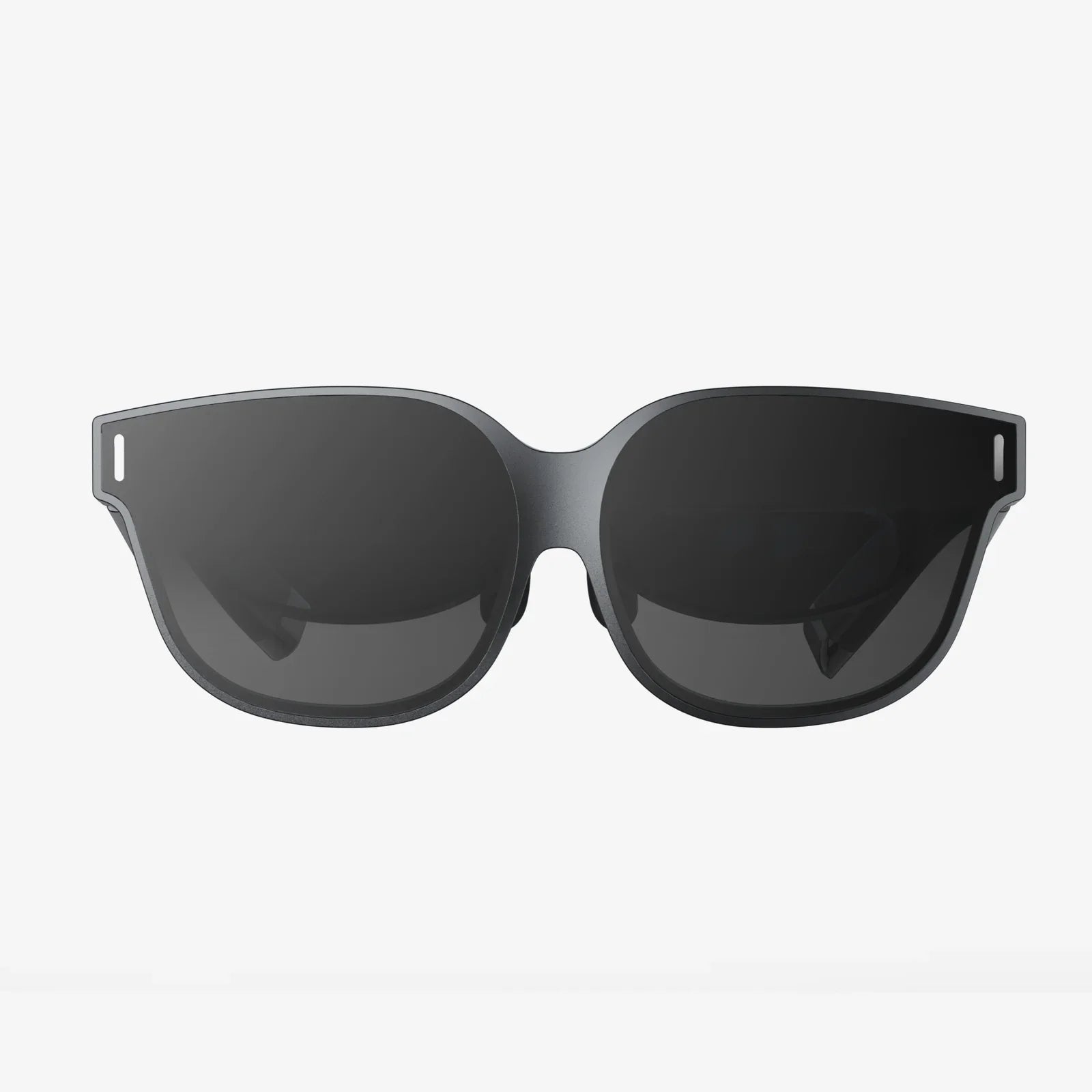
Imagine a world where information flows seamlessly into your field of vision, where language barriers dissolve with a glance, and your surroundings become an interactive canvas of data. This is the tantalizing promise of AI glasses, a piece of technology that feels ripped from the pages of science fiction and is now vying for a place on the bridge of your nose. But as these devices begin to trickle into the market, a critical question emerges from the buzz of potential: are they a transformative leap into the future, or merely an expensive, underwhelming gimmick? The answer is as complex and multifaceted as the technology itself.
The Evolution of Eyewear: From Vision Correction to Visual Computation
Eyewear has historically been a passive tool. For centuries, its primary function was singular: to correct imperfect vision. Then, it evolved into a fashion statement, a symbol of intellect, and finally, with the advent of sunglasses, a protector from the elements. The concept of augmenting this everyday object with technology is not new. For over a decade, various companies have attempted to create smart glasses, often with bulky designs and limited functionality that failed to capture the public's imagination. The current generation of AI glasses, however, represents a fundamental shift. They are not just about displaying notifications; they are about contextual understanding and real-time interaction with the world. This is powered by a confluence of advancements: miniature sensors, more efficient processors, sophisticated machine learning algorithms, and improved battery technology, all packaged into a form factor that is inching closer to conventional eyewear.
Unpacking the "AI" in AI Glasses: What Can They Actually Do?
The term "AI" is often used as a marketing catch-all, but its application in smart glasses is specific and powerful. The value proposition hinges on several core functionalities:
Real-Time Translation and Transcription
Perhaps the most compelling application is the ability to break down language barriers. Imagine walking through a foreign airport and seeing signs translated instantly in your line of sight, or having a conversation with someone where their words are transcribed and translated subtitles appear in your glasses. This isn't just about convenience; it's a profound tool for connection and accessibility, potentially revolutionizing travel, business, and diplomacy.
Enhanced Visual Search and Object Identification
AI glasses can act as a visual search engine for the real world. Point your gaze at a landmark, and historical facts might pop up. Look at a menu, and you could see personalized dietary information or reviews for specific dishes. For professionals, this could mean identifying a specific component in a machine and pulling up its schematic, or for a student, identifying a plant species during a nature walk. This layer of contextual information overlaid on reality is a key selling point.
Navigation and Contextual Awareness
Instead of constantly looking down at a phone screen for directions, AI glasses can project turn-by-turn navigation directly onto the path ahead. This is not only more convenient but also significantly safer for pedestrians. Furthermore, they can provide contextual information about your surroundings—the name of the restaurant you're walking past, the showtimes at a cinema, or the bio of a person you're about to meet at a networking event.
Accessibility and Assistance
The potential for aiding those with visual or auditory impairments is immense. AI glasses can describe scenes to the visually impaired, read text aloud, identify currency, or amplify and transcribe conversations for the hard of hearing. This application moves the technology from a luxury gadget to a potentially life-changing assistive device.
The Stark Reality: Significant Hurdles and Limitations
For all their potential, current-generation AI glasses are fraught with compromises that prevent them from being a must-have product for the average consumer.
The Form Factor Conundrum: Fashion vs. Function
This is the most immediate and obvious challenge. To house batteries, processors, speakers, and projection systems, designers face a constant battle. Most models are still noticeably bulkier than regular glasses, and many prioritize function over form, resulting in a look that can be awkward and socially conspicuous. Until the technology can be miniaturized to fit into frames indistinguishable from those bought at an optician, widespread adoption will be hampered. People are highly selective about what they put on their face; it's a part of their identity. Clunky, tech-forward designs will remain a niche product for enthusiasts.
Battery Life: The Tether to the Wall Outlet
Intensive AI processing and optical display are incredibly power-hungry. Many current models struggle to last a full day of typical use, often dying after just a few hours of active functionality. This creates a form of "battery anxiety," where users must constantly be mindful of their charge level, effectively negating the promised convenience. Some models offload processing to a paired smartphone to conserve power, but this creates its own dependencies and limitations.
The Privacy Paradox
This is arguably the single biggest societal hurdle. AI glasses often require cameras and microphones to perceive the world. The idea of people wearing recording devices on their faces in public spaces, often without clear indication of when they are active, raises enormous privacy concerns for both the wearer and everyone around them. The term "glasshole" emerged from earlier iterations for a reason. Navigating the etiquette of using this technology in social settings, and the potential for new laws and regulations restricting their use, presents a massive challenge for manufacturers and users alike.
Cost versus Utility: The Value Proposition
The early-adopter tax on this technology is steep. High-end AI glasses can cost several times more than a premium smartphone. When weighed against the utility they currently provide—which for many is a set of novel but non-essential features—the value proposition becomes very hard to justify for the mainstream market. It becomes a solution in search of a problem for many consumers whose smartphones already handle these tasks adequately, if less seamlessly.
Who Are They For Right Now? Identifying the Early Adopters
While the average consumer might balk at the current limitations, specific user groups are finding tangible value in this emerging technology.
- Tech Enthusiasts and Developers: Those driven by a passion for cutting-edge technology and the desire to shape its development are natural early adopters.
- Certain Professionals: Field service technicians, warehouse logistics managers, surgeons, and architects can use them for hands-free access to manuals, schematics, and data, significantly improving efficiency and safety in specialized tasks.
- Individuals with Specific Accessibility Needs: As mentioned, the assistive potential is enormous, making the cost and quirks a worthwhile trade-off for enhanced independence.
- Content Creators: The first-person perspective (POV) offered by built-in cameras provides a unique and immersive format for vlogging, documenting processes, and creating novel content.
For these groups, the utility outweighs the drawbacks, making the investment potentially "worth it."
The Future Lens: Where is This Technology Headed?
The current state of AI glasses is likely just a primitive precursor to what is coming. The trajectory points toward several key developments:
- Radical Miniaturization: Advances in materials science, photonics (using lasers to project images directly onto the retina), and chip design will lead to glasses that are virtually indistinguishable from regular frames.
- Seamless AI Integration: The AI will become more anticipatory and less reactive, offering information and suggestions before you even know you need them, based on a deep understanding of context and user behavior.
- Ecosystem Development: The true power will be unlocked by a robust ecosystem of apps and services built specifically for an augmented reality interface, much like the smartphone app economy.
- Improved Battery Technology: Breakthroughs in solid-state or other advanced battery tech will be essential for all-day, worry-free use.
In the future, the question may not be "are they worth it?" but "how did we ever live without them?"
So, are AI glasses worth it? In their current incarnation, for the vast majority of people, the answer is probably no. The combination of high cost, limited battery life, social awkwardness, and unresolved privacy issues makes them a difficult purchase to justify. They remain a fascinating glimpse into a future paradigm of computing, but one that is still maturing. However, to dismiss them entirely would be a mistake. The technology is advancing at a breathtaking pace, and the potential is undeniably profound. For early adopters and specific professional use cases, they offer a compelling, if imperfect, window into that future. For everyone else, the best approach may be one of eager anticipation, watching this space closely as the technology evolves from a bulky prototype into an indispensable, and perhaps even invisible, part of our daily lives. The dream of seamless augmented reality is not a question of 'if' but 'when,' and that 'when' is getting closer every day.
Share:
Are XR Glasses Worth It? A Deep Dive Into the Future on Your Face
Vision Gaming Glasses: The Ultimate Tool for Enhanced Performance and Eye Comfort