


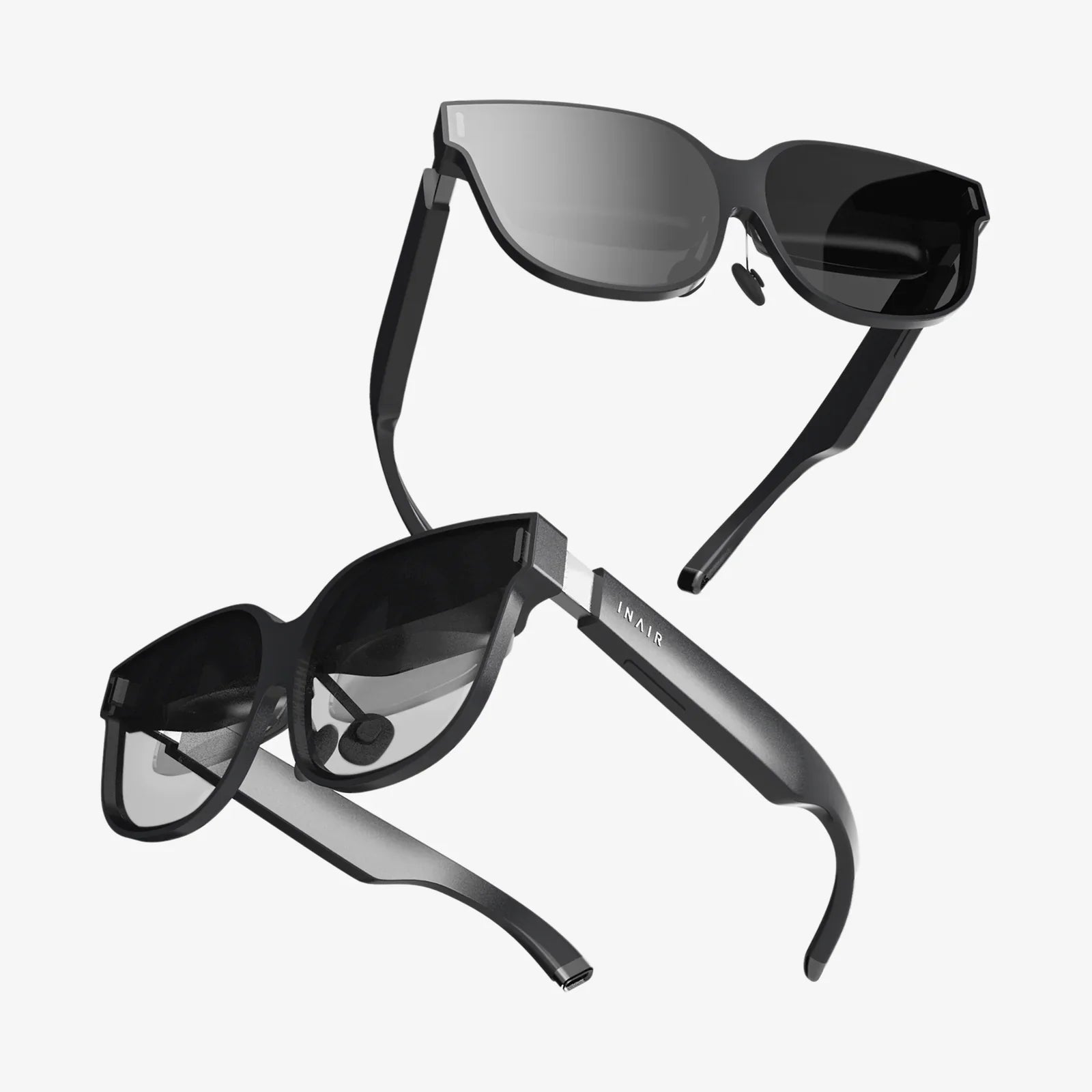
Imagine a world where the digital and the physical are not just connected, but seamlessly, intelligently intertwined. A world where your surroundings are not just seen but understood, not just displayed but enhanced with a layer of dynamic, context-aware information. This is no longer the realm of science fiction; it is the imminent future being forged at the powerful intersection of two of the most transformative technologies of our time. The fusion of artificial intelligence and augmented reality is poised to redefine human interaction with technology, information, and each other, creating a new, hyper-intelligent layer of reality itself.
The Foundational Synergy: More Than the Sum of Its Parts
To understand the profound impact of this convergence, one must first appreciate the unique capabilities that each technology brings to the partnership. Augmented reality, at its core, is a presentation layer. It is the medium through which digital information—be it 3D models, text, or videos—is superimposed and anchored onto our perception of the real world, typically through a device like a headset or smartphone. Its primary challenge has always been relevance and context. Simply overlaying data is not enough; that data must be meaningful to the specific user in their specific environment at that specific moment.
This is precisely where artificial intelligence enters the equation. AI, particularly its subfields of machine learning and computer vision, acts as the brain behind the eyes. It provides the critical cognitive functions that AR has historically lacked:
- Perception and Understanding: AI algorithms can parse the visual data from an AR device's cameras to identify objects, people, surfaces, and even gestures. It doesn't just see a table; it understands it is a table, estimates its dimensions, and recognizes the objects on it.
- Contextual Awareness: By processing this visual data alongside other sensor inputs and user data, AI can infer context. Is the user in a busy factory floor or a quiet living room? Are they trying to assemble a complex machine or learn a new dance? AI determines the user's intent and situation.
- Intelligent Interaction: AI enables natural and intuitive ways to interact with the AR environment. This includes voice commands processed through natural language processing (NLP), gesture recognition that understands human movement, and even predictive interfaces that anticipate the user's next move.
- Dynamic Content Generation: Instead of displaying static, pre-programmed digital content, AI can generate or modify AR content in real-time based on the evolving environment and user actions, creating a truly responsive experience.
In essence, AR provides the canvas and the brush, while AI provides the vision, the knowledge, and the skill to paint a masterpiece tailored to every individual viewer.
The Technical Engine Room: How AI Powers Immersive AR
The magic of this fusion is enabled by a suite of sophisticated AI-driven technologies working in concert, often in real-time and on the edge (on the device itself) to minimize latency.
Computer Vision: The Art of Seeing and Comprehending
This is the cornerstone of the AI-AR relationship. Computer vision algorithms perform several critical tasks:
- Simultaneous Localization and Mapping (SLAM): SLAM is the technology that allows an AR device to both map an unknown environment and understand its own position within that environment simultaneously. AI-enhanced SLAM is far more robust, able to handle dynamic scenes with moving people and changing lighting conditions, creating a stable and persistent digital anchor in the physical world.
- Object Recognition and Segmentation: Advanced convolutional neural networks (CNNs) can classify thousands of objects with high accuracy. They can not only identify a car engine but can also segment it, distinguishing the alternator from the battery and the belts. This granular understanding is what allows for precise placement of AR instructions or information.
- Occlusion Handling: A key marker of a convincing AR experience is digital objects being realistically obscured by physical ones. AI predicts depth and understands the geometry of a scene to ensure a virtual character can walk behind a real sofa, maintaining the illusion that both exist in the same space.
Machine Learning for Personalization and Prediction
Beyond seeing, AI is crucial for learning and adapting. Machine learning models can analyze a user's behavior patterns within an AR application. For a training application, it can identify which steps a user struggles with and automatically offer more detailed guidance or supplementary exercises. In a retail setting, it can learn a user's style preferences and highlight AR fashion items that match their taste. This creates a deeply personalized experience that becomes more valuable with each use.
Natural Language Processing: The Conversational Interface
NLP allows users to interact with their AR environment using natural speech. Instead of navigating complex menus, a technician can simply say, "Show me the wiring diagram for this component," and the AI will both understand the command and identify "this component" from the camera feed to display the correct manual. This hands-free, voice-activated interface is crucial for applications where a user's hands are occupied, such as surgery or machinery repair.
Transforming Industries: The AI-AR Revolution in Action
The theoretical potential of AI-driven AR is already being realized in practical, groundbreaking applications across the global economy.
Industrial and Manufacturing: The Augmented Worker
This is perhaps the most mature application area. On factory floors and in warehouse logistics, AI-powered AR is driving unprecedented gains in efficiency, accuracy, and safety.
- Assembly and Maintenance: Workers wearing AR smart glasses can see digital work instructions overlaid directly onto the machinery they are assembling or repairing. AI doesn't just show the same manual to everyone; it recognizes the specific model and serial number of the equipment and tailors the instructions. It can visually highlight the exact bolt that needs to be tightened next and warn the worker if they are about to use an incorrect tool.
- Quality Control and Inspection: AI can be trained to recognize defects—micro-fractures, corrosion, misalignments—that are invisible to the human eye. An AR system can guide an inspector's gaze to a potential problem area and display historical data about failures in that specific component.
- Remote Expert Assistance: A less experienced field technician can stream their live AR view to a senior expert miles away. The expert can see what the technician sees, annotate the live video with arrows and notes that appear anchored in the technician's field of view, and guide them through complex procedures, effectively teleporting expertise anywhere in the world.
Healthcare and Medicine: Enhancing Precision and Care
In medicine, where error is not an option, the precision offered by AI and AR is saving lives and improving outcomes.
- Surgical Guidance: Surgeons can wear AR headsets to see critical patient data, such as MRI or CT scans, projected directly onto the patient's body during an operation. AI can align the pre-operative scan with the patient's actual anatomy in real-time, even accounting for tissue shift during surgery. This allows for incredibly precise navigation, minimizing incision size and reducing risk.
- Medical Training and Education: Students can practice procedures on hyper-realistic AR simulations. AI can act as an intelligent tutor, providing feedback on their technique, tracking their progress, and dynamically adjusting the difficulty of the simulation based on their skill level.
- Patient Care and Rehabilitation: AR apps guided by AI can help patients perform physical therapy exercises correctly at home by demonstrating movements and using computer vision to provide corrective feedback on their form.
Retail and E-Commerce: The Try-Before-You-Buy Revolution
The retail sector is being utterly reshaped, moving from transactional to experiential.
- Virtual Try-On: AI-powered AR allows customers to virtually try on clothes, glasses, makeup, and even see how furniture would look in their home with stunning accuracy. The AI understands lighting, scale, and fit, going beyond a simple overlay to simulate how fabric would drape or how a paint color would look at different times of day.
- Personalized In-Store Navigation: In large stores, customers could use an AR app on their phone to find products. The AI would generate a path through the store, overlaying arrows on the live video feed. It could also offer personalized promotions as they pass certain aisles, based on their purchase history.
Education and Remote Collaboration
These technologies are dissolving geographical barriers and creating new, immersive forms of learning and working together.
- Interactive Learning: Instead of reading about ancient Rome, students can walk through a digitally reconstructed Colosseum, with AI-powered virtual guides answering their questions. Complex scientific concepts, from molecular structures to planetary physics, can be manipulated and explored in 3D space.
- The Holistic Workspace: Remote collaboration moves beyond flat video calls into shared AR workspaces. Teams from across the globe can interact with the same 3D model of a new product design, making annotations that persist in space. AI can transcribe meetings, assign action items, and even translate speech in real-time, breaking down language barriers within the collaborative environment.
Navigating the Frontier: Challenges and Ethical Considerations
For all its promise, the path towards an AI-augmented world is fraught with significant challenges that must be addressed proactively.
- Privacy and Data Security: AR devices, by their very nature, are continuous data collection machines. They have cameras and microphones that are always on, capturing incredibly intimate details about a user's life and environment. The AI processing this data must be designed with privacy-first principles. Who owns this data? How is it stored and used? The potential for surveillance is unprecedented, demanding robust ethical frameworks and transparent policies.
- Hardware Limitations: Truly immersive AR requires lightweight, powerful, all-day wearable devices with long battery life and immense processing power to run complex AI models. While progress is rapid, current hardware often still faces trade-offs between performance, size, and cost.
- User Safety and Reality Blurring: If digital content is too convincing, users could become distracted in potentially dangerous environments (e.g., walking near traffic). There is also a psychological risk—the potential for addiction to an augmented world or difficulty distinguishing between augmented memories and real ones.
- Algorithmic Bias: The AI models powering these experiences are trained on data. If that data contains societal biases, the AR world will reflect and potentially amplify them. An object recognition system that fails to accurately identify objects in diverse environments or for diverse users will create exclusionary and frustrating experiences.
- The Digital Divide: This technological leap could create a new societal schism between those who can afford and access these advanced tools and those who cannot, potentially exacerbating existing inequalities in education and economic opportunity.
The Invisible Layer of Intelligence: What Comes Next?
The trajectory of AI and AR is pointing towards a future where the technology itself fades into the background. The goal is not to create a world cluttered with digital pop-ups, but to develop an intuitive, invisible layer of intelligence that enhances our natural capabilities. We are moving towards spatial computing, where the digital world understands and respects the physics and context of our physical world. The next breakthroughs will likely involve more advanced predictive AI, affective computing (where AI can read and respond to user emotion), and even tighter integration with other technologies like the Internet of Things, where every smart device becomes a data point for the AR AI to create a holistic model of the environment. The device itself may evolve from glasses to more minimalist forms like contact lenses, further embedding this digital layer into our perception.
We stand at the precipice of a new era, one where our reality becomes a customizable, interactive, and intelligent interface. The convergence of artificial intelligence and augmented reality is the key that unlocks this door, promising to amplify human potential in ways we are only beginning to imagine. The journey ahead is as much about thoughtful innovation as it is about technological prowess, requiring a collective effort to ensure this powerful fusion builds a future that is not only smarter but also more equitable, safe, and profoundly human.
Share:
XR AR VR News Today: The Metaverse Is Closer Than You Think
Augmented Reality in Web Technology: The Invisible Revolution Reshaping Our Digital Experience