


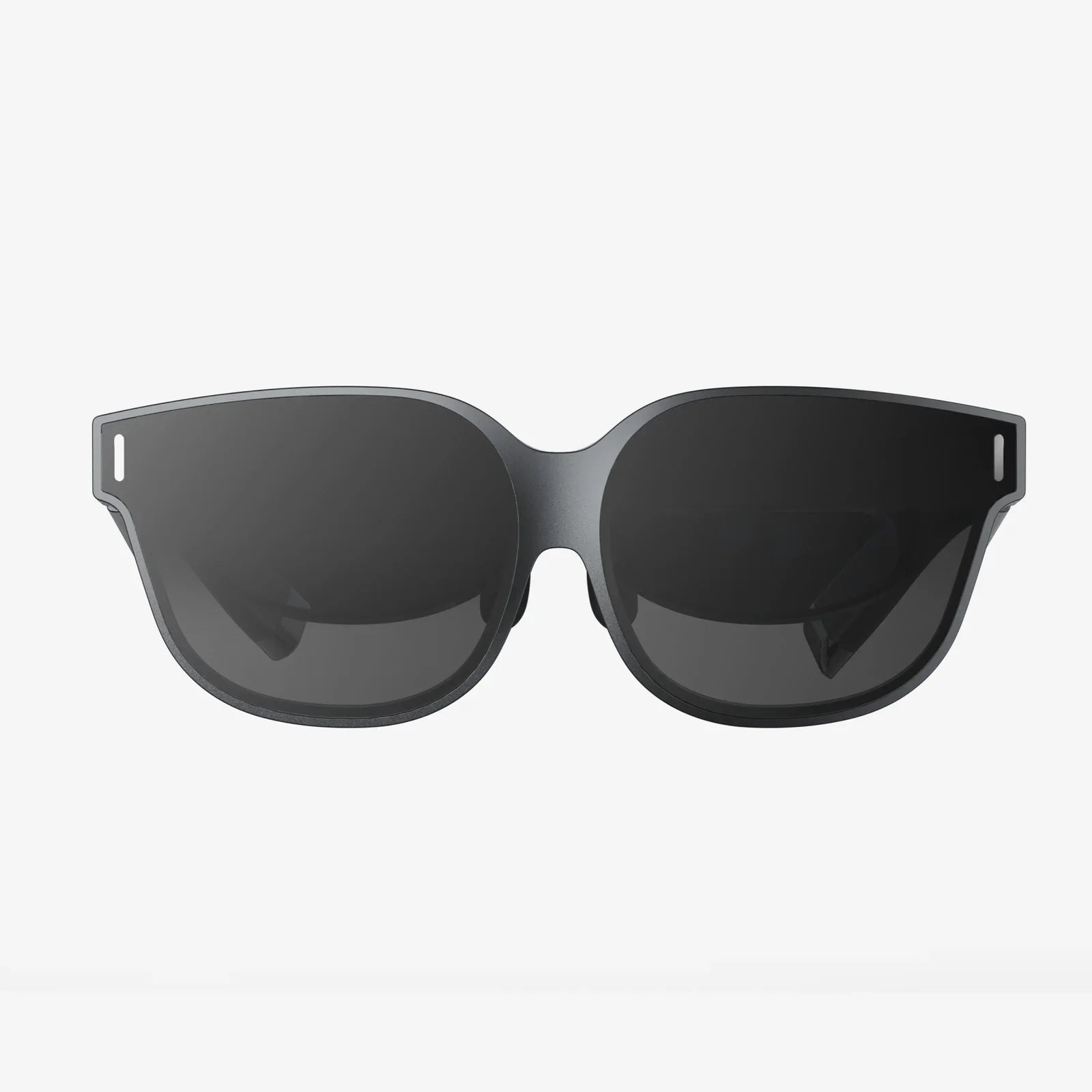
The digital frontier is no longer a distant sci-fi fantasy; it's unfolding before our eyes, headset by headset, app by app. If you think the buzz around extended reality is just hype, today's developments in XR, AR, and VR news will make you think again. We are standing at the precipice of a fundamental shift in how we compute, communicate, and experience the world, and the pace of change is nothing short of breathtaking.
The Semantic Layer: Making the Metaverse Understandable
One of the most significant yet underreported pieces of XR news today revolves around the development of a semantic layer for the metaverse. Currently, most virtual environments are vast collections of 3D objects and spaces that machines render but do not truly understand. A chair is a shape, not a place to sit; a wall is a barrier, not a surface for information. The next wave of innovation is focused on embedding meaning into these digital constructs.
This involves using advanced AI and machine learning to tag objects, environments, and even actions with real-world meaning. Imagine an AR headset that not only recognizes a coffee machine but understands its function, can pull up the user manual, and display a step-by-step holographic guide for brewing a perfect espresso. This semantic understanding is the key to moving from passive observation to active interaction within mixed realities, blurring the lines between instruction and intuition.
Enterprise Adoption Accelerates Beyond Training Simulations
While immersive training modules for high-risk jobs have been a flagship application for VR, enterprise AR and VR news today indicates a massive expansion into day-to-day operations. Remote assistance is becoming a cornerstone of industrial AR. A field technician facing a complex repair can don smart glasses and share their first-person view with a senior expert thousands of miles away. The expert can then annotate the technician's real-world view with arrows, diagrams, and text instructions, effectively guiding their hands from afar. This not only resolves issues faster but drastically reduces travel costs and downtime.
Furthermore, we are seeing the rise of persistent digital twins in architecture, engineering, and construction. Using AR overlays, engineers can visualize a building's internal systems—electrical conduits, plumbing, HVAC—laid perfectly over the physical structure during a walkthrough. This allows for flawless maintenance, efficient renovations, and collaborative planning in a shared, hybrid space where the digital and physical are inextricably linked.
The Invisible Interface: The Rise of Contextual Computing
A major trend emerging from recent AR and VR news is the move away from clunky menus and floating screens towards what is being termed contextual computing. The goal is to make the technology itself fade into the background, presenting information and interactions only when and where they are relevant. Your environment becomes the interface.
For instance, looking at a restaurant through your AR glasses might subtly display its rating and today's specials on its façade. Glancing at your smartwatch could project your schedule for the day onto your sleeve. The information is tied to the context of your gaze and your location, creating a seamless flow of data that enhances reality without overwhelming it. This shift is crucial for achieving mass adoption, as it reduces cognitive load and makes the technology feel like a natural extension of human perception.
Social XR: Building Connection in a Digital Space
The concept of social VR is evolving rapidly into a broader category of Social XR. Today's VR news highlights platforms that are moving beyond cartoonish avatars and game-like environments to foster genuine human connection. The focus is on spatial presence—the convincing feeling that you are in a room with another person, sharing the same digital space.
Advancements in face and eye tracking are making this possible. Avatars can now reflect a user's subtle facial expressions, winks, and frowns, transmitting non-verbal cues that are essential for meaningful conversation. Virtual meetings can take place on a digital recreation of Mars, or friends can gather to watch a movie in a virtual theater that feels as social as a real one. This is not about replacing physical interaction but about adding a rich, new dimension to digital communication, making it more empathetic and engaging than a flat video call could ever be.
The Hardware Horizon: Lighter, Smarter, More Accessible
Of course, none of these software advancements would be possible without parallel leaps in hardware. The latest VR news from the hardware front is overwhelmingly focused on miniaturization and performance. Standalone headsets are becoming more powerful, with better processors, higher-resolution displays, and wider fields of view. The holy grail remains a pair of glasses that are as socially acceptable and comfortable to wear as everyday eyewear, and while we are not there yet, recent prototypes show the industry is steadily marching in that direction.
For AR, the development of advanced waveguide optics and microLED displays is crucial. These technologies aim to project bright, vivid digital images onto clear lenses, allowing users to see the real world unimpeded. Furthermore, on-device AI chips are processing camera and sensor data at incredible speeds, enabling real-time object recognition and spatial mapping without a constant, lag-inducing connection to the cloud. This makes interactions instantaneous and reliable, which is non-negotiable for both consumer and enterprise applications.
Navigating the New Frontier: Ethics and the Future
This rapid evolution is not without its challenges. The collection of immense amounts of visual and spatial data through these devices raises profound privacy and security questions. The concept of attention theft becomes more acute when advertisements can be plastered onto every physical surface you see. Furthermore, the potential for deepfakes and hyper-realistic synthetic environments creates new avenues for misinformation.
The industry's response, as seen in policy discussions within tech news circles, is slowly taking shape. There is a growing push for ethical design frameworks, data anonymization, and clear user controls over what is recorded and how it is used. The development of the XR space will be as much a societal conversation as a technological one, requiring collaboration between engineers, policymakers, and ethicists to build a future that is not only immersive but also safe and equitable for all.
The stream of XR, AR, and VR news today paints a clear picture: the age of immersive computing is dawning. This is no longer a niche interest for gamers and tech enthusiasts. It is a foundational shift that will reshape industries, redefine social interaction, and alter our very perception of reality. The devices are getting smarter, the software more intuitive, and the applications more critical to our daily lives. To ignore this wave is to miss the next chapter of the internet—a chapter that is being written not on screens, but in the space all around us.
Share:
VR Glasses for PC: The Ultimate Guide to Immersive Desktop Virtual Reality
Artificial Intelligence and Augmented Reality: The Confluence Creating a New Digital Epoch