


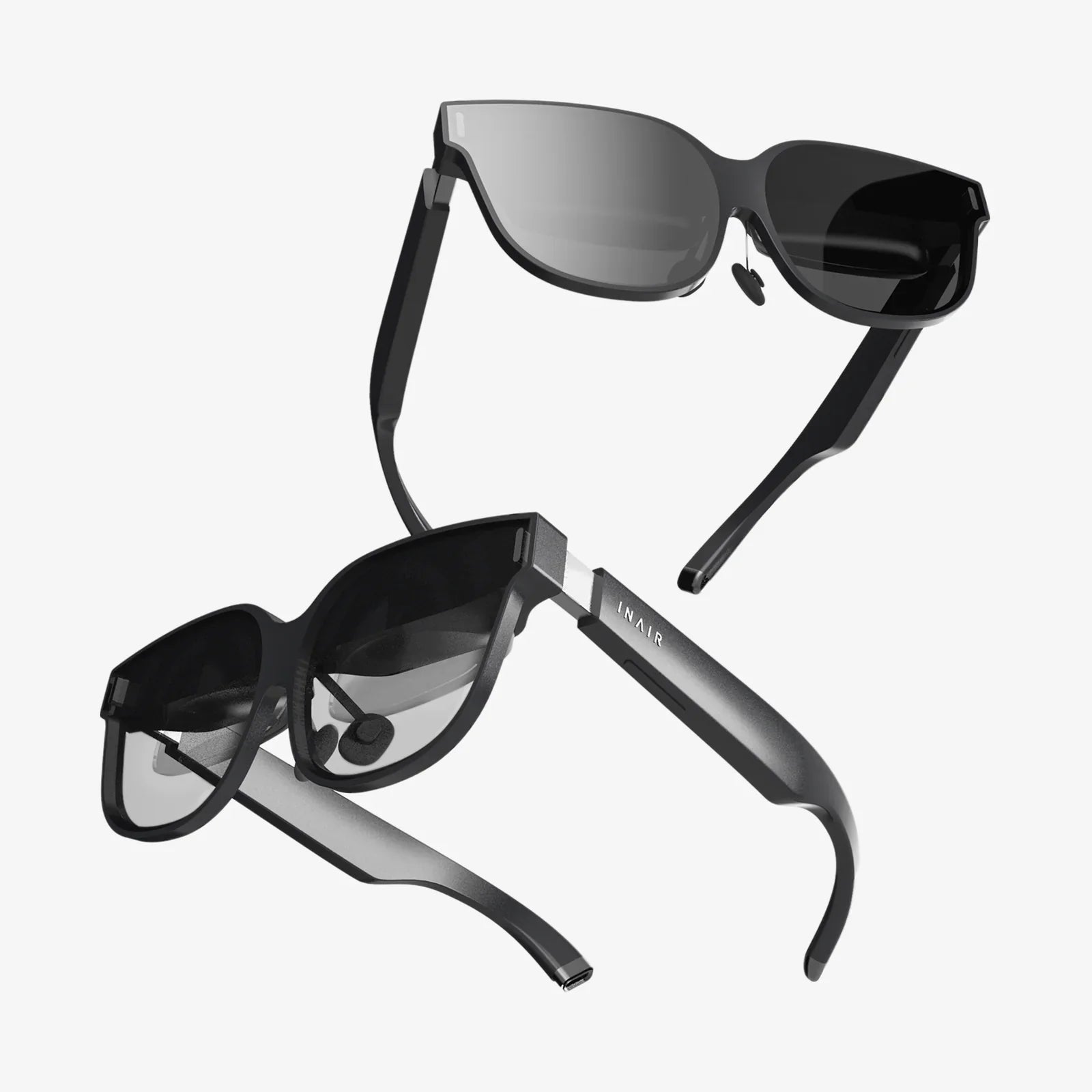
Imagine a world where your thoughts are commands, where information flows into your mind not from a screen but through your senses, and a digital assistant, intimately familiar with your every need, anticipates your desires before you’re even consciously aware of them. This is not the distant future of science fiction; it is the imminent reality being forged by the rapid convergence of advanced hardware and sophisticated software in the form of the artificial intelligence headset. This device represents far more than a simple wearable; it is the next fundamental leap in human-computer interaction, a portal to a seamlessly integrated world of ambient computing that promises to redefine the very fabric of daily life, cognitive enhancement, and social connection.
The Architectural Symphony: Hardware Meets Intelligence
At its core, an artificial intelligence headset is a masterpiece of integrated engineering, a symphony of components working in concert to create a seamless, intelligent experience. Unlike traditional audio devices, its functionality is not confined to a single sense.
Sensing the World and the Self: A sophisticated array of sensors acts as its eyes and ears. High-resolution cameras, both standard and depth-sensing, continuously map the user's environment in three dimensions, constructing a real-time digital twin of the physical world. Inertial measurement units (IMUs) track head movement with incredible precision, while microphones, often employing beamforming technology, isolate and capture audio from specific directions, filtering out background noise to hear voice commands clearly.
The Onboard Brain: The true differentiator is the presence of a dedicated neural processing unit (NPU) or a similarly specialized AI accelerator chip. This is the cognitive engine of the device. While powerful central processors handle general tasks, the NPU is designed from the ground up to perform the trillions of matrix operations required for machine learning models with extreme efficiency and low latency. This allows for complex AI tasks—like real-time language translation, object recognition, and spatial audio processing—to occur directly on the device, ensuring user privacy and eliminating dependency on a constant cloud connection.
Interfacing with the Mind: The output systems are equally advanced. High-density speaker arrays or bone conduction technology deliver personalized, spatial audio that sounds like it emanates from the environment itself, not from headphones. For visual overlays, miniature micro-OLED or Liquid Crystal on Silicon (LCoS) displays project high-fidelity imagery onto waveguides or lenses, creating the illusion of holographic screens and objects existing within the user's space. Haptic feedback modules can provide subtle tactile sensations on the user's temples or headband, offering a new channel for notifications and immersive experiences.
Beyond Voice Commands: The Multimodal Interaction Revolution
The quintessential image of AI interaction is a user speaking to a virtual assistant. The artificial intelligence headset shatters this limited paradigm, ushering in an era of multimodal interaction that is far more natural and intuitive.
Contextual Awareness: The AI does not merely listen for a wake word. It is perpetually contextually aware. By processing the continuous feed from its sensors, it understands where you are, what you're looking at, and who you're with. Glance at a restaurant menu, and it can instantly translate the text and highlight popular dishes. Look at a complex piece of machinery, and schematic overlays or instructional animations can appear, pinned to the specific components. This ambient intelligence provides relevant information precisely when and where it is needed, without obtrusive searches or commands.
The Power of Gaze and Gesture: Eye-tracking cameras add another layer of profound interaction. The AI knows exactly where your focus lies, allowing you to select UI elements just by looking at them. Subtle, predefined hand gestures, recognized by outward-facing cameras, become a powerful tool for manipulating virtual objects, scrolling through content, or controlling media playback—all without uttering a word or touching a surface. This creates a sense of direct manipulation with the digital world that feels like magic.
Proactive and Predictive Assistance: The onboard AI, learning from your patterns and preferences, evolves from a reactive tool to a proactive partner. It might detect the onset of a migraine by analyzing subtle changes in your voice or movement patterns and suggest a break, dim the virtual lights, and play calming sounds. It could notice you’ve been sitting for too long and prompt you to stretch, or remind you to pick up milk as you walk past a grocery store, having learned your schedule and shopping habits.
Transforming Industries and Redefining Human Potential
The applications for this technology extend far beyond consumer convenience, poised to revolutionize entire sectors and augment human capabilities in unprecedented ways.
Healthcare and Wellbeing
In medicine, the implications are staggering. Surgeons could perform complex procedures with real-time, hands-free access to patient vitals, MRI overlays, and surgical guides directly in their field of view. Medical students could practice intricate techniques on virtual cadavers. For individuals with disabilities, the headset could be transformative, offering real-time captioning for the deaf, detailed audio descriptions of environments for the blind, or cognitive support for those with memory conditions or brain injuries by recognizing faces and providing contextual reminders.
Education and Training
Learning becomes an immersive, interactive journey. History students don't just read about ancient Rome; they can walk through a digitally reconstructed Forum, hearing the sounds and seeing the scale of the architecture. Mechanics can learn to repair a jet engine by following interactive, spatially-anchored instructions overlaid on the actual machinery. This experiential learning dramatically improves knowledge retention and skill acquisition.
Professional and Creative Workspaces
The concept of the office is redefined. The "spatial computer" aspect allows professionals to create vast, virtual workspaces limited only by their imagination. Architects and engineers can collaborate on 3D models in real time, manipulating designs as if they were physical objects. Coders could surround themselves with multiple floating windows of code, documentation, and terminal outputs. This liberates productivity from the confines of a physical monitor, creating a truly boundless digital canvas.
Social Connection and Entertainment
Social interactions are poised for a fundamental shift. Instead of flat video calls, friends and families from across the globe could gather in a shared virtual living room, feeling a genuine sense of co-presence as digital avatars convey realistic eye contact and body language. Entertainment becomes truly immersive, with interactive films and games that blend seamlessly with your physical environment, turning your living room into a fantasy landscape or a thrilling racetrack.
Navigating the Labyrinth: Ethical and Societal Challenges
With such transformative power comes a profound responsibility. The path to widespread adoption is fraught with complex ethical and societal questions that must be addressed with urgency and care.
The Privacy Paradox: An device that sees what you see and hears what you hear is the ultimate data-collection tool. The potential for intrusive surveillance, both by corporations and governments, is unprecedented. Robust, transparent data governance frameworks are essential. Users must have absolute control over their data, with clear opt-in policies and strong on-device processing to keep the most sensitive information private. The very definition of personal space will need to be renegotiated in a world where recording someone without their knowledge could become trivial.
The Algorithmic Bias and Autonomy Dilemma: The AI models that power these experiences are trained on vast datasets that can contain human biases. If left unchecked, these systems could perpetuate or even amplify societal inequalities, from racial profiling in object recognition to gender bias in language models. Furthermore, as AI becomes more proactive, a critical question arises: at what point does helpful suggestion become manipulative nudging? Preserving human autonomy and ensuring these systems serve our goals, not the other way around, is paramount.
The Digital Divide and Reality Fade:
The cost of this advanced technology could create a new, stark digital divide—a chasm between those who can afford cognitive augmentation and those who cannot. This has implications for economic opportunity, education, and social mobility. Moreover, the allure of a perfectly curated, enhanced reality risks fostering a retreat from the messy, unpredictable physical world. Will we risk a collective "reality fade," where the digital overlay becomes preferable to genuine human experience and unmediated nature? The development of the artificial intelligence headset is not merely an incremental product cycle; it is the beginning of a new chapter in our relationship with technology. We are moving from tools we hold in our hands to intelligent systems we wear on our heads, systems that will become increasingly integrated with our perception and cognition. The next decade will see these devices become lighter, more powerful, and more energy-efficient. They will move from discrete gadgets to fashionable wearables, and eventually, to sleek, minimally invasive forms that are worn all day. Battery technology and thermal management will improve, enabling longer and more complex use. Most importantly, the AI will become more nuanced, more personal, and more truly symbiotic, understanding not just our commands but our intent and emotional state. This journey requires a collaborative effort. Technologists must prioritize ethical design and user agency. Policymakers must craft intelligent regulations that protect citizens without stifling innovation. And as users, we must engage critically with this technology, demanding transparency and considering the long-term implications for our society and our humanity. The artificial intelligence headset is more than a gateway to augmented reality; it is a mirror reflecting our deepest ambitions for progress and a lens focusing the urgent questions of our time. It holds the promise of unlocking human potential in ways we are only beginning to imagine, offering a glimpse of a future where technology doesn't separate us from the world, but helps us to see it, understand it, and connect with it more deeply than ever before. The device is on the horizon, and its arrival will challenge us to decide not just what we want this technology to do, but who we want to become while using it.The Road Ahead: A Symbiotic Future
Share:
AI Companion Device: The Dawn of a New Era in Personal Technology and Connection
Virtual Goggle The Ultimate Portal to Immersive Digital Realities