


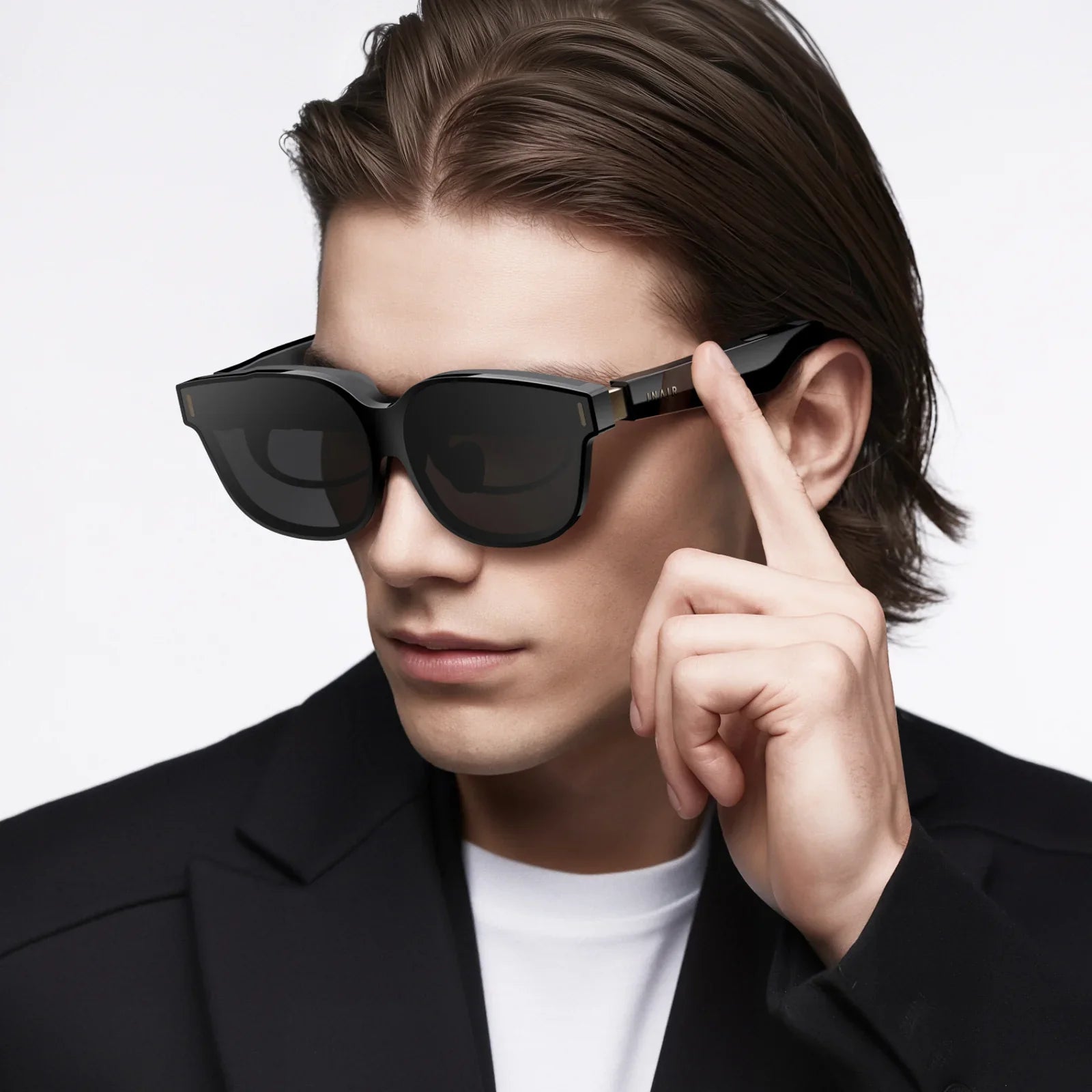
- by wangfred
Virtual Goggle The Ultimate Portal to Immersive Digital Realities
- by wangfred
Imagine slipping on a sleek, futuristic headset and instantly being transported to a sun-drenched beach, the front row of a concert, or the command deck of a starship hurtling through the cosmos. This is the profound promise of the virtual goggle, a device that has evolved from science fiction fantasy to a powerful portal reshaping our perception of reality itself. More than just a piece of technology, it is a key, unlocking doors to experiences previously confined to the imagination, and its story is one of relentless innovation and boundless potential.
The human desire to simulate and escape into other realities is not new. The foundational principles of the virtual goggle can be traced back centuries, to inventions like the stereoscope in the 19th century, which used twin mirrors to trick the brain into perceiving a flat image as a three-dimensional scene. This simple yet powerful concept—of presenting slightly different images to each eye to create depth—is the bedrock upon which all modern immersive visual technology is built.
However, it was the realm of science fiction that truly gave the virtual goggle its iconic form and function. For decades, authors and filmmakers envisioned headsets that could overlay digital information onto the real world or plunge users entirely into fabricated ones. These fictional depictions were not merely predictions; they served as a blueprint, inspiring a generation of engineers, programmers, and dreamers to turn fantasy into tangible, functional hardware. The very term often used to describe these devices was popularized by these early speculative stories, cementing its place in the cultural lexicon long before the technology existed to support it.
At its core, a modern virtual goggle is a sophisticated symphony of components working in perfect harmony to create the illusion of presence. Understanding its anatomy is key to appreciating the engineering marvel it represents.
While gaming remains a primary driver of consumer adoption, the true revolution sparked by the virtual goggle is happening far beyond the living room. Its ability to simulate environments, visualize complex data in 3D, and facilitate remote collaboration is transforming professional fields.
In medicine and healthcare, surgeons are using them to plan complex procedures by practicing on detailed 3D models of a patient's anatomy derived from CT and MRI scans. Medical students can perform virtual dissections and explore the human body in ways textbooks could never allow. Furthermore, these devices are being used for exposure therapy to treat phobias and PTSD, and for physical rehabilitation, turning exercises into engaging virtual activities.
The architecture, engineering, and construction (AEC) industries have been revolutionized. Instead of examining a building design on a 2D screen, architects and clients can don a headset and walk through a full-scale, photorealistic virtual model before a single foundation is poured. This allows for unparalleled design validation, catching potential errors and making changes when they are still inexpensive digital alterations rather than costly physical modifications.
In corporate training and education, the virtual goggle offers a safe, scalable, and highly effective platform. From training warehouse employees on complex machinery to simulating dangerous scenarios for first responders, the ability to learn by doing in a risk-free environment improves retention and outcomes. In classrooms, students can take virtual field trips to historical sites, the bottom of the ocean, or the surface of Mars, making learning an active, immersive adventure.
As with any transformative technology, the proliferation of virtual goggles brings with it a host of social and psychological considerations that society must thoughtfully navigate.
A primary concern is the phenomenon of simulator sickness, a form of motion sickness caused by a disconnect between the visual motion perceived in the headset and the lack of corresponding physical motion sensed by the vestibular system. While advancements in display technology, higher refresh rates, and better software have significantly reduced its occurrence, it remains a barrier for some users.
On a deeper level, questions arise about long-term effects on brain development, eyesight, and social behavior, particularly for younger users. While research is ongoing, it underscores the need for responsible usage guidelines and parental controls.
Perhaps the most profound questions are philosophical. As these digital worlds become increasingly compelling, what are the implications for our sense of self and reality? Could excessive use lead to a disconnection from the physical world and real human relationships? Conversely, could it offer new avenues for social connection for those who are isolated due to geography or disability? The virtual goggle is not just a technological tool; it is a mirror reflecting our evolving relationship with technology and each other.
The current generation of devices is impressive, but it represents merely a stepping stone on a much longer journey. The future of the virtual goggle is poised to be even more revolutionary, driven by several key advancements.
The ultimate goal is achieving true photorealism in real-time. This will be powered by breakthroughs in rendering techniques, eye-tracking technology that enables foveated rendering (where only the spot the user is directly looking at is rendered in full detail), and the integration of artificial intelligence to generate dynamic, believable environments and characters.
Form factor is also set for a radical change. The current somewhat bulky headsets will give way to sleek, lightweight designs that resemble everyday eyeglasses. This will be enabled by advancements in micro-OLED displays, pancake lenses that fold optical paths, and more efficient, compact batteries.
Finally, the line between the virtual and the real will continue to blur with the development of more sophisticated haptic feedback systems. From gloves that simulate the touch and weight of virtual objects to full-body suits that can convey impact and temperature, the future of immersion is multisensory, moving beyond sight and sound to incorporate touch in a meaningful way.
The journey of the virtual goggle is far from over; in many ways, it has just begun. It stands as one of the most compelling and transformative technologies of our time, a device that challenges our definitions of space, presence, and experience. It holds the power to educate, heal, connect, and entertain in ways we are only starting to comprehend. The next time you see one, see it not for what it is, but for what it represents: an invitation to step through the looking glass and explore the infinite possibilities that lie on the other side.