


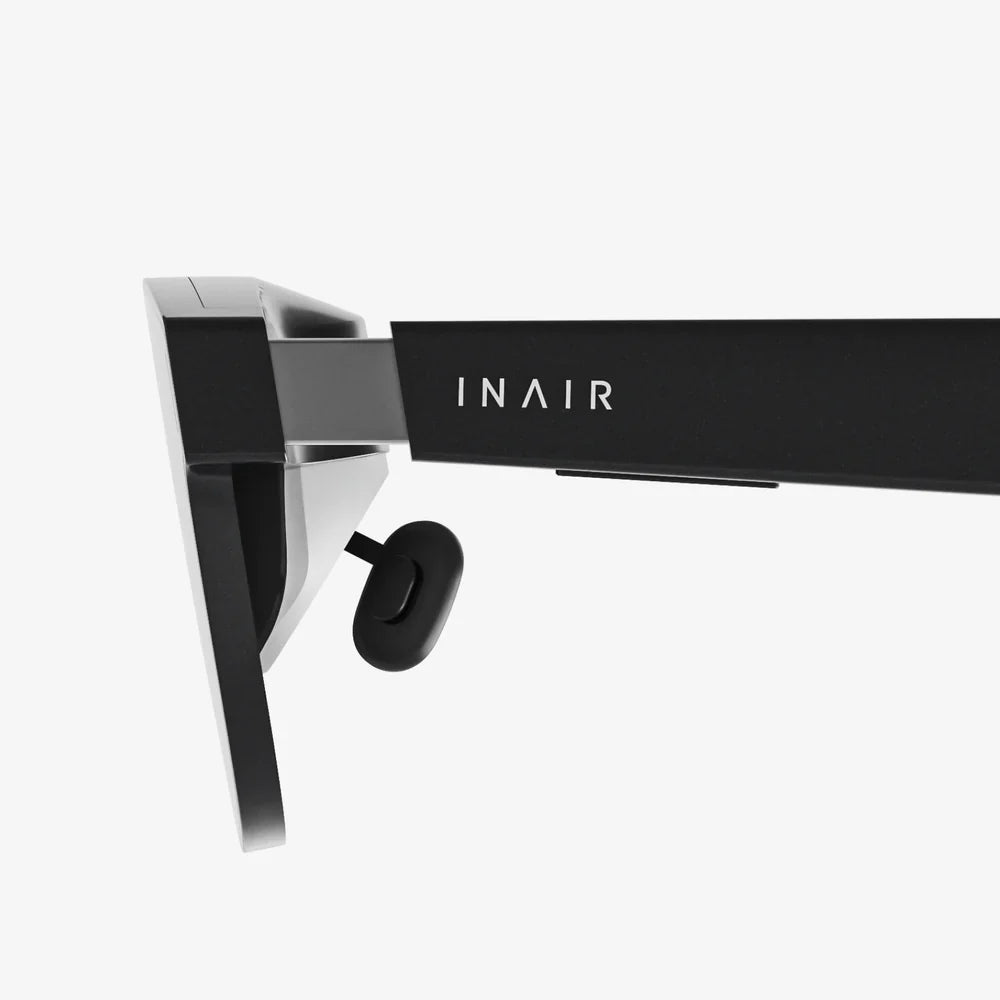
Imagine a world where your sunglasses do more than shield your eyes from the sun; they are your personal translator, navigator, historian, and digital concierge, seamlessly overlaying a world of information onto your reality. This is not a distant sci-fi fantasy. The era of artificial intelligence sunglasses is dawning, promising to fundamentally reshape our interaction with technology, each other, and the world around us. This convergence of advanced optics, sophisticated sensors, and powerful on-device AI is poised to become the next ubiquitous computing platform, moving beyond the confines of our pockets and into our field of vision, offering a glimpse into a future where the digital and physical are inextricably fused.
The Architectural Marvel: More Than Meets the Eye
At first glance, a pair of artificial intelligence sunglasses might appear as a sleek, modern accessory. However, beneath the surface lies a densely packed array of cutting-edge technology, a symphony of hardware and software working in perfect harmony. The foundation is built upon a sophisticated optical system, typically employing waveguide technology or micro-projectors to beam digital images directly onto the lenses. These transparent displays act as a canvas for augmented reality (AR), allowing text, graphics, and 3D models to appear as holographic overlays integrated into the user's environment.
The true intelligence, however, is driven by a suite of sensors that act as the device's eyes and ears. High-resolution cameras continuously capture the visual world, while microphones pick up ambient sound and voice commands. Inertial Measurement Units (IMUs)—including accelerometers and gyroscopes—precisely track head movement and orientation, ensuring digital content remains locked in place within the physical world. More advanced models may incorporate LiDAR scanners or depth sensors to create a real-time 3D map of the surroundings, understanding the geometry and distance of objects with remarkable accuracy.
The central nervous system of these glasses is an onboard AI processing unit, often a specialized Neural Processing Unit (NPU). This is the critical differentiator from earlier, less sophisticated smart glasses. Instead of merely acting as a wireless display for a smartphone, true AI sunglasses process data locally on the device. This edge computing capability is paramount for reasons of speed, privacy, and functionality. It allows for instantaneous visual recognition—identifying a face, translating a street sign, or analyzing a product on a shelf—without the latency of sending data to the cloud and back. This local processing also ensures that sensitive visual and auditory data, like everything you see and hear, can be processed without ever leaving the device, a crucial consideration for user privacy.
The Power of Real-Time Context: A Superpower for Daily Life
The magic of artificial intelligence sunglasses is unlocked when these hardware components are fused with powerful software algorithms. Machine learning models, particularly those for computer vision and natural language processing, are the engines of this magic. They empower the glasses with a range of seemingly superhuman capabilities that are context-aware and responsive in real-time.
- Visual Translation: Point your gaze at a restaurant menu in a foreign language, and the translated text instantly overlays the original, perfectly aligned. This breaks down communication barriers in a profoundly intuitive way.
- Advanced Navigation: Forget looking down at a phone screen. Directional arrows and markers are painted onto the street itself, guiding you turn-by-turn with immersive visual cues, making urban exploration effortless.
- Object and Facial Recognition: The glasses can identify products on a store shelf, pulling up reviews, price comparisons, or nutritional information. They can also recognize landmarks, providing a rich, audio-guided history tour of a city. While facial recognition raises significant ethical questions, it demonstrates the powerful potential of the technology.
- Auditory Augmentation: Sophisticated beamforming microphones can isolate a single speaker's voice in a noisy room, making conversations clearer. For those with hearing impairments, they could provide real-time subtitles for the world, transcribing every spoken word around them.
- Personalized Assistance: An integrated AI assistant, activated by a simple voice command or gesture, can manage tasks, retrieve information, and schedule appointments, all without the user ever needing to reach for another device.
This constant, contextual awareness transforms the glasses from a simple tool into a proactive partner, anticipating needs and delivering information precisely when and where it is most useful.
Beyond Novelty: Transformative Applications Across Industries
The potential of artificial intelligence sunglasses extends far beyond consumer convenience. They are poised to become indispensable tools in professional and specialized fields, enhancing safety, efficiency, and capability.
In healthcare, a surgeon could view a patient's vital signs, MRI scans, or procedural checklists directly in their line of sight during an operation, keeping their focus entirely on the patient. A paramedic could receive guided instructions for emergency procedures while keeping their hands free to help.
In manufacturing and field service, a technician could see a holographic schematic overlaid on a complex machine they are repairing, with step-by-step instructions highlighting specific components. Remote experts could see what the on-site worker sees and annotate their field of view to guide them through a fix, drastically reducing downtime and travel costs.
For accessibility, the impact is profound. As mentioned, real-time captioning can revolutionize life for the hearing impaired. For the visually impaired, AI glasses could audibly describe scenes, identify currency, read documents, and detect obstacles, granting a new level of independence and spatial awareness.
The Inevitable Ethical Storm: Privacy, Surveillance, and the Social Contract
With this transformative power comes a host of profound ethical and societal challenges that must be addressed head-on. The most pressing concern is privacy. A device that is always-on, always-seeing, and always-listening represents the ultimate surveillance tool. The potential for mass data collection on an unprecedented scale is staggering. Every person, place, and interaction becomes a data point. Who owns this data? How is it stored, processed, and used? The risk of unauthorized access, data breaches, and function creep—where data is used for purposes beyond what was originally consented to—is immense.
This leads directly to the threat of a pervasive surveillance state and a culture of constant observation. If everyone is wearing cameras, the concept of public anonymity could vanish. The chilling effect on free speech, association, and behavior in public spaces could be significant. The technology could enable new forms of social scoring and behavioral monitoring, raising dystopian prospects that were once only theoretical.
Furthermore, the social etiquette of wearing such devices is uncharted territory. The "glasshole" stigma from earlier iterations highlighted the social unease of talking to someone who may be recording you or is distracted by a digital feed. How do we know when we are being recorded? How do we consent to being in the background of someone else's always-on life? These are not merely technical problems but fundamental questions about the social contract in an augmented age.
Navigating the Future: The Path to Responsible Adoption
For artificial intelligence sunglasses to move from a niche product to a widely accepted technology, a multi-faceted approach is required. Robust regulation must be developed to establish clear rules for data ownership, usage limits, and mandatory privacy-by-design principles. Features like always-on recording and facial recognition may need to be strictly opt-in or even legally restricted.
Transparency from developers is non-negotiable. Companies must be explicit about what data is collected, how it is processed (preferably on-device), and who it is shared with. Clear physical indicators, like a prominent light, must signal when recording is active to alert people in the vicinity.
Perhaps most importantly, a broad public conversation is essential. We must collectively decide what kind of augmented future we want to build. What uses are beneficial and acceptable? Where do we draw the line? The development of this technology cannot be left to engineers and corporations alone; it requires input from ethicists, sociologists, lawmakers, and the public at large.
The technological hurdles of battery life, processing power, and display technology will inevitably be solved. The human challenges of privacy, ethics, and social norms are the true frontier that will determine the ultimate role of this technology in our society.
The flicker of a digital overlay in your vision is no longer a special effect—it's the starting gun for a revolution in how we perceive and interact with our reality. The ultimate question isn't if artificial intelligence sunglasses will become a part of our lives, but what kind of reality we will choose to build with them. The future is looking at you, and it's wearing sunglasses.
Share:
XR Headset Meaning: Unlocking the Future of Immersive Reality
Multimedia Glasses: The Dawn of a Seamless Digital Reality