


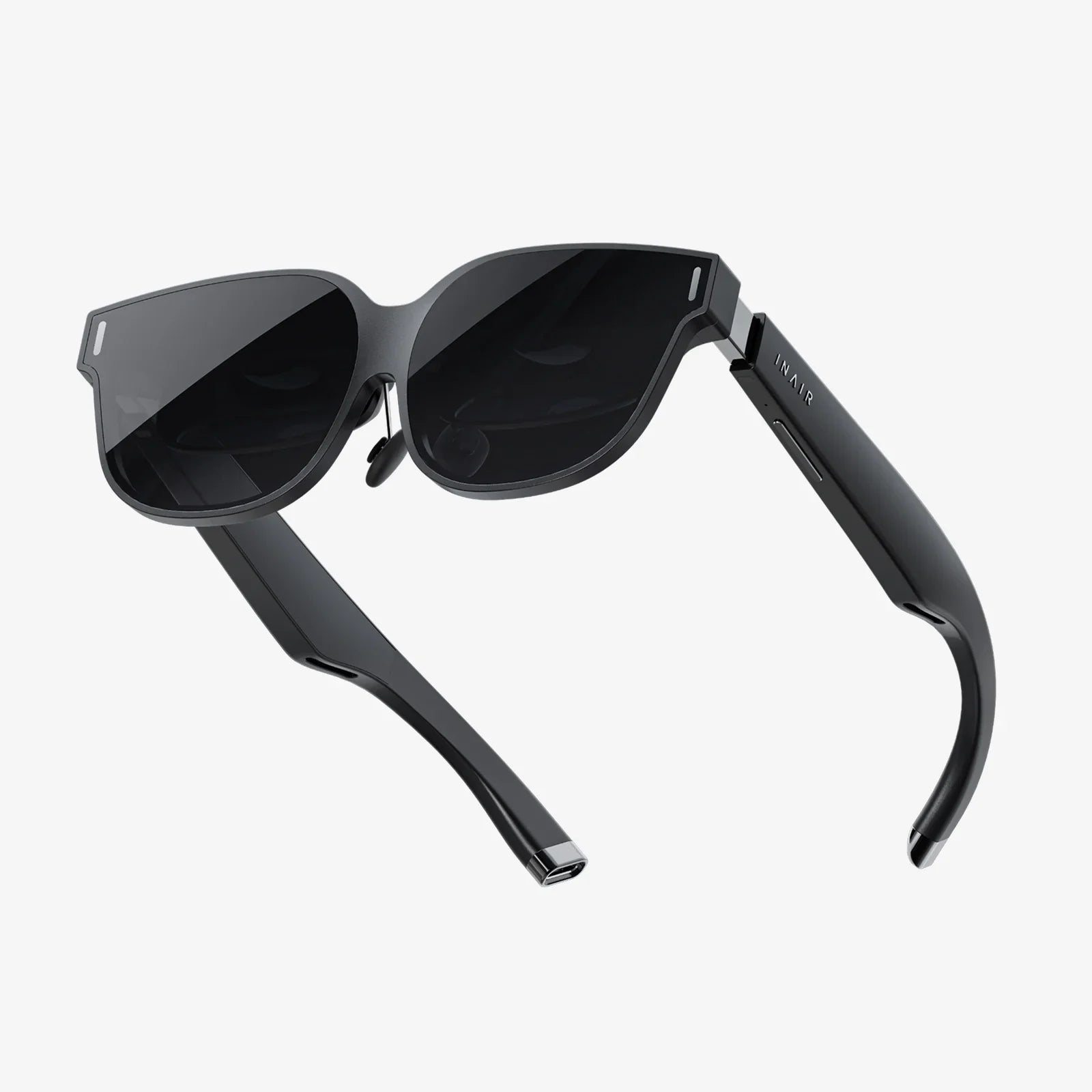
Imagine a world where your field of vision becomes a boundless canvas, where information, entertainment, and communication are seamlessly painted onto the reality you see. This is no longer the realm of science fiction; it is the imminent future being crafted by the rapid evolution of multimedia glasses. This wearable technology represents a fundamental shift in human-computer interaction, promising to dissolve the barrier between the digital and the physical, forever changing how we work, learn, and play.
The Architectural Pillars of Augmented Experience
At their core, multimedia glasses are a symphony of miniaturized advanced technologies working in perfect harmony. Unlike their virtual reality counterparts, which seek to replace the world with a simulated one, these glasses are designed to augment and enhance it. This augmentation is powered by several critical technological pillars.
The first is advanced optical display technology. This is the magic that projects digital images onto the user's retina or a transparent lens. Early systems often used cumbersome setups, but modern iterations employ sophisticated micro-displays and waveguides. These waveguides are essentially transparent glass or plastic elements with microscopic structures that channel light from a tiny projector at the temple of the glasses directly into the eye. This creates the illusion that high-resolution text, videos, and 3D models are floating in the space in front of the user, perfectly integrated with their surroundings. The pursuit of a wide field of view, high resolution, and vibrant color in an incredibly small form factor is one of the most significant engineering challenges in this field.
The second pillar is spatial awareness and tracking. For digital content to feel anchored in the real world, the glasses must understand their environment with astonishing precision. This is achieved through a suite of sensors typically including high-resolution cameras, depth sensors (like LiDAR), inertial measurement units (IMUs), and sometimes microphones for audio context. These sensors continuously scan the environment, creating a real-time 3D map. This allows the device to understand surfaces, recognize objects, and track the user's precise head movements and gaze direction. This spatial mapping is what allows a virtual screen to stay locked on a wall or a digital character to hide behind your real-world sofa.
Beyond Novelty: Transformative Applications
The true power of multimedia glasses is revealed not in their technical specifications, but in their practical applications, which are poised to disrupt numerous aspects of daily life.
Revolutionizing Professional and Industrial Workflows
In professional settings, the potential for increased efficiency and safety is staggering. For a field engineer repairing a complex piece of machinery, instead of shuffling through paper manuals or looking back and forth at a tablet, step-by-step holographic instructions can be overlaid directly onto the equipment, highlighting specific components with arrows and annotations. A surgeon could have vital signs, ultrasound data, or 3D anatomical models visualized directly in their line of sight during a procedure, without ever turning away from the patient. Architects and interior designers could walk through a physical space and see their digital models superimposed at full scale, allowing for instant design validation and client presentations. This hands-free, context-aware access to information is a monumental leap forward for countless professions.
Redefining Social Connection and Entertainment
The social and entertainment implications are equally profound. Imagine watching a movie where the screen is a vast, immersive canvas that only you can see,不受打扰的, on a plane, in a bed, or in your living room without dominating the room's television. Video calls could transform into feeling like the person is sitting across from you in your environment, their window into your world being your point-of-view. Gaming will evolve from an activity confined to a screen to one that transforms your entire living room into a dungeon, your backyard into an alien planet, and a city street into an augmented reality playground. This technology promises a new form of shared experience, where digital content becomes a layer on top of our shared physical reality.
The Future of Navigation and Information Access
Navigation will become intuitive and immersive. Instead of glancing down at a phone, directions can be painted onto the street itself with glowing arrows and signs visible only to you, guiding you seamlessly through a complex airport or a foreign city. Landmarks could be annotated with historical information, restaurant reviews could pop up as you walk down a street, and translation of foreign signs could happen in real-time, overlaying the translated text directly onto the original. This creates a powerful, always-available heads-up display for life itself, delivering contextually relevant information exactly when and where you need it.
The Inevitable Challenges and Ethical Considerations
Despite the exciting potential, the path to widespread adoption of multimedia glasses is fraught with significant challenges that extend far beyond mere technical hurdles.
The Privacy Paradox
The most pressing concern is privacy. Devices equipped with always-on cameras and microphones, constantly scanning and recording the environment, represent a paradigm shift in surveillance capability. The concept of "consensual observation" becomes blurred. If someone wearing these glasses walks into a cafe, are they inadvertently recording everyone present? Who has access to that data stream? Robust, transparent, and user-centric data policies are non-negotiable. Features like clear recording indicators, automatic blurring of unidentified faces in shared content, and strong local data processing will be essential to building public trust. Without it, the specter of a dystopian surveillance society will hinder acceptance.
The Social Contract and Etiquette
A new social etiquette will need to be negotiated. Is it rude to wear these during a conversation with someone? How do we know if a person is recording us or simply looking up information? The subtle social cues we rely on today will be disrupted. The sight of people seemingly talking to themselves or gesturing at empty air will become common, requiring a period of social adjustment and the establishment of new norms to prevent further alienation in an already digitally distracted world.
Health and Human Factors
Prolonged use also raises health questions. While the technology avoids the motion sickness sometimes associated with VR, eye strain from focusing on projected images, potential effects of long-term exposure to close-range displays, and the psychological impact of perpetual digital augmentation are areas that require ongoing study. Furthermore, the digital divide could widen; if these devices become essential tools for work and education, a new class of "information haves and have-nots" could emerge.
The Road to Ubiquity: Form, Function, and Affordability
For multimedia glasses to transition from a niche gadget to a mainstream platform, they must overcome three final barriers: design, battery life, and cost. The first generation of any wearable technology is often clunky, heavy, and aesthetically questionable. Success hinges on creating devices that are lightweight, comfortable for all-day wear, and, crucially, stylish—indistinguishable from or even superior to traditional eyewear. Battery technology must advance to support computationally intensive tasks for a full day without becoming a burden. Finally, the price point must fall to a level that encourages mass adoption beyond early adopters and enterprise clients. The convergence of these factors—social acceptance, elegant design, all-day battery, and accessible pricing—is the key that will unlock the true potential of this technology.
We stand at the precipice of a new sensory paradigm. Multimedia glasses are not merely another screen; they are a portal to a blended reality, an attempt to weave the digital tapestry of the information age directly into the fabric of our perceived world. The challenges are immense, from safeguarding our privacy to rewriting our social contracts. But the opportunity is even greater: to augment our human capabilities, to unlock new forms of creativity and productivity, and to connect with information and with each other in ways we are only beginning to imagine. The future is not something we will merely watch on a screen; it is something we will see through our glasses.
Share:
Artificial Intelligence Sunglasses: The Dawn of a New Vision for Human-Computer Interaction
Human Machine Interaction Definition: The Bridge Between Humanity and Technology