


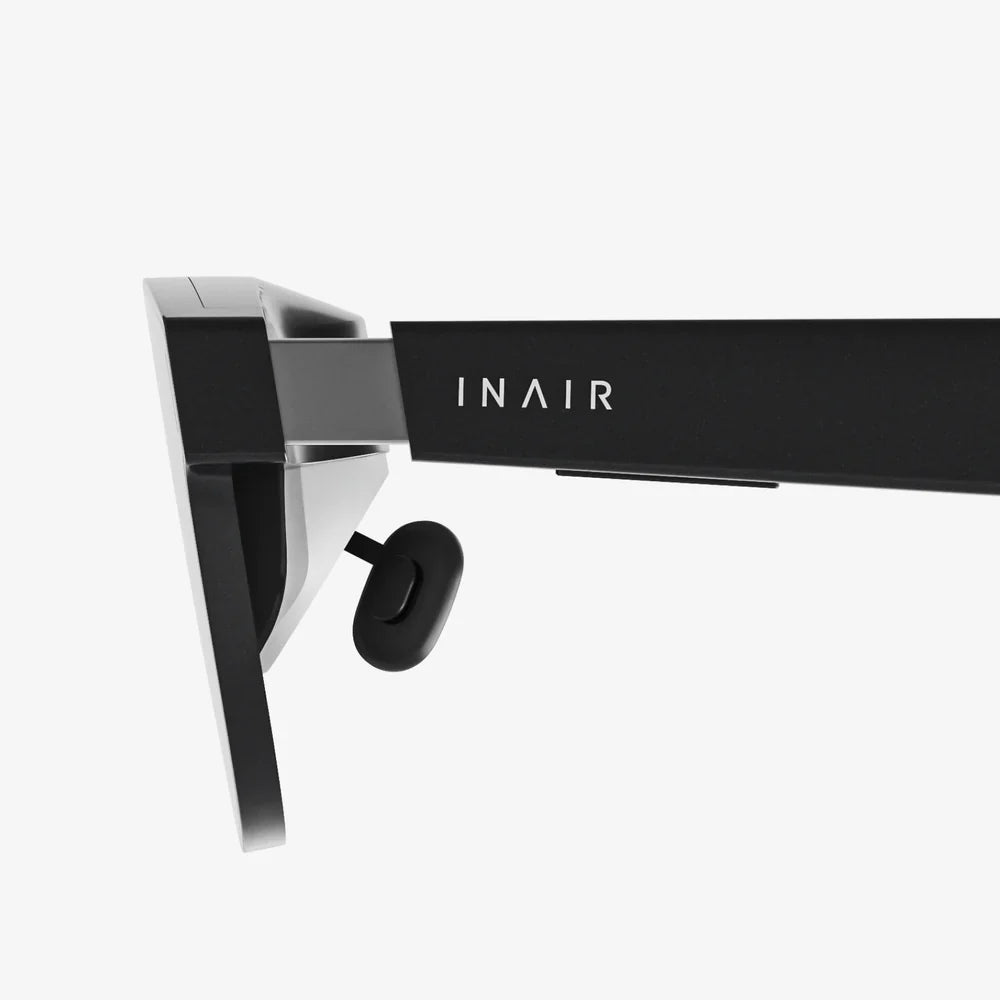
Imagine a world where the digital and the physical are no longer separate realms but a single, intertwined experience. This is the promise held within the cryptic acronyms AR and VR, technologies that are not just evolving our screens but are fundamentally altering our perception of reality itself. To understand their meaning is to peer into the very future of human-computer interaction, a future that is unfolding right before our eyes—and through our headsets.
Deconstructing the Acronyms: More Than Just Letters
At its most fundamental level, AR (Augmented Reality) and VR (Virtual Reality) represent two distinct approaches to blending the digital with the real. Their core difference lies in their relationship with the user's environment.
Virtual Reality (VR) is an immersive, all-encompassing experience. It operates on a principle of isolation. By wearing a head-mounted display, the user is visually and acoustically transported into a completely computer-generated simulation. The physical world is blocked out entirely, replaced by a digital one that can be a fantastical game environment, a meticulous surgical training simulator, or a virtual tour of a historical site. The meaning of VR is presence—the convincing sensation of being somewhere else.
Augmented Reality (AR), in contrast, is an integrative technology. It does not seek to replace the real world but to augment it by overlaying digital information—images, data, 3D models, text—onto the user's view of their immediate surroundings. This is often achieved through smartphone cameras, smart glasses, or specialized headsets with transparent lenses. The meaning of AR is context—providing relevant digital information exactly where and when it is needed, enhancing your understanding of the world around you without removing you from it.
A Spectrum of Experiences: From AR to VR and Everything In Between
It is more accurate to think of AR and VR as two points on a spectrum of mixed realities, often referred to collectively as XR (Extended Reality). Between them lies a hybrid space that combines elements of both.
Mixed Reality (MR) is this crucial middle ground. It represents experiences where digital and physical objects not only coexist but can interact with each other in real-time. Imagine a holographic character that can jump onto your real-world coffee table and hide behind your physical sofa, aware of the geometry and surfaces of your room. This requires advanced sensors and cameras to map the environment, allowing the digital content to be spatially aware and anchored to the real world. The meaning of MR is interaction—seamless, dynamic interplay between the real and the virtual.
The Technological Engine Room: How AR and VR Work
The magic of these experiences is powered by a sophisticated convergence of hardware and software.
The Hardware of Immersion and Augmentation
For VR: The primary interface is the headset. Inside, high-resolution displays are placed mere centimeters from the user's eyes, viewed through lenses that warp the image to fill the field of view. Critical to avoiding motion sickness is a high refresh rate (90Hz or higher) and incredibly low latency (the delay between a user's movement and the screen updating). This is achieved through a combination of internal sensors (gyroscopes, accelerometers) and external or internal cameras (inside-out tracking) that precisely track the position and rotation of the head (6 degrees of freedom). Hand controllers tracked with similar precision complete the sense of embodiment, allowing users to reach out and manipulate the virtual world.
For AR: The hardware varies from simple smartphones, which use their camera and screen as a viewfinder, to more advanced smart glasses. These glasses utilize micro-displays that project light onto transparent lenses (waveguides), allowing the user to see both the real world and the superimposed digital graphics. They also incorporate spatial mapping technology, like depth-sensing cameras and LiDAR scanners, to understand the environment's dimensions and surfaces, ensuring digital objects sit convincingly in space.
The Software That Breathes Life into the Experience
On the software side, powerful game engines are the unsung heroes. They render complex 3D environments in real-time, handle the physics simulations that make interactions feel real, and manage the spatial audio that sells the illusion. For AR, computer vision algorithms are paramount. They analyze the camera feed to identify flat surfaces (like a table or floor), recognize objects, and even understand hand gestures, turning them into inputs for the digital layer.
Transforming Industries: The Practical Meaning of AR and VR
Beyond gaming and entertainment, the true meaning of AR and VR is revealed in their profound, practical applications across countless sectors.
Revolutionizing Healthcare and Medicine
In medicine, these technologies are saving lives and improving outcomes. Surgeons use AR to overlay CT scans and 3D anatomical models directly onto a patient's body during procedures, providing X-ray vision that increases precision and reduces risk. VR is a powerful tool for exposure therapy, helping patients safely confront and manage phobias, PTSD, and anxiety disorders in controlled environments. It's also used for physical rehabilitation, turning repetitive exercises into engaging games that improve patient motivation and adherence.
Redefining Education and Training
The meaning of education is shifting from passive learning to active experience. VR allows students to take field trips to ancient Rome, the depths of the ocean, or the surface of Mars. AR can bring textbook diagrams to life, with a 3D heart model beating above the page. For industrial training, the implications are massive. Aspiring engineers can practice assembling complex machinery virtually, and mechanics can see repair instructions overlaid on the actual engine they are fixing, drastically reducing errors and training costs.
Empowering Enterprise and Manufacturing
In the enterprise world, AR is a powerhouse for efficiency. Field service technicians can receive remote expert guidance, with an expert seeing what they see and annotating their real-world view with arrows and notes. Architects and interior designers use VR to conduct immersive walkthroughs of unbuilt designs, allowing clients to experience the space at scale before a single brick is laid. This streamlines decision-making and prevents costly changes later.
Creating New Frontiers in Retail and Design
AR has fundamentally changed the retail experience. The infamous "will it fit?" question is being answered by apps that allow you to visualize furniture in your room at true-to-life scale or to try on glasses, makeup, or even clothes virtually before purchasing. This reduces return rates and increases consumer confidence, bridging the gap between online and in-store shopping.
The Human Factor: Challenges and Considerations
For all their potential, the integration of AR and VR into daily life is not without its hurdles and ethical questions.
Technical Limitations: For VR, achieving perfect visual fidelity, eliminating motion sickness for all users, and creating wireless headsets with all-day battery life remain active challenges. For AR, the holy grail is socially acceptable, all-day wearable glasses that can deliver rich graphics without compromising field of view or battery life.
The Privacy Paradox: AR devices, in particular, are inherently data-collection machines. To function, they must continuously scan, record, and analyze your environment. This raises immense privacy concerns. Who has access to this data? How is it stored and used? The meaning of privacy must be renegotiated in a world where our surroundings can be constantly digitized.
The Societal Impact: As these technologies become more pervasive, we must consider their psychological and social effects. Will a hyper-augmented world lead to information overload? Could immersive VR lead to increased escapism and social isolation? Establishing healthy boundaries and digital etiquette for these new realities will be a crucial societal task.
The Future is Already Here: What's Next for AR and VR?
The trajectory of these technologies points toward even greater integration and invisibility. We are moving toward lighter, more powerful, and more affordable devices. The development of neural interfaces, which translate brain signals into digital commands, could eventually make controllers obsolete, allowing us to manipulate virtual worlds with our thoughts.
The concept of the metaverse—a persistent network of interconnected virtual spaces—represents the ultimate convergence of AR and VR. It envisions a future where our digital avatars, assets, and identities are portable across experiences, blurring the lines between work, socializing, and play in a fully realized digital twin of our world—or something entirely new.
The true meaning of AR and VR is not found in the headsets or the code, but in their capacity to expand human potential. They are tools for enhancing our perception, amplifying our creativity, and connecting us in ways previously confined to science fiction. They are unlocking new ways to learn, to heal, to work, and to play. We are standing at the threshold of a new layer of reality, and the door is swinging open wider every day.
Share:
Switchable Smart Glass: The Future of Dynamic Windows and Partitions
Virtual Desktop Glasses: The Dawn of a Pervasive Personal Computing Era