


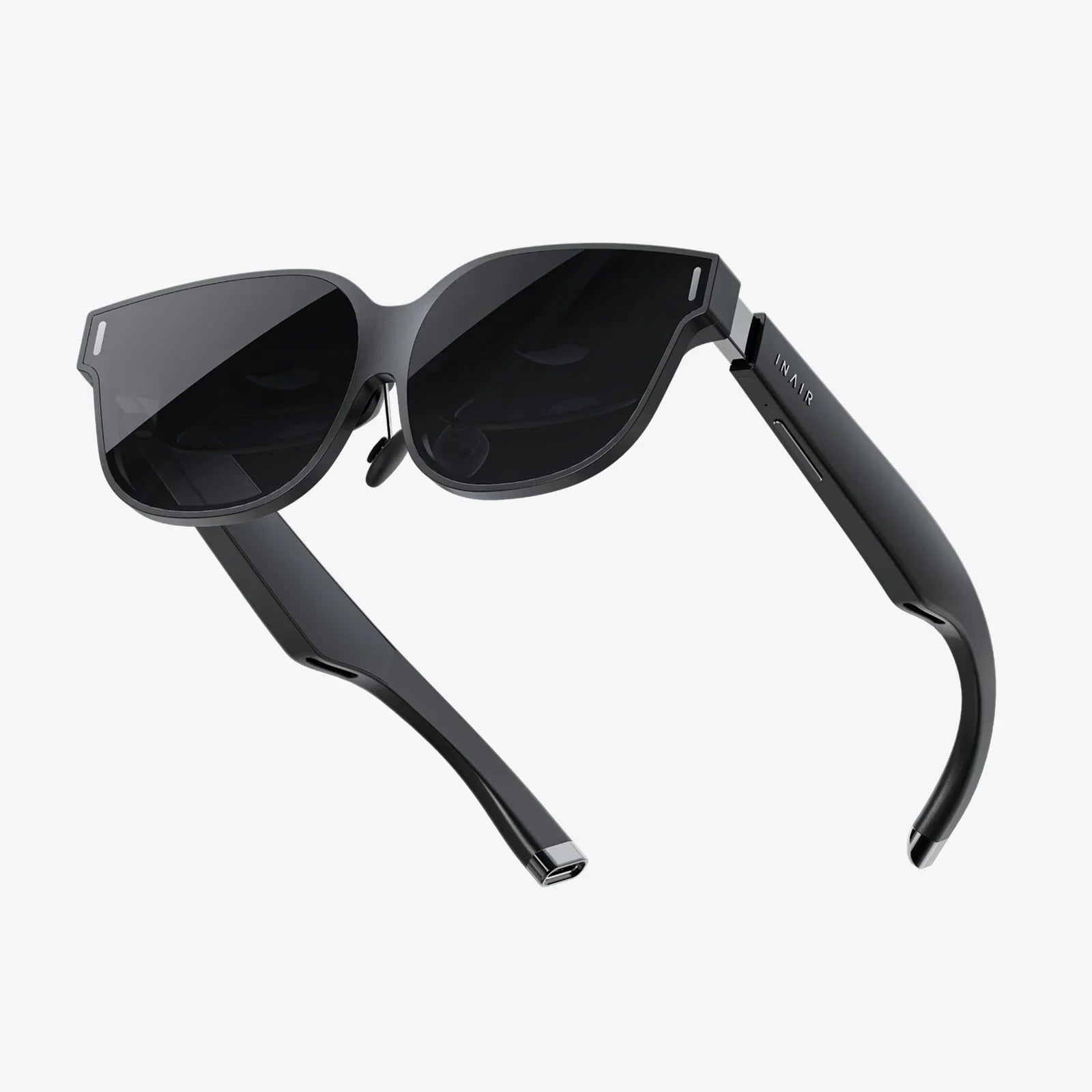
Imagine a world where your entire digital life—your emails, spreadsheets, creative projects, and entertainment—floats seamlessly in the space around you, accessible with a glance and a gesture. This is not a scene from a science fiction film; it is the imminent future promised by virtual desktop glasses, a technology poised to untether us from the physical screens that have defined computing for decades. This shift represents more than just a new gadget; it signifies a fundamental reimagining of our relationship with information and each other, heralding the dawn of a truly pervasive and personal computing era.
The Architectural Shift: From Screens to Space
To understand the revolutionary potential of virtual desktop glasses, one must first appreciate the constraints of our current paradigm. For over half a century, human-computer interaction has been mediated through a rectangle of glass—the screen. Whether it's a smartphone, a laptop, or a desktop monitor, we are forced to condense our digital universe into these fixed, finite portals. We navigate by peering through these windows, our postures hunched, our attention fragmented across multiple devices. Virtual desktop glasses shatter this model entirely. They replace the concept of a screen with that of a space. Instead of looking at a device, you look through a device into an infinite canvas limited only by your physical surroundings and imagination.
The core technology enabling this vision is a sophisticated blend of optics, sensors, and processing power. Miniaturized high-resolution displays, often using Micro-OLED or similar advanced technologies, project imagery directly onto the lenses. Sophisticated waveguide or holographic optical elements then bend this light, painting crisp, bright virtual images that appear to reside in the real world at various focal distances. This is a critical advancement, as it helps mitigate the vergence-accommodation conflict—a primary source of eye strain in earlier attempts at such technology—by allowing the eye to focus more naturally.
Simultaneously, a suite of inward and outward-facing sensors works tirelessly to create a coherent experience. Cameras track eye movement, enabling intuitive gaze-based navigation and understanding where your attention is focused. Simultaneous Localization and Mapping (SLAM) algorithms constantly scan your environment, building a 3D mesh of the room so virtual objects can be placed persistently on your physical desk, wall, or coffee table. This spatial awareness allows digital content to interact with the real world, occluding behind your physical monitor or resting convincingly on your kitchen counter.
Transforming the World of Work and Productivity
The most immediate and profound impact of virtual desktop glasses will likely be felt in the professional sphere. The promise of a boundless, portable workspace is a powerful one for knowledge workers, developers, and creatives alike.
- The Ultimate Multi-Monitor Setup: The dream of having three, four, or even ten virtual monitors arrayed around you becomes a reality, accessible from any location with enough physical space to turn your head. This eliminates the physical and financial constraints of traditional multi-display setups, offering unparalleled screen real estate for coding, financial modeling, or video editing.
- Contextual Computing: Imagine working on a complex report where your research documents are pinned to your left, your primary writing window is front and center, and your communication apps are subtly visible to your right. The glasses can understand context, automatically surfacing relevant information based on the task at hand, creating a fluid and intuitive workflow that reduces constant app switching and cognitive load.
- Remote Collaboration Reimagined: Virtual meetings can transcend the flat grid of video calls. Colleagues from across the globe can appear as avatars or holograms in your physical space, standing around a 3D model of a new product design, annotating a virtual whiteboard that everyone sees identically, and interacting with shared data in a spatially intuitive way. This fosters a sense of presence and co-creation that is impossible to achieve with current technology.
Unleashing Creativity and New Forms of Expression
Beyond productivity, this technology is a blank canvas for artists, designers, and engineers. It enables a direct, hands-on manipulation of digital content that feels more like sculpting or painting than using a mouse and keyboard.
Digital artists can sculpt 3D models in mid-air, walking around their creation to examine it from every angle. Architects and interior designers can project their full-scale plans into an empty room, allowing clients to literally walk through a proposed design before a single wall is built. Musicians could have a virtual mixing board or synthesizer interface appear on any surface, turning any environment into a recording studio. The barrier between the ideation in one's mind and its digital manifestation becomes thinner, enabling a more fluid and intuitive creative process.
The Social and Ethical Landscape: A Double-Edged Sword
As with any transformative technology, the widespread adoption of virtual desktop glasses will not be without significant social and ethical challenges. The very feature that makes them powerful—their ability to overlay a personalized digital reality onto the shared physical world—also creates the potential for isolation and dissonance.
Will public spaces become filled with individuals interacting with private digital worlds, further eroding shared social experiences? The specter of a new digital divide emerges, not just based on access to the technology, but on the ability to afford the subscription services and software that will undoubtedly power the most compelling experiences within it. Privacy concerns are paramount; devices with always-on cameras and microphones, constantly scanning environments and tracking eye movements, represent a data collection nightmare if not governed by strict ethical frameworks and transparent user control.
Furthermore, the long-term psychological effects are unknown. Will our brains adapt healthily to constantly juggling physical and virtual stimuli? Could over-reliance on contextual information overlays diminish our innate cognitive abilities for memory and navigation? These are not reasons to halt progress, but they are compelling arguments for developing this technology thoughtfully and proactively, with human well-being as a core design principle from the outset.
Overcoming the Hurdles to Mass Adoption
For virtual desktop glasses to transition from a niche prosumer tool to a mainstream platform, several significant hurdles must be cleared. The first and most obvious is the form factor. Current generations, while impressive, often resemble bulky ski goggles. Mass adoption requires a design that approaches the social acceptability and comfort of standard eyeglasses. This necessitates breakthroughs in battery technology, thermal management, and ultra-miniaturization of all components.
Battery life is another critical challenge. Powering high-resolution displays, numerous sensors, and significant processing power is incredibly demanding. All-day battery life is a prerequisite for these devices to become your primary computer. This may be solved through a combination of more efficient components, innovative power management, and perhaps a companion processing unit that offloads intensive tasks.
Finally, and perhaps most importantly, is the development of a killer app and a robust ecosystem. The hardware is merely a vessel; it is the software and experiences that will drive desire. The ecosystem needs to be open and interoperable, allowing developers to create compelling applications that work across different hardware platforms, avoiding the walled gardens that have stifled innovation in other tech sectors.
The journey of virtual desktop glasses is just beginning. We are at the 'bag phone' stage of this technology—clunky, expensive, and misunderstood, yet undeniably powerful in its promise. The path forward will be iterative, with each generation becoming lighter, smarter, and more integrated into our lives. The goal is not to escape reality, but to augment it; to enhance our human capabilities without diminishing our humanity. It is a tool to make us more creative, more productive, and more connected, all while allowing us to remain present in the world we share.
We stand on the precipice of a fundamental rewiring of daily life, where the digital and physical cease to be separate realms and instead blend into a single, enhanced continuum of experience. The question is no longer if your world will be augmented, but how you will choose to shape it when the power to curate your reality rests literally before your eyes.
Share:
AR(VR) Meaning: A Deep Dive Into the Realities Reshaping Our World
Pro XR(AR) Glasses: The Dawn of a Seamless Digital Reality