


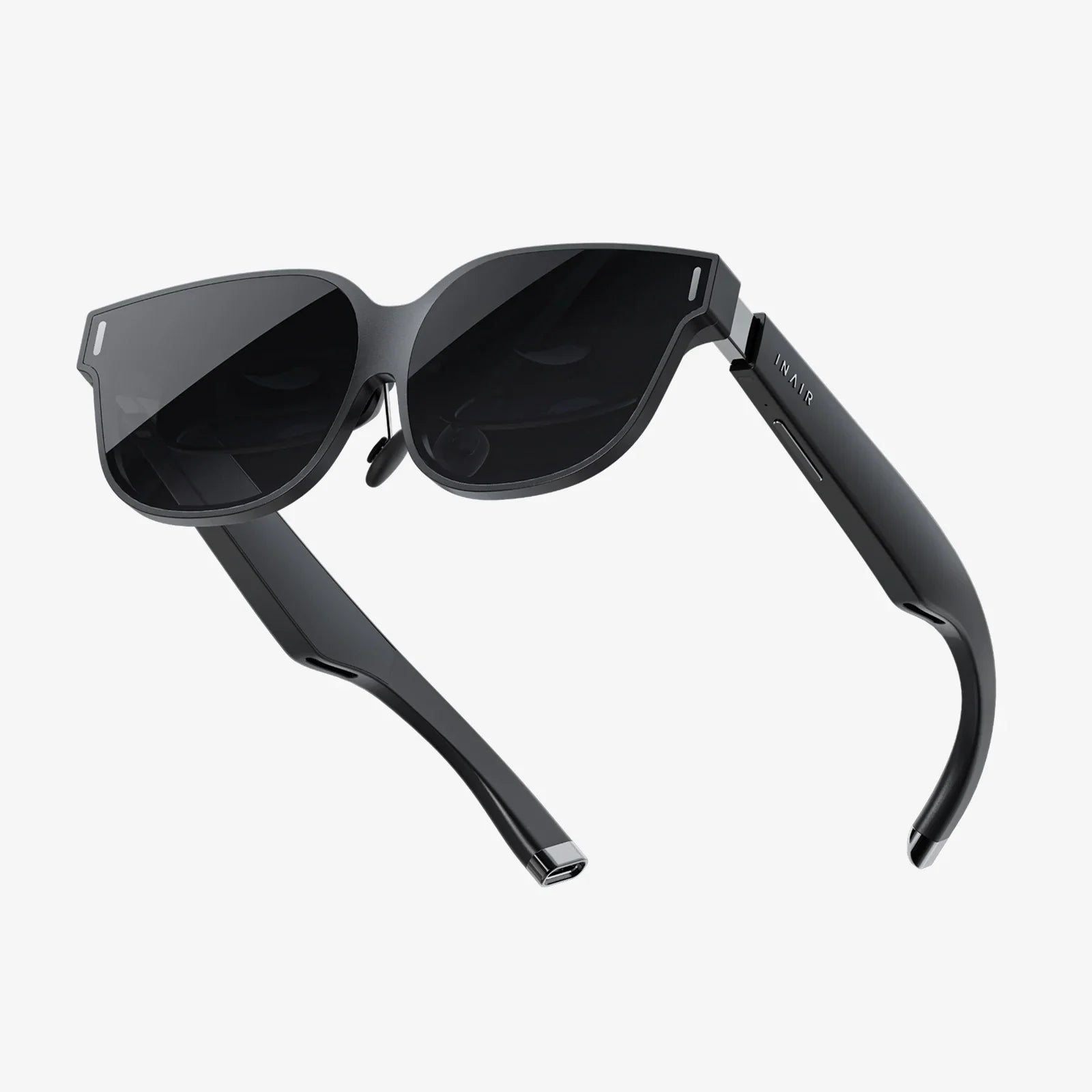
Imagine a piece of technology so seamlessly integrated into your life that it enhances your experience of the world without ever demanding your attention or blocking your view. This isn't a concept from a distant sci-fi future; it's the present-day reality offered by audio only smart glasses, a product category poised to quietly revolutionize how we interact with information, entertainment, and each other. In a world saturated with screens vying for our eyeballs, this shift from visual to auditory augmentation is not just innovative—it's liberating.
The Philosophy of Subtle Enhancement
The driving principle behind audio only smart glasses is a radical departure from the ethos of most modern tech. Instead of creating a more immersive digital layer atop our reality, their goal is auditory augmentation: enriching the real world with sound, not obscuring it with pixels. This philosophy champions situational awareness, social presence, and uninterrupted living.
Where other wearable displays can create a literal barrier between the user and their environment, leading to a phenomenon often dubbed "absent presence," audio glasses strive for the opposite. They allow the user to remain fully engaged in a conversation, appreciate their surroundings, and maintain eye contact, all while receiving aural information. This subtlety is their greatest strength. They reject the notion that technology must be ostentatious to be powerful, instead offering a utility that feels personal and private, a whisper in your ear rather than a billboard in front of your face.
Deconstructing the Technology: How They Work
At their core, audio only smart glasses are an elegant convergence of several mature technologies, packaged into a familiar and socially accepted form factor. The engineering challenge is immense: fitting high-quality audio components into the slim arms of a pair of glasses without compromising comfort or style.
The Audio System: Speakers and Microphones
The most critical component is the audio delivery system. Unlike traditional headphones that use cones to push air directly into the ear canal, these devices typically employ bone conduction or open-ear audio technology.
Bone conduction transducers bypass the eardrum entirely. They send subtle vibrations through the facial bones, directly to the cochlea, leaving the ears completely free to hear ambient sounds. Open-ear audio, a more common approach in glasses, uses miniature directional speakers housed in the temples. These speakers are precisely angled to beam sound directly into the ear canal, like a personal spotlight of audio. Advanced signal processing ensures the sound is focused, minimizing audio leakage so that those nearby are unlikely to hear what you're listening to, preserving your privacy.
Equally important are the microphones. Multiple beamforming mics are strategically placed to isolate the user's voice from background noise, wind, and echoes. This array allows for crystal-clear call quality and effective voice assistant interactions, even on a noisy street.
Connectivity and Processing
These glasses are fundamentally wireless peripheral devices. They connect to a smartphone or other primary device via Bluetooth, acting as a sophisticated headset. The onboard processing is minimal but crucial, handling the audio codecs, microphone filtering, and touch or gesture controls. Battery life is a key metric, with most designs aiming for a full day of use on a single charge, often achieved through efficient chipsets and compact, high-density batteries.
A Universe of Use Cases: Beyond Just Music
While streaming music and podcasts is an obvious application, the true potential of audio only smart glasses unfolds across a wide spectrum of daily activities.
- The Productive Professional: Imagine taking conference calls while walking between meetings, your hands free for gesturing and your eyes free to engage with people around you. You can receive calendar notifications, hear emails read aloud, or dictate quick replies, all without ever touching your phone.
- The Urban Explorer: Navigation becomes an auditory experience. Turn-by-turn directions are whispered into your ear, allowing you to keep your head up, admire the architecture, and stay aware of your surroundings instead of staring at a map on your phone.
- The Fitness Enthusiast: For runners and cyclists, situational awareness is paramount for safety. Audio glasses provide the perfect soundtrack or coaching app guidance while allowing them to hear approaching traffic, other athletes, and the sounds of nature.
- The Multitasking Parent: Listen to an audiobook or podcast while playing with children at the park, fully present and able to respond to them instantly without fumbling for wireless earbuds.
- The Lifelong Learner: Language learning apps, historical podcasts about your location, or educational content can be consumed while commuting, walking, or even doing household chores, transforming downtime into productive learning time.
A Profound Impact on Accessibility
Perhaps the most significant and laudable impact of this technology is in the field of accessibility. For individuals with visual impairments, audio only smart glasses can be transformative.
When paired with a smartphone's camera and AI, these glasses can describe surroundings, read text from signs or documents aloud, identify currency, and even recognize faces, providing a greater degree of independence and spatial awareness. For those with certain types of hearing loss, the advanced microphone arrays can amplify speech in conversations while filtering out noise, acting as a powerful and discreet assistive listening device. This application moves the technology from a convenience to a genuine tool for empowerment and inclusion.
Navigating the Social and Privacy Landscape
Any always-on, wearable technology inevitably raises questions about social etiquette and privacy. The discreet nature of audio glasses is a double-edged sword. On one hand, they are less socially intrusive than someone staring at a smartwatch or phone during a conversation. On the other, the fact that someone could be recording audio or receiving information without any visible indication can create unease.
Responsible manufacturers address this through clear design cues—like a subtle LED indicator for recording—and robust privacy controls that give users full command over their data. The societal norm will likely evolve, much like it did with Bluetooth headsets, toward a general understanding and acceptance of the technology, provided it is used respectfully.
The Future Sounds Extraordinary
The evolution of audio only smart glasses is far from complete. We are moving towards a future where the technology becomes even more integrated and intelligent. We can anticipate improvements in battery technology leading to weeks of use, even more advanced spatial audio for immersive experiences, and deeper integration with AI assistants that act as a true auditory second brain, proactively providing relevant information based on context and location.
Further miniaturization will make the technology virtually indistinguishable from standard eyewear, broadening its appeal. The ultimate goal is a device that feels less like a piece of technology and more like a natural extension of our own senses—always available, always helpful, but never obtrusive.
The true magic of audio only smart glasses lies in their paradox: they are a powerful piece of technology whose ultimate success is measured by its ability to fade into the background of your life. They don't ask you to look at them; they ask you to look at the world, and in doing so, they offer a more connected, accessible, and harmonious way to live with technology. They represent a quiet but confident step towards a future where our devices don't capture our attention, but instead, enhance our attention to everything that truly matters.
Share:
Wearable Comparison: The Ultimate Guide to Choosing Your Perfect Tech Companion
Wearable Technology Security Issues: The Vulnerable Frontier on Your Wrist