


Imagine pointing your device at an empty corner of your living room and watching a perfect, photorealistic new sofa materialize right before your eyes, or holding a historical artifact in your hands during a history lesson without it ever leaving a museum vault. This is no longer the stuff of science fiction; it's the transformative power of augmented reality, and at the forefront of this revolution is the concept of an application designed to augment our three-dimensional world. The ability to seamlessly blend digital information with our physical environment is fundamentally changing how we learn, shop, design, and play, and it all starts with an app that can truly augment 3D augmented reality into our daily lives.
Beyond the Screen: Understanding the Core Technology
At its heart, an application built to augment 3D objects into our reality relies on a sophisticated fusion of hardware and software. Unlike Virtual Reality (VR), which creates a completely immersive digital environment, Augmented Reality (AR) enhances the real world by overlaying computer-generated perceptual information onto it. This process involves several key technological components working in harmony.
First, the device's camera captures the live feed of the physical world. Then, sophisticated computer vision algorithms and simultaneous localization and mapping (SLAM) technology kick in. SLAM allows the application to understand its environment in real-time. It identifies unique feature points, maps the geometry of the space, and tracks the device's precise position and orientation within that space. This complex digital understanding of the physical world is what allows a virtual chair to stay firmly planted on your floor, even as you walk around it.
The final piece is the rendering engine. Once the environment is mapped and the device's position is tracked, the application can render high-fidelity 3D models into the scene with astonishing accuracy. Advanced lighting engines analyze the ambient light in the room and adjust the virtual object's shading and shadows to match, creating a believable, integrated scene that tricks the brain into accepting the digital as physical.
A World of Applications: More Than Just Games
While popularized by entertainment, the utility of a powerful 3D augmentation tool extends far beyond catching digital creatures in a city park. Its ability to bridge the gap between the digital and physical makes it an invaluable asset across countless sectors.
Retail and E-Commerce: Try Before You Buy, Digitally
The retail industry has been completely transformed. Imagine shopping for furniture online. Static 2D images and vague dimension listings are a thing of the past. With an AR app, consumers can project a true-to-scale 3D model of that armchair directly into their living room. They can walk around it, see how the fabric looks under their lighting, and ensure it fits perfectly in the intended space, drastically reducing purchase uncertainty and product return rates. The same principle applies to trying on watches, sunglasses, or even makeup virtually, offering a personalized shopping experience from the comfort of home.
Education and Training: Interactive Learning Comes to Life
Education is experiencing a paradigm shift. Textbooks become interactive portals. A student studying anatomy can point their device at a target to see a beating heart model float above the page, which they can rotate, zoom into, and explore layer by layer. Mechanics-in-training can practice complex repair procedures with virtual instructions overlaid directly onto physical equipment. This hands-on, visual learning approach enhances comprehension, retention, and engagement in ways previously unimaginable.
Design and Architecture: Visualizing the Future
For architects, interior designers, and urban planners, these applications are a game-changer. Instead of relying on clients to interpret blueprints or 3D renders on a screen, designers can place them inside a full-scale, virtual model of their proposed building or renovated kitchen. Clients can literally walk through the space before a single brick is laid, providing immediate feedback on flow, lighting, and design choices. This collaborative visualization saves immense time, reduces costly changes during construction, and ensures the final product meets expectations.
Industrial and Field Service: Knowledge at Your Fingertips
In industrial settings, technicians can use AR-enabled smart glasses or tablets to perform complex maintenance tasks. By looking at a piece of machinery, the system can overlay digital schematics, highlight specific components, and provide step-by-step animated repair instructions directly onto the equipment. This empowers workers with instant expert knowledge, reduces errors, and shortens downtime. Remote experts can also see what a field technician sees and annotate the live view to guide them through a process from thousands of miles away.
The User Experience: Intuitive and Immersive Design
The success of any technology hinges on its accessibility. The most powerful AR engine is useless if the user interface is clunky and confusing. Leading applications prioritize intuitive design, often relying on simple gestures like tap, drag, pinch-to-zoom, and rotate that users are already familiar with from touchscreen devices.
The goal is to make the interaction with the digital object feel as natural as interacting with a physical one. This includes ensuring stable tracking so objects don't jitter or drift, implementing realistic physics for object placement, and providing clear visual feedback. The best experiences are those where the technology fades into the background, and the user is left with a magical feeling of direct manipulation of the digital world.
Challenges and The Road Ahead
Despite rapid advancement, the path forward for widespread AR adoption is not without its hurdles. Consistent and accurate environmental understanding, especially in dynamically changing or poorly lit spaces, remains a technical challenge. Creating high-fidelity 3D content can also be resource-intensive, requiring specialized skills and software.
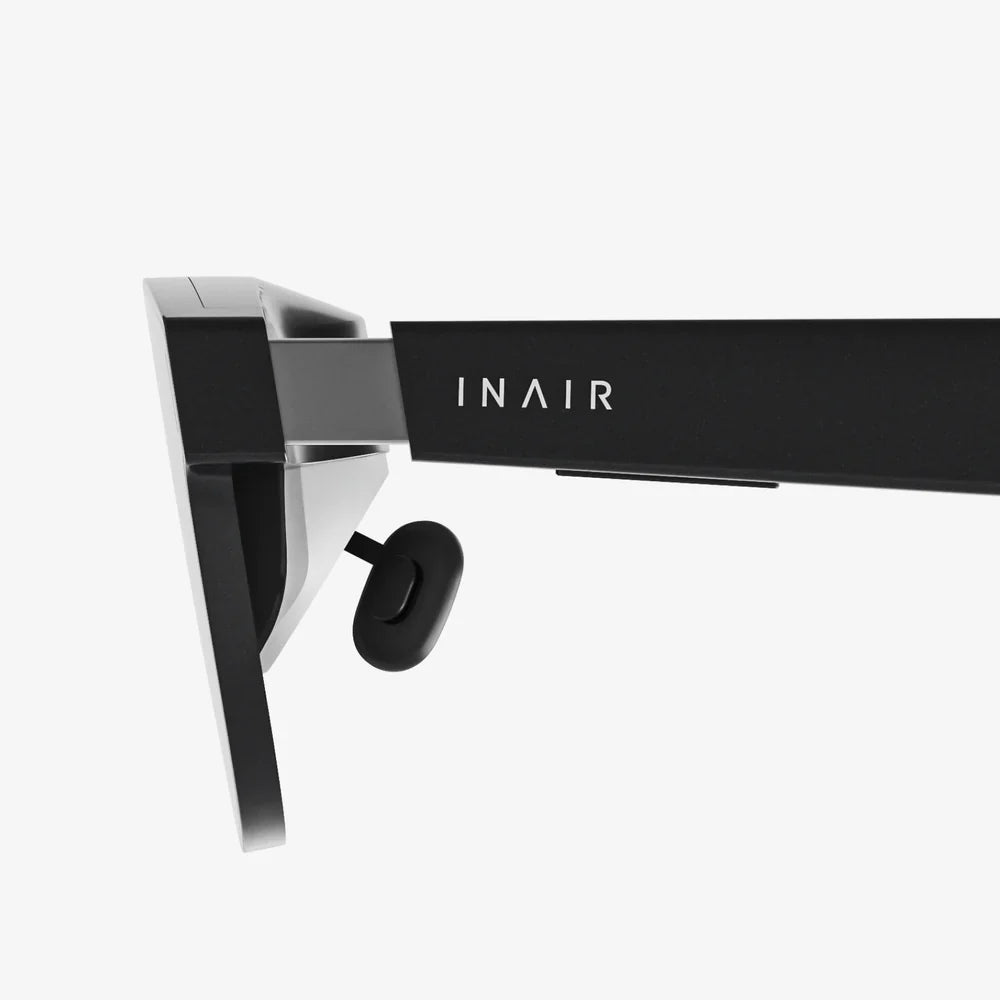
Furthermore, the future lies in moving beyond smartphone and tablet screens. The ultimate expression of AR is through lightweight, stylish eyewear that can overlay digital information onto our field of view seamlessly—often referred to as the "Holy Grail" of wearable computing. Progress in waveguide displays, battery life, and processing power is bringing us closer to this reality every day.
As 5G connectivity becomes ubiquitous, it will unlock cloud-based rendering, allowing incredibly complex and detailed models to be streamed in real-time without taxing a device's local processor. This, combined with advancements in AI for better object recognition and spatial understanding, will make AR experiences richer, more responsive, and more integrated into our daily routines than ever before.
The line between our digital and physical existence is blurring at an incredible pace, and the catalyst is the powerful technology you can carry in your pocket. This isn't just about viewing a filter on a social media video; it's about fundamentally enhancing human capability. It's about giving a surgeon X-ray vision, a student a time machine, and a designer a crystal ball. The potential to augment our reality is limitless, promising a future where information and imagination are no longer confined to screens but are woven into the very fabric of the world we interact with every single day.
Share:
VR AR Glass Company: The Architects of Our Digital Tomorrow
VR AR Glass Company: The Architects of Our Digital Tomorrow