


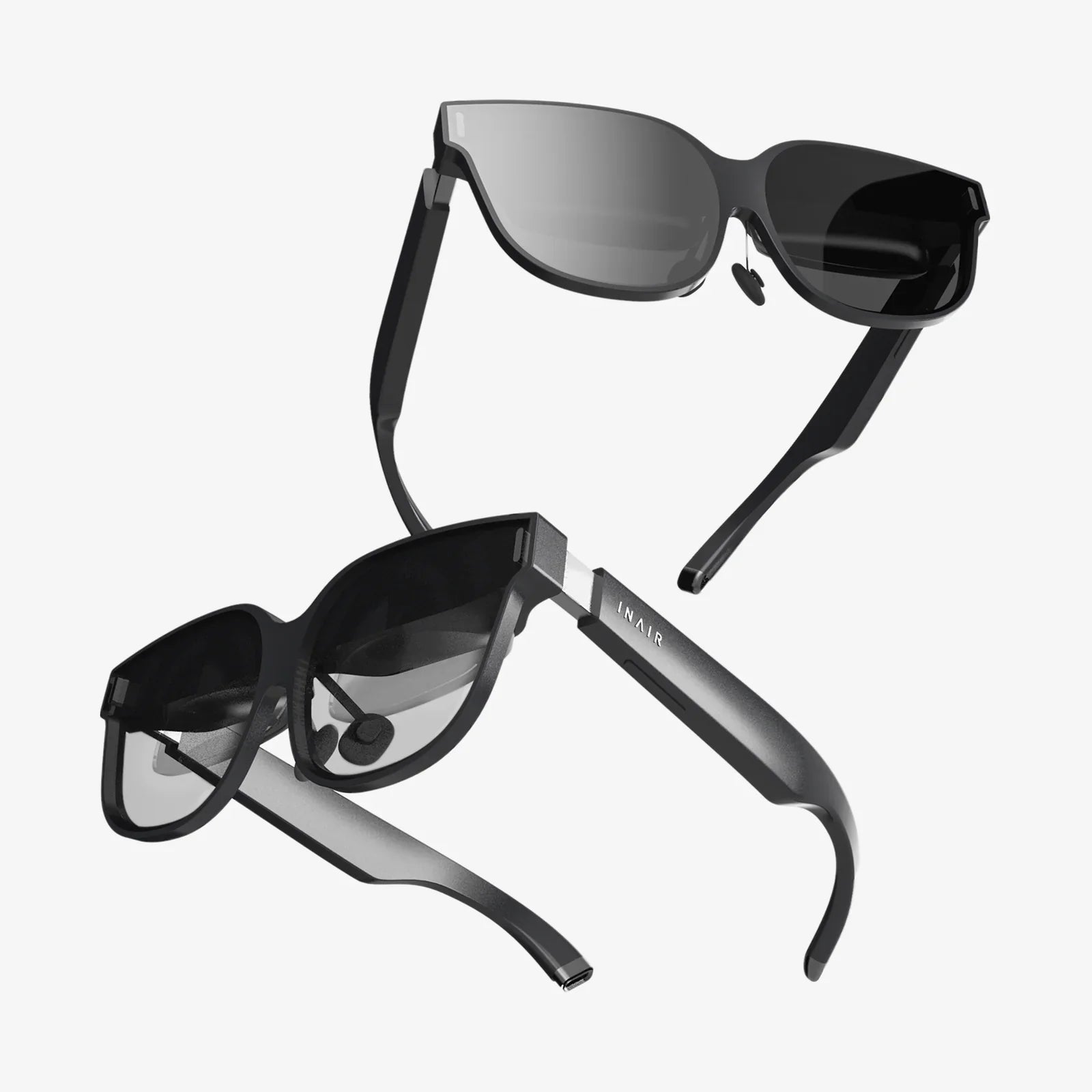
Imagine a world where digital information doesn’t live on a screen in your hand, but is seamlessly woven into the fabric of your reality. The morning weather forecast hovers by your window, a virtual colleague sits across your physical desk for a meeting, and a complex engine repair is guided by holographic arrows and instructions overlaid onto the machinery itself. This is the future being built not in science fiction novels, but in the research labs, design studios, and manufacturing facilities of a new generation of pioneering VR AR glass companies. These enterprises are not merely selling gadgets; they are architecting the next fundamental shift in human-computer interaction, promising to unlock unprecedented levels of productivity, creativity, and connection. The race to place a lightweight, powerful, and socially acceptable window to the digital world on our faces is the defining technological battleground of the coming decade, and its outcome will reshape everything from how we work to how we perceive reality itself.
Beyond the Hype: Defining the Vision
The terms Virtual Reality (VR) and Augmented Reality (AR) are often used interchangeably, but they represent two distinct, though converging, paradigms. A VR AR glass company must navigate the complexities of both, often developing expertise in one while strategically planning for the ultimate fusion of the two: the coveted Mixed Reality (MR) or spatial computing device.
Virtual Reality is an immersive, fully digital experience. By blocking out the physical world and replacing it with a computer-generated environment, VR transports the user elsewhere. Its primary applications have been rooted in gaming and entertainment, offering unparalleled levels of escapism and interactive storytelling. However, its potential stretches far beyond. VR is revolutionizing fields like corporate training, allowing surgeons to practice complex procedures or engineers to walk through unbuilt prototypes without physical or financial risk. It’s a powerful tool for therapy, helping patients overcome phobias or manage chronic pain through controlled exposure and distraction.
Augmented Reality, by contrast, enhances the real world rather than replacing it. Digital information—text, images, 3D models—is superimposed onto the user’s view of their immediate surroundings through transparent lenses. This technology has found early success in enterprise and industrial settings. A technician wearing AR glasses can see diagnostic data and repair instructions while keeping their hands free to work. A warehouse worker can have picking routes and inventory information visually guided to the exact shelf location, drastically improving efficiency and reducing errors.
The ultimate goal for any ambitious VR AR glass company is to create a single device that can seamlessly transition between these modes—a pair of glasses that can opaque their lenses for full VR immersion or remain transparent for AR enrichment. This is the holy grail of spatial computing: a unified platform that serves as our primary portal to both the digital and physical realms.
The Monumental Engineering Challenge
Creating a device that fulfills this vision is arguably one of the most difficult engineering problems of our time. A successful product must conquer a host of conflicting demands, often described as the "impossible trinity" of AR/VR: high performance, small form factor, and affordable cost. You can typically only pick two.
The Optical Heart: Display Systems
At the core of any headset is its display technology. The challenge is to project bright, high-resolution, and wide field-of-view images onto transparent lenses without overwhelming the real-world view. Different companies are exploring various paths:
- Waveguide Optics: This is the leading approach for sleek, glasses-like AR. Light is piped through a thin, transparent piece of glass or plastic using a process called total internal reflection, eventually being directed into the user’s eye. It allows for a compact form factor but can suffer from limited field of view and challenges with brightness and clarity.
- Birdbath Optics: A compact design that uses a beamsplitter to reflect the image from a micro-display into the user’s eye while allowing real-world light to pass through. It offers a good balance of performance and size for consumer-focused devices.
- MicroLED Displays: The future of AR displays likely lies with MicroLED technology. These self-emissive pixels are incredibly small, bright, and power-efficient, enabling see-through AR glasses that are both high-resolution and visually compelling without bulky components.
The Computational Brain: Processing Power
Rendering complex 3D environments or tracking a user’s movement and the surrounding space in real-time requires immense computational power. Early systems relied on being tethered to a powerful external computer, but the drive for untethered freedom is relentless. This has led to the development of specialized chipsets designed specifically for the unique demands of spatial computing, handling tasks like simultaneous localization and mapping (SLAM), hand-tracking, and depth sensing with extreme efficiency to preserve battery life.
The Interface: Tracking and Interaction
How does a user interact with a virtual interface that has no physical buttons? VR AR glass companies are pioneering a suite of new input modalities. Inside-out tracking uses onboard cameras to map the environment and understand the headset’s position within it without external sensors. Advanced computer vision algorithms enable precise hand-tracking, allowing users to manipulate digital objects with natural gestures. Eye-tracking not only enables more intuitive menus (just look at a button to select it) but also enables foveated rendering—a technique that focuses processing power only on the area where the user is directly looking, dramatically improving performance.
From Niche to Normal: The Path to Mass Adoption
For all the technological marvels, the greatest challenge facing the industry is not engineering, but sociology. For these devices to move from specialized tools to everyday companions, they must overcome three significant hurdles: design, comfort, and a compelling use case.
The first generation of headsets were often bulky, heavy, and caused fatigue during extended use. The industry is in a relentless pursuit of miniaturization, using lighter materials, more efficient components, and better weight distribution. The goal is a device that can be worn all day with the same comfort as a pair of premium sunglasses.
Perhaps even more critical is social acceptance. A successful consumer AR device must be socially unobtrusive. This means a form factor that looks like ordinary eyewear, not a robotic appendage. It means understanding social cues—for instance, having a clear "engaged" or "off" signal so others know when you are using the device mid-conversation. Solving this will require close collaboration not just with engineers, but with fashion designers, sociologists, and ethicists.
Finally, there must be a "killer app." For the personal computer, it was the spreadsheet and word processor. For the smartphone, it was the app store, the camera, and always-on connectivity. For AR glasses, the killer app might not be one single application, but a constellation of always-available, context-aware utilities: turn-by-turn navigation painted onto the street, real-time language translation subtitles under a speaking person, or instant facial recognition with linked professional profiles during a networking event. It’s the magic of having an intelligent assistant that sees what you see and knows what you need to know, right when you need it.
Transforming Industries: The Enterprise Revolution
While the consumer market remains the ultimate prize, the most tangible and impactful deployments of VR and AR technology are happening today in the enterprise sector. Forward-thinking companies are leveraging this technology to solve real-world problems, drive efficiency, and empower their workforce.
- Manufacturing and Field Service: Technicians can access interactive 3D manuals overlaid on equipment, receive remote expert guidance from a specialist who can see their view and draw annotations into their vision, and perform complex assembly tasks with visual guidance, reducing errors and training time.
- Healthcare: Medical students can practice surgeries in risk-free VR simulations. Surgeons can use AR to visualize patient anatomy, such as CT scans, directly on the patient’s body during procedures, improving precision. The technology is also used for physical therapy, cognitive rehabilitation, and managing anxiety.
- Architecture, Engineering, and Construction (AEC): Architects and clients can walk through full-scale, photorealistic holographic models of unbuilt structures, making design decisions before a single brick is laid. On the construction site, workers can see BIM (Building Information Modeling) data overlaid on the physical space, ensuring accuracy in complex installations.
- Retail and Design: Customers can use AR to visualize how furniture will look and fit in their home or how a new shade of paint will transform a room. Car buyers can configure a vehicle and explore its features in their driveway through a digital twin.
In these environments, the ROI is clear: reduced downtime, fewer mistakes, enhanced training, and improved safety. This enterprise adoption is not just funding further R&D for VR AR glass companies; it is providing a crucial testing ground for the technology, proving its value and refining its applications for a broader audience.
The Invisible Framework: Software and Ecosystem
A headset without software is an expensive paperweight. The hardware is only as powerful as the ecosystem that supports it. This is where the real battle for dominance will be fought. A VR AR glass company must foster a robust developer community, providing them with the software development kits (SDKs), tools, and support to build compelling applications.
This ecosystem includes the operating system—the spatial OS that manages how digital objects persist in physical space and interact with the user and each other. It includes app stores and distribution platforms. It also includes cloud services for storing 3D content, processing complex AI tasks, and enabling shared multi-user experiences where people in different physical locations can collaborate in the same virtual space.
The companies that succeed will be those that build not just the best hardware, but the most vibrant and innovative software ecosystem, creating a virtuous cycle where great apps sell more devices, which in turn attracts more developers to create even better apps.
Navigating the Ethical Minefield
With great power comes great responsibility, and a device that can record, analyze, and overlay information onto everything a user sees raises profound ethical and societal questions that the entire industry must address proactively.
Privacy and Data Security: AR glasses, by their very nature, are equipped with always-on cameras and microphones. The potential for surveillance—both corporate and governmental—is unprecedented. Clear, transparent policies on data collection, usage, and storage are non-negotiable. Users must have absolute control over their data. How do we prevent a world where our every glance is recorded, analyzed, and monetized?
The Reality Divide: Will this technology become a force for inequality? High-cost devices and services could create a chasm between those who can afford augmented capabilities and those who cannot, exacerbating existing social and economic divides.
Digital Addiction and Mental Health: If we thought smartphone addiction was a problem, consider a world where the digital layer is always available, vying for our attention. The potential for distraction, social isolation, and a further retreat from physical reality is a serious concern that designers must mitigate through thoughtful, human-centered design principles that prioritize well-being.
Addressing these issues is not a sidebar to technological development; it is integral to building a future that is not only advanced but also equitable and humane. The choices made by VR AR glass companies today will echo for generations.
The journey to perfecting the window to our digital future is fraught with technical hurdles, societal questions, and fierce competition, but the destination promises a world where the line between helper and human, between instruction and intuition, is beautifully and productively blurred. The true sign of success for this technology won't be selling millions of units, but the moment we forget the technology is even there—when the magical becomes mundane, and the augmented layer simply becomes a seamless, indispensable part of how we perceive and interact with our world.
Share:
Augment 3D Augmented Reality App: The Ultimate Guide to Visualizing Your World
Augment 3D Augmented Reality App: The Ultimate Guide to Visualizing Your World